
 rifanmuazin
The modern business landscape is increasingly defined by the "Experience Economy," a paradigm where the quality of customer interactions often outweighs the product itself in determining market leadership. As organizations strive to navigate this shift, two metrics have emerged as the standard-bearers for measuring success: Customer Satisfaction Score (CSAT) and Net Promoter Score (NPS). While these acronyms are frequently used interchangeably in boardrooms, they represent fundamentally different dimensions of the customer journey. Understanding the nuance between the immediate "pulse" of a transaction and the long-term "health" of a brand relationship is no longer optional; it is a strategic necessity for any enterprise focused on retention, advocacy, and sustainable growth.
The Foundational Architecture of Sentiment Metrics
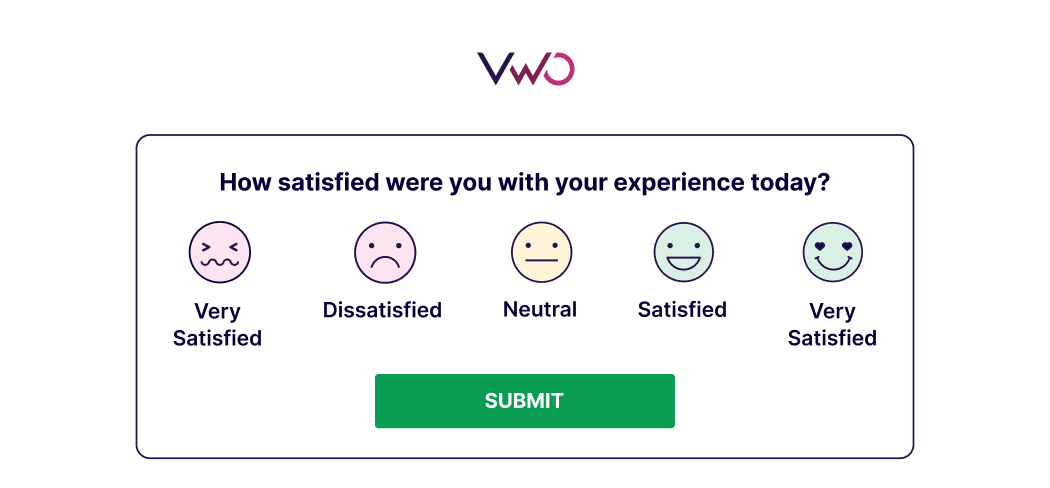
At its core, the distinction between CSAT and NPS is one of scope and temporal focus. CSAT is designed to capture the "right here, right now" sentiment. It is a transactional metric, typically triggered immediately following a specific touchpoint—such as the resolution of a support ticket, the completion of a purchase, or the conclusion of a product demonstration. By asking a variation of the question, "How satisfied were you with your experience today?" companies gain a granular view of operational efficiency.
In contrast, NPS is a relational metric. It looks past individual interactions to gauge the customer’s holistic perception of the brand. Developed in 2003 by Fred Reichheld, a partner at Bain & Company, NPS asks a single, forward-looking question: "How likely are you to recommend our company/product/service to a friend or colleague?" This metric is not concerned with the speed of a single support chat but with the cumulative trust built over months or years. It serves as a primary indicator of brand loyalty and a predictor of organic growth through word-of-mouth advocacy.
A Chronology of Customer Feedback Evolution
The journey toward these sophisticated metrics has been decades in the making. In the mid-20th century, customer feedback was largely anecdotal, collected through physical suggestion boxes or reactive complaint letters. By the 1980s, the rise of the Total Quality Management (TQM) movement introduced more structured surveys, though these were often cumbersome and suffered from low response rates.
The 1990s saw the birth of the American Customer Satisfaction Index (ACSI), which provided the first national economic indicator of customer satisfaction. However, it was the digital revolution of the early 2000s that necessitated faster, more agile metrics. The introduction of NPS in 2003 revolutionized the field by providing a simple, benchmarkable score that CEOs could understand and act upon. Today, the chronology has reached a new phase: the era of "Continuous Feedback," where AI-driven platforms like VWO Pulse allow companies to move beyond periodic surveys to real-time sentiment analysis integrated directly into the user interface.
Supporting Data: Why Sentiment Directly Impacts the Bottom Line
The push to optimize CSAT and NPS is driven by clear economic incentives. Research by the Harvard Business Review indicates that increasing customer retention rates by just 5% can increase profits by 25% to 95%. Furthermore, data from Gartner suggests that 80% of a company’s future revenue will come from just 20% of its existing customers.
When analyzing the impact of these metrics:

- Advocacy Value: Promoters (those who score 9 or 10 on NPS) are typically worth five times more in lifetime value than Detractors, due to their higher renewal rates and lower cost of acquisition through referrals.
- Operational Efficiency: High CSAT scores in customer support are directly correlated with lower churn. A study by Zendesk found that customers who have a positive service experience are 3.5 times more likely to purchase from that company again.
- Market Volatility: During economic downturns, brands with high NPS scores tend to see 2-3 times higher stock market returns than their low-scoring competitors, as loyal customers provide a "revenue floor" that protects the business.
Comparative Analysis: Tactical vs. Strategic Utility
To effectively utilize these tools, leadership teams must understand when to deploy each. The utility of CSAT is tactical. It is the ideal tool for A/B testing a new checkout flow or evaluating the performance of a customer service department. If a CSAT score drops following a software update, the product team knows exactly where to look for the friction point.
NPS, however, is the metric of the C-suite. It provides the "Big Picture" necessary for long-term strategic planning. A high CSAT score coupled with a declining NPS is a red flag; it suggests that while your team is efficient at solving problems, the overall value proposition of the brand is eroding. This "mismatch" often occurs when a product is technically functional but is being outpaced by competitors in terms of innovation or brand prestige.
| Feature | CSAT (Customer Satisfaction Score) | NPS (Net Promoter Score) |
|---|---|---|
| Primary Purpose | Measure immediate satisfaction | Measure long-term loyalty |
| Focus | Short-term "Reaction" | Long-term "Reputation" |
| Timing | Real-time (Post-interaction) | Periodic (Quarterly/Biannually) |
| Outcome | Tactical improvements | Strategic brand health |
| Question Type | "How satisfied were you?" | "Would you recommend us?" |
The Loyalty-Satisfaction Matrix: A Strategic Framework
The most sophisticated organizations do not view these metrics in isolation. Instead, they plot them on a "Loyalty-Satisfaction Matrix" to categorize their customer base and dictate corporate strategy.
- Brand Champions (High CSAT, High NPS): These are your most valuable assets. They are satisfied with every interaction and loyal to the brand. Strategy: Nurture through loyalty programs and use them for case studies.
- At-Risk Satisfied Users (High CSAT, Low NPS): These customers are satisfied with the utility of the product but feel no emotional connection to the brand. They are highly susceptible to switching to a competitor for a lower price. Strategy: Focus on brand storytelling and community building.
- Frustrated Loyalists (Low CSAT, High NPS): These customers believe in your mission but are struggling with the product’s usability or support. Strategy: Immediate technical intervention to fix friction points before their patience expires.
- Churn Risks (Low CSAT, Low NPS): These users have checked out both technically and emotionally. Strategy: Targeted win-back campaigns or a "graceful exit" to prevent negative public reviews.
Official Perspectives and the "Voice of the Customer"
Industry experts emphasize that the value of these metrics lies not in the numbers themselves, but in the qualitative data they unlock. Ali Good, Global Head of Strategy and Product Marketing at Quizizz, notes that the "Voice of the Customer" (VoC) is a form of social proof that should be woven through all corporate messaging. According to Good, using the actual language customers use in surveys helps brands avoid "marketing-ish" jargon and aligns product development with real-world needs.
Furthermore, the rise of Generative AI is transforming how this qualitative feedback is processed. Modern platforms can now ingest thousands of open-ended survey responses and instantly surface recurring themes. However, analysts warn that AI should be a "co-pilot" rather than a replacement for human judgment. Automated summaries can identify that customers are "unhappy with pricing," but it takes human intuition to determine if the issue is the price point itself or a failure to communicate the product’s value.
Broader Impact and Future Implications
As we move toward 2025 and beyond, the integration of sentiment metrics into the broader tech stack will become seamless. We are seeing a move away from "survey fatigue" toward "contextual intercepts." Instead of sending an email survey three days after an event, companies are using tools like VWO Pulse to trigger micro-surveys at the exact moment of delight or frustration within an app.
This real-time data loop allows for "Experience Optimization." If a user gives a low CSAT score for a specific feature, the system can automatically trigger a personalized walkthrough or offer a direct line to a senior support specialist. This shift from measurement to active management is what separates market leaders from laggards.
In conclusion, while CSAT tells you if you won the battle of the day, NPS tells you if you are winning the war for the market. By combining the "micro" view of satisfaction with the "macro" view of loyalty, businesses can create a predictive engine for growth. The goal is no longer just to have "happy customers," but to build a resilient ecosystem of advocates who will sustain the brand through changing market cycles. Closing the loop—moving from feedback to documented action—remains the final, most critical step in the journey toward customer centricity.








