rifanmuazin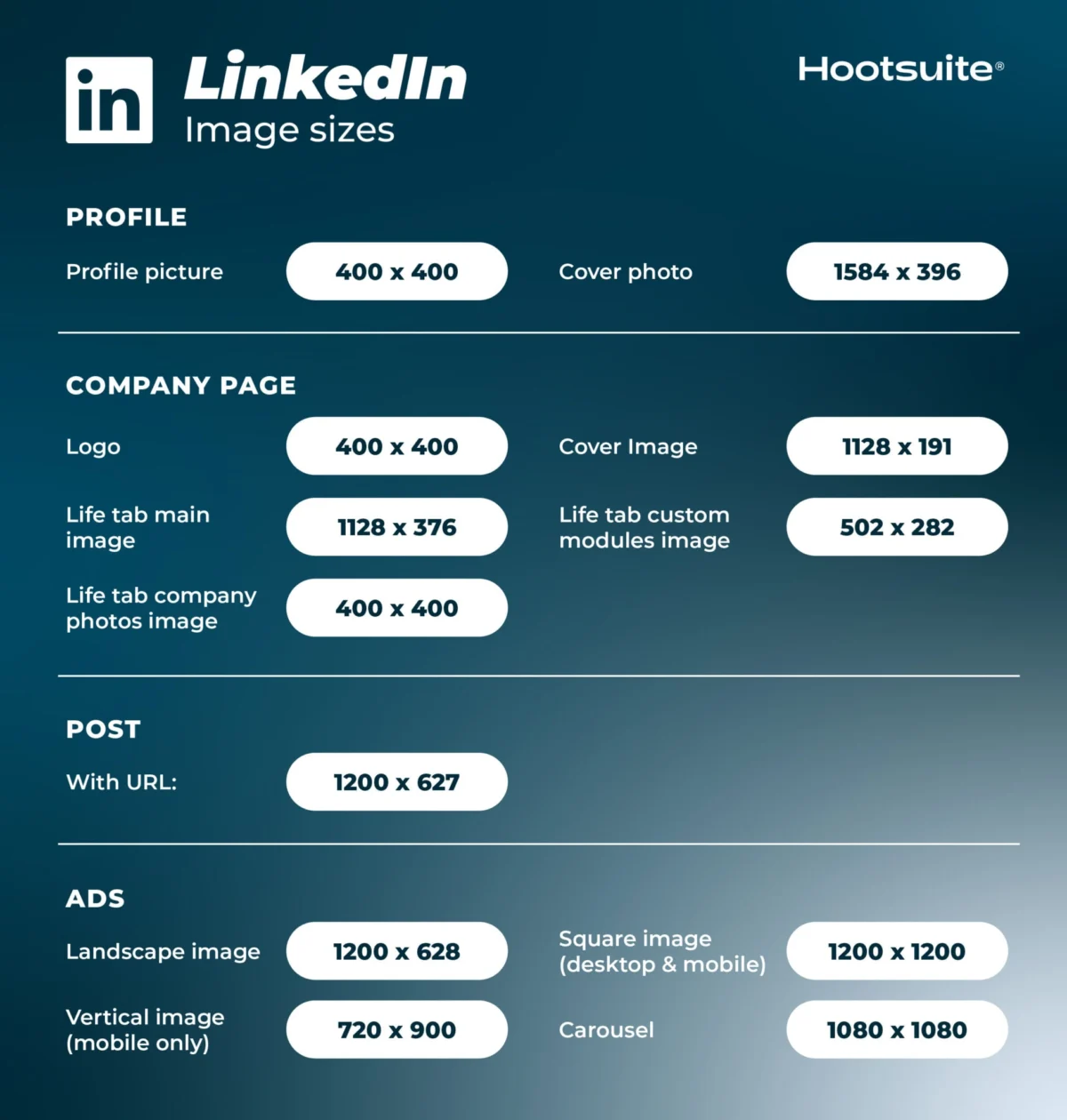
The dynamic world of social media perpetually shifts its visual guidelines, making optimal image sizing a persistent challenge for brands and marketers. As of 2026, adhering to the precise image size requirements across platforms like Instagram, X (formerly Twitter), Facebook, LinkedIn, TikTok, Bluesky, and others is not merely a technicality but a strategic imperative that directly influences content reach, engagement metrics, and overall brand consistency. The penalty for misaligned visuals, ranging from awkward cropping to reduced algorithmic visibility, underscores the critical need for up-to-date knowledge and agile content strategies.
![Social media image sizes for all networks [May 2026]](https://blog.hootsuite.com/wp-content/uploads/2023/01/Social-Media-Image-Sizes-2023.png)
The Strategic Imperative of Visual Optimization
In an increasingly visual-first digital ecosystem, the quality and presentation of imagery are paramount. Social media platforms are sophisticated engines designed to deliver the most engaging content to their users, and part of that engagement hinges on visual integrity. Images that are correctly sized and optimized load faster, display without distortion, and naturally integrate into the user experience, thereby increasing the likelihood of interaction. Conversely, poorly sized images can appear unprofessional, fail to convey the intended message, and lead to a diminished perception of brand quality. This phenomenon impacts everything from a brand’s profile picture, which acts as its digital storefront, to intricate ad creatives designed for conversion.
![Social media image sizes for all networks [May 2026]](https://blog.hootsuite.com/wp-content/uploads/2025/12/Social-media-image-sizes-for-all-networks-December-2025-556x556.png)
Industry analysts consistently advise that content optimized for a platform’s specific technical specifications often receives preferential treatment from algorithms. This means that an image perfectly tailored to Instagram’s feed dimensions, for instance, is more likely to be showcased to a broader audience than one that requires the platform to perform automatic, often imperfect, adjustments. The constant evolution of these requirements, with minor and major updates occurring annually, necessitates a vigilant approach from digital marketing teams.
A Chronology of Continuous Adaptation
![Social media image sizes for all networks [May 2026]](https://blog.hootsuite.com/wp-content/uploads/2025/12/Social-media-image-sizes-for-all-networks-January-2026-1-620x465.png)
The shift in social media image requirements is not a sporadic event but a continuous process driven by technological advancements, evolving user behaviors, and competitive platform developments. Historically, platforms began with relatively simple, often square-dominated, formats. However, the proliferation of mobile usage dramatically accelerated the adoption of vertical orientations, exemplified by the rise of Instagram Stories and TikTok. Each year brings incremental changes, with platforms refining aspect ratios for new features, improving compression algorithms, and adjusting display resolutions to cater to high-definition screens. The dates embedded in recent Hootsuite documentation, citing updates for "December 2025" and "January 2026," underscore this ongoing cycle of adaptation, suggesting that platforms are consistently tweaking their back-end infrastructure and front-end display. This constant flux demands that marketers treat image size guidelines not as static rules, but as dynamic best practices.
Key Platform Updates and Image Size Requirements for 2026
![Social media image sizes for all networks [May 2026]](https://blog.hootsuite.com/wp-content/uploads/2025/04/Social-media-image-sizes-Instagram-620x558.jpg)
For 2026, a detailed understanding of each major platform’s visual specifications is crucial. While a general principle of high resolution and appropriate aspect ratio holds true, the nuances dictate success.
Instagram’s Evolving Visual Canvas:
Instagram, a platform synonymous with visual content, supports a variety of image orientations, yet it subtly influences how these are presented. While horizontal, vertical, and square images can be posted, they are all displayed with a vertical crop on a user’s main grid, impacting aesthetic consistency.
![Social media image sizes for all networks [May 2026]](https://blog.hootsuite.com/wp-content/uploads/2025/12/Social-media-image-sizes-for-all-networks-January-2026-1-1-620x629.png)
- Profile Picture: Recommended at 320 x 320 pixels. While displayed smaller, uploading at this resolution ensures crispness across devices. The circular display necessitates centralizing key visual elements.
- Feed Posts:
- Square: 1080 x 1080 pixels (1:1 aspect ratio) remains a timeless choice.
- Landscape: 1080 x 566 pixels (1.91:1 aspect ratio).
- Vertical: 1080 x 1350 pixels (4:5 aspect ratio) is highly recommended for maximizing screen real estate in the feed.
- Stories & Reels: Both thrive on full-screen, vertical content at 1080 x 1920 pixels (9:16 aspect ratio). Instagram recommends maintaining "safe zones" for text and logos, leaving roughly 14% of the top, 35% of the bottom, and 6% on each side free to prevent cropping or obstruction by UI elements.
- Ads: Follow similar dimensions, with feed ads using 1080 x 1080 (square) or 1080 x 1350 (vertical), and Stories/Reels ads aligning with the 1440 x 2560 pixels full-screen vertical format.
X (formerly Twitter) Embraces Multimedia:
X continues its evolution into a multimedia-rich platform, with a clear emphasis on visual content to enhance tweet engagement.
- Profile Photo: 400 x 400 pixels is the standard, displayed as a circle.
- Header Photo: 1500 x 500 pixels is critical for branding, though X’s interface can crop parts depending on screen size, making centralizing important details paramount.
- In-stream Photos:
- Single image: 1600 x 900 pixels (16:9 aspect ratio) for landscape, or 900 x 1600 pixels (9:16) for portrait, though X often displays a 2:1 or 1:1 preview.
- Multi-image posts: X allows up to four images, often displayed in a square or near-square grid.
- Ads: Image ads often leverage 1200 x 675 pixels (16:9) or 800 x 800 pixels (1:1) for various formats like single image, multi-image, and website cards.
Facebook’s Dual-Screen Optimization:
Facebook presents a unique challenge due to its significant user base across both desktop and mobile, often requiring consideration for how images render on different screen sizes.
![Social media image sizes for all networks [May 2026]](https://blog.hootsuite.com/wp-content/uploads/2025/12/Social-media-image-sizes-for-all-networks-January-2026-3-620x753.png)
- Profile Picture: 320 x 320 pixels recommended, displayed as a circle.
- Cover Photo: 851 x 315 pixels for personal profiles and 820 x 312 pixels for Pages. Critical elements should be kept within a "safe zone" of 640 x 312 pixels to ensure visibility across devices.
- Timeline Photos & Posts:
- Square: 1200 x 1200 pixels for optimal display.
- Landscape: 1200 x 630 pixels.
- Vertical: 1080 x 1350 pixels, similar to Instagram.
- Stories & Reels: Like Instagram, Facebook’s ephemeral content and short-form videos are optimized for 1080 x 1920 pixels (9:16 aspect ratio).
- Ads: Various formats, including single image (1200 x 628 pixels), carousel (minimum 600 x 600 pixels), and full-screen vertical for Stories/Reels ads (1440 x 2560 pixels), which also require attention to safe zones.
LinkedIn for Professional Branding:
LinkedIn’s professional environment demands crisp, high-quality imagery to convey credibility and professionalism, with slight variations between personal and company pages.
- Personal Profile:
- Profile Photo: 400 x 400 pixels (min).
- Background Photo: 1584 x 396 pixels.
- Company Pages:
- Logo: 300 x 300 pixels (square).
- Cover Image: 1128 x 191 pixels.
- Posts:
- Image posts: 1200 x 1200 pixels (square) or 1200 x 627 pixels (landscape) are recommended.
- Posts with a URL: 1200 x 627 pixels for link previews.
- Ads: Generally follow feed post dimensions, with spotlight ads requiring 100 x 100 pixels for logos and larger images up to 300 x 250 pixels.
Pinterest’s Visual Discovery Engine:
As a visual discovery platform, Pinterest prioritizes vertical imagery that stands out in a feed.
![Social media image sizes for all networks [May 2026]](https://blog.hootsuite.com/wp-content/uploads/2025/04/Social-media-image-sizes-LinkedIn-620x651.jpg)
- Profile Image: 280 x 280 pixels.
- Cover Photo: 800 x 450 pixels (minimum).
- Pins:
- Standard Pins: 1000 x 1500 pixels (2:3 aspect ratio) is ideal for vertical display. Longer pins (e.g., 1000 x 2100 pixels) can also perform well but may get truncated in some views.
- Collection Pins & Ads: Typically use similar vertical formats, emphasizing product imagery and clear calls to action.
Snapchat’s Ephemeral Storytelling:
Snapchat’s design is inherently full-screen and vertical, dictating straightforward image requirements.
- Profile Picture: 320 x 320 pixels.
- Banner Image: 375 x 278 pixels.
- Ads: 1080 x 1920 pixels (9:16 aspect ratio) for full-screen ads, with a minimum resolution of 1080 x 1080 pixels for single image ads. Safe zones are critical here due to interactive elements and user interface overlays.
YouTube’s Branding and Thumbnails:
YouTube focuses on video, but its static image requirements for channel branding and video thumbnails are vital for discoverability and professional presentation.
![Social media image sizes for all networks [May 2026]](https://blog.hootsuite.com/wp-content/uploads/2025/04/Social-media-image-sizes-Pinterest-620x517.jpg)
- Profile Photo: 800 x 800 pixels, displayed as a circle.
- Banner Image: 2560 x 1440 pixels. This large canvas needs careful design due to varied display on desktops, mobile, and smart TVs, necessitating a "safe area" (e.g., 1546 x 423 pixels) for core branding.
- Video Thumbnail: 1280 x 720 pixels (16:9 aspect ratio) is crucial for attracting clicks.
- Podcast Playlist Thumbnail: 1280 x 1280 pixels (1:1 aspect ratio).
TikTok’s Vertical Dominance:
TikTok is the epitome of vertical-first mobile content, making its image and video size recommendations straightforward but critical.
- Profile Photo: 200 x 200 pixels.
- Video & Carousel Size: 1080 x 1920 pixels (9:16 aspect ratio) is the standard for both. Like Instagram and Facebook Reels, attention to safe zones for text and interactive elements is vital.
- Ads: Mirror video dimensions at 1080 x 1920 pixels.
Emerging Platforms: Bluesky and Threads
Newer entrants to the social media landscape, such as Bluesky and Threads, also establish specific visual guidelines from their outset.
![Social media image sizes for all networks [May 2026]](https://blog.hootsuite.com/wp-content/uploads/2025/04/Social-media-image-sizes-Snapchat-620x325.jpg)
- Bluesky:
- Profile Picture: 1000 x 1000 pixels.
- Banner Image: 3000 x 1000 pixels.
- Image Post: Minimum of 1000 pixels in either height or width, allowing flexibility while ensuring quality.
- Threads:
- Profile Image: 640 x 640 pixels (often synced with Instagram).
- Post Image: 1440 x 1920 pixels (recommended vertical).
Both platforms emphasize clean, high-resolution imagery consistent with modern mobile-first design principles.
Implications for Brands and Marketers
The ongoing volatility of social media image sizes carries significant implications. For brands, incorrect sizing leads to:
![Social media image sizes for all networks [May 2026]](https://blog.hootsuite.com/wp-content/uploads/2025/04/Social-media-image-sizes-YouTube-620x321.jpg)
- Compromised Visual Quality: Images may appear pixelated, stretched, or compressed, undermining brand aesthetics.
- Reduced Engagement: Visually unappealing content is often scrolled past, directly impacting interaction rates.
- Negative Brand Perception: A consistent display of low-quality or poorly formatted visuals can signal a lack of attention to detail and professionalism.
- Algorithmic Penalties: While not always explicitly stated, platforms prioritize content that aligns with their technical recommendations, potentially leading to reduced reach for non-optimized visuals.
- Wasted Resources: Time and effort spent on creating content can be negated if it fails to display correctly, requiring rework.
Enterprises, in particular, face the challenge of standardizing image sizes across multiple campaigns and diverse teams. The solution often lies in establishing clear brand guidelines, utilizing design templates that automatically adjust to platform requirements, and leveraging social media management tools. These platforms often integrate functionalities that automate resizing, cropping, and optimization, thereby streamlining workflows and mitigating the risk of human error.
A spokesperson for a leading social media management platform, speaking on the condition of anonymity, highlighted the importance of technological assistance: "The sheer volume of platforms and their continuous updates make manual image optimization an unsustainable task for many brands. Our goal is to abstract away that complexity, ensuring marketers can focus on creativity while our tools handle the technical precision, keeping content consistently sharp and impactful."
![Social media image sizes for all networks [May 2026]](https://blog.hootsuite.com/wp-content/uploads/2025/12/Social-media-image-sizes-for-all-networks-January-2026-5-1-620x507.png)
In conclusion, as social media continues to be a primary battleground for brand visibility and engagement in 2026, the seemingly minor detail of image sizing emerges as a foundational pillar of digital strategy. Brands that invest in understanding and adapting to these evolving specifications, whether through internal expertise or integrated technological solutions, will be best positioned to cut through the noise and capture audience attention effectively.