rifanmuazin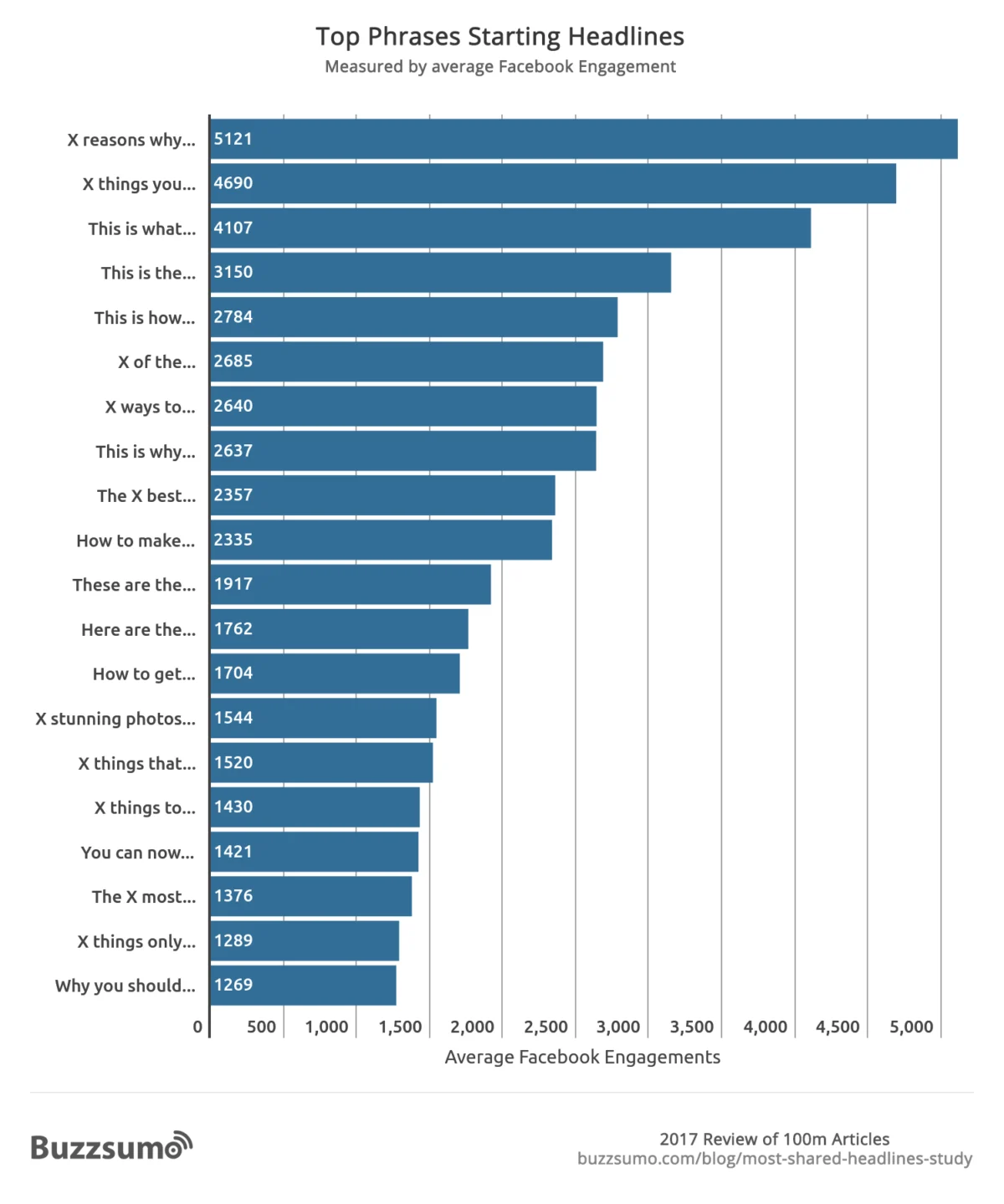
The dynamic landscape of digital content consumption demands a sophisticated understanding of what captures audience attention. A recent comprehensive study by BuzzSumo, building upon its groundbreaking 2017 research, analyzed an astounding 100 million headlines published between 2019 and 2020 to uncover the most effective strategies for engagement on Facebook and Twitter. The findings reveal a dramatic shift in audience preferences and algorithmic priorities, moving away from sensationalism towards utility, specificity, and factual authority. This updated analysis offers critical insights for publishers and content creators navigating an increasingly competitive and refined digital ecosystem.
The Evolving Landscape of Headlines: 2017 to 2020/2021
The digital content sphere has undergone a significant transformation since BuzzSumo’s initial 2017 headline study. What once drove viral engagement has largely fallen out of favor, replaced by more informative and direct communication styles. This evolution can be largely attributed to the maturity of social media algorithms, shifts in audience preferences, and changes in the broader publisher landscape.
From Emotional Triggers to Practical Value:
In 2017, emotional language and sensationalism were kings on Facebook. Phrases like "will make you," "melt your heart," and "tears of joy" consistently topped engagement charts, promising readers a strong emotional reaction. A headline using "will make you" could garner millions of shares. However, the 2019-2020 analysis shows a stark reversal. Overtly emotional or sensational headlines are now rare, with only a single emotional phrase ("in love with") making it into the top 60 Facebook trigrams, and even that at a significantly lower average share count compared to its 2017 counterparts. This decline directly correlates with Facebook’s policy changes, initiated in May 2017, to demote "clickbait-style content" that exaggerates or withholds information. The platform’s subsequent prioritization of "trustworthy news" (January 2018) and "original and authoritative news reporting" (June 2020) further cemented this shift, penalizing sensationalism and rewarding genuine value.
The Demise of Quizzes and Tribal Content:
Another notable change is the disappearance of quiz-based and tribal headlines. Phrases such as "can we guess" (e.g., "Can We Guess Your Real Age?") and "only X in" (e.g., "Only 1 In 50 People Can Identify These 16 Grammar Mistakes. Can You?") that dominated in 2017 are now virtually absent. Similarly, tribal identity headlines, like "25 Things Only Teachers Will Understand," which appealed to specific demographic groups, have faded. This suggests a broader audience fatigue with such content and an algorithmic preference for more universally applicable and less divisive topics.
Snappier, More Direct Communication:
The ideal headline length has also contracted significantly. While the 2017 study found an optimal length of 15 words and 95 characters, the updated research indicates that 11 words and 65 characters now drive the most engagement on Facebook and Twitter. This reduction of approximately four words and 30 characters reflects a broader trend of content overload; a separate study revealed that online content production increased by 64% between 2016 and 2020. In an environment saturated with information, readers demand concise, to-the-point headlines that offer immediate clarity. As Brian Dean, founder of Backlinko, noted, "today’s Facebook users need to know that the content is going to teach them something new."
Increased Homogeneity Across Platforms:
Interestingly, while social media platforms might seem distinct, headline trends are converging. In 2017, only one of the top 20 headline phrases was shared between Facebook and Twitter. By 2019-2020, this figure had jumped to eight, indicating a 2.5% to 20% similarity. This suggests that certain headline structures and thematic approaches are becoming universally effective across major social networks, allowing for more streamlined content distribution strategies, though platform-specific nuances remain crucial.
Divergent Engagement Rates:
Despite the convergence in headline phrases, engagement rates have diverged. Facebook saw a substantial increase, with its top-performing trigram ("of the year") garnering an average of 26,702 shares – three times more than the 2017 top phrase ("will make you"). Conversely, Twitter experienced a nearly fourfold decrease in average shares for its most popular phrases, and a 14% overall drop in Twitter shares between 2017 and 2020, despite stable monthly active users. This highlights Facebook’s growing dominance as a content sharing platform, while Twitter might be evolving into a more real-time information network where rapid consumption trumps extensive sharing of individual articles.
Shifting Publisher Landscape:
The algorithmic preference for authoritative content on Facebook has profoundly impacted the visibility of publishers. The 2019-2020 analysis of top domains for engaging headlines on Facebook showed a clear shift towards established news organizations such as CNN, DailyMail.co.uk, NBCNews.com, WashingtonPost.com, CBSNews.com, and Time.com. This is a direct consequence of Facebook’s efforts to combat misinformation and promote reliable sources, ensuring that content creators can feel more confident in applying these findings given the data’s origin from reputable outlets.
Deep Dive: What Works Now on Facebook
Facebook engagement is now primarily driven by headlines that offer clear value, invoke curiosity, or provide instruction. The study focused on three-word phrases ("trigrams") for their memorable and impactful nature.
The Power of Specificity and Utility:
The top Facebook trigram, "of the year," typically appeared in headlines related to rankings and awards (e.g., "Person of the Year"). This generates discussion between "fans" and "haters," driving shares. Closely following were phrases like "in X years," "for the first," and "the first time," which collectively form "for the first time in X years." These "newness" phrases create intrigue by hinting at rare or unique circumstances, compelling users to click for details.
Instructional Content Reigns Supreme:
A significant finding is the success of instructional headlines. Phrases incorporating modal verbs like "you need to," "you should," and "need to know" were highly engaging. These headlines directly address the reader, creating a sense of obligation or urgency (FOMO – Fear Of Missing Out). For example, "Everything you need to know about washing your hands to protect against coronavirus" (unicef.org, 2.2M shares) demonstrates how this approach effectively communicates critical, concise information. Amanda Milligan, Marketing Director at Fractl, observed that this language "inherently demonstrates authority," appealing to readers seeking expert guidance.
Strategic Use of Hyperbole:
While overt emotionalism is out, a refined form of hyperbole still works. Phrases like "one of the most" or "of the best" are successful when used to highlight genuinely exceptional content (e.g., "Why Your Older Sister Is One of the Most Important People in Your Life" – brightside.me, 2.1M shares). This differs from sensationalism by grounding the exaggeration in a perceived quality of the content.
Listicles and Guidance:
Headlines beginning with numbers (listicles) remain effective, promising readers structured information and actionable takeaways. Beyond numbers, starting phrases often lean into instructional ("X things to," "everything you need") and curiosity-driven ("X reasons why," "what is the") formats. "How to" headlines, falling under the "Guidance" category, were particularly prevalent among the top starting phrases, indicating Facebook users’ appetite for learning and practical advice.
Time-Centric and Trend-Driven Endings:
The most popular ending phrases on Facebook were heavily time-centric, focusing on recent events ("of 2020") or future predictions ("of 2021"). This reflects a collective interest in current affairs, particularly amplified by global events like the pandemic. Numbers were also used at the end of headlines to create surprise or emphasize "speed to insight" (e.g., "in just 5 minutes"). Furthermore, phrases related to "social media" in headline endings indicated content fueled by trending online conversations, showcasing a "content-conversation loop" where social trends inspire shareable articles.
Deep Dive: What Works Now on Twitter
Twitter’s audience exhibits a distinct preference for forward-looking, analytical, and immediate content.
Forward-Looking and Factual:
The phrase "the future of" dominated Twitter engagement, appearing both as a top trigram and a common starting phrase. This signifies Twitter users’ interest in analysis, predictions, and discussions about emerging trends and developments.
Research-Driven Engagement:
Words like "study" and "report" frequently appeared at the beginning of top-performing Twitter headlines. This suggests that Twitter is an ideal platform for sharing research, data-driven insights, and academic or journalistic investigations, catering to an audience that values factual information and intellectual discourse.
Immediacy and Current Affairs:
Similar to Facebook, time-sensitive and reactive phrases were highly effective in ending Twitter headlines. "2020" was overwhelmingly popular, and at least 13 of the top 20 ending bigrams emphasized immediacy, underscoring Twitter’s role as a real-time news and information platform. Users on Twitter are seeking current developments and rapid updates.
Comparative Analysis: Facebook vs. Twitter
While some headline themes are universally effective, understanding platform-specific nuances is crucial for optimizing engagement.
Shared Strategies:
Eight of the top 20 overall headline phrases, and 10 of the top 40 starting phrases, crossed over between Facebook and Twitter. These include phrases indicating listicles, instructional content, or curious inquiries, suggesting a foundational approach that can appeal to a broad social media audience.
Distinct Audiences:
Despite overlaps, significant differences persist. Curiosity-driven headlines performed better on Twitter, while instructional content showed strong performance on both. The "story" category, focusing on narratives around people or topics ("the story of," "the history of," "the rise of"), resonated particularly well on Twitter. It’s also critical to note the vast difference in scale: Facebook’s most shared headline phrase achieved 590 times more average shares than Twitter’s, underscoring Facebook’s superior reach for broad content dissemination. This reinforces the need for content creators to tailor their headlines and distribution strategies for each platform rather than adopting a one-size-fits-all approach.
Expert Perspectives on the Findings
Industry leaders offered insightful commentary on BuzzSumo’s findings:
- Heidi Cohen, Chief Marketing Officer at Actionable Marketing Guide, highlighted the pandemic’s influence on customer behavior, emphasizing the shift towards seeking valuable, actionable information. She advised marketers to focus on core marketing basics and adapt to evolving customer needs.
- Rand Fishkin, Founder of SparkToro, praised the study for "mythbust[ing]" long-held beliefs about clickbait and emotional triggers, and for "illuminat[ing] the nuance of what’s really working." He stressed its value for content creators and strategists in understanding past versus present trends.
- Ross Simmonds, Founder of Foundation, pointed out the fascinating adoption of "click-friendly" instructional copy, like "you need to" and "you should," by mainstream publishers. He attributed its success to human psychology and the innate desire to avoid missing out on important information.
- Brian Dean, Founder of Backlinko, recognized the "huge shift" on Facebook from BuzzFeed-style clickbait to instructional headlines, signaling an opportunity for content that genuinely educates.
- Amanda Milligan, Marketing Director at Fractl, found the "instructional" trend fascinating, linking it to a growing desire to learn from experts and to the inherent authority conveyed by such language. She encouraged brands to leverage their expertise through this content style.
Implications for Content Creators and Marketers
The BuzzSumo study provides a clear roadmap for crafting compelling headlines in today’s digital environment. The era of generic, emotionally manipulative, or purely tribal headlines is largely over. Success now hinges on delivering clear value and understanding platform-specific audience behaviors.
To write better headlines, content creators should:
- Prioritize Clarity and Utility: Headlines should be specific and reveal enough detail to draw readers in, promising actionable insights or valuable information. Focus on what the reader will gain.
- Embrace the Instructional: Phrases that directly instruct or imply necessity ("you need to know," "how to") are highly effective, tapping into the audience’s desire for practical guidance and fear of missing out.
- Use Numbers Strategically: Listicles remain popular, but the "magic number" is 10, followed by single digits (3-9). Avoid excessively long lists, as audiences prefer quicker insights.
- Refine Hyperbole: Employ superlative language ("one of the most," "of the best") only when the content genuinely warrants it, referencing exceptional quality rather than empty sensationalism.
- Optimize for Platform Nuances: While some phrases cross over, tailor headlines for each platform. Twitter users appreciate research, analysis, and current affairs, while Facebook users respond well to instructional content, rankings, and stories.
- Stay Current with Time-Centric Language: Incorporate year-specific or time-sensitive phrases when relevant to current events or trends, appealing to the audience’s desire for up-to-date information.
- Test and Analyze: Rely on tools like BuzzSumo’s Content Analyzer to identify what resonates with your specific audience, topics, and social networks. Continual testing and adaptation are crucial in a constantly evolving landscape.
Methodology and Future Outlook
The 2019-2020 BuzzSumo study meticulously analyzed 100 million article headlines using average median shares for engagement measurement. To prevent popular sites from skewing results, only one headline trigram/phrase example per domain was included in the analysis. This robust methodology, inspired by Steve Rayson’s original 2017 research and executed by Henley Wing Chiu, provides a reliable foundation for understanding contemporary headline dynamics.
In conclusion, effective headline writing is no longer a guessing game but a data-driven science. By understanding the shift from emotional clickbait to valuable, instructional, and platform-optimized content, creators can craft headlines that not only attract attention but also foster meaningful engagement in the digital age. The key lies in balancing algorithmic preferences with genuine audience needs, ensuring that a headline serves as a compelling, honest window into the content it represents.