rifanmuazin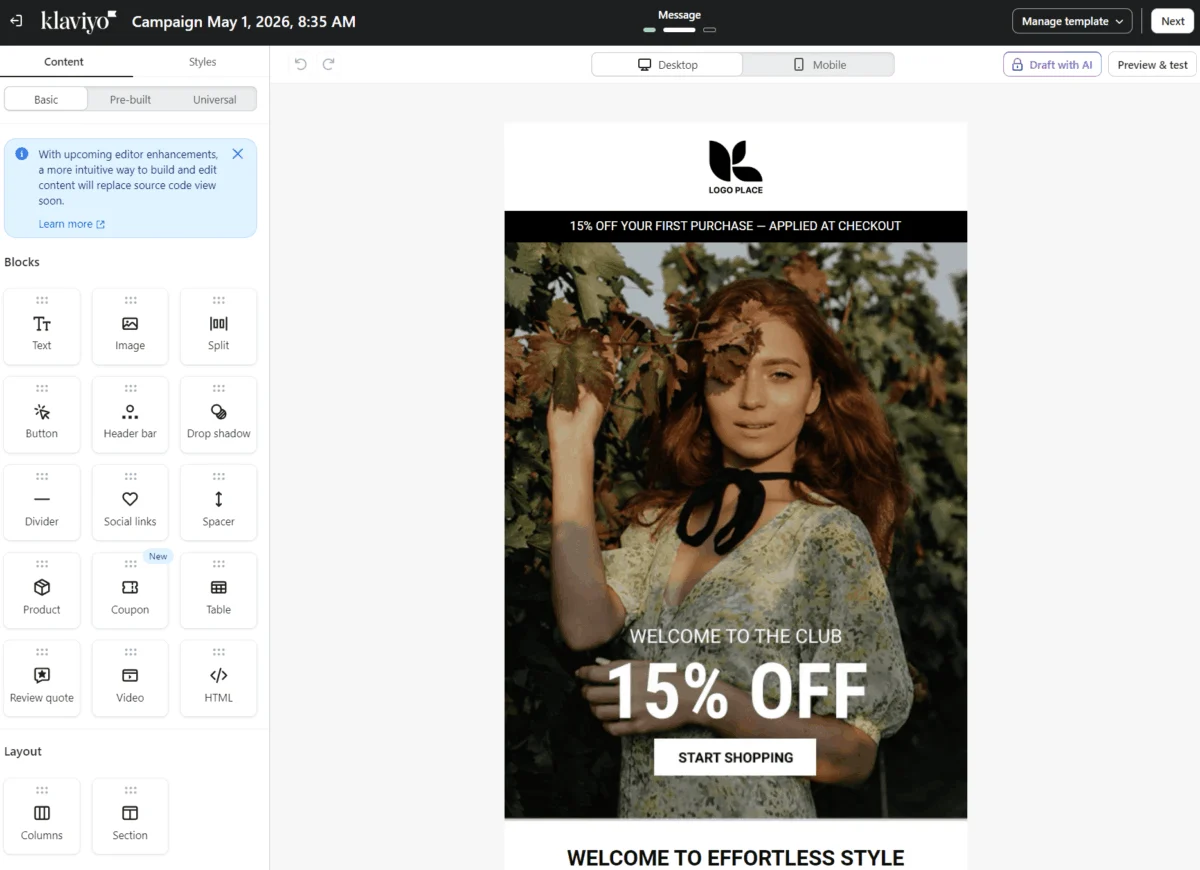
In the increasingly competitive digital marketplace, the choice of an email marketing platform is a pivotal strategic decision for businesses, profoundly influencing customer engagement, sales, and long-term retention. A comprehensive review of leading platforms, Klaviyo and Mailchimp, reveals a clear delineation in their optimal applications: Klaviyo emerges as the superior solution for advanced e-commerce operations, while Mailchimp maintains its stronghold as an accessible entry point for beginners and small businesses seeking foundational email marketing capabilities. This finding, consistently observed across extensive testing and market analysis, underscores the nuanced feature sets and pricing structures that define these two industry giants.

The perception that Mailchimp is unequivocally the more economical option often proves to be an oversimplification. While its most basic paid plan does indeed present a lower initial cost, this affordability comes with significant trade-offs, particularly a notable absence of essential e-commerce functionalities. Upon upgrading to Mailchimp’s higher tiers to access these critical features, the pricing structure frequently aligns with, or even surpasses, that of Klaviyo’s equivalent plans for comparable contact volumes. This price parity, especially for contact counts up to 5,000, challenges the conventional wisdom regarding Mailchimp’s cost advantage in a feature-rich environment.
Klaviyo distinguishes itself through its robust and sophisticated suite of tools for email flows, audience segmentation, and performance reporting. Its deep, native integration with e-commerce platforms like Shopify is a cornerstone of its appeal, enabling a level of data synchronization and utilization that transforms it into a powerful customer relationship management (CRM) system tailored for online retail. Conversely, while Mailchimp has progressively incorporated more e-commerce-centric features, these additions often feel secondary to its broader marketing suite, and their depth and integration capabilities have yet to reach the comprehensive standard set by Klaviyo. This article aims to provide a balanced and detailed examination of Klaviyo and Mailchimp, exploring their fundamental differences, core features, pricing models, inherent strengths and weaknesses, and optimal use cases for various business profiles.
The Evolution of Email Marketing and Platform Specialization
The journey of email marketing platforms reflects the broader evolution of digital commerce itself. Initially, tools like Mailchimp emerged in the early 2000s as simple, intuitive solutions for sending newsletters and managing contact lists. Their strength lay in ease of use and broad applicability, making email marketing accessible to small businesses, bloggers, and non-profits. Mailchimp capitalized on this need, building a reputation for user-friendliness and a generous free tier that allowed millions to dip their toes into email communication without significant investment.
As e-commerce matured, particularly with the proliferation of platforms like Shopify, the demands on email marketing grew exponentially. Generic mass emails gave way to the necessity for highly personalized, behavior-driven communications. Businesses needed to segment audiences based on purchase history, browsing behavior, cart abandonment, and predictive analytics. This shift created a vacuum for specialized platforms that could deeply integrate with e-commerce ecosystems and leverage granular customer data for automated, revenue-generating campaigns.
Klaviyo entered this landscape with a clear focus on e-commerce, designing its platform from the ground up to address these specific, advanced needs. Its architecture was built around capturing, analyzing, and acting upon transactional and behavioral data from online stores. This specialization allowed Klaviyo to develop predictive analytics, sophisticated segmentation rules, and multi-channel automation workflows that were natively integrated with the e-commerce customer journey. While Mailchimp continued its evolution, attempting to broaden its appeal as an "all-in-one" marketing solution—adding features like website builders, social media posting, and basic CRM—Klaviyo intensified its specialization, becoming the go-to platform for e-commerce brands seeking to maximize their marketing ROI through hyper-personalization and automation. This divergence in strategic direction is a key factor underpinning their current market positions and feature sets.
Deep Dive into Pricing and Value Propositions
The financial commitment associated with an email marketing platform is often a primary consideration for businesses. A granular examination of Klaviyo and Mailchimp’s pricing models reveals that the initial impression of Mailchimp’s affordability can be misleading for e-commerce entities.
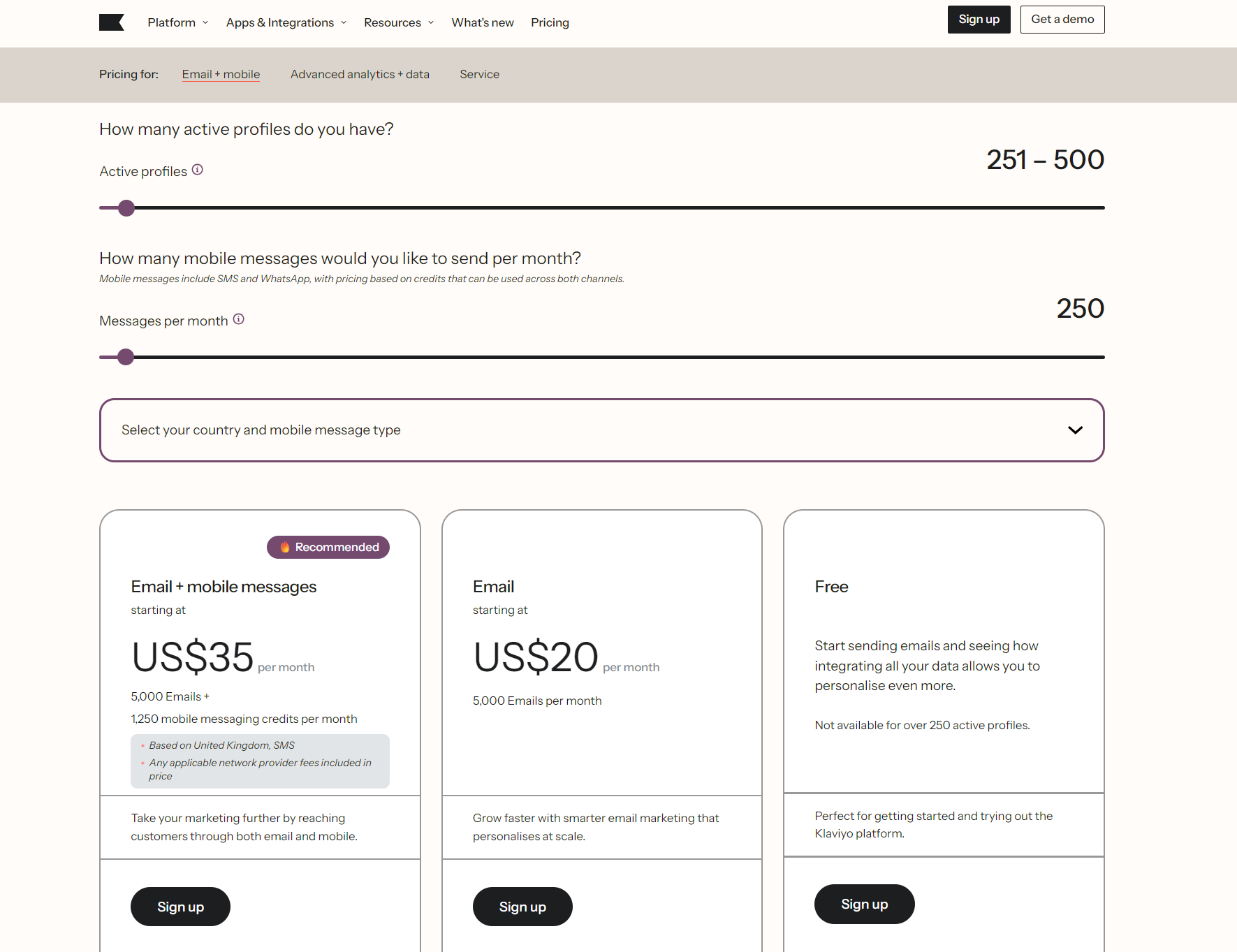
Klaviyo’s pricing structure is straightforward, offering an email-only plan and an email + SMS plan, both scaling with contact count from 500 to over 2 million. Its entry-level email plan begins at $20 per month for 500 contacts, allowing for up to 5,000 email sends. Mailchimp, in contrast, presents a tiered system with Essentials, Standard, and Premium plans, each imposing feature restrictions. The Essentials plan starts at $13 per month for 500 contacts, which appears to be a significant saving over Klaviyo. However, this plan crucially omits core e-commerce functionalities such as customer lifetime value tracking, generative AI for content creation, predictive analytics, advanced segmentation, and behavioral targeting—features that are indispensable for a thriving online store.
For e-commerce businesses to access these vital tools within Mailchimp, an upgrade to the Standard plan is necessary. This plan also starts at $20 per month for 500 contacts, effectively neutralizing Mailchimp’s initial price advantage when comparing feature-equivalent offerings. For contact counts such as 1,500, 2,500, and 5,000, both Klaviyo’s email plan and Mailchimp’s Standard plan are identically priced, underscoring the parity at crucial growth stages for small to medium-sized e-commerce businesses. For instance, at 5,000 contacts, both platforms cost $100 per month.
Klaviyo, however, offers greater granularity in its contact-count tiers, providing over 20 distinct pricing steps up to 20,000 contacts. This allows businesses to scale their costs more precisely as their audience grows, avoiding sudden, large jumps in subscription fees. For example, a business with 6,000 contacts would pay $130 with Klaviyo, compared to Mailchimp’s $135 for its 5,001-10,000 contact tier. While Mailchimp becomes cheaper at very high contact limits on its Essentials and Standard plans, Klaviyo’s value proposition lies in providing a full suite of e-commerce-specific features as standard, rather than restricting them to higher-cost tiers.
Both platforms offer free plans, supporting up to 250 contacts and 500 emails per month. Klaviyo adds 150 SMS/MMS credits to its free tier, providing a taste of its multichannel capabilities. These free plans serve as useful trial periods, though they come with mandatory platform branding on communications and limited customer support windows (Mailchimp 30 days, Klaviyo 60 days). The overarching conclusion on pricing is that for genuine e-commerce functionality, Klaviyo often delivers superior value by including advanced features without requiring an upgrade to a disproportionately expensive tier.
Advanced Capabilities: Campaign Builders, Automation, Segmentation, and Reporting
The core functionality of any email marketing platform rests in its ability to facilitate compelling campaigns, automate customer journeys, precisely segment audiences, and provide actionable insights through reporting. Here, Klaviyo consistently demonstrates a more specialized and robust approach for e-commerce.
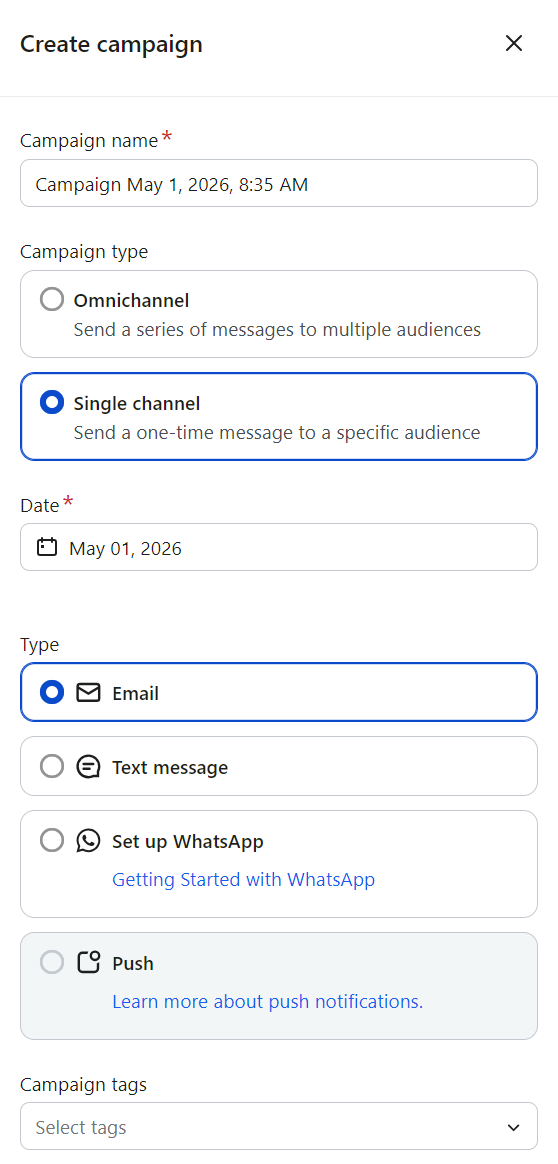
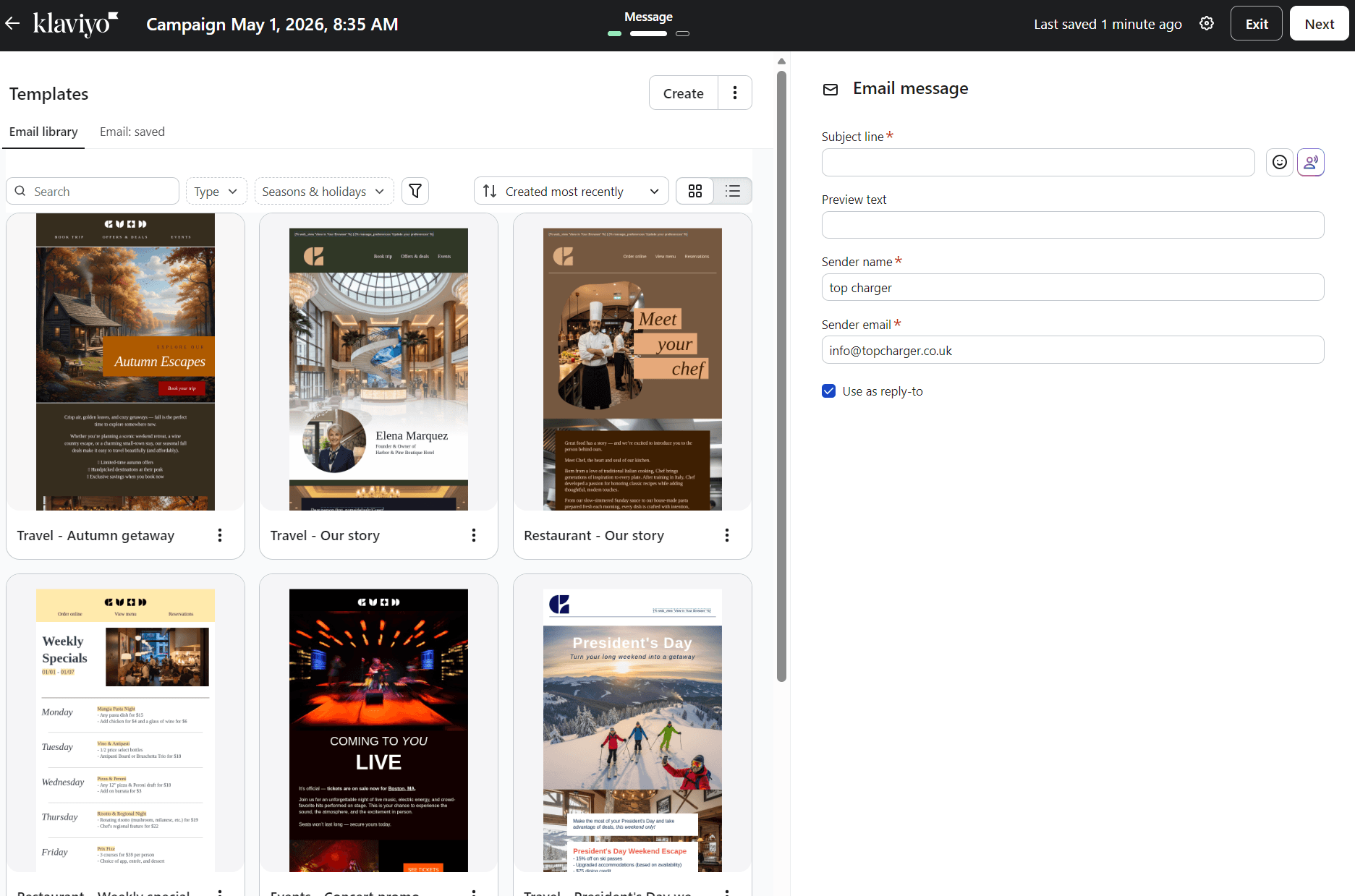
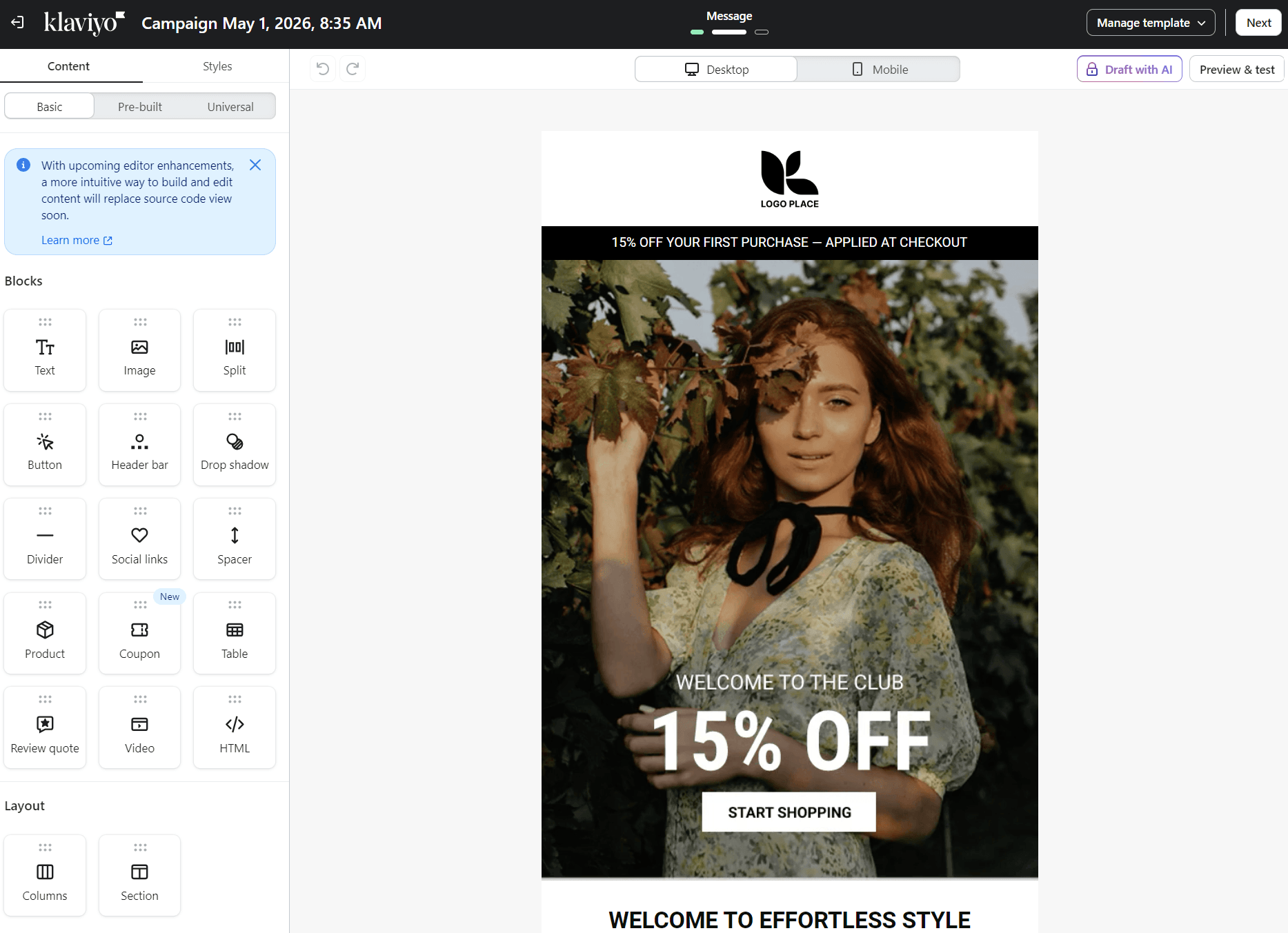
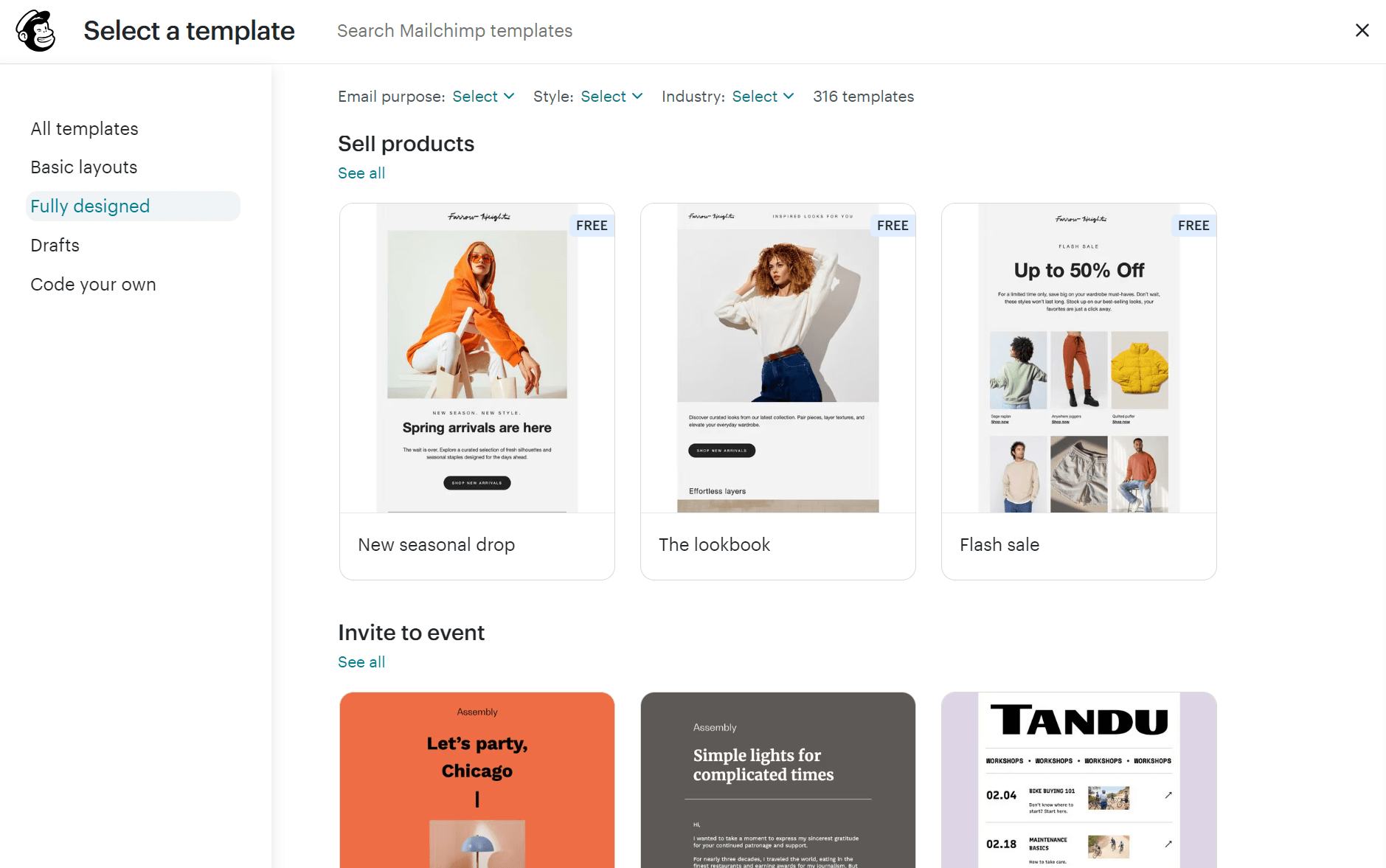
Campaign Builders: Both Klaviyo and Mailchimp provide intuitive drag-and-drop email editors. Klaviyo’s builder, accessible via its ‘Campaigns’ tab, offers a selection of over 160 high-quality, professionally designed templates. These templates automatically adapt to uploaded brand assets and are available across all plans, including the free tier. Its editor features logically grouped pre-built blocks, layouts, and sections, complete with an efficient search function for elements and a ‘Universal’ tab for saved components. The option to draft content using AI on paid plans further streamlines the creation process.
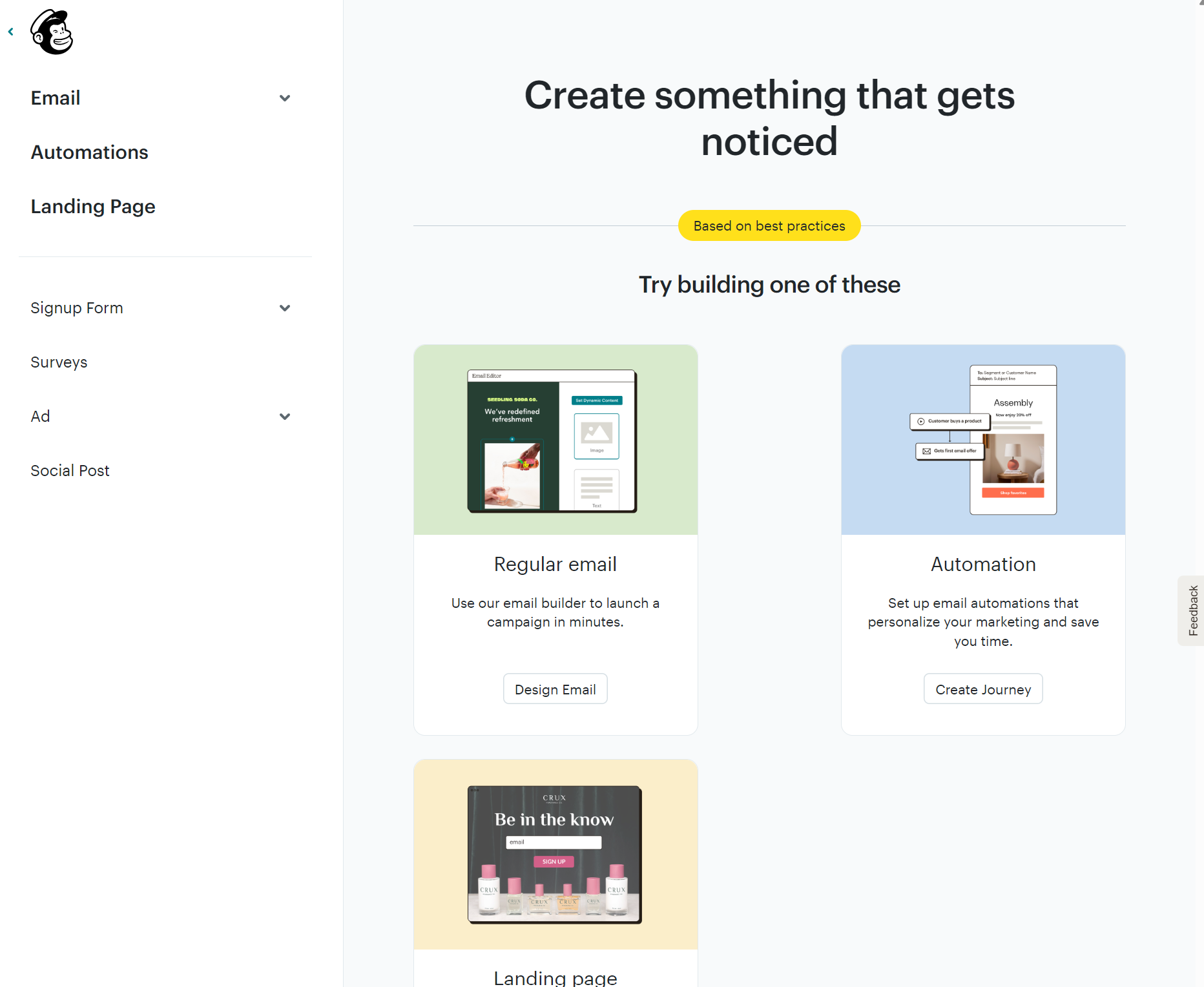
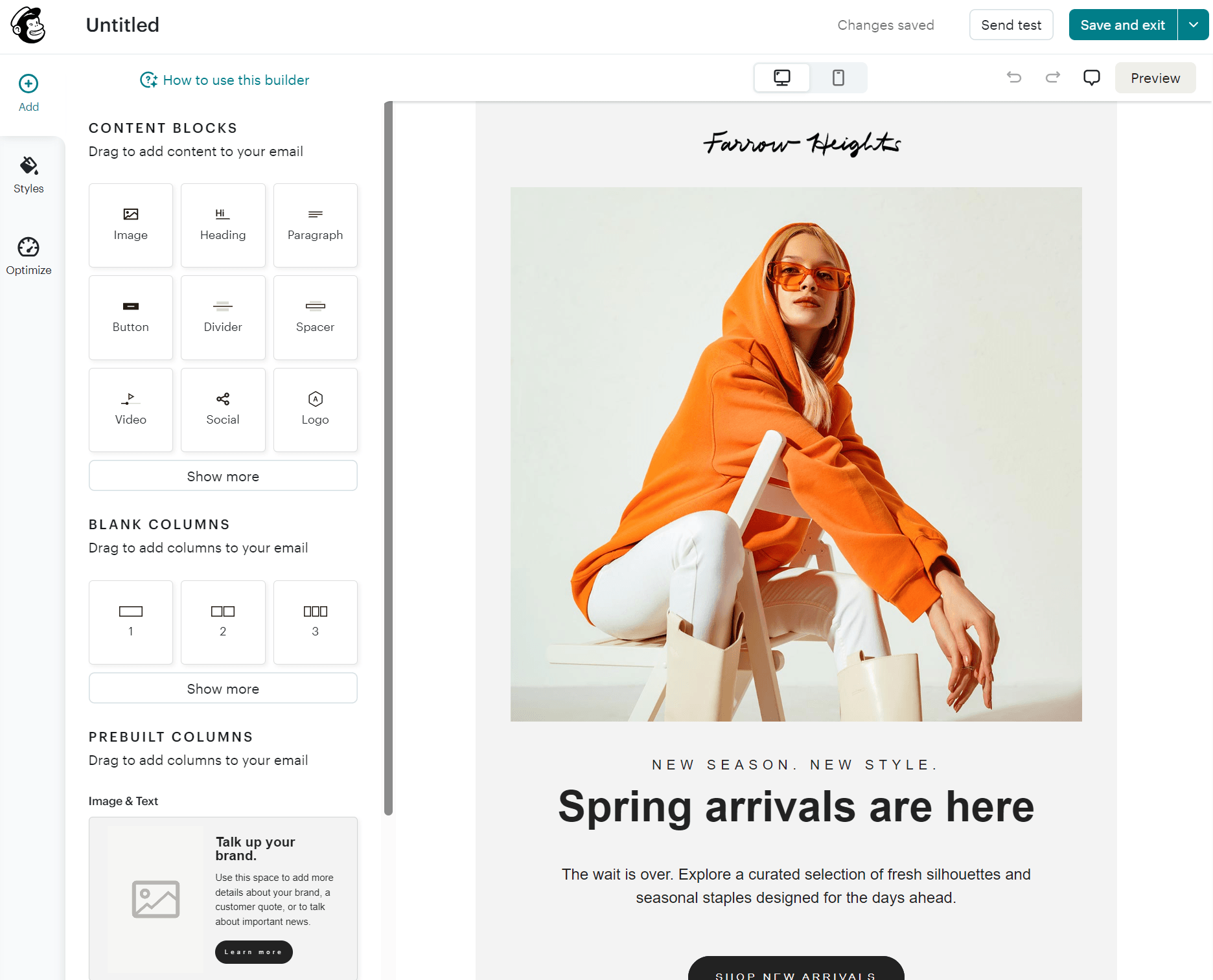
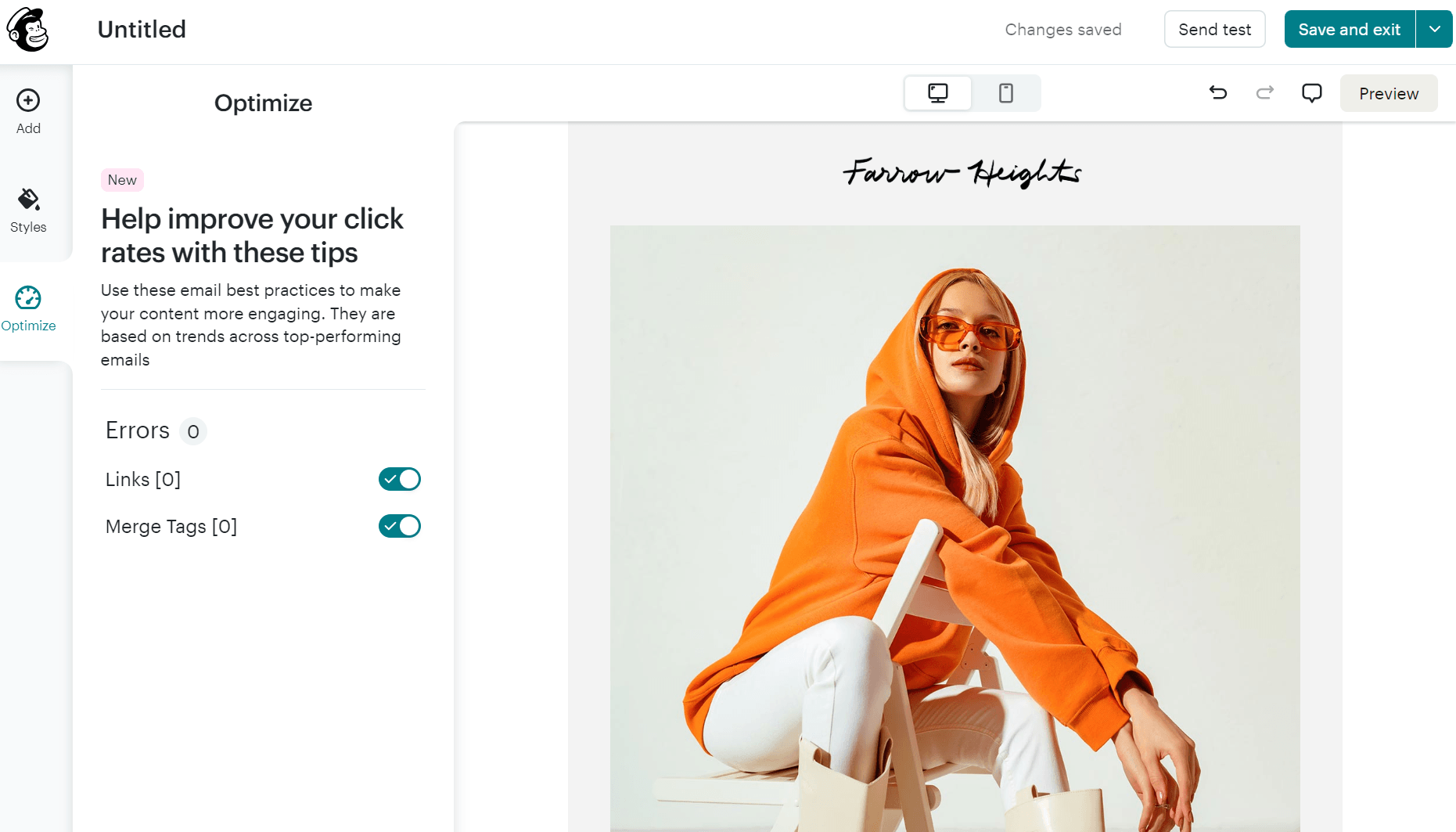
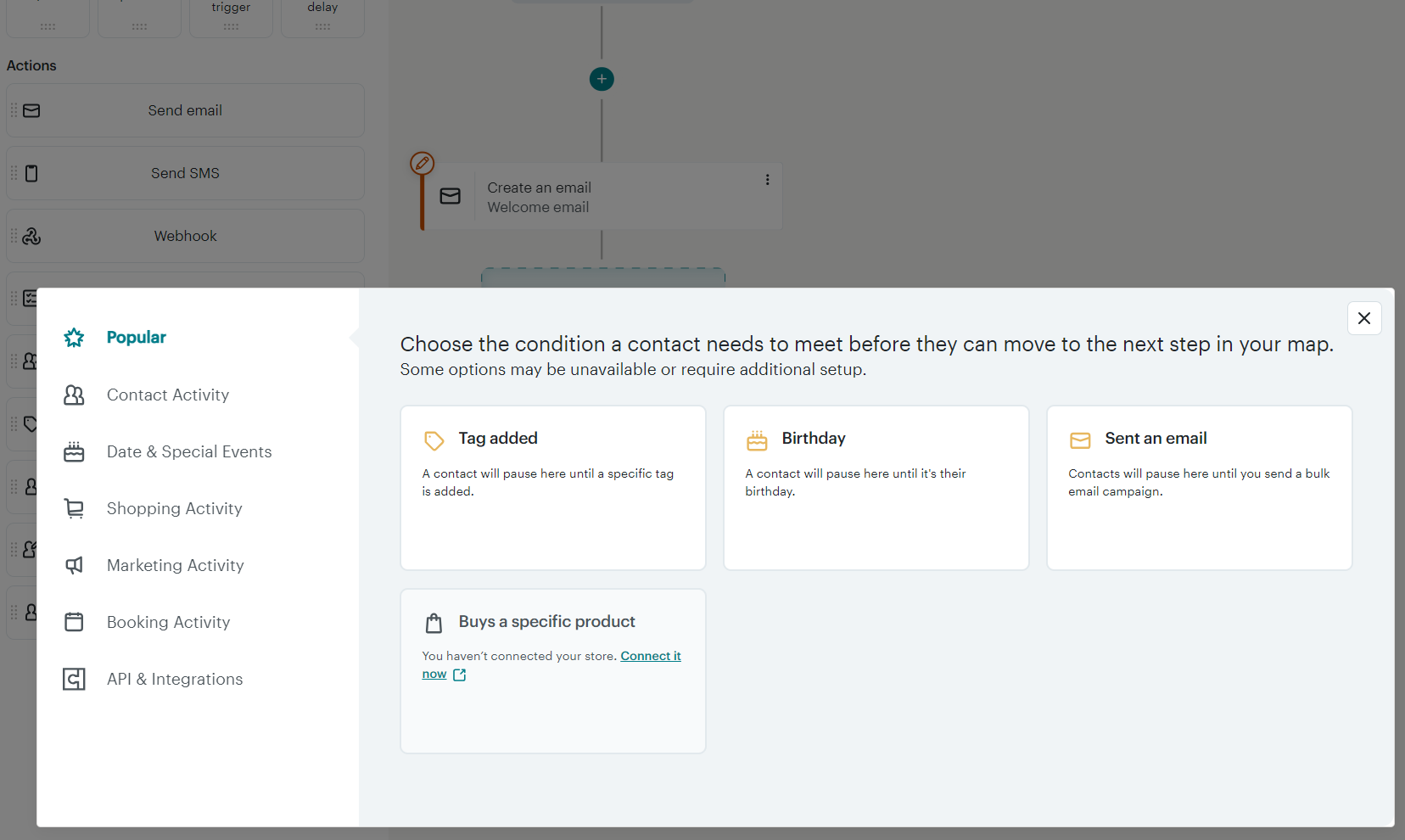
Mailchimp’s campaign builder, while user-friendly, presents some limitations. While it boasts over 130 templates for paid users, free users are restricted to fewer than 20 basic designs. Its content blocks are consolidated under a single ‘+Add’ column, which can make navigation slightly less efficient than Klaviyo’s tabbed interface. A standout feature for Mailchimp is its ‘Optimize’ tab, which proactively identifies and helps correct errors such as broken links or missing merge tags—a useful addition that Klaviyo currently lacks. Despite this, Klaviyo’s overall intuitiveness and unrestricted template access give it an edge for businesses prioritizing efficiency and design quality from the outset.
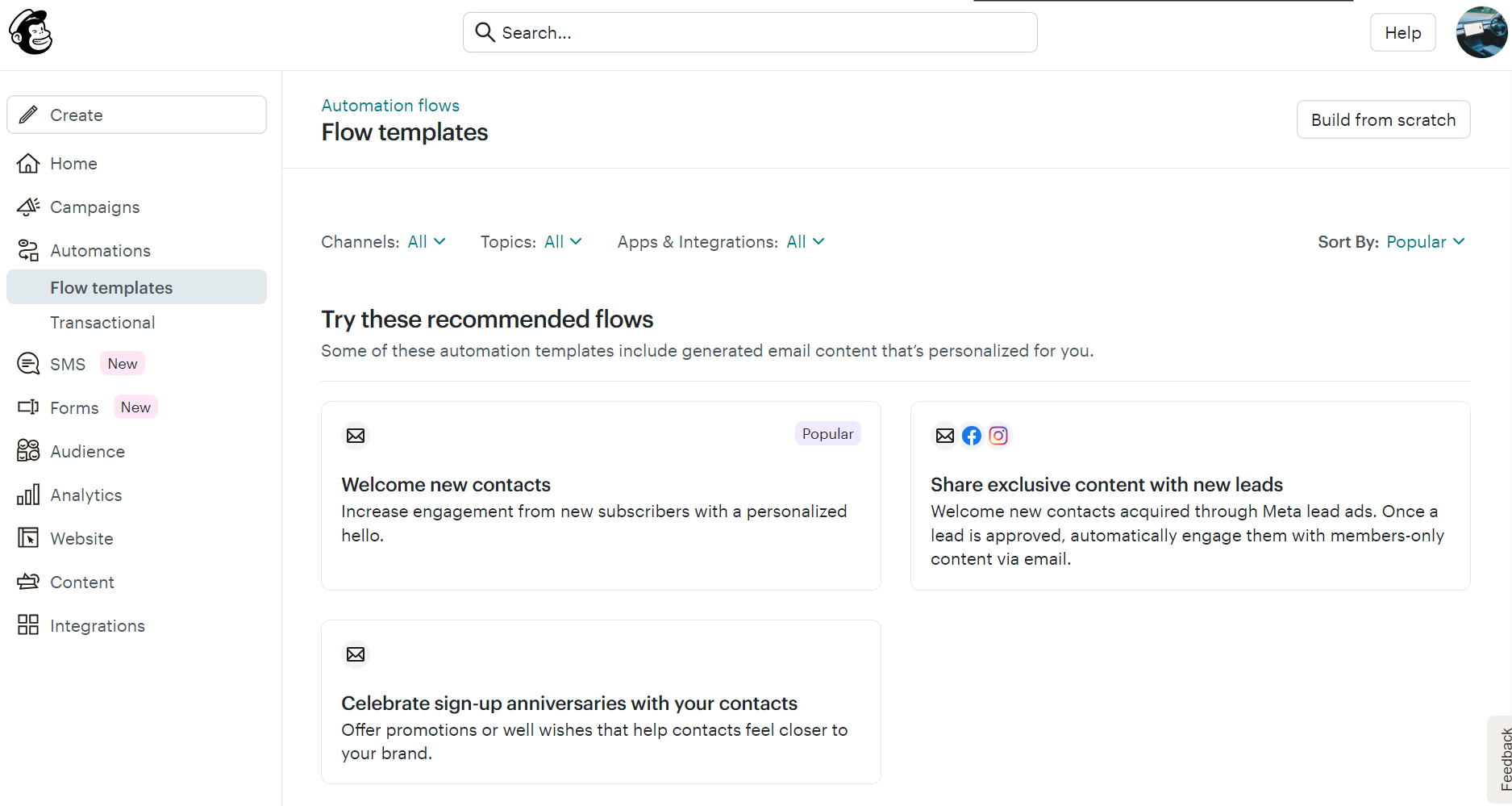
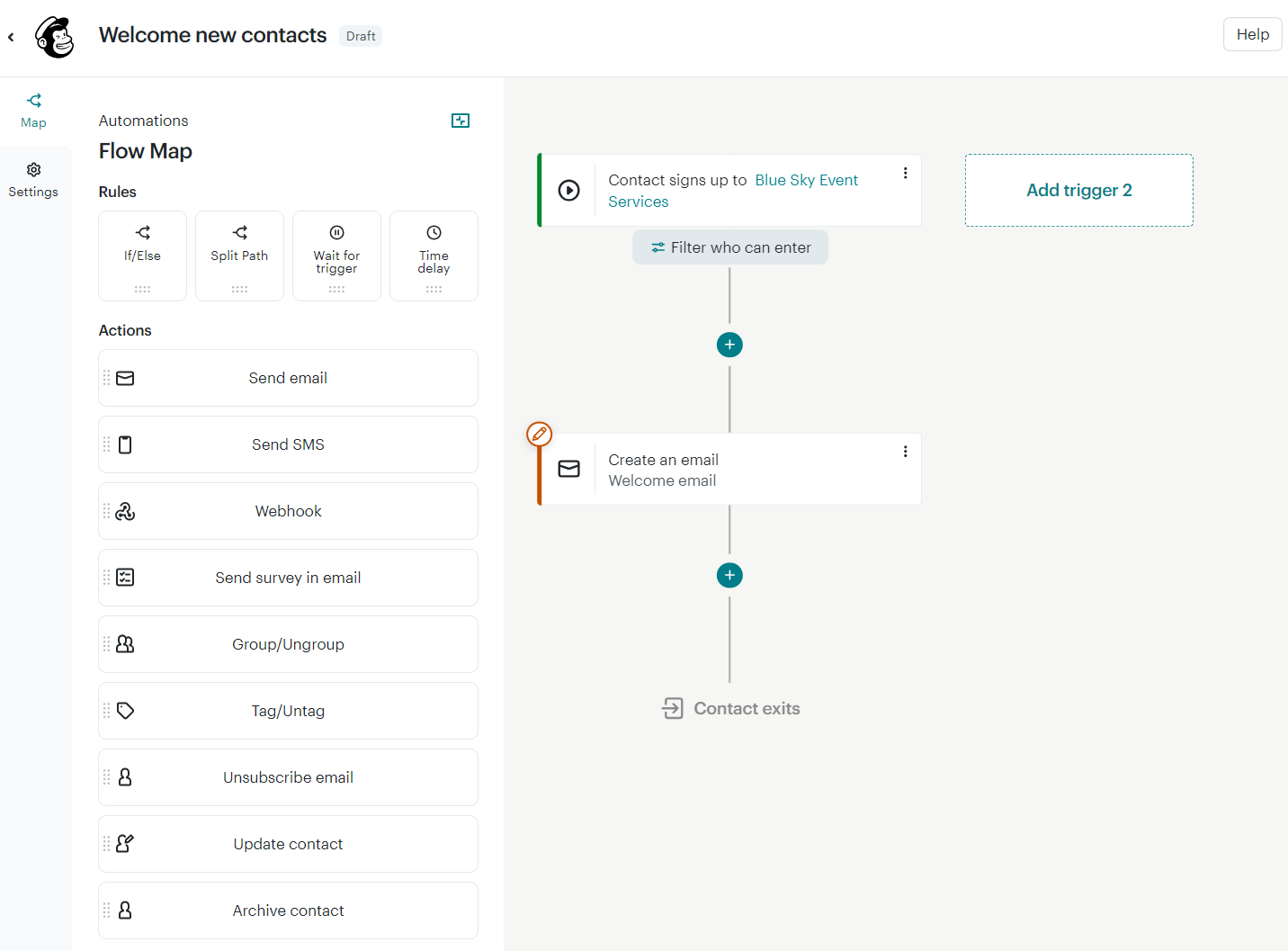
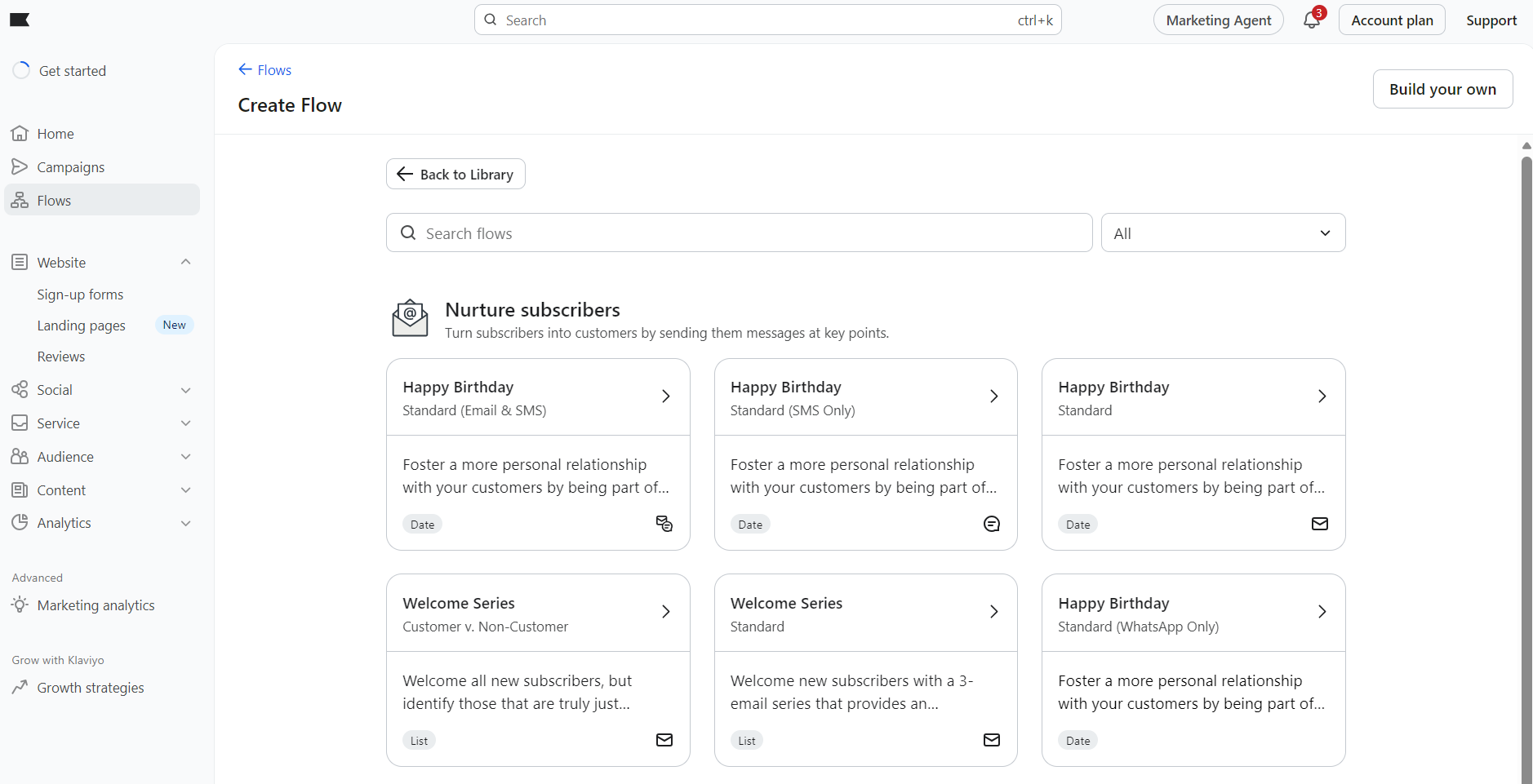
Automated Workflows (Flows): Automation is the engine of modern e-commerce marketing. Mailchimp offers over 100 pre-built flow templates covering essential scenarios like welcomes, lead nurturing, and revenue recovery. Its drag-and-drop flow builder is straightforward, making it easy for beginners to set up basic sequences. However, many predictive triggers, such as churn risk and next-purchase prediction, are gated behind its Standard plan.
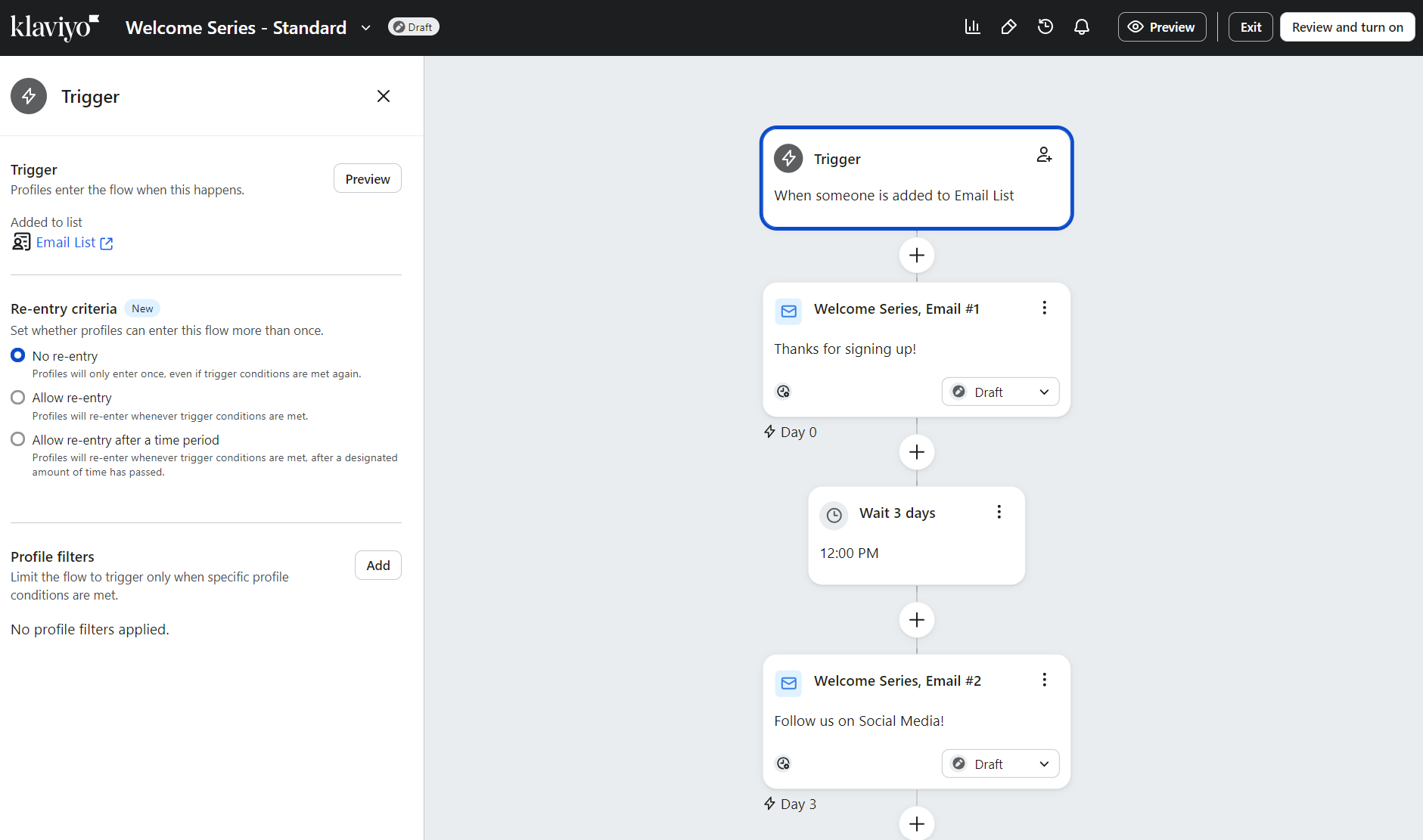
Klaviyo, while offering a slightly smaller library of 60+ pre-built flows, excels in the depth and control it provides. Its flow builder features a more polished interface with clear descriptions for settings. Critically, Klaviyo includes predictive triggers as standard across all paid plans. Its advanced flow control mechanisms, such as re-entry windows (determining how often a contact can enter a specific flow) and conditional splits (branching paths based on granular engagement, profile properties, or segment membership), enable marketers to construct highly sophisticated, multi-path customer journeys. This level of control is paramount for optimizing conversion rates and customer lifetime value in complex e-commerce environments.
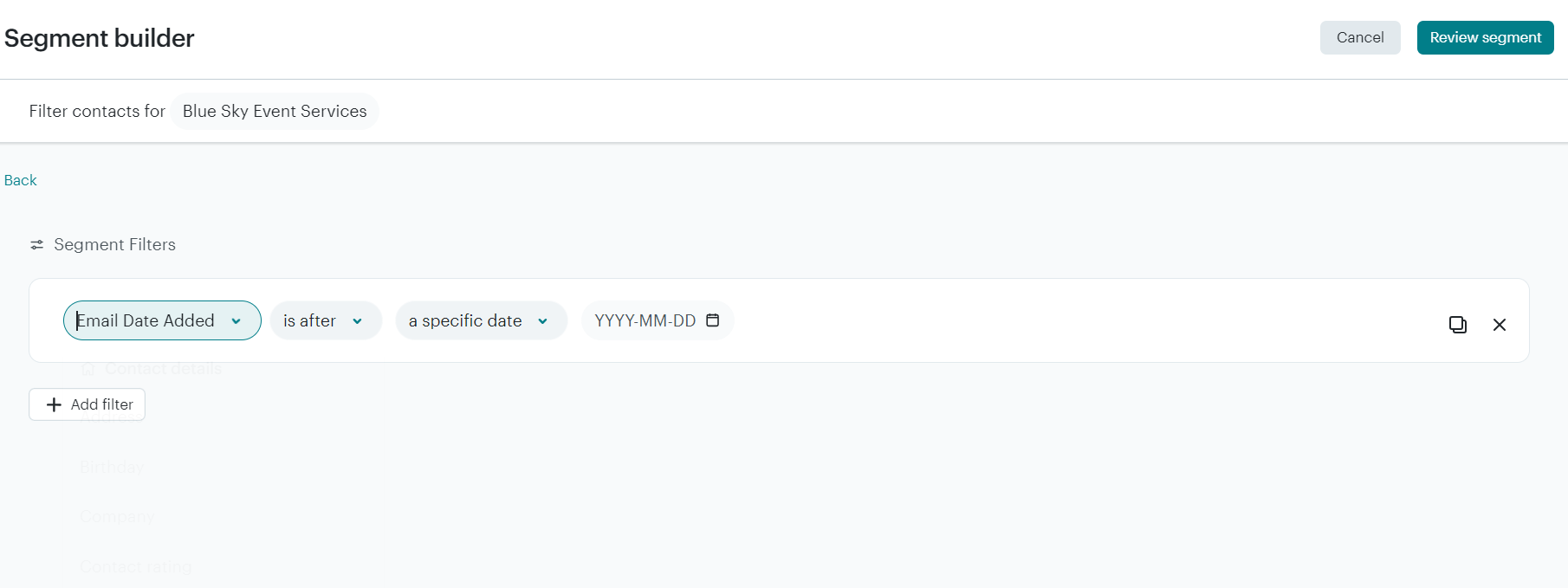
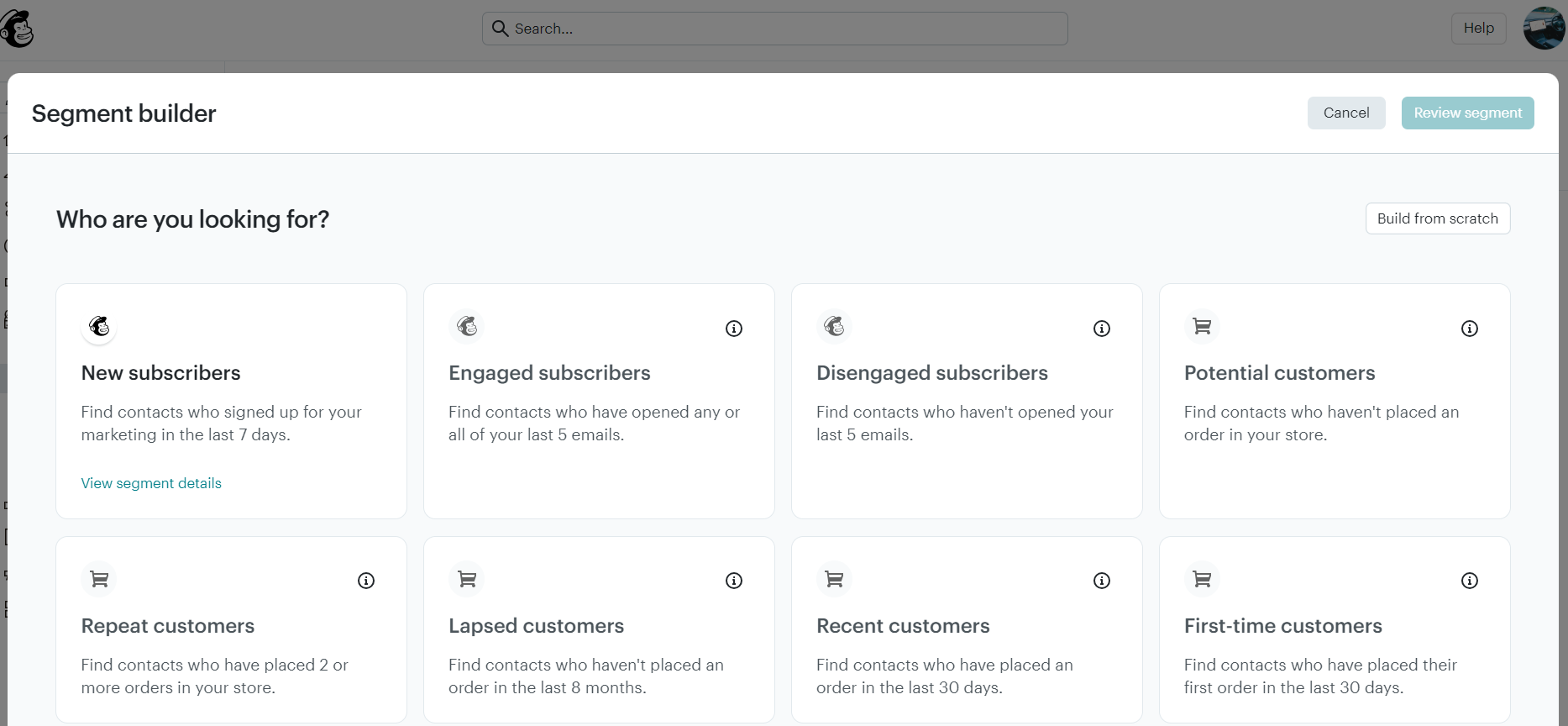
Segmentation and Personalization: The ability to precisely target messages is a cornerstone of effective e-commerce marketing. Both platforms allow real-time list updates from forms and purchases, and enable segment creation. Mailchimp provides 13 pre-built segment templates focusing on subscriber engagement, customer behavior, and demographics. Its segment builder uses dropdowns for filter and condition selection, and for accurate e-commerce segmentation, integration is mandatory. Mailchimp caps segment conditions at five, limiting the complexity of targeting.
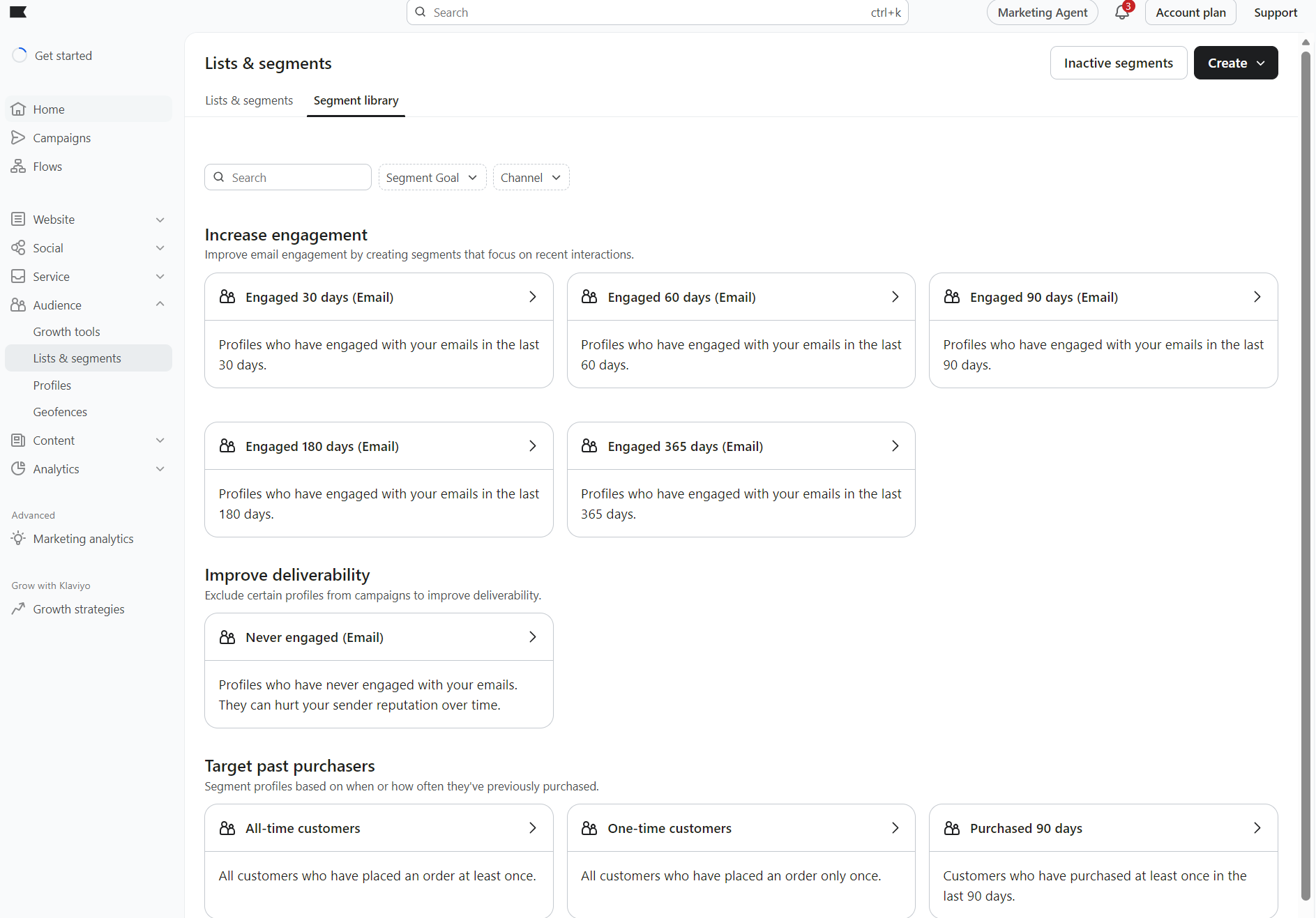
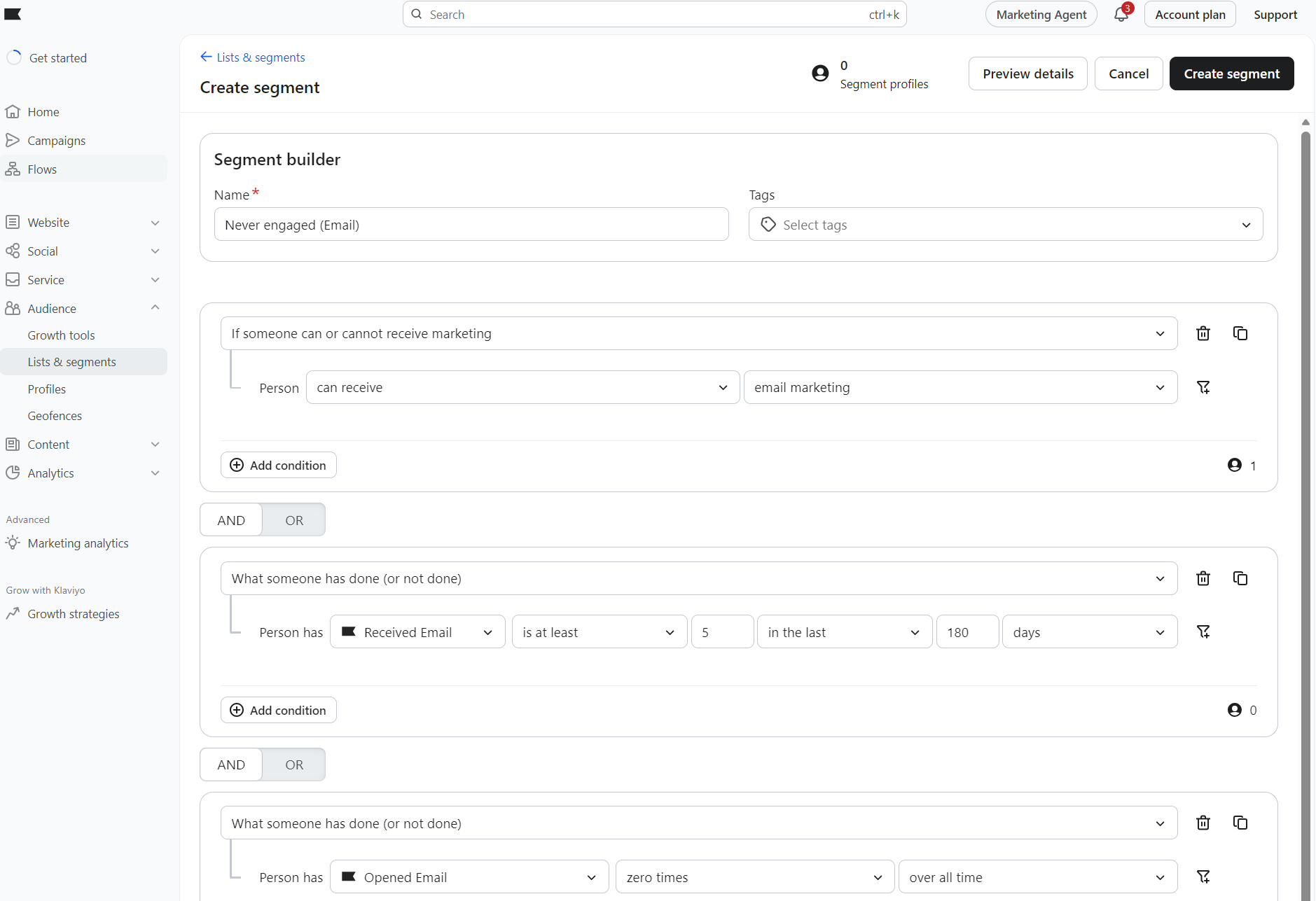
Klaviyo significantly surpasses Mailchimp in segmentation depth. It offers over 20 pre-built segments, including niche groups like "repeat customers" and "never engaged." More importantly, Klaviyo’s segment builder allows for up to 100 conditions and 10 filters per event, using flexible AND/OR logic. Crucially, Klaviyo can segment on any tracked event, providing unparalleled flexibility. This means marketers can create hyper-specific segments based on virtually any customer interaction, such as viewing a particular product category multiple times, adding specific items to a cart, or engaging with a particular campaign. This granular control over audience definition is a critical differentiator for e-commerce businesses aiming for precision marketing.
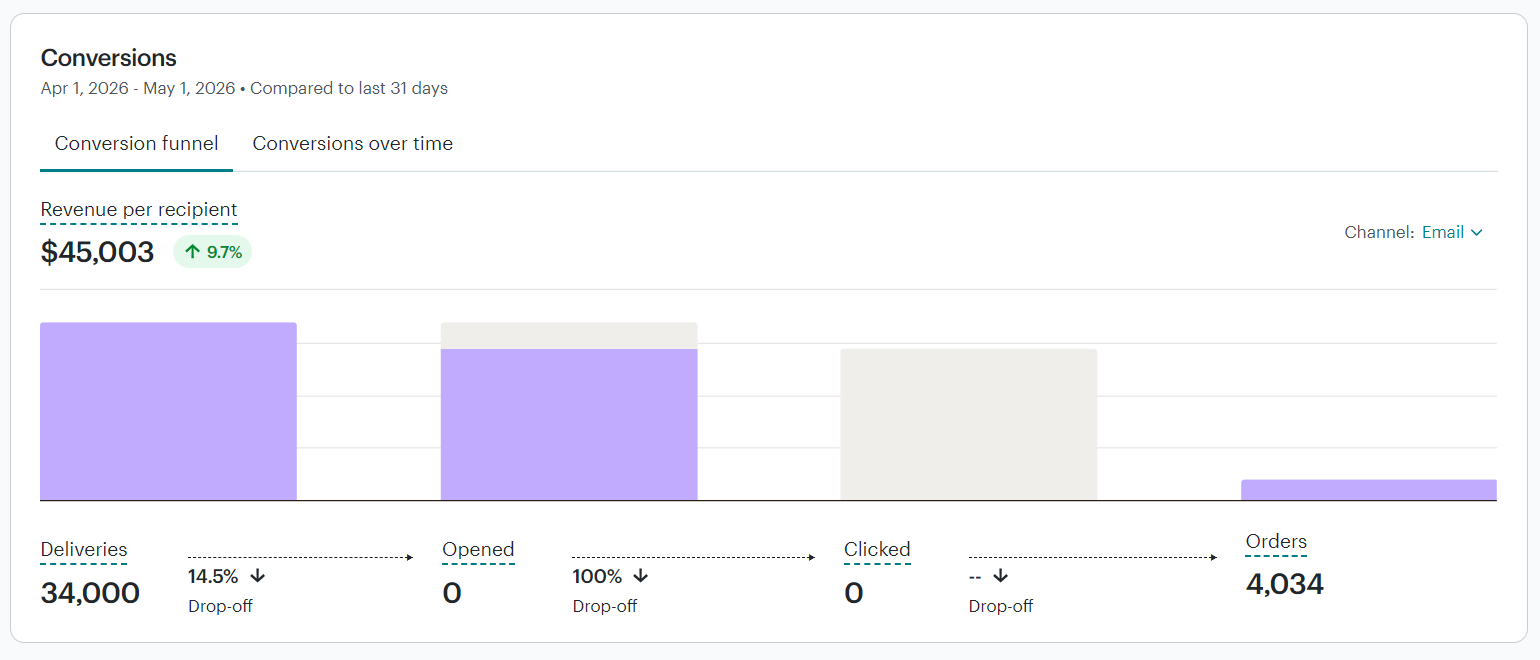
Reporting and Analytics: Data-driven decision-making is vital for e-commerce growth. Mailchimp offers a pre-built Analytics dashboard with mini-reports on performance over time, conversions, and deliveries. It tracks total sends, open rates, click rates, and unsubscribe rates, allowing for date range comparisons. With e-commerce integration, it also tracks revenue, using last-touch attribution with configurable windows. While sufficient for basic monitoring, its depth is limited.
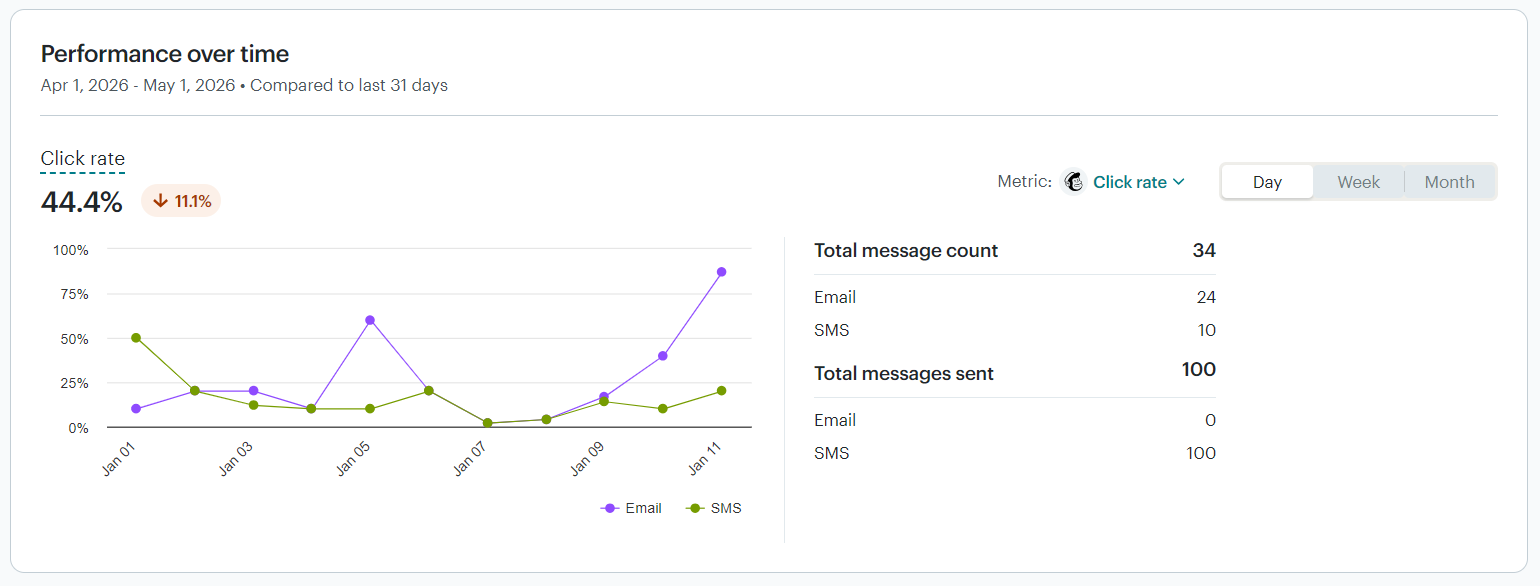
Klaviyo provides a far more comprehensive suite of reporting tools. Its business review dashboard offers insights into growth across conversions, messages, channels, campaigns, and flows. It includes dedicated reports for deliverability, segments, and a valuable industry benchmarks section, allowing businesses to gauge their performance against peers. Each report offers multiple tabs for deeper dives into metrics. Furthermore, Klaviyo’s dedicated ‘Metrics’ tab lists 21 distinct metrics, such as "active on-site," "clicked email to unsubscribe," and "bounced email," each with individual reports. This granular analytical capability allows e-commerce marketers to precisely understand the relationship between their marketing efforts and customer behavior and purchasing patterns, enabling continuous optimization. For a store focused on maximizing every interaction, Klaviyo’s analytical depth is invaluable.
E-commerce Specialization: Shopify Integration and Data Tracking
The integration capabilities, particularly with leading e-commerce platforms like Shopify, are where Klaviyo’s specialized design truly shines. While both platforms boast decent ratings on the Shopify App Store (Mailchimp at 4.8/5, Klaviyo at 4