rifanmuazin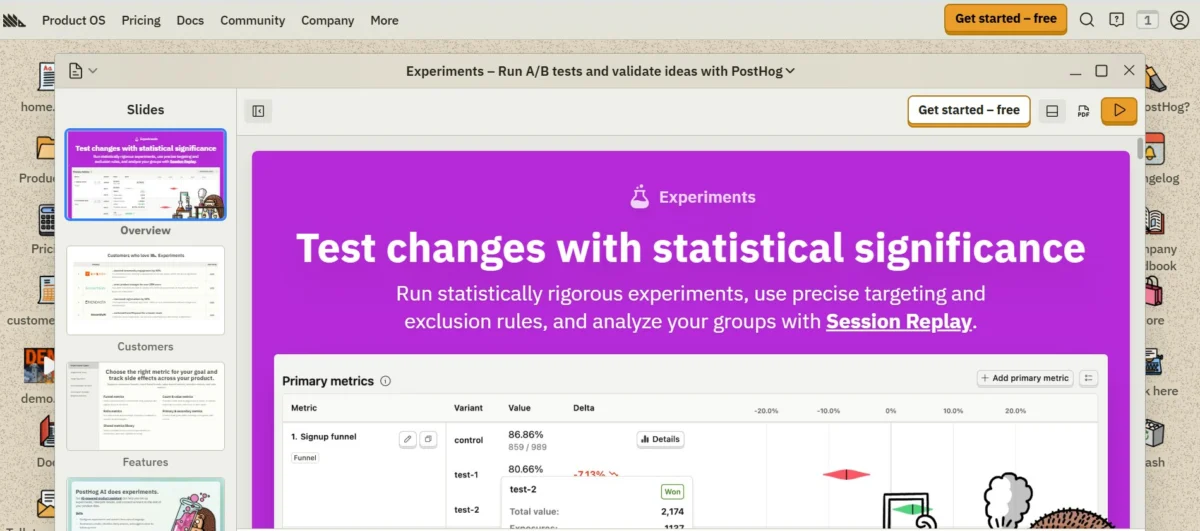
The landscape of digital experimentation has undergone a seismic shift as we move through 2026, driven by a growing corporate demand for data sovereignty and the rising costs of proprietary enterprise software. For years, the A/B testing market was dominated by high-cost, closed-ecosystem platforms that often required monthly retainers in the thousands of dollars before a single hypothesis could be validated. Today, open-source tools have disrupted this equation, offering organizations the ability to start testing early, maintain absolute control over their infrastructure, and build sophisticated experimentation programs without the burden of upfront licensing fees. This transition represents more than a cost-saving measure; it is a strategic move toward "warehouse-native" experimentation, where data remains within an organization’s own cloud environment, ensuring compliance with increasingly stringent global privacy regulations such as GDPR and HIPAA.
The Economic and Strategic Drivers of Open Source Adoption
The primary catalyst for the surge in open-source experimentation tools is the concept of "cost efficiency at scale." Traditional SaaS models often penalize success; as a company runs more tests or increases its traffic, the platform costs scale linearly or even exponentially. Open-source tools eliminate usage-based pricing, allowing teams to run an unlimited number of experiments across various user segments. Furthermore, the flexibility of these tools allows them to integrate seamlessly across diverse tech stacks. Unlike proprietary platforms that may struggle with non-standard environments or custom architectures, open-source solutions are built to be adapted, utilizing software development kits (SDKs) and feature flags that developers can modify to fit specific institutional needs.
Beyond the financial metrics, data privacy has become a non-negotiable requirement for modern enterprises. By self-hosting an experimentation platform, an organization ensures that sensitive user data never leaves its secure perimeter. This "zero-data-leak" architecture is particularly vital for sectors like fintech, healthcare, and government services. Additionally, the rise of feature management—the ability to decouple code deployment from feature release—has integrated experimentation directly into the DevOps lifecycle. Most open-source tools in 2026 now double as feature management platforms, supporting canary releases, kill switches, and staged rollouts, thus merging product development with scientific validation.
Leading Open Source A/B Testing Platforms of 2026
The current market offers several robust alternatives to traditional SaaS, each catering to different organizational structures and technical requirements.
1. GrowthBook: The Warehouse-Native Leader
GrowthBook has emerged as the premier choice for data-driven teams that prioritize their existing data warehouse. Rather than requiring teams to sync data to an external analytics platform, GrowthBook connects directly to systems like Snowflake, BigQuery, and Redshift. It utilizes both Bayesian and Frequentist statistical engines, allowing data scientists to apply their own models to experiment analysis. Its modularity means it can be used solely for feature flagging or as a full-suite experimentation engine.
2. PostHog: The All-in-One Product Suite
PostHog offers a comprehensive "product OS" that includes A/B testing, session recordings, heatmaps, and funnels. While it offers a cloud version, its open-source core remains a favorite for developers who want a unified view of the user journey. PostHog is particularly effective for growth teams that need to see the "why" behind the "what," combining quantitative test results with qualitative session replays.

3. Unleash: Enterprise-Grade Feature Management
Unleash focuses heavily on the governance and security aspects of feature management. It is designed for large-scale organizations that require complex rollout strategies and strict access controls. While its primary strength is feature toggling, its integration with custom metrics allows for sophisticated A/B/n testing across multi-language SDKs.
4. Flagsmith: Multi-Platform Release Control
Flagsmith excels in managing features across web, mobile, and server-side applications. By integrating with the OpenFeature standard, Flagsmith reduces the risk of vendor lock-in and allows teams to manage remote configurations without redeploying code. It is an ideal tool for teams that need to maintain consistency across a fragmented device ecosystem.
5. Mojito: The Lightweight, Git-Driven Choice
For engineering-led teams that prefer to manage experiments through code, Mojito offers a minimal, dependency-free setup. It is fully source-controlled, meaning experiments are versioned and deployed through standard CI/CD workflows. This "experimentation-as-code" approach ensures that performance overhead remains negligible, a critical factor for high-traffic applications.
6. FeatBit: Real-Time Optimization
FeatBit focuses on speed and scalability, offering real-time updates and advanced targeting. Its open-source version is notably generous, allowing for unlimited team members and projects, making it a favorite for startups looking to scale their experimentation culture without hitting a paywall.
Comparative Analysis of Tool Capabilities
| Tool | Primary Focus | Experimentation Depth | Data Ownership | Best Fit |
|---|---|---|---|---|
| GrowthBook | Warehouse-native | High | Full | Data-driven teams |
| PostHog | Product Analytics | High | High | Growth & Product teams |
| Unleash | Feature Management | Moderate | Full | Large Enterprises |
| Flagsmith | Remote Config | Moderate | Full | Multi-platform apps |
| Mojito | Split Testing | Basic-Moderate | Full | Engineering-led teams |
| FeatBit | Feature Toggles | Moderate | Full | Rapid-scale startups |
The Hidden Challenges of the Open Source Path
While the benefits are significant, industry analysts warn that open-source tools are not "free" in the absolute sense. The Total Cost of Ownership (TCO) must include the engineering hours required for setup, maintenance, and internal support. Organizations often face a "technical debt" trap where a lack of a visual editor—common in open-source tools—forces marketing and UX teams to rely heavily on developers for every minor change. This can create a bottleneck that slows down the velocity of experimentation.
Moreover, statistical rigor remains a challenge. While tools like GrowthBook offer robust engines, many open-source projects require teams to build their own analysis pipelines. Without a resident data scientist to oversee these implementations, companies risk falling victim to common pitfalls such as the "p-hacking" phenomenon or failing to account for sample ratio mismatch (SRM).
Best Practices for Scaling Experimentation in 2026
To maximize the value of open-source testing, organizations are encouraged to adopt a structured framework:

- Standardize Data Models: Ensure that event tracking and success metrics are consistent across the entire organization to prevent data silos.
- Prioritize Hygiene: Feature flags should be treated as temporary code. Establishing a "cleanup" protocol after an experiment concludes is essential to prevent system complexity and performance degradation.
- Statistical Governance: Define minimum sample sizes and test durations before launching experiments to ensure results are statistically significant and actionable.
- Hybrid Workflows: For many, the ideal setup involves using open-source tools for server-side, data-heavy experiments while utilizing proprietary tools for front-end, visual testing.
Broad Impact and the Transition to Mature Ecosystems
As an experimentation program matures, the limitations of open-source tools often become more apparent. The need for faster iteration and the desire for "no-code" solutions frequently lead organizations toward hybrid models or unified platforms like VWO. These enterprise-grade platforms bridge the gap by providing visual editors that empower non-technical stakeholders while maintaining the robust server-side capabilities that developers require.
For example, the energy provider Vandebron demonstrated the power of a mature experimentation ecosystem by using integrated insights to identify friction in their sign-up process. By testing a simplified date-of-birth field, they achieved a 16.3% increase in sign-ups. This level of rapid, insight-driven testing is where many organizations eventually land after outgrowing the initial DIY nature of open-source setups.
The broader implication for 2026 is clear: experimentation is no longer an optional luxury but a core operational requirement. Whether an organization starts with the flexibility of GrowthBook or the all-in-one power of PostHog, the ultimate goal remains the same—to foster a culture of data-backed decision-making that drives sustainable growth.
Frequently Asked Questions
Can open-source A/B testing tools handle high-traffic environments?
Yes. Platforms such as GrowthBook and Unleash are designed for enterprise-scale traffic. However, the performance is contingent upon the underlying infrastructure (e.g., AWS, Azure, or private servers) and the efficiency of the implementation.
How does open-source testing impact site performance?
Most open-source tools use server-side integration or lightweight SDKs (like Mojito’s 5.5kb library), which typically result in faster load times compared to traditional "client-side" JavaScript snippets used by older SaaS platforms.
What is the most significant risk of using open-source tools?
The primary risk is "maintenance overhead." Unlike a managed SaaS where the vendor handles security patches and updates, an open-source deployment requires internal resources to ensure the system remains secure and compatible with the evolving tech stack.