rifanmuazin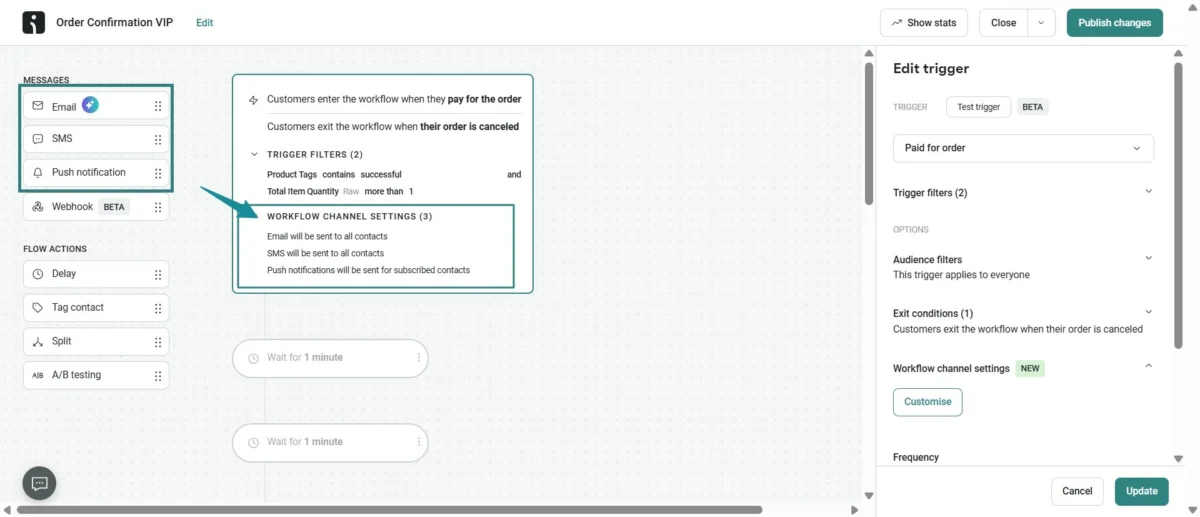
The digital commerce arena increasingly demands sophisticated marketing automation platforms to engage customers, optimize sales funnels, and drive revenue. Among the leading contenders frequently evaluated by e-commerce store owners are Klaviyo, ActiveCampaign, and Omnisend, each offering distinct strengths tailored to varying business needs and operational scales. This comprehensive analysis delves into their core functionalities, strategic positioning, pricing models, and user experience, providing a detailed overview for merchants seeking to make an informed decision.
Core Distinctions and Market Positioning
At the heart of the debate between Klaviyo and ActiveCampaign lies a fundamental difference in their design philosophy and target audience. Klaviyo, founded in 2012, emerged as a specialized B2C e-commerce CRM and marketing automation platform. Its development has been singularly focused on leveraging deep behavioral data from online stores to create highly personalized, revenue-driven email and SMS campaigns. This dedication to the e-commerce sector has allowed Klaviyo to build robust integrations and features specifically designed to understand and act upon customer purchasing patterns, browsing history, and predicted lifetime value.
Conversely, ActiveCampaign, established significantly earlier in 2003, began as a broader email marketing solution that evolved into a comprehensive CRM and automation platform. Its versatility extends across B2B, B2C, and e-commerce segments, making it suitable for a wider array of businesses that require complex multi-step automation workflows across various channels, including email, SMS, and even WhatsApp, alongside integrated CRM functionalities like lead scoring and sales pipelines. This broader focus means ActiveCampaign offers a more generalized but highly flexible toolset, prioritizing intricate automation logic and a wider range of integrations beyond just e-commerce.
For Shopify and WooCommerce merchants, the search for an optimal marketing platform often leads to a crucial third option: Omnisend. Positioned as an e-commerce-first alternative, Omnisend aims to bridge the gap between Klaviyo’s specialized e-commerce prowess and ActiveCampaign’s automation complexity. It unifies email, SMS, and push notifications into a single, intuitive platform, promising competitive pricing as businesses scale, without the steep learning curve often associated with its more established competitors.
Feature Deep Dive: Email Templates and Automation Capabilities
The ability to craft visually appealing and effective communications is paramount for any marketing platform. Both Klaviyo and ActiveCampaign offer extensive template libraries, though with nuanced differences. Klaviyo provides over 160 pre-built, mobile-responsive templates, emphasizing intuitive design and robust support for custom HTML. A key differentiator for e-commerce users is Klaviyo’s dynamic product recommendation blocks, which seamlessly integrate with all e-commerce platforms to pull live inventory and product data directly into emails, facilitating highly relevant upselling and cross-selling opportunities.
ActiveCampaign boasts a larger library of over 250 customizable templates and also supports custom HTML. However, its dynamic product suggestion blocks are primarily optimized for Shopify and WooCommerce stores, limiting options for merchants on other platforms. This reflects ActiveCampaign’s broader, less specialized approach to e-commerce content.
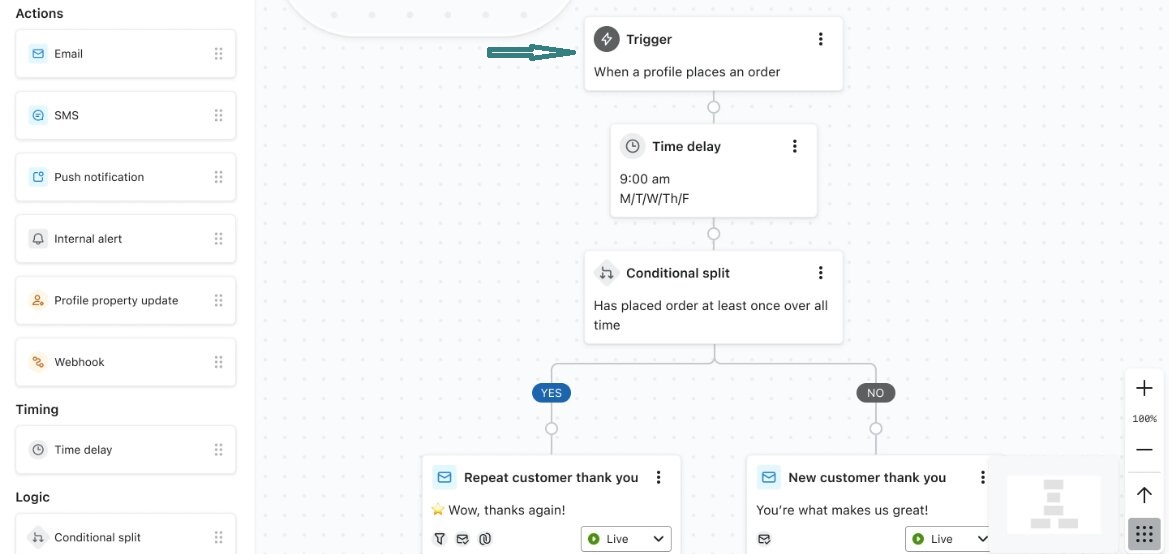
When it comes to automation, the platforms diverge significantly in philosophy and execution. Klaviyo offers fewer (around 60+) pre-built automation workflow templates, but these are exceptionally user-friendly and specifically tailored for e-commerce flows like abandoned cart recovery, browse abandonment, and win-back campaigns. A characteristic of Klaviyo’s approach is that each flow typically utilizes a single main trigger, simplifying setup while delivering potent omnichannel capabilities across email, SMS, and push notifications. The visual flow builder is clear and straightforward, allowing users to quickly deploy common e-commerce sequences.
ActiveCampaign, in contrast, presents a much larger repository of over 1,000 "Automation Recipes" spanning email, SMS, WhatsApp, and CRM channels. While offering unparalleled control and flexibility with multiple triggers, conditional logic, and branching paths, this complexity can lead to a steeper learning curve. Its "Visual Automations Map" is a powerful feature, allowing users to visualize how all workflows interconnect, which is beneficial for managing highly intricate, multi-stage customer journeys, particularly those involving B2B sales cycles or service-based follow-ups.
Advanced Capabilities: Segmentation and Deliverability
Effective segmentation is the bedrock of personalized marketing. Klaviyo excels here with up to 13 conditions per customer segment, deeply tied to real-time, behavior-based e-commerce data. This includes metrics like engagement levels, predicted lifetime value (CLV), churn risk, and RFM (Recency, Frequency, Monetary) analysis. Its strong focus on e-commerce allows for hyper-targeted campaigns that leverage every interaction a customer has with an online store, from product views to order history, ensuring emails are highly relevant and timely.
ActiveCampaign provides more extensive segmentation capabilities, allowing up to 20 conditions per segment, utilizing lead scoring, custom fields, and tagging. While more flexible and powerful for complex B2B or multi-faceted B2C scenarios, it often requires more initial setup and strategic planning to fully leverage its potential, as its data integration is broader rather than exclusively e-commerce-focused.
Email deliverability, the ability for messages to consistently reach the inbox, is critical for campaign success. Industry evaluations by sources like EmailTooltester often highlight Klaviyo’s superior performance in this area, rating it 5/5. Klaviyo offers a real-time inbox tracking dashboard, robust list hygiene policies, a sender reputation health score, guided IP warm-up processes, and branded domain authentication. These tools empower users to actively monitor and maintain their sender reputation, crucial for high-volume e-commerce senders.
ActiveCampaign, rated 4/5 by EmailTooltester, also provides essential deliverability features such as dedicated IP management support, list hygiene rules, and email authentication. However, it currently lacks the granular, real-time sender reputation scores and comprehensive deliverability dashboards found in Klaviyo, which can be a disadvantage for businesses that require immediate insights into their email performance.
E-commerce Specialization: Data and Integrations
Klaviyo’s dedication to e-commerce is most evident in its handling of customer data and platform integrations. It provides a full, live activity timeline for every shopper, detailing website visits, products viewed, orders placed, and coupons used on a single, unified profile. This rich, real-time data empowers merchants to create highly personalized segments and trigger relevant communications like abandoned cart emails, win-back messages, and post-purchase follow-ups. The visual representation of a customer’s journey within Klaviyo’s contact profile is a significant advantage for quick insights.
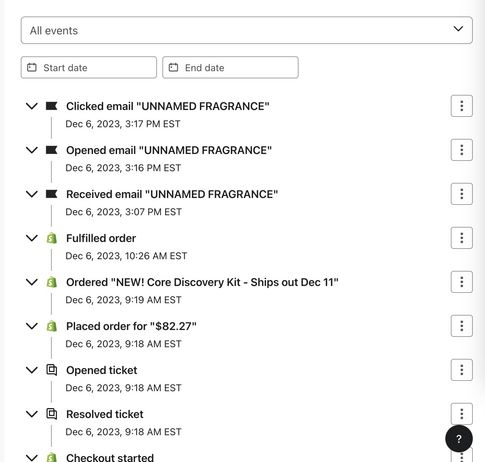
In contrast, ActiveCampaign’s e-commerce data appears more as static fields on contact records, typically showing only the most recently completed orders rather than a comprehensive historical timeline. While functional, this limits the depth of personalization that can be achieved without additional manual effort or complex automation setups.
Dynamic coupons are another area where Klaviyo shines for e-commerce. It offers built-in dynamic coupon generation for popular platforms like Shopify and Magento, allowing unique discount codes to be automatically created for each customer without needing third-party tools. ActiveCampaign, while capable of integrating with coupon services, does not offer this feature natively, adding a layer of cost and complexity.
Klaviyo’s product blocks also stand out, enabling dynamic product feeds to be embedded directly into emails, pulling live inventory and product data from any connected e-commerce store. ActiveCampaign limits this advanced functionality primarily to Shopify and WooCommerce, presenting a challenge for users on other platforms.
Regarding e-commerce integrations, Klaviyo offers deep, native connections with major platforms such as Shopify, Magento, WooCommerce, and Square, often available even on its free plan. ActiveCampaign has made strides recently, including deep data integrations with Shopify, Square, and WooCommerce in its Starter plan (formerly a Plus tier feature). While this is an improvement, Klaviyo generally provides a more comprehensive and seamlessly integrated experience for e-commerce-first businesses.
Pricing Models and Scalability
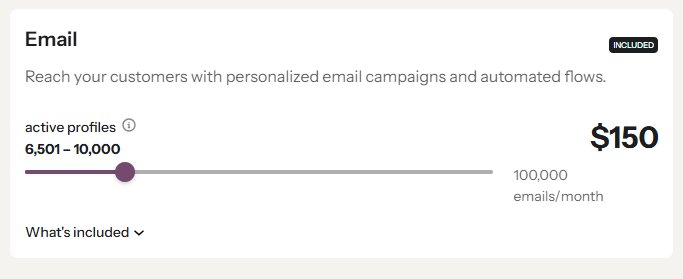
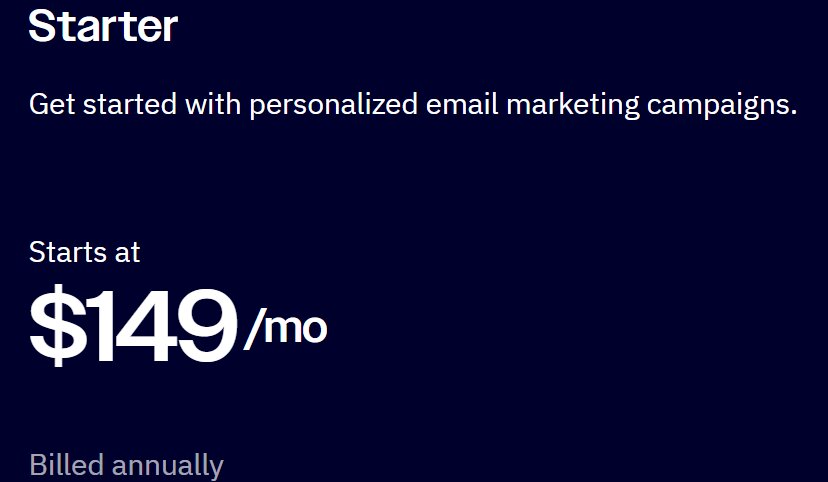
The financial aspect is a critical consideration for any business. The pricing structures of Klaviyo and ActiveCampaign differ, particularly as contact lists grow. ActiveCampaign generally offers more cost-effective entry points, with its Starter plan beginning at $15/month (billed annually) for 1,000 contacts and 10,000 emails. Klaviyo’s equivalent starts at $20/month for 500 contacts and 5,000 emails, or $30/month for 1,000 contacts and 10,000 emails.
However, as contact lists expand, the pricing gap narrows and, for some tiers, even reverses. For instance, at 10,000 contacts, both platforms hover around $150/month. Beyond this point, Klaviyo can become significantly more expensive, with a 25,000-contact plan reaching $400/month, compared to ActiveCampaign’s $391/month (billed annually) for the same contact count. Omnisend positions itself competitively, often offering better value at scale; for 10,000 contacts, it is priced at $132/month, and for 25,000 contacts, it is $282/month, providing more emails per month than either competitor at those price points.
Klaviyo and Omnisend also offer generous free plans, supporting up to 250 contacts and 500 emails per month, allowing small businesses to get started without immediate investment. ActiveCampaign, conversely, does not offer a free plan but provides a 14-day free trial. This distinction can be crucial for startups and very small e-commerce operations.
User Experience and Support Ecosystem
Ease of use and responsive customer support significantly impact a platform’s overall value. Many users commend Klaviyo for its intuitive interface and minimalist dashboard, which features clear menus and simple dropdowns, making it accessible even for beginners. Its focus on e-commerce specific workflows simplifies the campaign creation process.
ActiveCampaign, while powerful, is generally perceived as having a steeper learning curve. Its dual-sidebar navigation and the sheer depth of its automation and CRM features can be overwhelming for new users. While this complexity grants greater control over intricate workflows, it requires a more substantial time investment to master.
Both platforms offer live chat and email support. Klaviyo provides weekday live chat and 24/7 email support for paid plans, including weekends. ActiveCampaign offers weekday email and live chat support for paid plans. Omnisend distinguishes itself by providing 24/7 email and live chat support, even for its free plan users, a significant benefit for small businesses or those operating across different time zones.
User reviews across platforms like G2 and Trustpilot reflect these experiences. Klaviyo generally maintains a high G2 rating of 4.6/5, similar to Omnisend, while ActiveCampaign scores 4.4/5. Trustpilot scores tend to be lower for both Klaviyo and ActiveCampaign, often reflecting user frustrations with pricing increases or specific support interactions. Online discussions, particularly on forums like Reddit, frequently highlight Klaviyo’s greater intuitiveness compared to ActiveCampaign for e-commerce applications.
Strategic Choice: Who Benefits Most?
The decision between Klaviyo, ActiveCampaign, and Omnisend ultimately hinges on a business’s specific model, budget, and growth aspirations.
Choose Klaviyo if:
- Your business is a B2C e-commerce store with a strong focus on physical products.
- You require deep behavioral customer data and real-time activity tracking to drive hyper-personalized campaigns.
- You prioritize revenue-focused automation workflows, such as abandoned carts, post-purchase sequences, and win-back campaigns, with built-in dynamic coupon and product block features.
- You value strong e-commerce integrations and superior email deliverability insights.
Klaviyo excels at transforming raw customer data into actionable insights that directly impact e-commerce sales, making it a powerful choice for dedicated online retailers.
Choose ActiveCampaign if:
- Your business model is diverse, encompassing B2B, B2C, or service-based offerings alongside e-commerce.
- You need robust CRM functionalities, including lead scoring, deal pipelines, and advanced sales automation.
- Your marketing strategy demands highly complex, multi-step automation workflows with intricate conditional logic and multiple triggers across a broad range of channels (email, SMS, WhatsApp, CRM).
- You have the resources and technical proficiency to invest time in mastering a more intricate platform.
Experts often recommend ActiveCampaign for non-e-commerce or service-based brands due to its comprehensive CRM and versatile automation capabilities, which can manage longer sales cycles and more diverse customer journeys.
Emergence of Alternatives: The Omnisend Proposition
While Klaviyo and ActiveCampaign dominate much of the discussion, a crucial gap exists for Shopify and WooCommerce store owners seeking powerful e-commerce features without the prohibitive costs of Klaviyo as they scale, or the complexity of ActiveCampaign for a streamlined store setup. This is where Omnisend positions itself as a compelling alternative.
Omnisend stands out by combining email, SMS, and web push notifications into a single, unified platform, specifically designed for e-commerce. It offers comparable, if not superior, features to Klaviyo for common e-commerce automation needs but at a more competitive price point, particularly as contact lists grow. Its emphasis on ease of use means merchants can quickly set up sophisticated campaigns without a steep learning curve.
Key advantages of Omnisend include:
- Unified Omnichannel Marketing: Integrates email, SMS, and push notifications into single automation workflows, providing a cohesive customer experience.
- Ease of Use: An intuitive interface and drag-and-drop builders for emails, forms, and pop-ups make it accessible for merchants without extensive technical expertise.
- E-commerce Specific Features: Offers robust abandoned cart recovery, product recommendation blocks, welcome series, and post-purchase automations, all deeply integrated with e-commerce platforms.
- Competitive Pricing at Scale: Provides better value for money as businesses grow their contact lists, offering more emails per month than competitors at similar price points.
- Exceptional Support: 24/7 live chat and email support are available even on the free plan, a rarity in the industry.
The success story of Vape Superstore illustrates Omnisend’s impact. After migrating from Klaviyo due to rising costs that did not align with expected results, Vape Superstore experienced a 77% increase in signup rates (from 18% to 32%), with mobile-driven traffic reaching an impressive 80%. This case demonstrates that merchants do not have to sacrifice powerful e-commerce features for better value and user experience.
In conclusion, the landscape of marketing automation for e-commerce is dynamic and rich with options. While Klaviyo offers unparalleled depth for e-commerce specialists and ActiveCampaign provides broad, complex automation for diverse business models, Omnisend carves a niche as a powerful, user-friendly, and cost-effective alternative for growing Shopify and WooCommerce merchants. The optimal choice will always align with a business’s specific operational needs, budget constraints, and strategic growth objectives.