rifanmuazin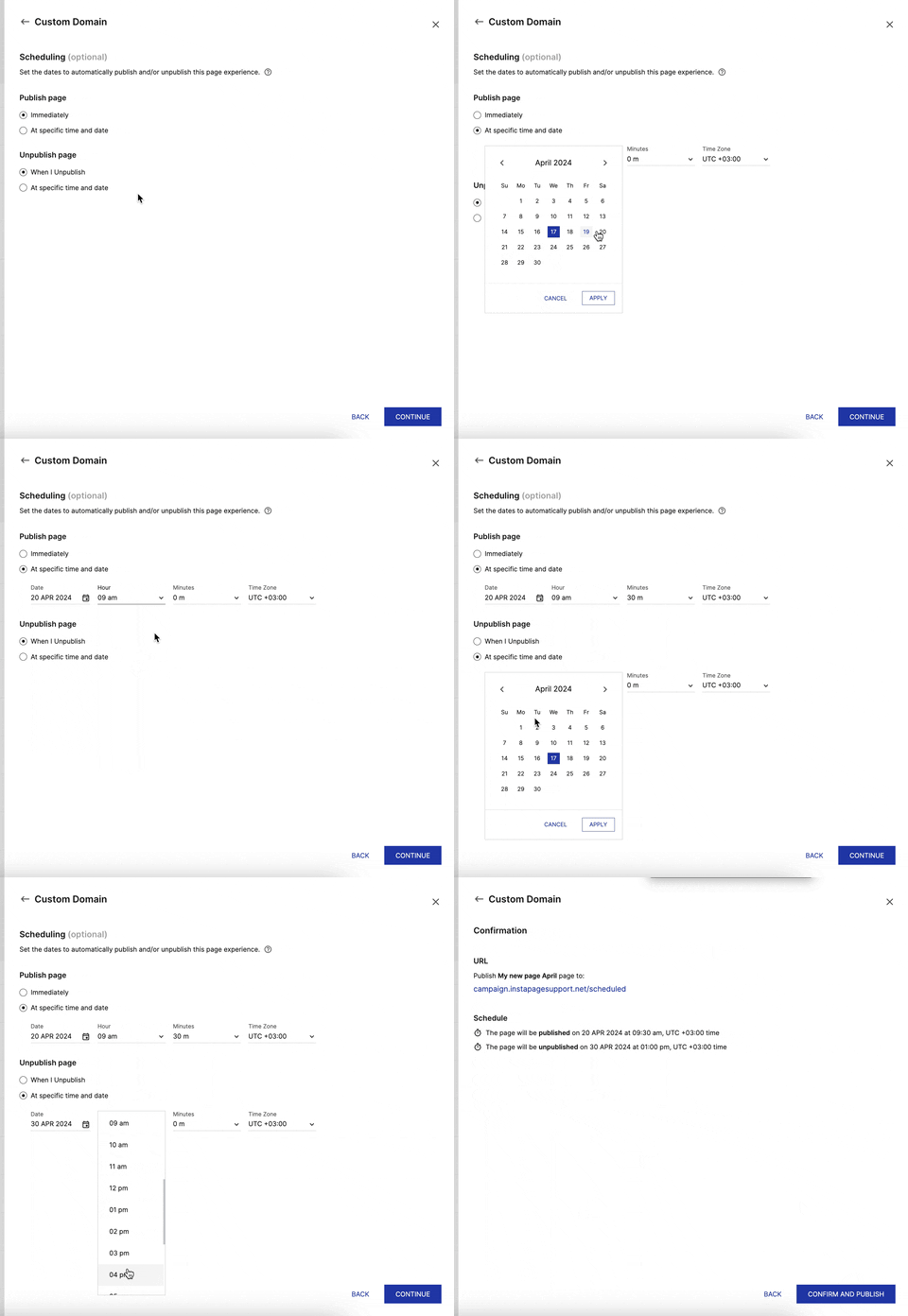
The digital marketing landscape is currently navigating a period of rapid transformation, characterized by an increasing reliance on automation and the democratization of web design through no-code platforms. In a strategic move to address the evolving requirements of performance marketers and agencies, Instapage has announced a suite of new features designed to enhance campaign management and broaden the scope of its web development capabilities. The update introduces a robust Scheduling tool, a dedicated category for Website Page Templates, and the formal launch of the Instapage Early Access Program. These developments signal a shift in the company’s focus from purely transactional landing pages to a more holistic approach to digital presence and campaign lifecycle management.
For over a decade, the primary challenge for digital marketers has remained consistent: the "last mile" of the customer journey. While advertising platforms like Google and Meta have optimized the process of driving traffic, the conversion of that traffic into tangible business outcomes frequently stalls at the landing page level. Instapage’s recent product announcements are positioned as a direct response to this friction, aiming to provide users with the tools necessary to manage high-velocity campaigns without the traditional overhead of manual oversight or extensive coding requirements.
Automated Campaign Lifecycle Management through Scheduling
The centerpiece of the latest update is the Scheduling feature, a tool specifically engineered to provide marketers with granular control over the temporal aspects of their digital assets. In the traditional workflow, the publication or expiration of a landing page often required manual intervention, a process prone to human error and logistical bottlenecks, particularly for global campaigns operating across multiple time zones.
With the new Scheduling functionality, users can pre-determine the exact dates and times for a page to go live, as well as the moment it should be taken offline or replaced with an updated version. This automation allows marketing teams to align their post-click experiences precisely with their advertising schedules. For instance, a retail brand launching a 48-hour flash sale can now program the landing page to activate at the stroke of midnight and automatically revert to a standard lead-generation form once the promotion concludes. This eliminates the need for "on-call" staff during off-hours and ensures that the user experience remains consistent with the active ad copy.
From a strategic perspective, this feature addresses the "decay" of relevance in digital advertising. Data from industry analysts suggests that campaign performance often dips when there is a disconnect between the ad’s call to action and the destination page’s availability. By automating this transition, Instapage enables marketers to maintain a high degree of message match and relevance, which are critical factors in Quality Score calculations for platforms like Google Ads.
Expansion into Full-Scale Website Architecture
While Instapage has historically been recognized as a premier landing page builder, the company has observed a significant trend in its user base: the utilization of its no-code builder to construct entire websites. To facilitate this use case, Instapage has introduced a new category of Website Page Templates. This move represents a strategic expansion of the platform’s utility, moving it closer to the territory of traditional Content Management Systems (CMS) while retaining the speed and conversion-focus of a landing page builder.
The new library includes pre-customized templates tailored to nine specific industries, including Real Estate, Beauty, and Consumer Products. These templates are not merely aesthetic upgrades; they are built with the architectural requirements of a functional website in mind. They incorporate elements such as navigation structures, "About Us" sections, and service menus that differ from the single-objective focus of a standard landing page.
This shift reflects a broader trend in the MarTech industry known as "platform convergence." As businesses seek to consolidate their tech stacks, the demand for tools that can handle both high-conversion landing pages and informational website pages has increased. By providing industry-specific templates, Instapage reduces the "time-to-market" for small to medium-sized businesses that may lack the resources for a custom-coded web development project but require a professional, high-performing digital storefront.
The Instapage Early Access Program and Community-Driven Innovation
Recognizing that the speed of technological change often outpaces traditional product development cycles, Instapage has also launched its Early Access Program (EAP). This initiative is designed to create a tighter feedback loop between the platform’s developers and its most active users. Participants in the EAP gain the ability to test and influence features—such as the recently released Carousels, Popups, and the overhauled Dashboard—before they reach the general market.
The launch of the EAP is a tactical move to ensure product-market fit in a competitive landscape that includes rivals like Unbounce and Leadpages. By involving users in the beta phase of development, Instapage can identify edge cases and usability issues earlier in the process. Furthermore, it fosters a sense of community and brand loyalty among power users who see their feedback reflected in the platform’s evolution.
In a statement regarding the philosophy behind these updates, the company emphasized its commitment to understanding the unique pressures faced by marketers. The focus remains on "scaling campaigns, staying on top of trends, and segmenting audiences," objectives that require a balance between creative flexibility and operational efficiency.
Chronology of Recent Platform Enhancements
To understand the context of these new features, it is necessary to look at the timeline of Instapage’s development over the past year. The company has been on a rigorous release schedule aimed at modernizing its interface and expanding its interactive capabilities:
- Q1 2024: The New Dashboard Launch. The platform introduced a redesigned administrative interface to improve navigation and provide clearer insights into campaign performance metrics.
- Q2 2024: Interactive Elements (Popups and Carousels). These features were added to allow marketers to create more dynamic and engaging experiences on their pages, helping to capture lead information without cluttering the primary layout.
- Q3 2024: The Integration of Scheduling and Website Templates. The current release rounds out these capabilities by adding a layer of automation and expanding the platform’s structural versatility.
Supporting Data: The Economic Impact of Conversion Optimization
The necessity for tools like Scheduling and specialized templates is underscored by current digital marketing data. According to recent industry reports, the average conversion rate across all industries for landing pages is approximately 2.35%. However, the top 10% of companies are seeing conversion rates of 11.45% or higher. The differentiator for these high performers is often the ability to rapidly test, iterate, and precisely time their campaigns.
Furthermore, the rise of "ad fatigue" means that consumers are increasingly sensitive to outdated or irrelevant content. A study by Econsultancy found that companies that take a strategic approach to optimizing their conversion rates are twice as likely to see a large increase in sales. By providing the infrastructure for better timing (Scheduling) and better design (Website Templates), Instapage is positioning itself as a critical component in the "Post-Click Automation" (PCA) category, which aims to maximize the ROI of every dollar spent on advertising.
Analysis of Implications for the MarTech Industry
The move by Instapage carries several implications for the broader marketing technology sector. First, it highlights the growing importance of the "no-code" movement. As marketing teams are increasingly expected to be self-sufficient, the reliance on IT departments for web updates is becoming a bottleneck. Tools that empower marketers to handle complex tasks like page scheduling and site building independently are likely to see higher adoption rates.
Second, the expansion into website templates suggests that the boundary between landing page builders and traditional web builders is blurring. While landing pages will always serve a specific, high-intent purpose, the ability to maintain a consistent design language across an entire site within a single platform is a compelling value proposition for agencies managing dozens of clients.
Finally, the introduction of the Early Access Program indicates a trend toward "open development" in SaaS. In an era where user experience is the primary competitive advantage, allowing customers to "shape the direction of the product" is no longer just a marketing slogan—it is a survival strategy.
As digital advertising costs continue to rise, the pressure on the post-click experience will only intensify. Instapage’s latest updates provide a framework for marketers to manage this pressure through automation and better design, ensuring that the transition from an ad click to a customer conversion is as seamless as possible. The company has invited users to experience these features firsthand through a 14-day trial, signaling confidence in the platform’s ability to drive immediate value for its customers.