rifanmuazin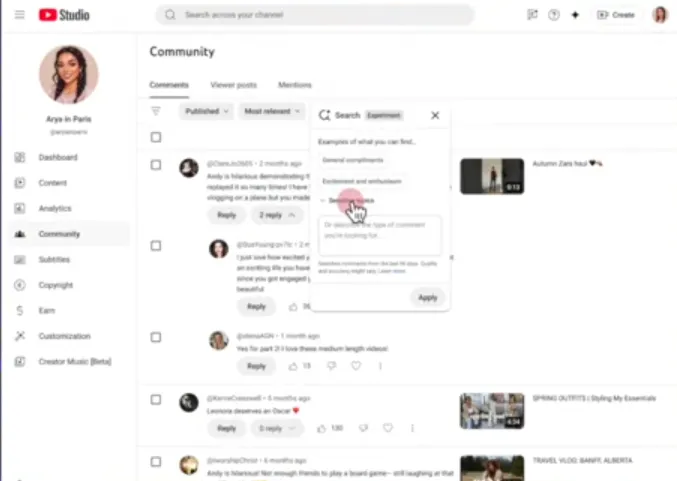
San Bruno, California – YouTube, the global leader in online video, has announced the rollout of two significant new features designed to enhance the creator experience: an innovative artificial intelligence-powered tool for generating royalty-free instrumental tracks to replace copyrighted audio and an advanced bulk moderation system for video comments that leverages conversational context. These introductions mark a strategic advancement in YouTube’s ongoing efforts to support its vast ecosystem of content creators, addressing long-standing pain points related to intellectual property compliance and the intricate task of managing community engagement on a massive scale.
The platform’s latest developments underscore a commitment to fostering a more sustainable and less friction-filled environment for creators. The instrumental track generation tool is poised to offer an immediate and integrated solution to Content ID claims, a persistent challenge that can lead to demonetization, content restriction, or even the outright removal of videos. Simultaneously, the enhanced comment moderation option aims to profoundly streamline community interaction, empowering channel managers to navigate, filter, and respond to viewer feedback with heightened precision and efficiency, moving beyond rudimentary keyword matching to a more nuanced understanding of dialogue.
Navigating the Labyrinth of Copyright: An AI-Driven Solution for Creators
Copyright infringement has long been a significant source of concern and frustration for YouTube creators. The platform’s Content ID system, a sophisticated digital fingerprinting technology, automatically scans uploaded videos against a database of copyrighted content provided by rights holders. While crucial for protecting intellectual property and ensuring creators are compensated, Content ID has frequently presented complex challenges for content creators, sometimes resulting in disputes over fair use, inadvertent infringements, or the loss of monetization revenue when ads are redirected to copyright owners.
Historically, creators have employed various strategies to navigate copyright issues. These include licensing music directly, utilizing tracks from YouTube’s own extensive Audio Library of royalty-free music, or sourcing legal audio from third-party platforms. However, these methods often necessitate proactive planning, incur additional costs, or, most problematically, require creators to undertake the cumbersome process of re-editing and re-uploading videos if a copyright claim emerges post-publication. Such retroactive fixes are not only time-consuming but can also lead to a temporary loss of audience engagement and revenue.
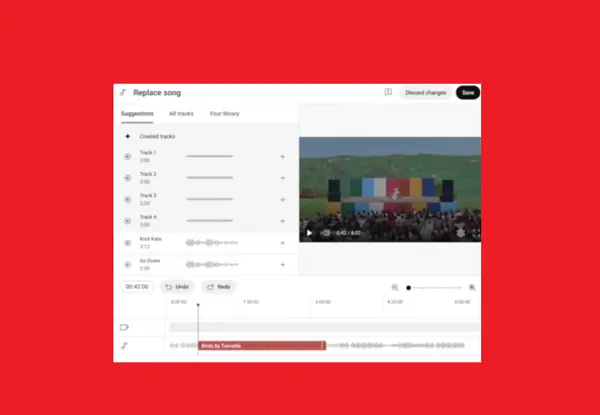
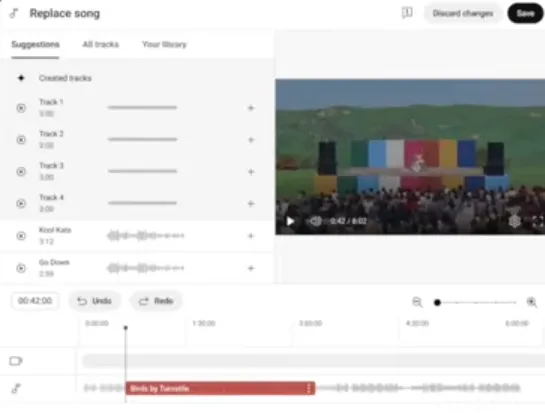
The newly introduced "Replace Song" tool within YouTube Studio aims to revolutionize this process. Currently in its testing phase with desktop users in the United States, with a broader global rollout anticipated later in the year, this feature integrates a novel "Create" button directly into the existing "Replace Song" interface. Upon activation, YouTube’s underlying artificial intelligence algorithms will dynamically generate a selection of four distinct royalty-free instrumental tracks. Creators can then choose one of these AI-composed options to seamlessly replace the identified copyrighted audio segment within their video. This innovative, in-platform approach offers a near real-time solution, enabling creators to swiftly resolve Content ID claims without the need for external video editing software or the time-consuming re-upload of an entire video.
The implications for the creator community are profound. This tool provides a critical safety net, allowing creators to protect their content’s availability and monetization status even after a copyright infringement is detected. This could significantly alleviate the stress and administrative burden traditionally associated with content creation, particularly for genres heavily reliant on music, such as vlogging, gaming commentary, fitness tutorials, and short-form entertainment. By automating the generation of compliant musical alternatives, YouTube is not only addressing a pragmatic operational challenge but also showcasing the practical application of AI in creative fields, a growing trend that sees artificial intelligence assisting in various forms of content generation.
The sheer volume of copyright claims processed by YouTube underscores the necessity of such an tool. YouTube’s own transparency reports have indicated that its Content ID system processes billions of claims annually, demonstrating the constant and intricate interplay between creators and rights holders. While Content ID has facilitated the payout of billions of dollars to rights holders, it has also, at times, inadvertently entangled numerous legitimate creators in disputes, even over minor uses. This new AI-powered tool, while not a universal solution for all copyright complexities, offers a powerful, user-friendly mechanism for creators to quickly rectify specific types of music-related claims, thereby safeguarding their channels, their content, and their income streams.
Empowering Community Engagement: Advanced Contextual Comment Moderation
Beyond the intricacies of copyright, managing the comment sections of popular YouTube channels presents an equally formidable challenge. For creators with substantial audiences, comment volumes can soar into the thousands or even millions per video, creating a significant hurdle for effective moderation, meaningful engagement, and community building. While comments serve as a vital conduit for direct interaction, feedback, and fostering a sense of community, they can also quickly become overwhelming repositories of spam, toxicity, misinformation, or simply a deluge of similar inquiries.
YouTube has consistently provided creators with a suite of tools to manage comments, including keyword filters, the ability to hold potentially inappropriate comments for manual review, and reporting mechanisms for violations of community guidelines. However, these tools often prove insufficient in grasping the subtleties and nuances of human conversation. Simple keyword filters can be easily circumvented by malicious actors or might inadvertently block legitimate discussions due to a lack of contextual understanding, leading to frustration for both creators and their audience.

The new bulk moderation option for video comments, currently undergoing testing, represents a significant evolutionary leap in this domain. Moving beyond the limitations of previous iterations that relied predominantly on explicit keyword matching, this new system is engineered to comprehend the conversational context of comments. This groundbreaking capability allows channel managers to employ natural language queries, up to 100 characters in length, to identify specific topics or sentiments. For example, a creator could accurately search for "questions about my gear," "people asking for a part 2 video," or even more nuanced queries such as "comments expressing confusion about the tutorial" or "feedback on the new video format."
This functionality transcends simple string matching, employing advanced natural language processing (NLP) and machine learning algorithms to achieve semantic understanding. Furthermore, the tool will enable creators to filter comments based on broader thematic categories like "Excitement and enthusiasm" or "Hurtful remarks," allowing for rapid identification and engagement with positive feedback or the efficient addressing of negative interactions. A particularly powerful feature is the ability to find similar comments based on an example reply, providing creators with a mechanism to identify recurring questions or sentiments and potentially craft a single, comprehensive response that addresses a multitude of similar inquiries, thereby saving valuable time and ensuring consistent communication.
The benefits of this enhanced moderation system are manifold. For creators dedicated to cultivating strong and engaged communities, it facilitates more targeted and meaningful interactions. They can swiftly pinpoint genuine questions from their audience, address product-related inquiries with precision, or accurately gauge overall sentiment about their content. This not only significantly improves viewer satisfaction and loyalty but also provides invaluable, actionable feedback for future content planning and channel strategy. For channels grappling with negativity, harassment, or a high volume of unconstructive criticism, the ability to filter for "Hurtful remarks" with greater contextual accuracy allows for more effective identification and removal of problematic content, thereby fostering a safer, more positive, and inclusive environment for all viewers.
The sheer scale of content and interaction on YouTube renders manual moderation an unfeasible task for most creators. With hundreds of hours of video uploaded every minute and billions of comments exchanged monthly, relying solely on human review or basic filters is simply unsustainable. By leveraging AI to intelligently understand, categorize, and prioritize comments, YouTube is furnishing creators with a scalable solution that can dramatically reduce the administrative burden of community management, thereby liberating more time for the core activity of content creation. This also plays a critical role in maintaining overall platform health, ensuring that comment sections remain valuable spaces for constructive interaction rather than descending into toxicity or becoming unmanageable.
A Broader Perspective: AI, Creator Economy, and Platform Evolution
These dual announcements collectively underscore YouTube’s enduring strategy to fortify its position as the preeminent platform for online video content. By proactively addressing fundamental pain points related to intellectual property compliance and the intricacies of community management, YouTube aims to significantly enhance creator satisfaction, reduce creator churn, and ultimately attract new talent to its platform. These efforts are crucial in an increasingly competitive digital landscape where platforms vie for the attention and loyalty of content creators.
The escalating integration of artificial intelligence stands as a central, unifying theme in these latest updates. From the generative capacity of composing original instrumental music to the semantic comprehension of human language in comments, AI is transcending its traditional role as a backend optimization tool to become an active, integral participant in the creator’s workflow. This trend is unequivocally expected to persist and expand, with future iterations of YouTube Studio likely featuring even more sophisticated AI-powered assistants for tasks ranging from intelligent video editing suggestions to data-driven content idea generation.
The broader impact on the creator economy is substantial. Tools that streamline workflows, mitigate financial and operational risks, and significantly enhance audience engagement directly contribute to the financial viability and overall well-being of creators. When creators are liberated from the arduous tasks of battling copyright claims or sifting through an overwhelming volume of comments, they gain more valuable time to concentrate on producing high-quality, engaging content. This, in turn, benefits the platform by increasing viewership, user retention, and ultimately, advertising revenue. This symbiotic relationship is absolutely critical for YouTube’s sustained growth and dominance in a competitive arena that includes formidable players such as TikTok, Twitch, and a myriad of emerging short-form video applications.
Furthermore, these features contribute significantly to overall platform health and reputation. A platform characterized by fewer copyright disputes and more civil, engaged, and constructive comment sections is inherently more attractive to both creators and advertisers. It fosters a stronger sense of trust, professionalism, and community, all of which are indispensable for long-term sustainability and growth. The ability to quickly identify and address "Hurtful remarks" through sophisticated contextual understanding represents a proactive and vital step towards combating online harassment and cultivating a more inclusive and respectful digital space for all users.
While the instrumental track generation tool exemplifies a creative and innovative application of AI, the comment moderation tool represents a highly practical and essential application, both serving to profoundly enhance the user experience for creators. The phased rollout strategy, commencing with U.S. desktop users for the music tool and an unspecified testing group for comment moderation, aligns with YouTube’s established approach of iterative development, allowing for continuous feedback collection and refinement before wider deployment. Creators worldwide eagerly anticipate the broader availability of these transformative tools, recognizing their immense potential to convert daily operational challenges into more manageable tasks, thereby enabling them to focus on their core passion: creating compelling video content for a global audience. The continued evolution of these features will undoubtedly play a pivotal role in shaping the future interactions between YouTube, its vast creator community, and billions of viewers worldwide.
Chronology of YouTube’s Creator Tool Development (Key Milestones):
- 2005-2006: Foundational Years
- YouTube launches, offering basic video upload and viewing capabilities.
- Initial steps towards community features like comments and subscriptions.
- 2007: Monetization and Early Infrastructure
- Google acquires YouTube.
- Introduction of the YouTube Partner Program (YPP), allowing creators to monetize content through advertising revenue.
- Early development of basic analytics for creators.
- 2007-2009: Content ID System Emerges
- YouTube begins developing and deploying its Content ID system to automatically identify and manage copyrighted content at scale, a groundbreaking innovation for digital rights management.
- Early 2010s: Creator Studio and Audio Library
- Launch of the YouTube Audio Library, providing creators with a collection of royalty-free music and sound effects.
- Enhancements to the Creator Studio (now YouTube Studio) offering improved video management, basic comment filtering (primarily keyword-based), and expanded analytics.
- Mid-2010s: Diversification and Community Focus
- Introduction of live streaming capabilities for creators.
- Development of the Community tab, fostering direct interaction between creators and subscribers.
- More robust comment moderation features, including holding potentially inappropriate comments for review and word blacklisting.
- Late 2010s: Expanded Monetization and AI Integration
- Expansion of monetization options beyond traditional ads, including Super Chat, Channel Memberships, and merchandise shelves.
- Increasing integration of AI for content recommendations and the initial stages of automated moderation to detect spam and policy violations.
- Early 2020s: Creator Well-being and Advanced AI
- Continued investment in creator health and safety initiatives.
- Launch of YouTube Shorts, the platform’s short-form video offering.
- Introduction of AI-powered instrumental track generation for copyright claim resolution and advanced contextual comment moderation, marking a significant leap in AI-assisted creator tools.
This chronological overview highlights YouTube’s continuous evolution in supporting its creator community, transitioning from fundamental functionalities to increasingly sophisticated, AI-driven solutions that address the complex and evolving demands of a rapidly professionalizing digital content landscape.