
 rifanmuazin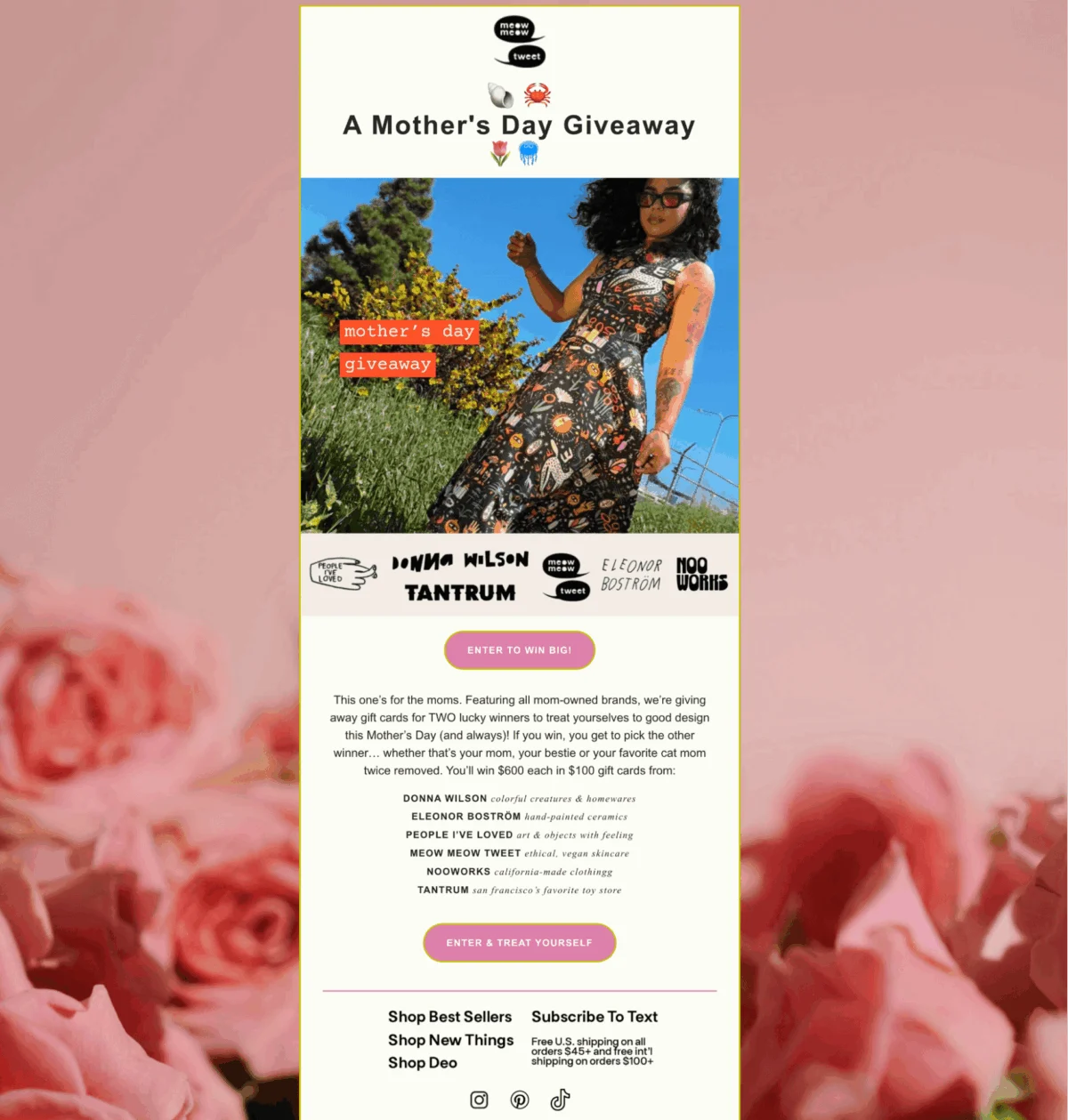
Mother’s Day, a global celebration honoring maternal bonds and the influence of mothers in society, has evolved into a significant retail event, presenting both immense opportunities and complex challenges for businesses seeking to connect with consumers. While the day inherently carries deep emotional weight, marketers often grapple with crafting email campaigns that resonate authentically while simultaneously driving sales. The goal is no longer merely to promote products but to foster genuine connections, acknowledge diverse family structures, and provide value that extends beyond a simple transaction. This intricate balance necessitates sophisticated strategies, leveraging data-driven insights, inclusive messaging, and creative presentation to stand out in crowded inboxes.
The Commercial Landscape of Mother’s Day
Historically, Mother’s Day, first celebrated officially in the United States in 1908 by Anna Jarvis, was conceived as a day of personal reflection and appreciation. However, its widespread adoption quickly led to commercialization, a trend Jarvis herself later decried. Today, it stands as one of the largest spending holidays outside of the Christmas season. According to the National Retail Federation (NRF), consumer spending for Mother’s Day consistently reaches tens of billions of dollars annually in the U.S. alone, with gifts ranging from flowers and greeting cards to special outings, jewelry, and electronics. This substantial economic activity underscores the importance for businesses to develop highly effective marketing strategies, with email marketing remaining a cornerstone due to its direct and measurable impact.
However, this commercial intensity also brings challenges. Consumers are bombarded with promotional messages, making it difficult for individual brands to capture attention. Moreover, the intensely personal nature of Mother’s Day means that generic, sales-focused emails can fall flat or even alienate segments of the audience who may find the holiday emotionally complex or difficult. This reality has propelled a shift towards more nuanced, empathetic, and highly targeted email campaigns.
Evolving Best Practices in Mother’s Day Email Marketing

High-performing Mother’s Day emails today move beyond simplistic product showcases. They strategically weave sentiment and storytelling into their core, introducing promotions and product recommendations only after establishing an emotional connection. This approach acknowledges the human element of the holiday, fostering brand loyalty and engagement that transcends a single purchase.
Key strategies for successful Mother’s Day email campaigns include:
- Audience-Centric Goal Setting: Rather than a one-size-fits-all message, businesses are increasingly tailoring their email goals based on granular audience data. This can involve sending curated gift guides to shoppers actively seeking presents, while simultaneously dispatching heartfelt appreciation letters or inclusive messages to mothers themselves or those who may prefer to acknowledge other maternal figures.
- Strategic Urgency and Clarity: Incorporating relevant urgency signals, such as shipping deadlines or limited-time offers, remains a potent driver for conversion. However, these signals must be presented clearly and informatively, guiding shoppers to make timely decisions without resorting to aggressive or manipulative tactics.
- Inclusive Framing: A critical evolution in holiday marketing is the adoption of inclusive language and imagery. Expanding messaging to encompass not just biological mothers but also grandmothers, stepmothers, aunts, mentors, and other mother figures significantly broadens appeal and reduces the likelihood of opt-outs from individuals who may not directly celebrate the traditional concept of Mother’s Day. Providing holiday opt-out options is also becoming a standard best practice, demonstrating empathy and respect for subscribers’ varied experiences.
- Purpose-Driven Email Format: The choice of email format is increasingly tied to the campaign’s purpose and brand identity. For founder-led brands, a plain-text note from the founder can often outperform highly polished visual templates, conveying authenticity and personal connection. Conversely, product-heavy campaigns benefit from visually rich, well-designed templates that showcase offerings effectively.
Case Studies in Effective Mother’s Day Email Campaigns
Analyzing real-world examples illustrates the diverse and effective strategies employed by brands:
1. The Dual-Campaign Structure: Rachel Riley
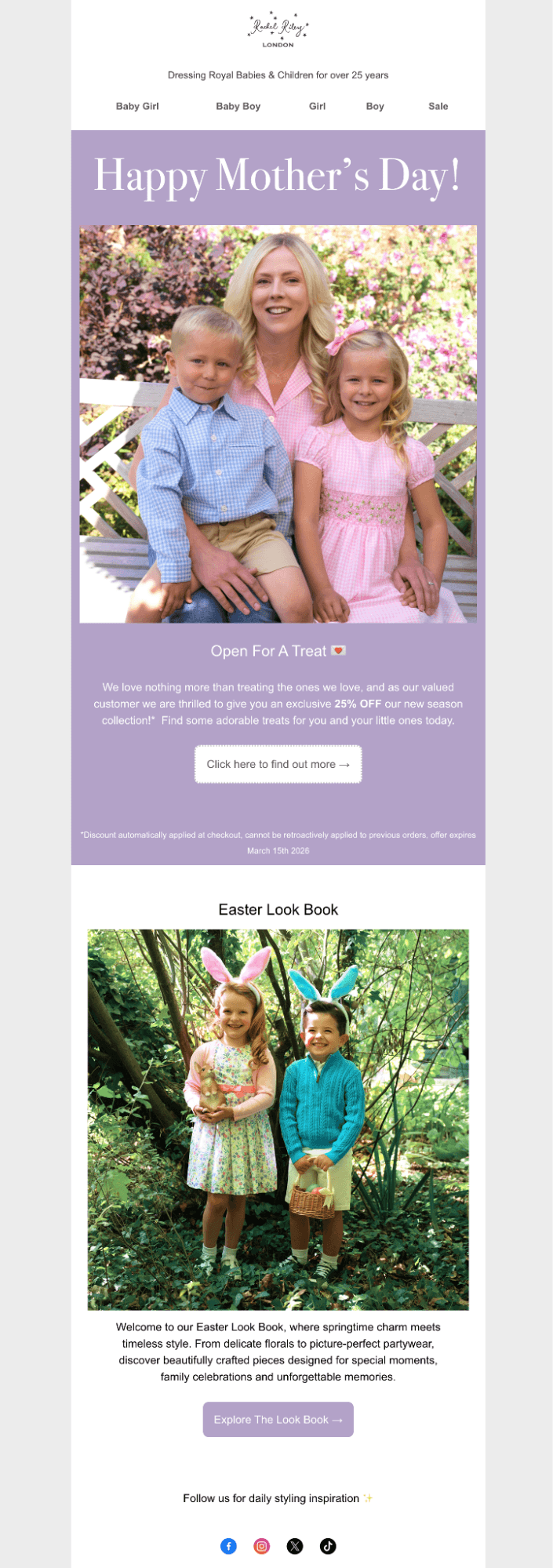
Rachel Riley effectively demonstrated how to manage overlapping campaigns without diluting their impact. Their "Happy Mother’s Day!" email seamlessly integrated a Mother’s Day discount with an Easter Look Book. The key to its success lay in clear visual separation and complementary color schemes, allowing each campaign to maintain its distinct message while existing within a single communication. This approach conserves inbox space for the consumer and strategic effort for the marketer, provided the themes are not jarringly disparate.
2. Innovative Engagement through Collaboration: Meow Meow Tweet
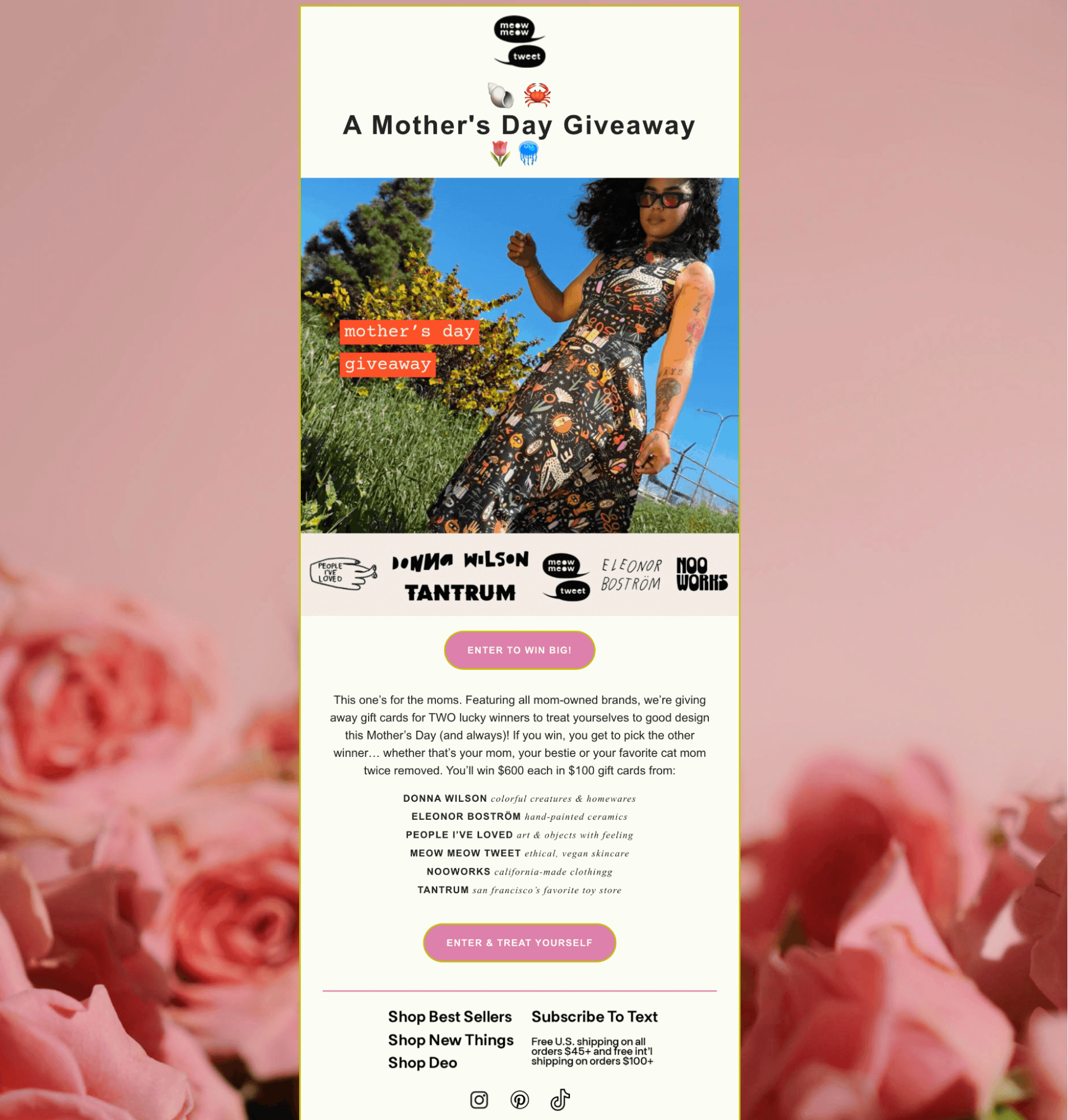
Breaking from direct sales, Meow Meow Tweet launched a "Mommy issues" themed giveaway in collaboration with six mom-owned partner brands. This creative strategy generated attention through a catchy subject line and the allure of winning $600 worth of gift cards. By focusing on a giveaway rather than a discount, the brand boosted engagement, expanded its reach through partner brands, and fostered positive brand association, demonstrating that not all successful campaigns require a direct transactional ask.
3. Multi-Offer and Last-Minute Solutions: Sodashi
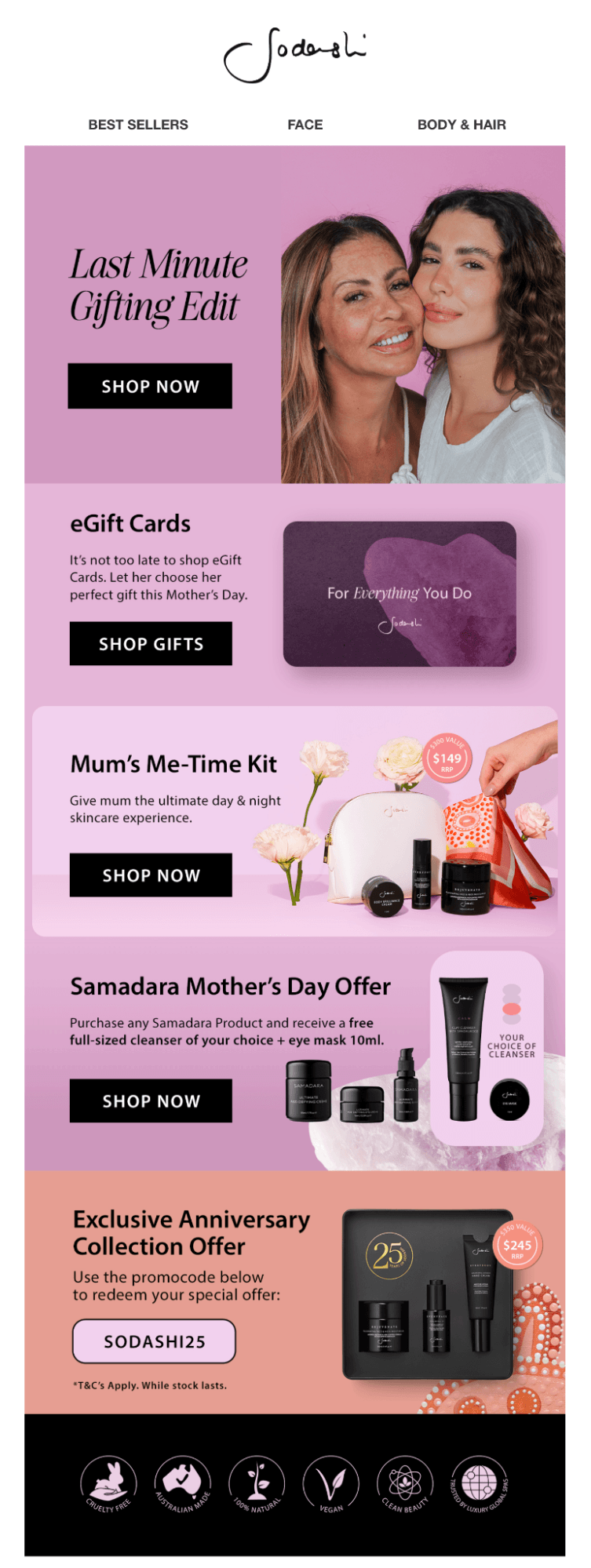
Sodashi directly addressed a common consumer pain point: finding the "Perfect Gift for the Mum Who’s Hard to Buy For!" Their email presented five distinct gift options, from eGift cards for last-minute shoppers to curated beauty bundles. Each section featured clear calls-to-action (CTAs) and the email concluded with trust signals like customer reviews, effectively guiding different shopper needs within a single, well-structured message. This approach highlights the importance of anticipating diverse customer journeys and offering solutions for each.
4. Pure Appreciation and Brand Storytelling: Cécrd
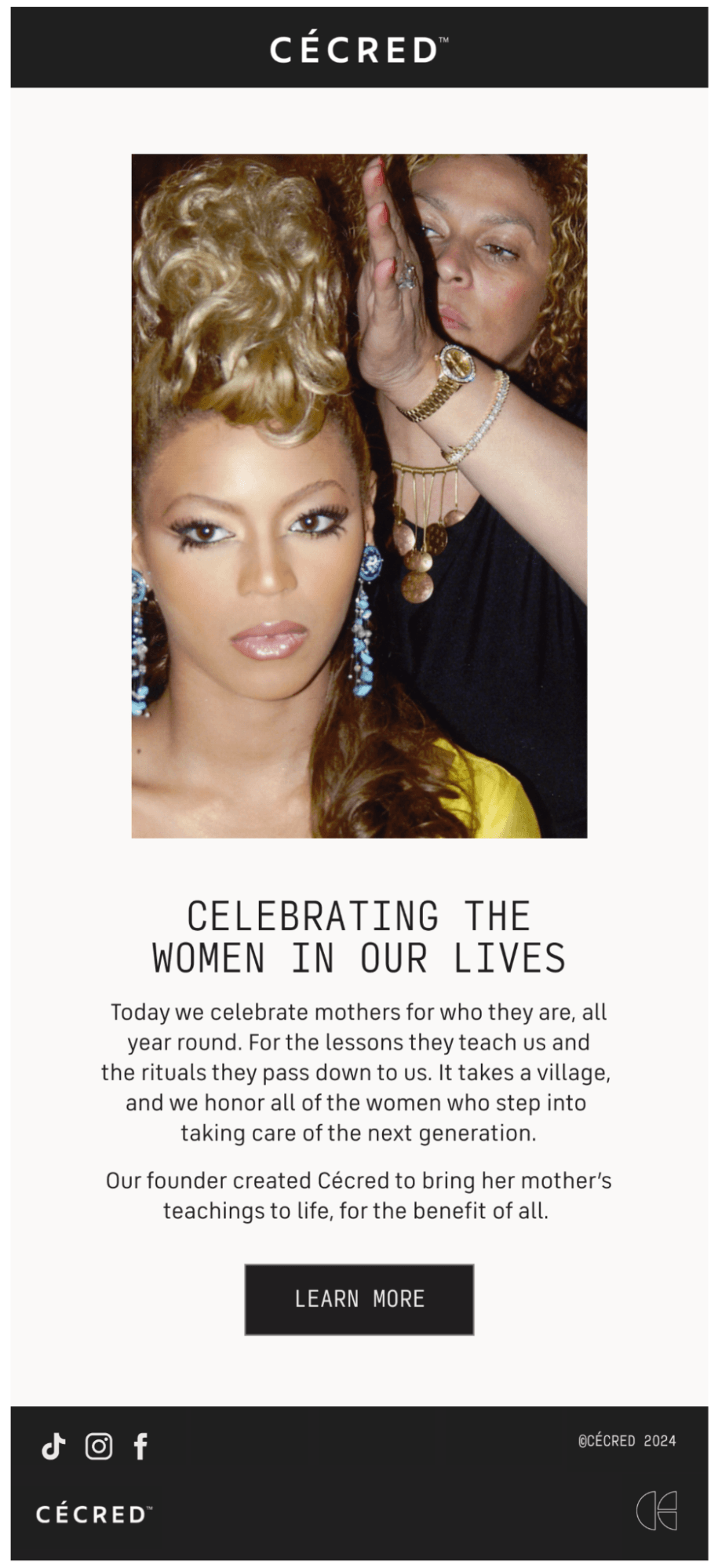
Cécrd’s "Happy Mother’s Day from Cécrd" email diverged significantly from promotional norms, opting for a powerful narrative celebrating women and the brand’s founding story, told through the words of the founder’s mother. With a simple yet impactful layout, the "Learn More" CTA led to the brand’s narrative, not a product page. This strategy, while not directly revenue-generating for the holiday, deepens brand affinity and builds a strong emotional connection, proving that investing in brand identity can have long-term benefits beyond immediate sales.
5. Authenticity with a Founder’s Tone: Studio Neat
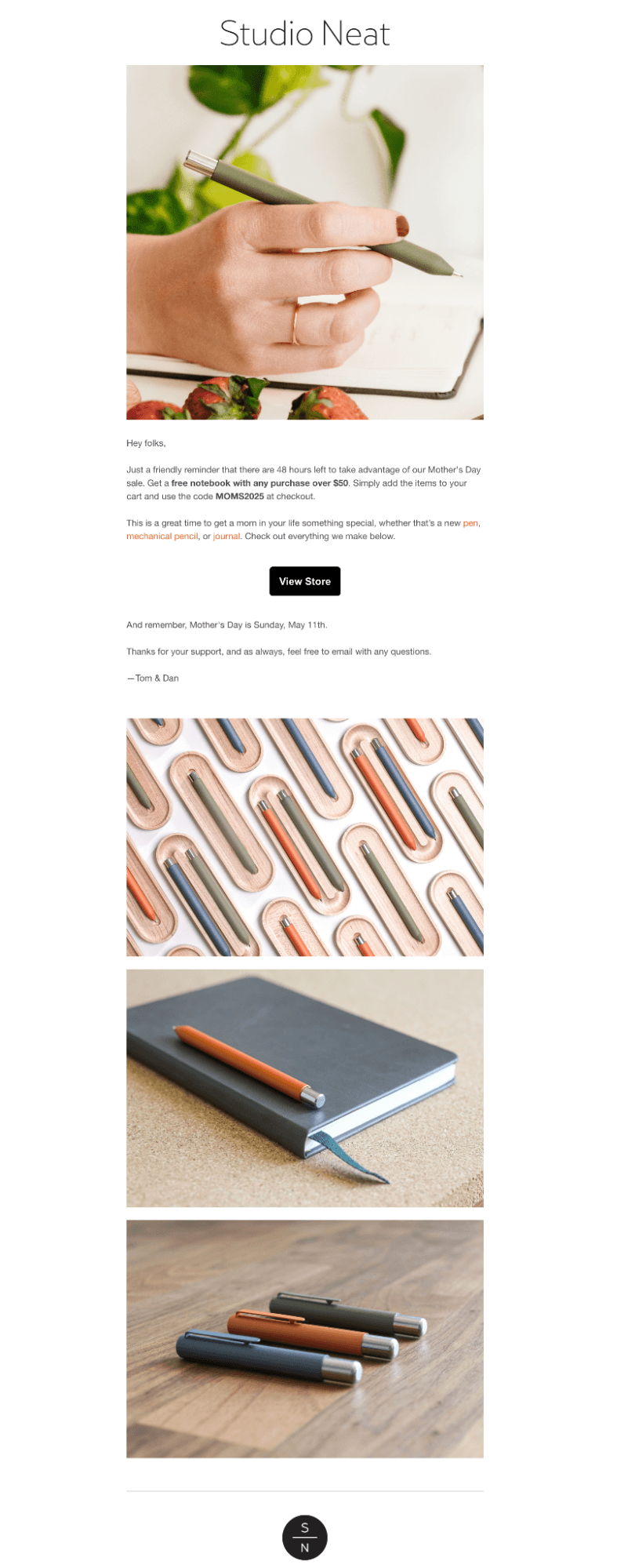
Studio Neat adopted a conversational, plain-text style, addressing their audience as "Hey folks" and signing off personally. Their "48 hours left to get something for Mom" email offered a free notebook with purchases over $50, subtly integrating a promotion within a personal note. This authentic, founder-led communication style humanizes the brand, making the offer feel more like a friendly suggestion than a hard sell and demonstrating the power of a consistent brand voice.
6. Leveraging Social Proof and Internal Recommendations: Brooklinen
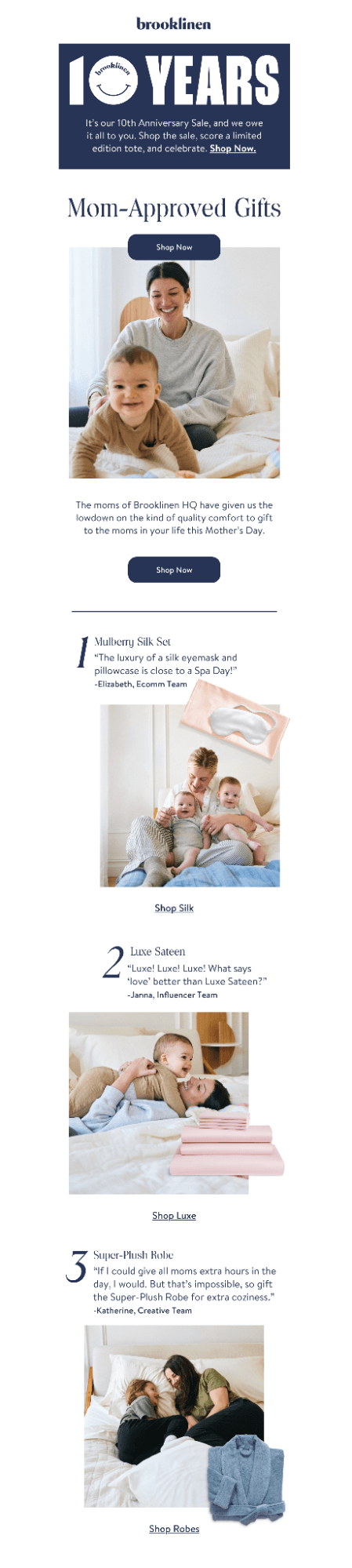
Brooklinen personalized social proof by featuring internal recommendations from their employees. Their "Celebrate and SAVE: Mother’s Day Gift Guide is Here!" email showcased products accompanied by why employees would choose them for their own mothers. This genuine approach built trust and resonated with customers, lending an authentic voice to their 10th-anniversary sale integrated into the campaign.
7. Simplifying Decisions with Curated Gift Guides: Don’t Buy Her Flowers
Recognizing the challenge many face in finding unique Mother’s Day gifts, "Don’t Buy Her Flowers" offered a clear "drop-a-hint" gift guide. Their "Our Mother’s Day Gift Guide is now ready" email featured ready-made boxes and multiple gift ideas, providing significant value to both browsing and ready-to-buy shoppers. This strategy effectively shifts the buyer’s mindset from "do I want this?" to "which one is right for her?", simplifying the decision-making process.
8. Experience-Based Gifting: Intelligentsia
Intelligentsia structured its "Great Gifts for Mom | Celebrate the mothers in your life" email around three shopper intents: physical products, shared experiences (like a virtual class), and flexible gift cards. The highlight was the "something you can do together" section, appealing to those seeking more meaningful, interactive gifts. This innovative approach taps into a desire for experiences over material goods, opening new revenue streams and offering a unique value proposition.
9. Team Appreciation, No Sell: Vessi
Similar to Cécrd, Vessi used its "Happy Mother’s Day" email to share a heartfelt message of appreciation, devoid of product mentions or promotions. The simple, clean design and genuine tone, signed by "The Vessi Team," served to build trust and strengthen customer relationships. In an inbox full of sales, such a non-transactional message stands out, demonstrating that brand equity can be built through empathy and sincere communication.
10. Personality and Humor: Beehive Cheese
Beehive Cheese employed warm visuals, playful puns, and a single CTA in its "Your Mom deserves the best" email. Their consistent brand personality, amplified with humor for Mother’s Day, effectively lowered purchase hesitation and added a memorable touch. This example underscores that humor, when aligned with brand character, can be a powerful tool for engagement and differentiation.
The Indispensable Role of Data, Segmentation, and Automation
The sophistication evident in these campaigns is underpinned by robust data analytics, precise audience segmentation, and marketing automation. While automated emails may constitute a smaller percentage of overall email volume, they generate a disproportionately high percentage of sales. For instance, platform data indicates that automated emails, making up just 2% of total email value, can generate up to 37% of all email-driven sales. This compelling statistic highlights the critical importance of carefully targeted and segmented emails in outperforming mass blasts.
Segmentation allows businesses to send highly specific messages to different groups, drastically increasing engagement and conversion rates. Key segmentation categories include:
- Demographic: Targeting based on gender, location, age group, or relationship type (e.g., direct mother, grandmother, aunt).
- Behavioral: Focusing on interests, past purchase history, loyalty status, or last-minute shopping habits.
- Campaign-Specific: Differentiating between gift-givers and mothers themselves, previous Mother’s Day purchasers, or subscribers who have opted out of holiday promotions.
Combining these segments allows for profound personalization. For example, emails to mothers might encourage self-care, while those to gift-givers might offer tailored suggestions for making moms feel appreciated. This level of personalization is crucial for building trust and meaningful relationships, transforming a transactional interaction into a valued connection.
Optimal Timing and Campaign Chronology
Effective Mother’s Day email campaigns adhere to a strategic timeline. It is generally advisable to launch the main campaign 2 to 3 weeks before the actual date, allowing ample time for consideration and shipping. This initial phase can include gift guides, special offers, and storytelling content. A follow-up, often a "last-minute" email, should be sent in the final 48-72 hours, targeting late shoppers and those who might appreciate a gentle reminder. This final push is also an opportunity to re-engage segments that haven’t opened previous emails. Post-holiday, a thank-you or feedback-soliciting email can further cement customer relationships.
Broader Implications for E-commerce Marketing
Mother’s Day serves as a microcosm for the evolving landscape of holiday and e-commerce marketing. The emphasis on authenticity, personalization, and inclusivity is not merely a trend but a fundamental shift in consumer expectations. Brands that successfully navigate this complexity demonstrate a deep understanding of their audience, leverage advanced marketing technologies, and prioritize genuine connection over aggressive sales tactics.
The implications for businesses are clear: investing in sophisticated CRM systems, marketing automation platforms, and data analytics is no longer a luxury but a necessity. Furthermore, cultivating a brand voice that is empathetic, respectful, and authentic across all communications will be paramount in fostering long-term customer loyalty. As consumers become more discerning and digitally fluent, the future of holiday marketing lies in campaigns that are not just effective in driving sales but also enriching in their engagement and respectful in their approach.









