rifanmuazin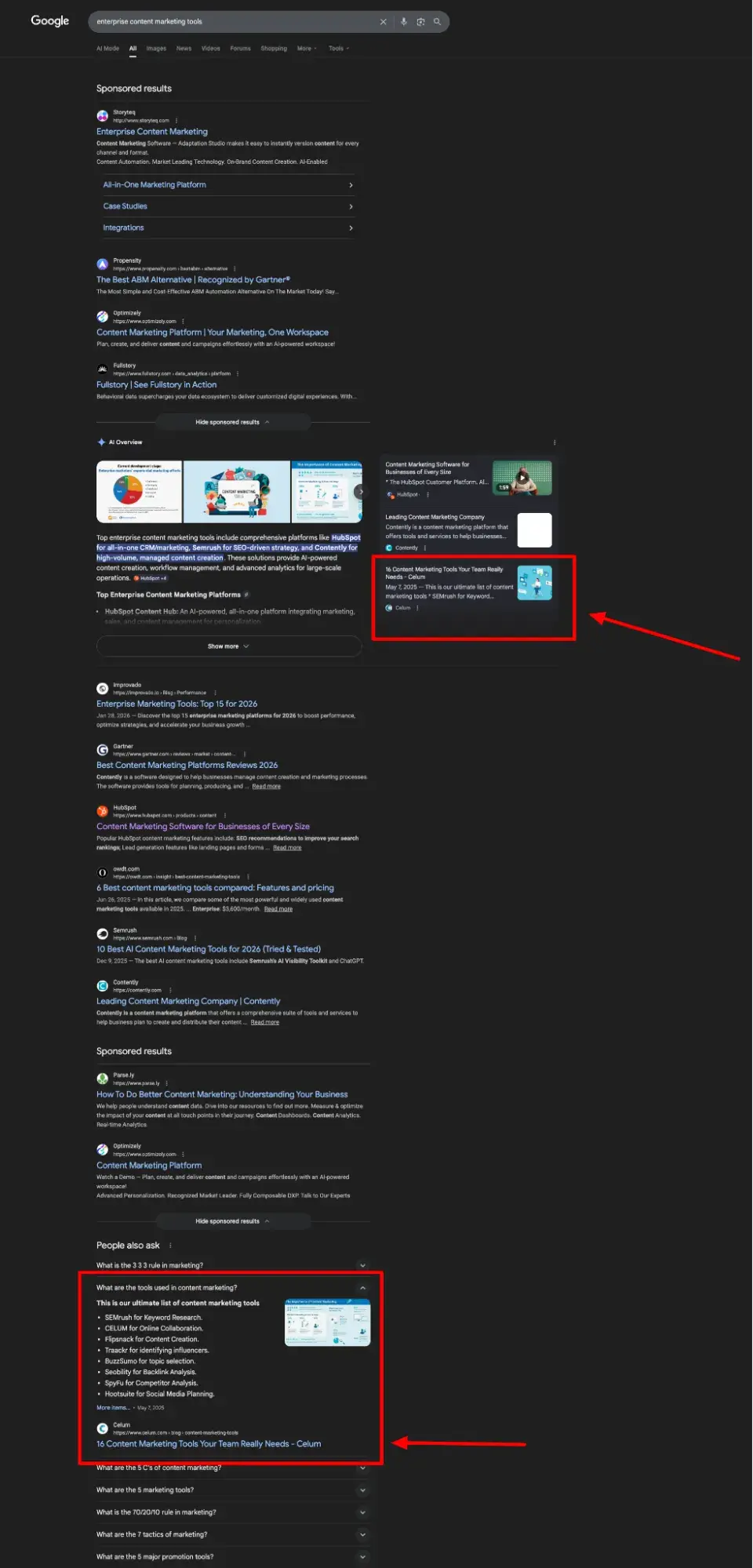
The digital marketing landscape is undergoing a profound transformation, challenging long-held assumptions about how consumers interact with search engines. What was once a straightforward doorway—a brand ranking, a user clicking, and landing on a website—is rapidly eroding, leaving many marketing teams struggling to adapt. This seismic shift is largely driven by the proliferation of "zero-click searches" and the increasing dominance of AI-generated answers directly on the Search Engine Results Page (SERP).
The Evolution of Search: From Links to Answers
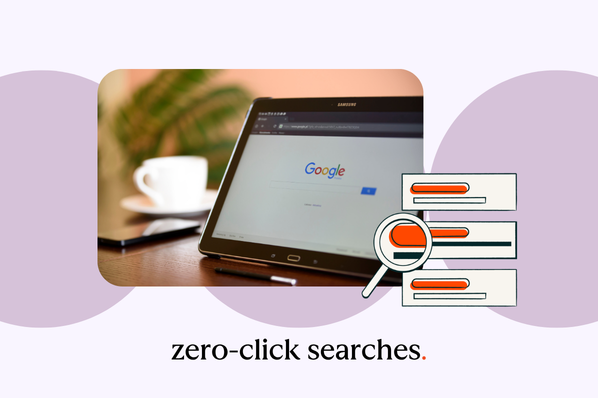
For decades, the primary goal of Search Engine Optimization (SEO) was to secure top rankings, driving organic traffic to websites. Search engines, particularly Google, evolved from simple keyword-matching algorithms to sophisticated systems capable of understanding context and intent. This evolution introduced features like featured snippets, knowledge panels, and "People Also Ask" (PAA) boxes, which began to satisfy user queries directly on the SERP, reducing the need for a click. This incremental shift laid the groundwork for the current revolution.
The advent of generative artificial intelligence has accelerated this trend dramatically. With the integration of AI Overviews (also known as AI-generated answers or rich results) into mainstream search engines, users are now presented with comprehensive summaries, direct answers, and curated information without ever navigating away from the search page. Google’s rollout of AI Overviews in its search results, initially in beta for certain queries and expanding over time, marks a pivotal moment, fundamentally reorienting the search experience from a directory of links to a dynamic answer engine. This technological leap signifies a strategic move by search providers to enhance user experience by providing immediate, consolidated information, but it simultaneously redefines the pathways through which businesses connect with their audience.
The Rise of Zero-Click Searches: A New Consumer Behavior

A zero-click search occurs when a user’s query is fully resolved on the SERP itself, circumventing the need to visit an external website. This phenomenon is becoming the new norm for a significant portion of online interactions. Research by Bain & Company underscores this shift, revealing that approximately 80% of consumers now rely on zero-click results for at least 40% of their searches. This behavioral change, while offering unparalleled convenience to users, is having a tangible and often negative impact on businesses, reducing organic web traffic by an estimated 15% to 25% across various sectors.
AI-powered rich results are the primary drivers of this trend. These include:
- AI Overviews: Comprehensive, AI-generated summaries presented at the top of the SERP, drawing information from multiple sources. These are designed to provide a quick, synthesized answer to complex queries.
- Featured Snippets: Direct answers extracted from a webpage, prominently displayed to address specific questions. These often appear as a concise paragraph, list, or table.
- Knowledge Panels: Information boxes, often on the right side of the SERP, providing quick facts about entities like businesses, people, or places, compiled from various sources.
- People Also Ask (PAA) boxes: Expandable sections offering related questions and their corresponding short answers, further satisfying user curiosity without a click, encouraging deeper exploration within the SERP itself.
- Local Packs: Maps and business listings for location-based queries, providing addresses, phone numbers, and reviews, often allowing users to find what they need without visiting a company’s website.
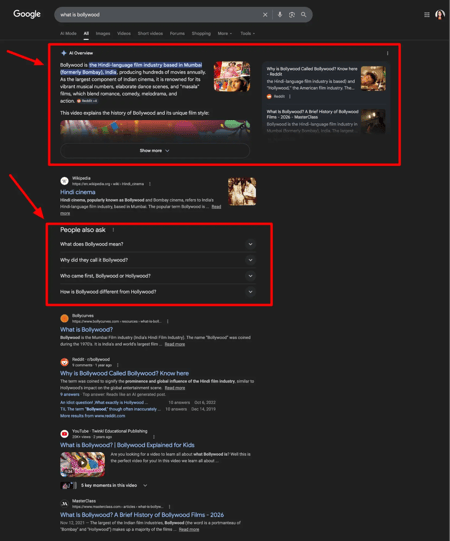
These features collectively transform the SERP into a self-sufficient information hub. For instance, a search for "What is Bollywood?" might yield an AI Overview providing a concise definition, historical context, and key characteristics, followed by a PAA section with related questions about its origins or cultural impact. This immediate gratification means the user’s informational need is met, and the journey often ends there, bypassing traditional website visits.
Why Marketers Must Care: Impact on Traffic and Attribution
The implications for marketers are far-reaching. The most immediate concern is the decline in organic click-through rates (CTR). Data from Search Engine Land indicates that organic CTRs have plummeted to 40.3% in the U.S. and 43.5% in the EU/UK, while clicks to Google-owned properties like YouTube and Maps have simultaneously risen to 14.3% in the U.S. This means that while a company’s Search Console might show stable or even growing impression data, the resulting web traffic, leads, and pipeline contributions are not aligning with past performance benchmarks. The challenge extends beyond traffic to attribution: how do marketers accurately measure the value of a brand appearing in an AI Overview if it doesn’t lead to a direct click? The traditional metrics of SEO are becoming increasingly insufficient to capture the full spectrum of brand interaction.
However, zero-click searches are not entirely detrimental. They can significantly boost brand recognition and recall. When a brand is consistently cited in AI Overviews, featured snippets, or PAA boxes during a user’s research, it establishes authority and expertise. This pre-exposure can "pre-warm" prospective buyers, making them more receptive and requiring less convincing when they eventually do visit the website. Studies suggest that this brand awareness generated through rich results can lead to higher conversion rates when users finally engage directly with a site. Industry experts and solution providers are rapidly responding to this shift. Companies like HubSpot, for example, are developing specialized tools, such as their AEO Grader, to help businesses assess their current performance in AI engines and understand what steps are needed to improve their visibility and leverage this new form of brand engagement, framing it as an opportunity for early adopters.
Disrupting the Marketing Funnel: A Restructured Buyer’s Journey
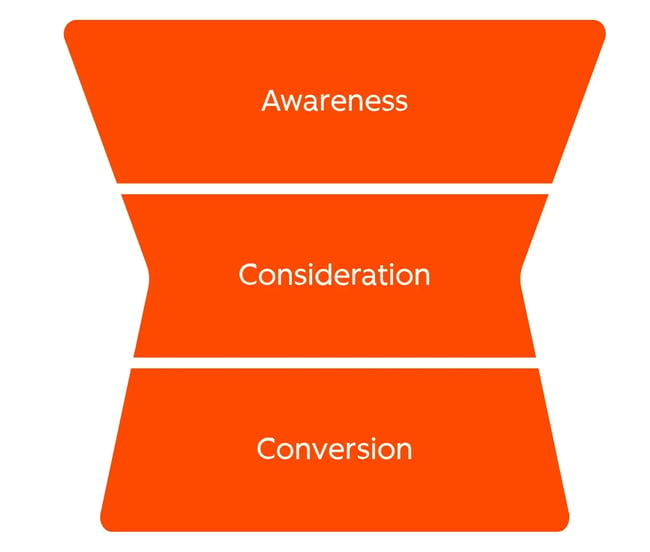
The traditional marketing funnel, which envisioned a linear progression from search to click, visit, and ultimately conversion, is being fundamentally restructured by zero-click interactions. While the path isn’t eliminated, more of the early stages of the buyer’s journey now unfold directly on the SERP. HubSpot’s "Loop Marketing" model and evolved hourglass visualization of the buyer’s journey offer a contemporary framework that accounts for this AI influence, emphasizing continuous engagement rather than a finite funnel.
-
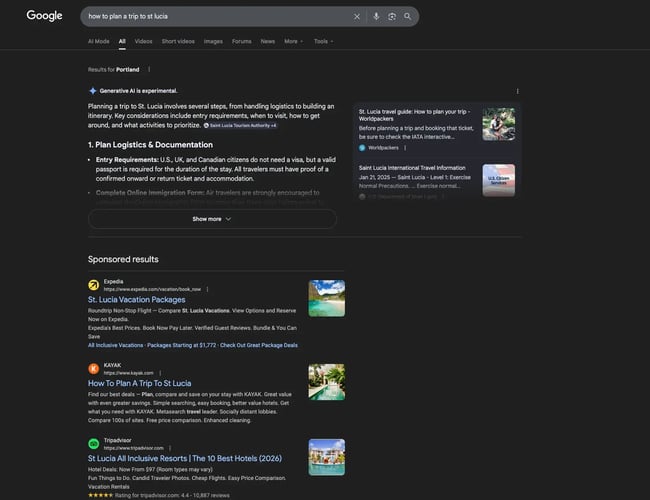
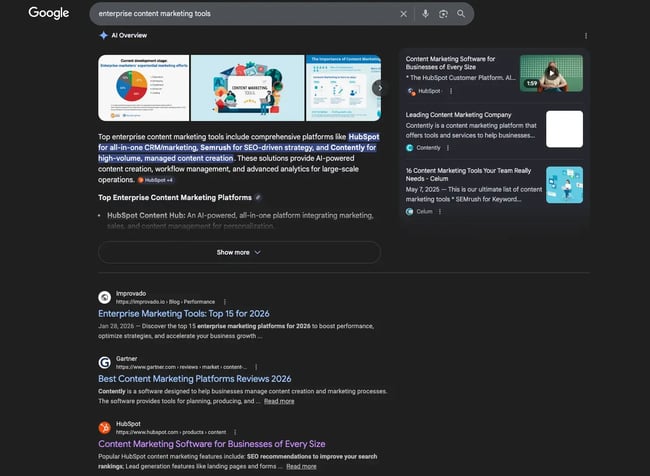
Awareness: The SERP as a Branding Arena: In the initial awareness stage, users are identifying their pain points and exploring potential solutions. Historically, scrolling through the SERP exposed them to various brand names and favicons, building passive awareness. Today, with prominent AI Overviews, users primarily see and become aware of only those brands and websites explicitly cited in these results. Everything below tends to be overlooked, drastically narrowing the initial window of brand exposure. This means a brand’s presence in these answer surfaces functions as a critical form of advertising, essential for building initial awareness and attracting potential leads. For a luxury travel agent specializing in the Caribbean, users researching "how to plan a trip to St. Lucia" might gather initial ideas and recommendations from AI summaries and sponsored results, rather than the agency’s dedicated content. Similarly, in the B2B SaaS sector, a search for "best CRM for mid-market" or "enterprise content marketing tools" could lead to AI overviews that shape a vendor shortlist before a single website visit, significantly influencing early-stage perception.
-
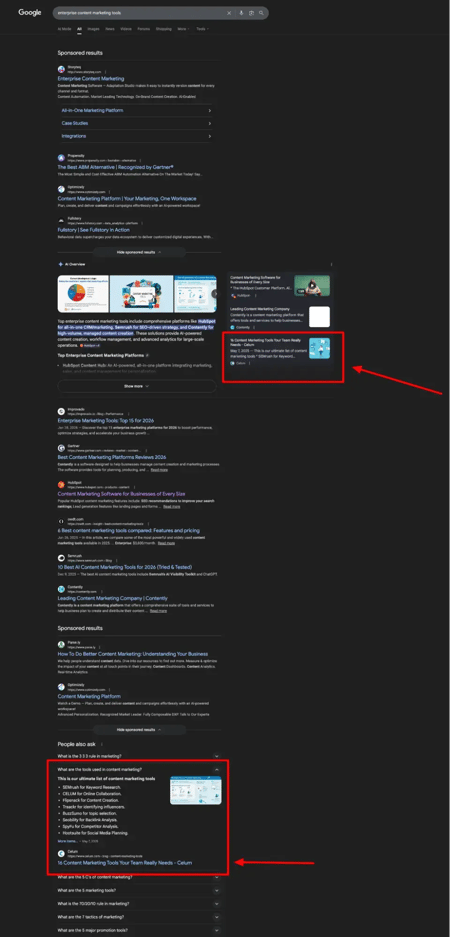
Consideration: Interest and Evaluation Without a Click: As buyers move into the consideration phase, actively seeking solutions, PAA boxes and featured snippets now fulfill much of the in-depth research that previously necessitated multiple site visits. If a user encounters a brand mentioned repeatedly—first in a featured snippet, then cited within a PAA answer—a preference begins to form, establishing a psychological advantage. The objective here shifts from forcing a click to establishing the brand as the consistently reliable source of information. HubSpot’s AEO capabilities, integrated into its Marketing Hub Professional and Enterprise, allow teams to align content with critical audience prompts and monitor how frequently their brand appears in AI-generated answers, providing valuable insights into this new form of engagement. For the St. Lucia travel agent, consistent citation in both AI Overviews and PAA for trip planning queries builds significant authority. The same principle applies to B2B SaaS, where repeated appearances for "enterprise content marketing tools" in AI overviews and PAA sections fosters trust and familiarity, reducing the perceived risk for potential clients.
-
Conversion: Queries with Direct Intent: The conversion stage remains the most traditional part of the buyer’s journey in the zero-click era. Queries with strong commercial intent—such as comparisons or those including terms like "buying," "demo," or "consultation"—are less likely to trigger extensive AI Overviews. These high-intent searches often still lead directly to traditional search results, local packs, or structured snippets, making investments in paid search and targeted SEO still highly relevant. For instance, "St. Lucia travel agent consultation" typically yields traditional search results without an AI Overview, directing users straight to service providers. Similarly, "free content marketing tools demo" for a SaaS company also often bypasses rich results, pushing users towards direct engagement. When an AI Overview does appear for a comparison query (e.g., "HubSpot vs. Salesforce"), it still often requires a click for the user to gain full value, confirming their pre-formed understanding rather than introducing new concepts. Nevertheless, marketers must remain vigilant, as AI intervention can lengthen the overall path to purchase, even if direct conversion queries are less impacted.
Adapting SEO in a Zero-Click World: The Rise of Answer Engine Optimization (AEO)
The diminishing importance of traditional Google rank does not render organic optimization obsolete; rather, it necessitates a recalibration of what marketers optimize for. This new paradigm is best addressed through Answer Engine Optimization (AEO), a strategy focused on earning citations, summaries, answer placements, and even voice mentions for a website and brand within the evolving AI-driven search ecosystem. AEO acknowledges that the value is no longer solely in the click, but in the authoritative presence within the answer itself.
1. Shift Your Key Performance Indicators (KPIs):
The foundational step for marketing leaders is to redefine success metrics. Continuing to report organic sessions as the primary SEO metric means measuring a declining output rather than the underlying influence. KPIs should be supplemented or replaced with metrics that reflect zero-click impact:
- SERP Impression Share: The percentage of times a brand appears in AI Overviews, featured snippets, and PAA boxes, indicating brand visibility at the top of the search results.
- Branded Search Volume: An increase indicates growing brand awareness and trust, often a precursor to direct engagement and a strong signal of AEO effectiveness.
- Organic-Assisted Pipeline/Revenue: Measuring how zero-click visibility contributes to the overall sales funnel, even without direct initial clicks, providing a more holistic view of ROI.
This reframe offers internal protection for marketing teams, providing data that demonstrates growing impressions, branded search, and pipeline influence, even if direct traffic dips, aligning marketing efforts with broader business objectives.
2. Format Content for Direct Answers:
Answer engines, including Google’s AI Overviews, ChatGPT Search, Perplexity, and Microsoft Copilot, process web content differently from traditional crawlers. They construct knowledge networks that link facts and entities, making content formatting crucial for extractability. HubSpot AEO provides actionable recommendations for structuring content for answer-first visibility. Effective formatting includes:
- Answer-First Content: Addressing the target query directly within the first 100 words of a page, optimizing for immediate AI extraction.
- Clear Headings and Subheadings: Using H2, H3, and H4 tags to structure information logically and signal content hierarchy to AI.
- Bulleted and Numbered Lists: Enhancing readability and improving eligibility for list-based snippets and AI summaries.
- Concise Paragraphs: Facilitating quick information extraction by AI, as longer paragraphs can be harder to parse.
- FAQ Sections: Directly answering common questions in