rifanmuazin
The eCommerce landscape is in a constant state of flux, driven by rapid technological advancements, evolving consumer behaviors, and geopolitical shifts. As businesses navigate this dynamic environment, forward-thinking strategies are paramount. In this regard, Bill D’Alessandro, a prominent figure in the eCommerce community, and an unnamed co-author have jointly put forth their predictions for the trajectory of online retail in 2026. These insights, covering a spectrum from artificial intelligence to international trade policies, offer a comprehensive outlook on the challenges and opportunities that lie ahead. To add a layer of accountability to their forecasts, the authors have pledged to have their predictions evaluated by AI at the close of 2026, with the loser of this prognostication contest facing a lighthearted, yet memorable, culinary consequence.
The Ascendancy of Telepathic Advertising
One of the most significant predictions centers on the transformative power of artificial intelligence in advertising. The authors posit that by 2026, advertising platforms, particularly those leveraging advanced AI models like those developed by OpenAI, will move beyond mere precision targeting to what they describe as "telepathic" advertising. This implies a level of understanding so profound that ads will feel intuitively relevant to the consumer’s immediate needs, desires, and even unspoken concerns.
The underlying principle for this projection lies in the sophisticated data-gathering capabilities of major tech companies. Platforms like Meta already possess vast troves of user data, tracking interests, engagement patterns, and online behaviors. The integration of advanced AI, such as Large Language Models (LLMs), promises to unlock deeper insights. Imagine an AI that can not only infer your interest in a particular product but also understand your current emotional state, financial anxieties, or personal aspirations. For instance, an LLM could analyze search history, social media interactions, and even private communications (with appropriate privacy safeguards) to anticipate a user’s need for a product or service before they explicitly express it. This could manifest as highly personalized ad creatives, tailored product recommendations, and even proactive customer service outreach.
The implication for early adopters is substantial. Businesses that can effectively harness these AI-driven advertising tools are predicted to gain a significant competitive advantage, achieving higher conversion rates and more efficient marketing spend. The authors emphasize that this is not a distant future but a trend poised to gain considerable traction within the next year.
Tariffs on China: A Calculated Moderation
The complexities of international trade, particularly the relationship between the United States and China, are a critical factor influencing global eCommerce. The prediction regarding tariffs on goods from China suggests a pragmatic approach. The authors anticipate that tariffs will ultimately settle within the range of 30% to 50%, rather than escalating to more extreme levels.

This forecast is grounded in an analysis of economic conditions and political responses. The current economic climate, characterized by creeping inflation and a softening growth trajectory, is a key consideration. Historical patterns indicate that political leaders often adjust trade policies in response to market reactions. When the bond market exhibited signs of distress earlier in the year, there was a discernible rollback of tariff-related measures. The authors argue that in an already precarious economic environment, imposing punitive tariffs that could further stifle economic activity would be counterproductive. The focus, therefore, is likely to remain on strategic trade management rather than aggressive protectionism that could destabilize a fragile economy.
The Enduring Strength of the AI Bubble
Contrary to some prevailing opinions that the artificial intelligence sector might be experiencing an unsustainable bubble, the authors contend that this is unlikely to burst in 2026. Their analysis draws a distinction between the current AI market and the dot-com bubble of the early 2000s.
Key data points support this assertion. The NASDAQ’s current forward price-to-earnings (P/E) ratio, hovering around 27x, stands in stark contrast to the P/E ratios exceeding 100x observed during the peak of the 2000 tech bubble. This suggests a more grounded valuation of technology companies in the present day. Furthermore, adjusted for inflation, government spending on AI research and development is approximately five times the level of tech spending seen in 2000. This substantial and sustained investment in AI infrastructure and innovation indicates a fundamental belief in its long-term potential, driven by tangible applications and demonstrable value creation across various industries.
The implications are that companies at the forefront of AI development and implementation are likely to continue experiencing significant growth and investment. This trend will likely fuel further innovation and adoption of AI-powered solutions across the eCommerce ecosystem, from marketing and customer service to supply chain management and product development.
The Rise of Verified Human Content
The proliferation of AI-generated content, particularly in visual and audio mediums, is rapidly blurring the lines between authentic and synthetic. One author recounts a recent experience on the social media platform X, where a significant portion of the content in their feed appeared to be AI-generated, leading to a noticeable erosion of trust.
In response to this growing concern, the prediction is that major online platforms will begin testing "verified human" content badges. This initiative would aim to provide users with a clear indication of whether the content they are consuming was created by a human. Such a system could involve various verification processes, potentially leveraging digital signatures, blockchain technology, or other authentication methods. The goal would be to restore user confidence and differentiate genuine human expression from AI-generated output. This development could have profound implications for content creators, social media platforms, and the broader online information ecosystem, potentially leading to a renewed emphasis on authenticity and human creativity.

Automation in Media Production
The capabilities of AI in content creation extend to the realm of media editing. The authors predict that by the end of 2026, video and audio editing will be largely automated, achieving a respectable "7 out of 10" quality. Tools like Descript are already demonstrating the potential of AI in this domain, allowing for text-based editing of audio and video.
The projection is that this technology will evolve to a point where users can input raw footage and provide simple prompts, such as "highlight key moments" or "focus on the product demonstration," and receive a polished, edited output. This advancement will democratize content production, enabling small businesses and individual entrepreneurs to create professional-quality videos and audio content without the need for extensive technical expertise or expensive production teams. This could lead to a surge in personalized video marketing, engaging product demos, and accessible educational content, further enhancing the richness and dynamism of the online retail experience.
Bill D’Alessandro’s Forecasts: Navigating Economic Divides
Bill D’Alessandro’s predictions offer a distinct perspective, focusing on economic trends and their impact on eCommerce businesses.
The K-Shaped Economy Takes Hold
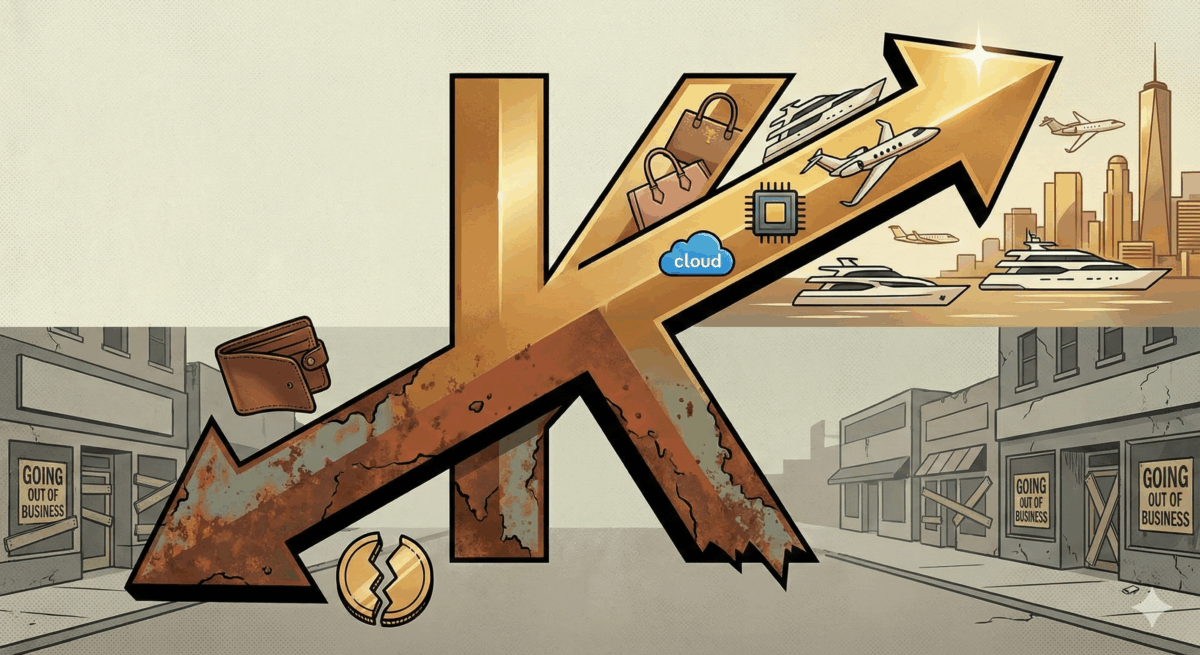
D’Alessandro foresees 2026 as the year the "K-shaped economy" becomes more pronounced. This economic model describes a situation where different segments of the economy diverge significantly. In this scenario, large technology companies and major market players (often referred to as the "Mag 7") are predicted to continue their upward trajectory, potentially experiencing growth exceeding 20%. Simultaneously, the broader economy and the average consumer are expected to face continued struggles.
For eCommerce businesses, this divergence presents a strategic imperative. D’Alessandro suggests that businesses will need to either "go up-market," catering to affluent consumers who remain relatively insulated from economic downturns, or "go down-market" by offering highly competitive pricing on essential goods. The "middle ground" is seen as increasingly perilous, as it may be squeezed by both the luxury segment and the discount-focused essential goods market. This necessitates a clear understanding of target customer segments and a tailored value proposition for each.
Persistent Inflationary Pressures
Inflation is another key concern in D’Alessandro’s outlook. He predicts that inflation will remain above 3% in 2026, a trend he believes is likely to persist for the next decade. This forecast is rooted in the expectation of continued deficit spending by governments, which can fuel inflationary pressures.

The implication for businesses and investors is the need to strategize for a prolonged period of elevated inflation. This could involve adjusting pricing strategies, optimizing supply chains to mitigate rising costs, and exploring investment opportunities that offer protection against inflation. D’Alessandro advises positioning both personal portfolios and business operations to weather this persistent economic condition.
AI’s Dominance in Meta Advertising
Echoing the broader sentiment on AI, D’Alessandro specifically predicts that AI will "completely take over Meta ads content." He has observed proof-of-concept initiatives where large brands are generating hundreds of novel ad variations daily using AI. These systems can analyze customer reviews, leverage brand assets, and create a range of visual content, including stills and soon-to-be video, which can then be directly launched through advertising APIs.
This prediction suggests that in 2026, AI-driven ad creation will move from experimental phases to mainstream adoption on platforms like Meta. This will empower businesses to achieve unprecedented levels of personalization and campaign optimization, but it also raises questions about the role of human creatives and the potential for AI-generated content to saturate advertising feeds.
The Demise of the Generic Lifestyle Brand
In a stark assessment, D’Alessandro declares "the lifestyle brand is dead" for many eCommerce businesses. He argues that unless a business possesses strong intellectual property protection or ranks within the top 5-10% of brands in its niche, smaller eCommerce ventures (in the single-digit millions) are at significant risk. Larger competitors, armed with AI-powered marketing machines, will possess the ability to outspend, out-test, and tolerate higher customer acquisition costs than smaller players can sustain.
This prediction signals a consolidation within the eCommerce market, favoring businesses with unique value propositions, strong brand equity, or significant technological advantages. The era of easily scalable lifestyle brands built on broad appeal may be waning, requiring a more specialized and defensible market position.
M&A Trends: A Tale of Two Markets
Mergers and acquisitions (M&A) activity in the eCommerce sector is expected to exhibit a pronounced dichotomy. D’Alessandro anticipates robust M&A activity at the high end of the market, with deals exceeding $1 billion showing a significant year-over-year increase of 19%. Conversely, transactions in the small and mid-size range are projected to decline by 18%.
This trend suggests that while top-tier eCommerce businesses with strong performance and market positions will continue to command premium valuations and attract significant investor interest, smaller and mid-sized brands may struggle to find buyers or achieve favorable deal terms. This disparity could further exacerbate the consolidation trend, as larger entities may acquire smaller ones strategically, or smaller businesses may find it challenging to exit their investments.
Bitcoin’s Volatile Path to a New High
In the realm of digital assets, D’Alessandro forecasts a volatile year for Bitcoin in 2026. He predicts that the cryptocurrency will experience a dip below $70,000 in the first half of the year but will ultimately finish above $100,000.
This prediction is based on competing economic forces. A struggling consumer economy can negatively impact Bitcoin as a risk asset, leading to potential price declines. However, persistent inflation is seen as a supportive factor, as Bitcoin is often viewed as a hedge against rising prices, or "digital gold." The interplay of these factors is expected to create significant volatility, with an initial downturn followed by a recovery driven by the inflation narrative.
Looking Beyond Predictions: The Value of Community
While these predictions offer valuable foresight, the authors emphasize that staying ahead of the curve requires more than just forecasting. They advocate for active engagement within a community of experienced eCommerce entrepreneurs. The eComFuel community, for instance, is highlighted as a platform where seven and eight-figure store owners actively discuss what strategies are working, what challenges they are facing, and their expectations for the future. This collaborative environment, characterized by shared experiences and real-time insights from those "in the trenches," is presented as a more dynamic and effective way to navigate the evolving eCommerce landscape than relying solely on predictions.
The full discussion of these predictions and their implications can be accessed through their podcast, offering a deeper dive into the nuances of each forecast and the strategic considerations for eCommerce businesses in the coming year.


 Raul Delapena Setiawan
 Ammar Sabilarrohman