
 rifanmuazin
Developing truly resonant and effective public relations campaigns presents a significant challenge for industry professionals, requiring not only creative ingenuity but also the strategic allocation of time and the courage to advocate for innovative ideas. However, the inherent risks associated with launching new campaigns can be substantially mitigated through a rigorous, research-backed approach, dramatically increasing the probability of achieving desired outcomes. This article outlines a comprehensive two-step methodology for formulating successful PR initiatives, heavily reliant on in-depth content analysis and strategic inspiration drawn from successful past campaigns.
The Foundation: Understanding Content Themes and Emotional Resonance
The initial, pivotal step in constructing a high-probability PR campaign involves a deep understanding of prevailing content themes and the emotional responses they evoke within target audiences. To confidently predict a PR idea’s success, practitioners must first identify themes that consistently garner significant discussion, social sharing, and inbound links across the digital landscape. Success, in this context, is primarily defined by securing media coverage and valuable backlinks, with social engagement serving as a crucial secondary Key Performance Indicator (KPI).
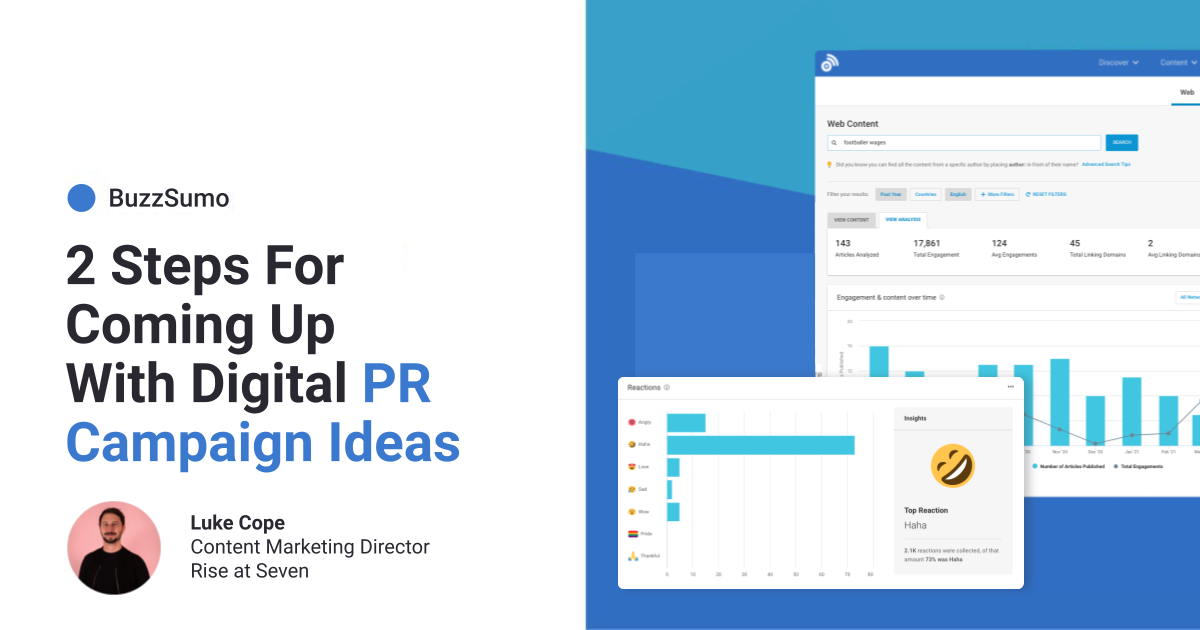
At this nascent stage of ideation, the immediate pressure to conceive a fully formed campaign concept is counterproductive. Instead, the focus should be on exploratory research, allowing insights to emerge organically rather than forcing a predefined answer. Tools like BuzzSumo’s Content Analysis Report become indispensable here, offering granular data on content performance.
For instance, consider a client specializing in honeymoon packages. The research journey would commence with the core product area: "Honeymoons." This initial query often reveals foundational data on publication frequency and general engagement. From there, the exploration should strategically broaden to adjacent, yet highly relevant, themes such as "Engagement rings" or "Weddings." This expansion helps uncover broader narratives and audience interests that might intersect with the core offering but possess greater inherent virality or emotional depth. The process of branching out continues until the themes become too far removed from the client’s direct product or service, ensuring relevance remains paramount.
The objective is to identify a core theme that not only shows consistent publication volume but also demonstrates robust reader engagement across various platforms. This deep dive into content analysis provides a data-backed understanding of what resonates with audiences and, crucially, what motivates media outlets to cover certain topics. The historical performance of content around these themes offers a blueprint for future success, indicating areas of sustained public interest and journalistic appetite.
Case Study: The "World Without Light Pollution" Campaign
A compelling illustration of this research-driven approach is the "World Without Light Pollution" campaign, conceptualized for Under Lucky Stars, a brand specializing in personalized star maps. The initial product theme, "Star maps," while unique, presented limited scope for a broad, high-impact PR campaign due to its niche appeal.
The research then expanded to secondary themes:
- Supermoons: This topic consistently generated high social engagement and offered opportunities for reactive PR due to its regular occurrence.
- Night Sky: A broader theme, also demonstrating significant social engagement and visual potential.
- Light Pollution: This theme emerged as the strongest candidate, showing not only consistent discussion and high social engagement but also significant topical relevance.
At the time of the campaign’s development, the theme of light pollution was experiencing a surge in public interest. SpaceX’s satellite launches were raising concerns about increased light pollution, and the global COVID-19 pandemic had brought general pollution issues into sharp focus. This confluence of events created a timely and highly receptive environment for a campaign addressing light pollution, signifying that the moment was ripe for its launch.
Further analysis of reader reactions to articles on light pollution revealed two dominant emotional responses: sadness regarding the loss of natural night skies and a profound "wow factor" when confronted with the beauty of an unpolluted sky. These emotional insights were critical in shaping the campaign’s creative direction, emphasizing the need for a highly visual and thought-provoking execution that would transport audiences to a world free from light pollution.
Deconstructing the "Footballer Car Cost Calculator"
Another successful campaign, though not explicitly named in the original text, can be inferred from the discussion surrounding private number plates. For a client in this sector, the initial product theme, "Private number plates," while having some humorous content, lacked the expansive appeal required for a major campaign. The strategy shifted to exploring aspirational lifestyle themes.
Research into "Celebrity cars" revealed a high volume of articles, but it was the deeper dive into "Footballers’ cars" that yielded significant insights. Analysis of comments sections on these articles uncovered a potent emotional cocktail: a mixture of intense frustration, envy, and a strong sense of competitive comparison among readers. People were not just passively consuming content; they were actively measuring their own financial realities against the extravagant lifestyles of footballers.
This emotional undercurrent provided the crucial spark for the campaign idea: a literal comparison tool. By creating a calculator that allowed individuals to directly compare their earnings and the time it would take them to afford a footballer’s luxury car, the campaign tapped into a universal human tendency for social comparison, amplifying the observed emotional responses into a highly engaging and shareable experience. This example underscores the power of translating audience sentiment into an interactive, relatable concept. When a campaign successfully links to widely discussed themes and evokes one or two strong emotions, it inherently possesses a significant advantage in the competitive PR landscape. This systematic, research-driven validation process is a consistent precursor to every successful campaign undertaken by leading PR practitioners.
The Art of Format Selection and Adding Depth
The second critical step in crafting winning PR campaigns involves selecting the optimal format and then enriching that format with substantial depth and multiple angles. A brilliant idea can falter if presented in an inappropriate format. For instance, the "light pollution" campaign, with its emphasis on visual transformation and emotional impact, would have lost much of its power if presented merely as a static blog post.
The interactive "before and after" slider, showcasing cities with and without light pollution, was instrumental in conveying the "wow factor." This simple yet effective piece of slider code transformed static images into an engaging, interactive experience, directly addressing the campaign’s core emotional objective.
Beyond the format, the depth of the idea and the multiplicity of its potential angles are paramount. While a single, strong angle can initiate traction, adding layers of data and perspective significantly broadens a campaign’s appeal and outreach potential. In the light pollution campaign, the striking statistic that "85% of Americans had never seen the Milky Way" served as a powerful primary angle. This was further bolstered by incorporating data from the Bortle scale, a scientific measure of sky darkness. By comparing the most light-polluted cities (Bortle 10) with their hypothetical appearance under pristine conditions (Bortle 1), the campaign added scientific credibility and a tangible, visual representation of the problem. Furthermore, recognizing light pollution as a global issue, the campaign was expanded beyond a U.S.-centric focus to include international cities, thereby maximizing its global relevance and media appeal.
Spotlight on Campaign Formats and Depth
The Unseen World: Visualizing Germs in Urban Spaces (Inferred Example)
While details in the original text are brief, the mention of a campaign involving a "microscope function" and a comment from the Mayor of London suggests a powerful public health or urban hygiene initiative. This campaign likely transformed what could have been a simple graphic or data list into an immersive, interactive experience, allowing users to virtually "zoom in" on invisible threats like germs. Such a format would have significantly amplified the campaign’s impact, making the abstract concept of microbial contamination tangible and alarming. The endorsement or comment from a high-profile civic leader like the Mayor of London underscores the campaign’s success in not only generating high volumes of links but also influencing public discourse and potentially policy. This demonstrates how a well-chosen, interactive format can elevate an idea, lending it the credibility and urgency required for significant media and political attention.
The "Space Junk" Dilemma: Missed Opportunities for Deeper Exploration
The "Who owns all the space junk?" campaign by Aira, while visually appealing and conceptually strong, highlights the potential for greater depth. The piece effectively visualized space junk by country, presenting a clear main angle. However, the vastness of the subject matter suggests numerous untapped avenues for enrichment. Imagine extending the campaign to explore:
- Types of Space Junk: Categorizing debris by origin (e.g., spent rocket stages, defunct satellites, collision fragments) and material composition.
- Historical Evolution: A timeline showcasing how space junk has accumulated since the 1960s, illustrating the exponential growth of the problem.
- Future Projections: Interactive models predicting the state of orbital debris in 50 or 100 years, emphasizing the increasing risk of collisions (Kessler Syndrome).
- Mitigation Strategies: Explaining current and proposed solutions for space debris removal, engaging audiences with potential technological innovations.
By integrating these elements, the campaign could have transcended a mere visualization to become a comprehensive educational resource and a catalyst for discussion on a critical global issue. This missed opportunity underscores that even a strong initial idea benefits immensely from exhaustive depth and diverse angles, ensuring maximum impact and longevity.
The Power of Simplicity: iPods Visualized as Vinyl
Not all effective formats demand complex interactivity. Mark Johnstone’s "iPods visualized as vinyl" campaign exemplifies the power of elegant simplicity. This idea, marrying two iconic eras of music consumption, taps into strong emotions of nostalgia, aesthetic appreciation, and cultural comparison. The visual juxtaposition of modern digital devices with the classic, tactile beauty of vinyl records creates an immediate, striking, and highly shareable image.
The campaign’s success lies in its ability to evoke a conversation about technological evolution, the sensory experience of music, and generational preferences, all through a deceptively simple visual concept. Data points such as historical sales figures for both formats, their respective cultural impacts, and perhaps even qualitative data on listener preferences could underpin and enrich such a campaign, providing journalistic fodder for deeper analysis while maintaining the initial visual appeal.
Revisiting the "Footballer Car Calculator" for Expanded Angles
The "Footballer Car Cost Calculator" further demonstrates the principle of deriving multiple outreach angles from a core idea. Beyond the direct comparison of individual earnings, the underlying data—footballer weekly wages versus car costs—could generate a wealth of additional narratives:
- Disparity in Wealth: Highlighting the stark contrast between average earnings and the cost of luxury vehicles, sparking discussions on economic inequality.
- Time to Afford: Calculating the number of years an average person in different professions would need to save to purchase a footballer’s car, offering relatable, often shocking, statistics.
- Geographic Variations: Analyzing how these comparisons differ across various countries or regions, adding a global dimension.
- Impact on Consumer Culture: Exploring how aspirational lifestyles depicted in media influence consumer desires and financial decisions.
By meticulously developing these diverse angles, a campaign can appeal to a broader range of media outlets and resonate with different segments of the public, ensuring widespread coverage and engagement.
Strategic Implications and Best Practices for PR Professionals
The synergy between a compelling idea, the right format, and comprehensive depth is the bedrock of successful PR. When these elements are meticulously combined with a data-driven understanding of themes and emotions, campaigns are poised for significant impact across both digital PR and social media channels.
Leveraging Initial Research for Targeted Outreach
A highly effective, yet often overlooked, best practice is to repurpose the initial research conducted for ideation into the foundation for outreach and seeding lists. By returning to the BuzzSumo Content Analysis Report, PR professionals can identify and export a list of journalists and publications that have historically covered the campaign’s core themes. This proactive approach ensures that pitches are directed to highly relevant contacts, significantly increasing the likelihood of media pickup. BuzzSumo’s Journalist Profiles and outreach tools facilitate this process, allowing users to save journalists to projects and export their contact details. Complementary resources, such as BuzzSumo’s studies on effective PR pitching and Fractl’s insights on avoiding common agency PR tactics, further refine outreach strategies, emphasizing personalization and relevance.
Data-Driven Sign-Off: Eliminating Subjectivity
One of the enduring challenges in PR is securing internal or client buy-in for campaign ideas, often a subjective process fraught with differing opinions. The research-intensive methodology outlined here provides a robust framework for de-risking ideas and obtaining confident sign-off. By presenting a comprehensive package of research—detailing the consistent engagement and emotional resonance of chosen themes, validated by tools like BuzzSumo’s Content Analysis Report—PR professionals can replace subjective opinions with objective data. This evidence-based approach streamlines the approval process, fostering greater confidence in the campaign’s potential for success. The ability to quickly report on engagement and emotional sentiment across multiple themes and publishers transforms a creative pitch into a strategic business proposal.
Key Takeaways for Modern PR Campaign Development:
- Embrace Data-Driven Ideation: Consistently explore content engagement and production consistency across various themes to inform and validate PR campaign concepts.
- Prioritize Emotional Connection: Ensure campaigns tap into at least one strong emotion (e.g., joy, sadness, anger, awe, nostalgia) to maximize audience resonance and shareability.
- Optimize Format for Impact: Match the campaign idea to its most effective format, understanding that this will vary significantly from one concept to another (e.g., interactive calculators, visual sliders, simple graphics).
- Harness Comparative Storytelling: Utilize "dream vs. reality" comparisons (e.g., footballer wages vs. average earnings, light pollution vs. pristine night skies) to generate compelling emotional responses and drive engagement.
- Cultivate Depth and Diverse Angles: Infuse campaigns with as much factual depth and as many distinct angles as possible. This strategy significantly enhances outreach opportunities and broadens media appeal.
For those eager to apply these principles and validate their own PR campaign ideas, a free 30-day trial of BuzzSumo’s Content Analysis Report is available, offering the tools to transform creative concepts into measurable successes.









