rifanmuazin
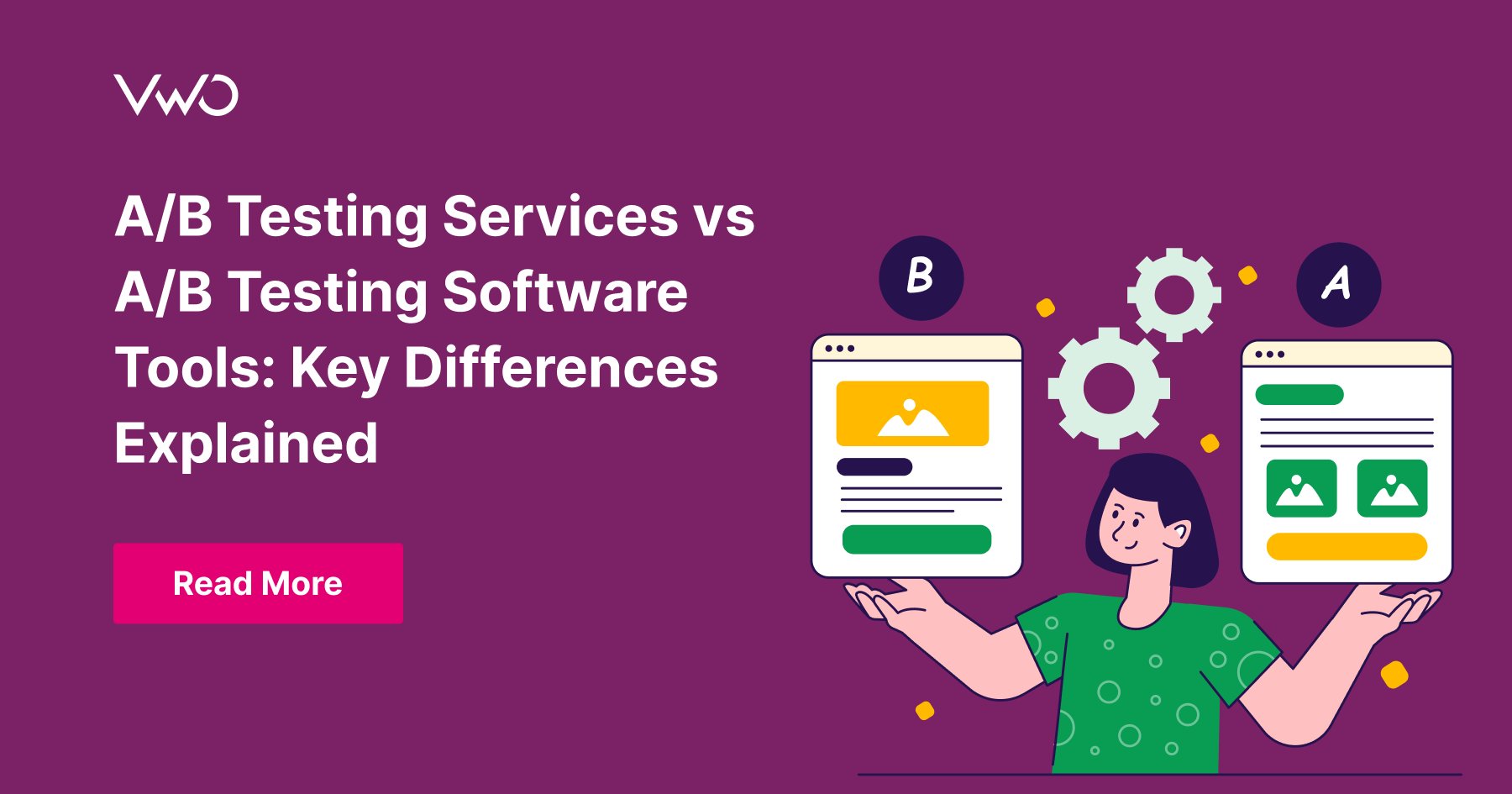
The global digital economy has reached a point of saturation where marginal gains in user experience can translate into millions of dollars in incremental revenue, forcing enterprise leaders to choose between two primary paths for optimization: specialized A/B testing software tools or expert-led A/B testing services. This fundamental decision—whether to build an internal experimentation engine or outsource the capability to an agency—shapes not only a company’s immediate conversion rates but its long-term institutional knowledge and technical infrastructure. While software tools like VWO provide the framework for internal teams to run and manage experiments, services prioritize speed and immediate access to specialized expertise, creating a complex trade-off between control, scalability, and speed-to-market.
The Evolution of the Experimentation Landscape
The dichotomy between software and services has evolved significantly over the last decade. In the early 2000s, A/B testing was a rudimentary process, often limited to simple headline changes on landing pages. Today, the field has matured into a sophisticated discipline encompassing multivariate testing, server-side feature flagging, and AI-driven personalization. As digital products become more complex, the "experimentation maturity" of an organization becomes a competitive moat.
Industry data suggests that organizations with high experimentation maturity—defined by their ability to run hundreds of tests simultaneously across the full product stack—experience significantly higher growth rates than their peers. However, reaching this level of maturity requires a robust decision-making process regarding the "Who" and the "How" of testing. For organizations with high monthly tracked users (MTU) across web, mobile, and server environments, the question is no longer whether to experiment, but who should own the experimentation engine.
Software Tools: The Case for Internal Ownership and Infrastructure
A/B testing software platforms are designed for organizations that view experimentation as a core competency rather than a peripheral marketing activity. These tools provide the technical infrastructure required to design hypotheses, implement variations, and interpret statistical results. When an organization adopts a platform like VWO, it is essentially investing in a long-term asset that de-risks every product release.
Infrastructure for Controlled Innovation
Modern experimentation platforms have moved beyond simple client-side scripts. They now offer feature management capabilities, including "kill switches" and controlled rollouts. This allows engineering teams to release new features to a small percentage of the user base, monitoring for performance regressions before a full-scale launch. This "safety net" functionality is a critical component of modern DevOps and product management.
Behavioral Context and Data Integration
One of the primary advantages of internal software ownership is the ability to integrate experimentation data with behavioral analytics. Leading tools allow teams to view heatmaps and session recordings for specific test variations. This provides the "why" behind the "what," allowing teams to see exactly how a change influenced user engagement. Furthermore, enterprise-grade tools integrate seamlessly with Customer Data Platforms (CDPs) and analytics suites like Google Analytics. This unified data ecosystem enables teams to measure the impact of experiments on long-term metrics such as Customer Lifetime Value (CLV) rather than just session-level conversions.
The Rise of AI-Powered Personalization
The integration of Artificial Intelligence (AI) into software tools has lowered the barrier to entry for complex testing. Features such as AI-driven hypothesis generation and natural language commands for variation building allow smaller teams to execute sophisticated experiments. These capabilities automate the more tedious aspects of the testing cycle, shifting the focus of internal teams from manual setup to high-level strategic analysis.

A/B Testing Services: The Turnkey Solution for Rapid Results
For organizations that lack the immediate technical headcount or the organizational "appetite" to build an in-house department, A/B testing services (agencies) offer a turnkey solution. These agencies provide a full experimentation squad, typically including a strategist, a data analyst, a UI/UX designer, and a front-end developer.
Immediate Expertise and Faster Initial Velocity
The primary value proposition of an agency is the elimination of the learning curve. Building an internal team takes months of recruitment and training. An agency can often launch its first experiment within weeks of a kickoff meeting, utilizing established frameworks and historical benchmarks from other clients in the same industry. This model is particularly effective for organizations with high budgets but low technical bandwidth.
Organizational Enablement and Cultural Shift
Beyond the immediate ROI of a winning test, agencies often serve as a "proof of concept" for data-driven decision-making. By demonstrating the impact of a professional testing process, they can help secure internal buy-in for future experimentation investments. This "expert-led" approach can break through internal political deadlocks regarding website design or product direction by providing objective, statistically significant evidence.
Strategic Comparison: Decision Factors for Enterprise Leaders
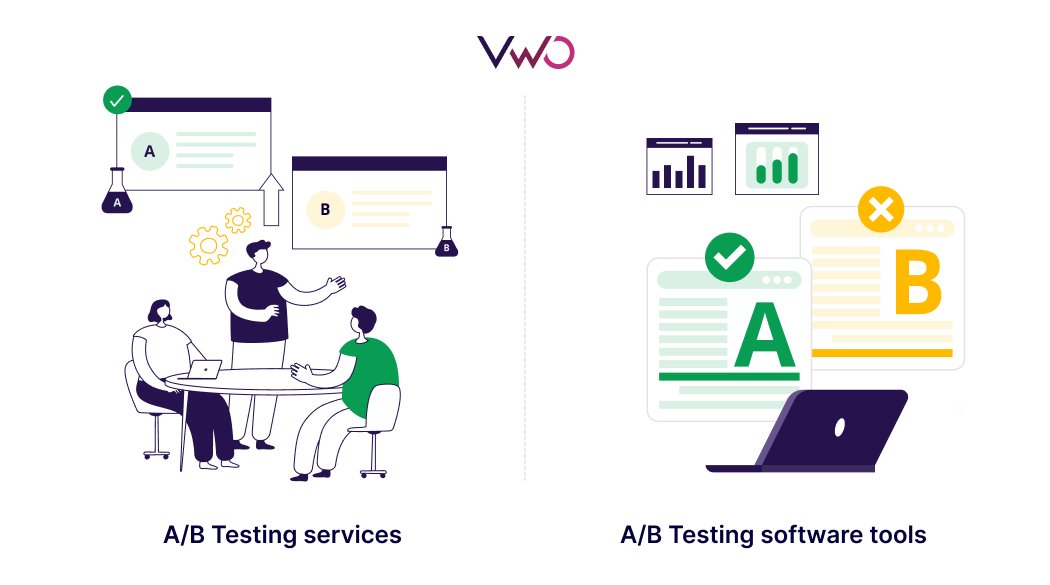
To determine the appropriate model, organizations must evaluate four critical pillars: traffic volume, experiment complexity, budget structure, and compliance requirements.
1. Traffic Volume and Statistical Significance
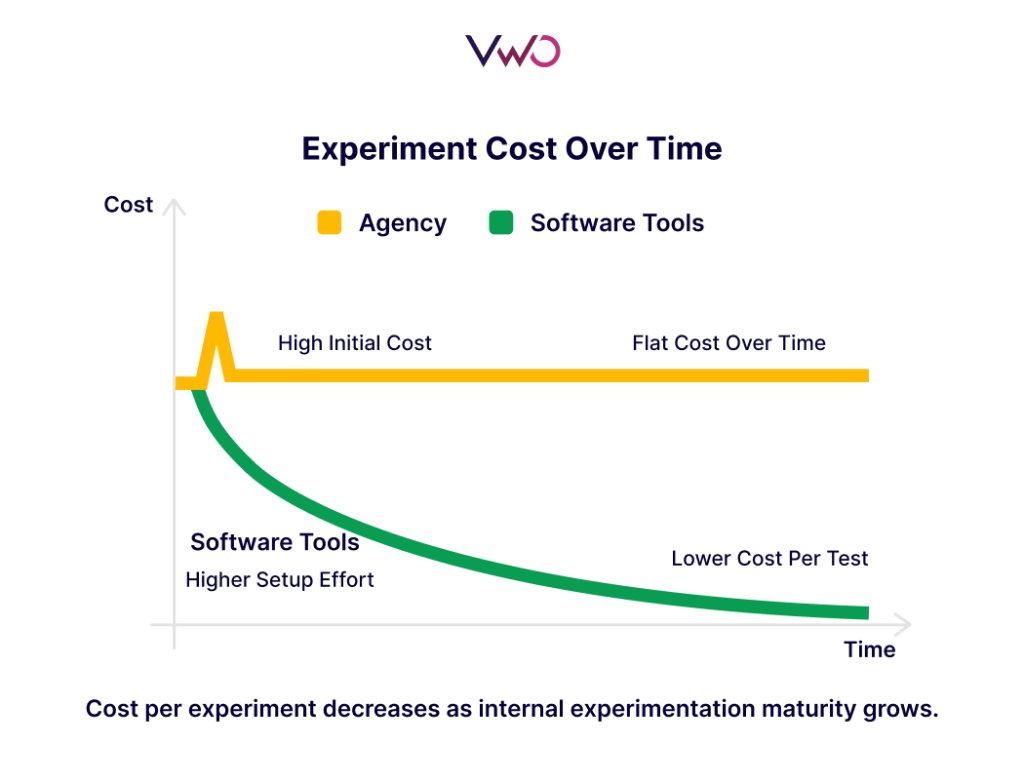
Organizations with massive traffic can reach statistical significance in days, allowing for high-velocity testing. In these cases, a software tool is often more cost-effective as the "cost per test" drops as the team’s efficiency increases. Conversely, organizations with lower or seasonal traffic require more careful prioritization of tests. Agencies excel here, as their expertise ensures that every "slot" in the testing calendar is used for a high-impact hypothesis.
2. Experiment Complexity and the Full Stack
If an organization’s roadmap involves server-side testing, mobile app experimentation, or algorithm testing, internal tools are generally preferred. These require deep integration with the company’s codebase, which can be difficult and risky to manage via an external third party. However, if the focus is primarily on front-end optimization and conversion rate optimization (CRO) on marketing pages, an agency can manage the entire lifecycle without taxing internal engineering resources.
3. Economic Structure and Long-Term ROI
The cost structure of software is typically a predictable subscription based on MTUs or feature tiers. As the internal team matures, the ROI compounds because the knowledge stays within the building. Agency costs are usually higher upfront, involving monthly retainers or project-based fees. While the initial results may be faster, the ROI is tied to the duration of the contract; once the agency leaves, the experimentation capability often leaves with them.
4. Security, Compliance, and Data Governance
In highly regulated sectors such as FinTech or Healthcare, data ownership is non-negotiable. Software tools allow these organizations to maintain complete control over user data and ensure compliance with GDPR, CCPA, and other privacy frameworks. While agencies can work within these constraints using compliant tools, the additional layer of external access can complicate data governance audits.

The Hybrid Model: A Transitionary Strategy
In practice, the choice between services and software is not always binary. A significant trend among mid-market and enterprise firms is the adoption of a hybrid model. In this scenario, an organization purchases the software (ensuring data ownership and infrastructure) but hires an agency to manage the strategy and execution for the first 12 to 18 months.
This approach allows the company to see immediate results while its internal team "shadows" the agency experts. Over time, the internal team takes over more of the process—starting with hypothesis building and moving eventually to full execution—until the agency is no longer required or is moved to a high-level advisory role.
Industry Perspectives and Case Analysis
Lucia van den Brink, Founder of The Initial, emphasized in a recent industry podcast that the ownership of experimentation is fundamentally about empowerment. "It gives designers, developers, and product teams the power to verify their ideas and have influence in deciding what to do next," she noted. This sentiment reflects a broader industry shift toward "democratized experimentation," where testing is not just a marketing function but a core part of the product development lifecycle.
The impact of this shift is visible in the case of Vandebron, a Dutch green energy provider. By utilizing an integrated software platform that combined behavioral analytics with A/B testing, Vandebron identified a specific friction point in their registration form’s date-of-birth field. By validating a simplified input method through an experiment, they achieved a 16.3% increase in sign-up conversions. This type of rapid, insight-driven iteration is the hallmark of a mature internal experimentation program.
Conclusion: Shaping the Future of Digital Optimization
Ultimately, the decision between A/B testing services and software tools shapes how innovation scales within an organization. Software tools offer the path to long-term capability, data sovereignty, and technical integration, making them the standard for product-led companies. Services offer a high-octane jumpstart, providing specialized talent and rapid results for organizations that need to prove the value of CRO before committing to internal overhead.
As AI continues to integrate into these platforms, the barrier between "service-level expertise" and "software capability" will continue to blur. However, the fundamental requirement remains: organizations must decide whether they want to rent their growth or own the engine that produces it. For those looking to build a sustainable competitive advantage, the path forward usually involves a strategic investment in internal infrastructure, supported by the right software and, when necessary, guided by expert insights.


 Asro
Asro
 Dwi Wanna