rifanmuazin
The digital realm of search engine optimization has undergone a profound transformation, moving far beyond the rudimentary keyword matching that once dominated content strategy. In its nascent stages, Google’s primary function was a straightforward index: connect a user’s search query with identical keywords found within web documents. This foundational mechanism gave birth to the practice of "keyword research and optimization," a methodology that, remarkably, persists as a core strategy for many publishers despite Google’s significant advancements. Today, the search giant no longer operates on such simplistic principles; its algorithms now possess a sophisticated understanding of search intent, contextual nuances, and, critically, the multifaceted concept of "content quality." This shift represents a paradigm change, demanding content creators to evolve their strategies to align with a more intelligent and discerning search environment.
The Genesis of Quality: Google’s Algorithmic Evolution
Google’s journey from a keyword-centric engine to a semantic powerhouse has been a deliberate and continuous process, driven by the ambition to deliver ever more relevant and reliable information. Initially, algorithms like PageRank revolutionized search by evaluating the quantity and quality of backlinks, indicating a page’s importance. However, as the web grew exponentially, the limitations of solely relying on link signals and keyword density became apparent.
Major algorithmic updates marked pivotal moments in this evolution. The Panda update, first rolled out in 2011, targeted low-quality content, penalizing websites with thin, duplicate, or unoriginal material. This marked Google’s serious commitment to content quality over quantity. Subsequent updates like Hummingbird (2013) introduced semantic search capabilities, enabling Google to understand the meaning behind queries rather than just the literal words. This meant recognizing synonyms, concepts, and the broader context of a user’s request. RankBrain, launched in 2015, further enhanced this by integrating machine learning to interpret ambiguous queries and identify patterns in search results, particularly for never-before-seen searches. More recently, BERT (2019) and MUM (2021) have leveraged advanced natural language processing (NLP) to comprehend the nuances of language, making search results even more contextually relevant and conversational. These advancements collectively underscore Google’s pivot towards a human-like understanding of content and user needs.
The complex task of teaching a machine to discern "high-quality" content is inherently challenging, given that quality is subjective and varies based on the individual searcher’s needs and the nature of the information sought. To bridge this gap, Google introduced and continuously refines its Search Quality Raters’ Guidelines. This extensive document, utilized by over 10,000 human quality raters globally, provides detailed instructions on how to evaluate web pages. These human assessments do not directly impact rankings but serve as crucial training data for Google’s machine learning algorithms, teaching them what constitutes a "quality" result and what user satisfaction looks like. It was within this framework that the E-E-A-T concept was born, becoming a cornerstone for assessing content credibility.
E-E-A-T Defined: The Pillars of Online Credibility
E-E-A-T, which stands for Experience, Expertise, Authoritativeness, and Trustworthiness, represents Google’s comprehensive framework for evaluating the credibility and reliability of both a website and its content creators. This dual focus on both the platform and the individual producing the content is a critical distinction. The concept of E-A-T was first prominently discussed in the Quality Raters’ Guidelines around 2014, emphasizing expertise, authoritativeness, and trustworthiness. In late 2022, Google officially added the first "E" for "Experience" to the framework, acknowledging the value of firsthand knowledge and personal engagement with a topic.
- Experience: This refers to the extent to which the content creator has direct, lived experience with the topic they are discussing. For instance, a product review written by someone who has actually used the product extensively demonstrates experience. This addition highlights Google’s recognition that practical, real-world insight often adds unique value that theoretical knowledge alone cannot provide.
- Expertise: This component assesses whether the content creator possesses specialized knowledge or skill in a particular field. This doesn’t always necessitate formal qualifications, especially for hobby-related or niche topics. However, for subjects like medical advice or financial planning, verifiable professional credentials are often essential.
- Authoritativeness: This pertains to the reputation of the creator and the website as a recognized source of information on the given topic. It is about being seen as a "go-to" authority in the industry or niche, often evidenced by mentions, citations, and recognition from other reputable sources.
- Trustworthiness: This is arguably the most crucial element, focusing on the legitimacy, honesty, and accuracy of the content and the website. Trustworthiness is built through transparent sourcing, factual accuracy, clear communication of purpose, and a secure user experience. For transactional websites, clear customer service information and secure payment gateways are vital.
The Criticality of E-E-A-T: Navigating "Your-Money-Your-Life" (YMYL) Topics
The importance of high E-E-A-T is not uniform across all content types. It is particularly paramount for "Your-Money-Your-Life" (YMYL) topics, where inaccurate, misleading, or low-quality information could have significant, detrimental impacts on a user’s health, financial stability, safety, or well-being. Google applies significantly stricter quality standards to YMYL content to protect users from potential harm.
Examples of YMYL topics that demand exceptionally high E-E-A-T include:
- Medical and Health Information: Content related to diagnoses, treatments, medications, or general health advice. This requires expertise from licensed medical professionals, scientists, or reputable health organizations.
- Financial and Legal Advice: Articles on investments, taxes, loans, legal rights, or estate planning. Such content necessitates input from certified accountants, lawyers, or official government financial/legal bodies.
- News Reporting and Current Events: Information about local, national, or international events, especially those impacting public policy, safety, or human rights. Accuracy, factual reporting, and experienced journalism are non-negotiable.
- Civic, Government, and Public Policy Information: Content concerning voting procedures, legislation, public services, or governmental functions. Official government sources are the definitive authority here.
- Topics Related to Children: Any advice or information concerning the care, development, or safety of children. This demands highly reliable sources and often professional child development or safety expertise.
- Product Reviews and Purchasing Decisions: While seemingly less critical, reviews that influence significant purchasing decisions can impact a user’s financial well-being. First-hand experience with the product, transparent methodology for evaluation, and balanced assessments are vital.
It is important to note that a lack of an established online reputation does not automatically equate to low E-E-A-T. Many small websites and individual creators may not have extensive public profiles but can still produce high E-E-A-T content, especially when their content is backed by genuine first-hand experience and demonstrable expertise. In such cases, authentic experience can significantly outweigh a lack of widespread author reputation, provided the content itself is accurate and helpful.
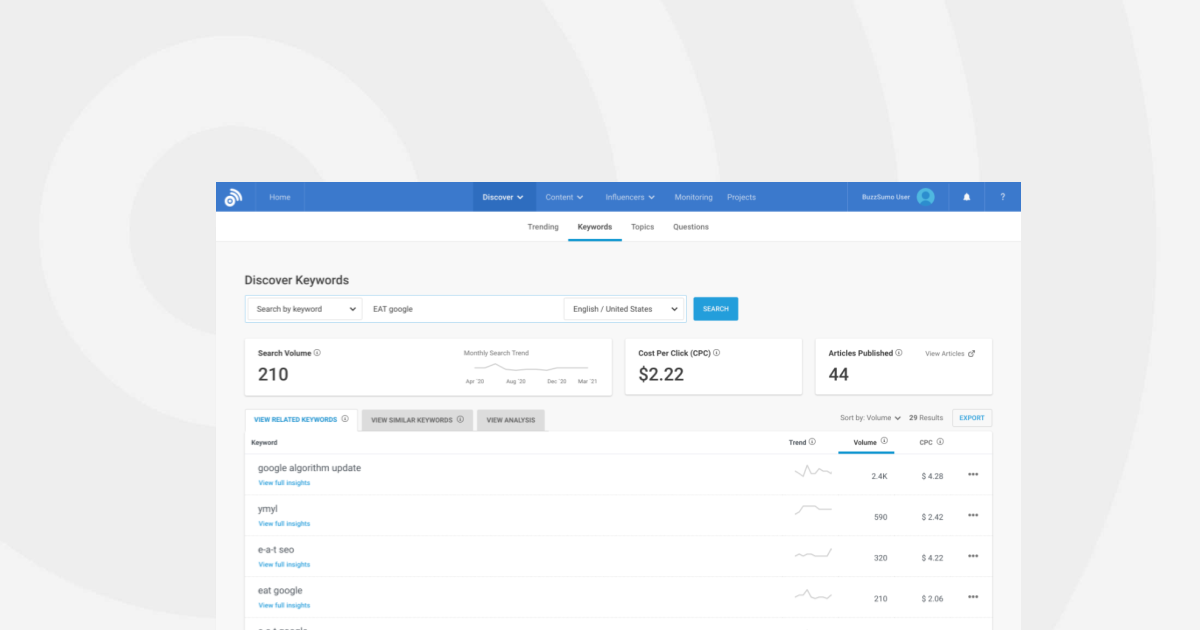
Strategic Shifts for Content Creators: Embracing the E-E-A-T Framework
For content creators and SEO professionals, the shift towards E-E-A-T necessitates a fundamental rethinking of content strategy, moving away from keyword stuffing and towards genuine value creation. The goal is to produce content that truly serves the audience, anticipating their questions and fulfilling their search intent.
1. From Keywords to Comprehensive Topic Clusters:
Google’s emphasis on topics and entities over isolated keywords demands a holistic approach to content planning. Content strategists are advised to adopt a topic-centric model, building "topic clusters." This involves identifying a broad, authoritative "pillar content" piece that comprehensively covers a core subject. This pillar content is then supported by multiple "cluster content" articles that delve into specific sub-topics related to the pillar, with internal linking connecting them all. This structure demonstrates deep subject matter expertise and helps search engines understand the breadth and depth of a site’s coverage on a particular domain. Tools like a "Topics Explorer" can help identify popular associated topics and prioritize them in content planning, ensuring alignment with audience interests and search trends.
2. Cultivating Author and Brand Authority:
Google explicitly encourages its quality raters to investigate the credibility of content authors and the reputation of the publishing website. Building a strong niche authority, while requiring sustained effort, yields significant long-term benefits, including improved content rankings. Strategies to achieve this include:
- Active Participation and Outreach: Seeking opportunities for interviews, podcasts, guest contributions, and speaking engagements on reputable platforms. Content analysis tools can help identify publications that feature experts in specific niches.
- Demonstrating Expertise: Consistently producing high-quality, insightful content that showcases deep knowledge. Monitoring other established authorities in the niche can provide valuable learning opportunities and insights into effective strategies.
- Leveraging Schema Markup: Implementing Organization and Author schema markup helps Google understand who is behind the content and the site. This structured data explicitly communicates authorship and organizational details to search engines, reinforcing E-E-A-T signals.
- Consolidating Digital Presence: Creating a unified online presence across various channels (e.g., social media, professional profiles, personal websites) that clearly articulate expertise and affiliations.
3. Crafting Content for User Satisfaction, Not Just Word Count:
Google’s guidelines stress the importance of a "satisfying amount" of content, which is entirely dependent on the search intent and topic. There is no universal ideal word count. For a quick factual lookup, a concise answer is satisfying. For a complex "how-to" guide or an in-depth analysis, extensive content is required. Content analysis tools can provide data on the average engagement by content length for specific topics, helping creators understand the optimal depth needed to satisfy users and perform well in search results. For instance, an analysis might reveal that "Social Media Marketing" guides perform best between 3,000 and 10,000 words, indicating a need for comprehensive coverage.
4. The Power of Network and Credibility:
Beyond direct content attributes, the relationships a brand and its authors cultivate play a crucial role in E-E-A-T. Google’s quality raters consider who is associated with the content and brand. Building genuine relationships with credible authors, journalists, and publications in a niche is paramount. This involves strategic outreach, offering exclusive insights, and fostering collaborations. Even without direct backlinks, Google’s advanced algorithms can semantically understand when a brand or author is regularly referenced alongside other influential "entities" (brands, individuals) within a topic, interpreting this as a strong signal of authority and trustworthiness. Tools like "Journalist Databases" facilitate identifying and engaging with influential voices in specific niches.
5. The Imperative of Verifiable Sourcing:
Citing diverse and authoritative sources is fundamental to demonstrating trustworthiness and thorough research. This practice signals to Google that the content is well-supported, unbiased, and provides readers with options for further investigation, especially for high-stakes YMYL topics. Prioritizing official sources for data, statistics, and recommendations is critical. For example, when discussing public health matters, referencing government health organizations or peer-reviewed scientific journals using advanced search operators (e.g., site:gov) can significantly enhance the perceived trustworthiness of the content. While linking out might seem counterintuitive to keeping users on a site, it ultimately reinforces credibility and provides a richer, more reliable experience.
Measuring and Adapting: Tools for E-E-A-T Optimization
To effectively implement these E-E-A-T strategies, content creators rely on sophisticated analytics and research tools. Platforms offering "Content Analyzer" features allow marketers to examine successful content based on social shares, engagement metrics, and link profiles, gleaning insights into what resonates with audiences. A "Keyword Tool" provides a view of top-ranking content in search engine results pages (SERPs) for specific topics, helping to understand competitive landscapes. Furthermore, "Topics Explorer" functions aid in identifying related subjects for comprehensive topic cluster development, while "Journalist Databases" assist in discovering influential media contacts for strategic outreach and relationship building. Such tools provide data-driven insights essential for iterating and refining content strategies in line with Google’s evolving expectations.
Challenges and Opportunities for Digital Publishers
The shift towards E-E-A-T presents both challenges and significant opportunities. For smaller websites and independent creators, the initial hurdle of establishing reputation and authority can be daunting. However, Google’s guidelines acknowledge that genuine first-hand experience can often compensate for a lack of widespread public recognition, offering a pathway for niche experts to thrive. The overarching implication is that the era of tactical SEO manipulation is waning; success now hinges on consistently producing genuinely valuable, well-researched, and credible content that serves real user needs.
This evolution signifies a positive trajectory for the internet, pushing publishers towards higher standards of quality and responsibility. By aligning content strategies with the principles of E-E-A-T, digital publishers can build stronger brands, foster greater audience trust, and achieve sustainable long-term visibility in an increasingly intelligent search environment. The future of content is human-centric, driven by the algorithms’ growing ability to understand and reward genuine value, making it imperative for content strategists to embrace this transformative approach.