rifanmuazin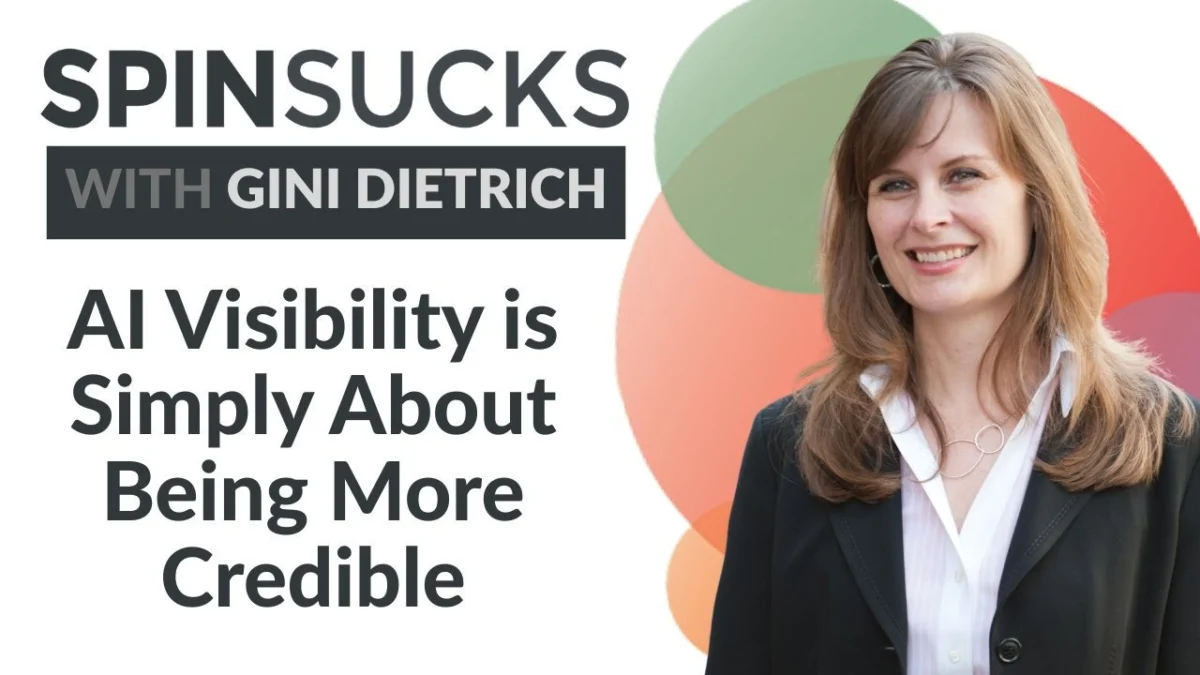
The digital marketing landscape is undergoing a fundamental transformation as artificial intelligence redefines how information is discovered, synthesized, and delivered to users. For years, the prevailing wisdom in search engine optimization (SEO) and content marketing was rooted in the concept of volume: the more a brand published, the more digital real estate it could claim. However, as generative AI tools like ChatGPT, Perplexity, and Google’s Search Generative Experience (SGE) become the primary interfaces for information retrieval, the rules of engagement have shifted. AI visibility is no longer a game of content volume; it has become a game of credibility, where authority, structure, and consistency dictate which brands are cited as the "obvious answer" and which are relegated to the digital void.
The Shift from Volume to Veracity
The traditional marketing impulse to respond to technological shifts with increased output is a relic of the "hustle culture" that dominated the early 2010s. When search engines began siphoning off clicks through featured snippets and zero-click results, many brands doubled down on production, flooding the internet with blog posts, newsletters, and social updates. This "more is more" philosophy was built on the assumption that visibility was a linear function of output. In the era of AI, this strategy is not only becoming less effective but is actively detrimental to brand authority.
AI systems are not looking for the most prolific source; they are looking for the most reliable one. These large language models (LLMs) and recommendation engines prioritize content that is clear, structured, and corroborated across multiple platforms. When marketing teams prioritize speed over substance, they often produce generic, interchangeable content that fails to provide the "proof-backed" assets—such as proprietary data and unique frameworks—that AI tools require to justify a recommendation. By cranking out high volumes of mediocre content, brands are effectively proving they can produce noise, but they are failing to prove strategic value.
A Chronology of Search Evolution
To understand why credibility has overtaken volume, one must look at the timeline of digital discovery.
- The Keyword Era (2000–2010): Visibility was driven by keyword density and basic backlink counts. Quantity was king, leading to the rise of "content farms."
- The Semantic Era (2011–2022): Google’s Panda and Penguin updates began rewarding quality and intent. The introduction of E-A-T (Expertise, Authoritativeness, and Trustworthiness) signaled a shift toward credible sourcing.
- The Generative Era (2023–Present): With the mass adoption of generative AI, the search engine is evolving into an "answer engine." Users no longer receive a list of links; they receive a synthesized response. This shift has led to a projected 25% decline in traditional search engine traffic by 2026, according to Gartner, as users find answers within AI interfaces.
In this current phase, the "Corroboration Loop" has emerged as the critical metric. This refers to the process where an AI tool identifies a claim on a brand’s owned media (their website) and finds it validated by third-party earned media (journalism, analyst reports, or podcasts). If the information is consistent across these channels, the AI assigns a higher confidence score to the brand.
Visibility Engineering: The New Strategic Framework
As the industry moves away from simple content creation, a new discipline known as "visibility engineering" is taking hold. This approach treats brand presence not as a series of disconnected posts, but as a structured system of expertise. Visibility engineering requires brands to move beyond the "busyness badge" and focus on three core pillars:
1. Structured Expertise
AI rewards clarity. A strong point of view buried in a poorly organized 2,000-word article is less useful to an LLM than a concisely structured page featuring clear definitions, tight theses, and bulleted takeaways. For a machine to "understand" a brand’s expertise, the content must be machine-readable and logically organized. This includes the use of schema markup, clear hierarchies, and internal linking that maps out the brand’s knowledge graph.
2. The Credibility Ceiling of Owned Media
While a brand’s website remains its "source of truth," owned media has an inherent credibility ceiling. Because it is self-published, it lacks the inherent trust of third-party validation. In an environment where buyers are increasingly skeptical, they—and the AI tools they use—triangulate information. They look for "credibility transfer," which occurs when an external, reputable source reinforces the brand’s narrative.
3. Corroboration Loops
The most visible brands in the AI era are those that successfully align their owned and earned media. If a CEO makes a claim on a corporate blog, and that same claim is analyzed in a trade publication and discussed on a reputable industry podcast, the AI sees a pattern of authority. This consistency makes the brand a "safe" recommendation for the AI to provide to a user.
Supporting Data: The Impact of Zero-Click Search
Recent industry data underscores the urgency of this shift. Studies by SparkToro and other search analytics firms have shown that nearly 60% of searches on mobile and desktop now result in no click-through to a website. This "zero-click" reality means that the content a brand produces must be impactful enough to be summarized by the AI in the search results themselves.
Furthermore, a 2024 survey of B2B buyers revealed that 72% of decision-makers are more likely to trust a brand that provides proprietary data and original research over those that publish general thought leadership. This highlights a growing demand for "Level-Three FAQs"—content that moves beyond "what is" and "how to" and addresses complex implementation challenges, risk mitigation, and nuanced comparisons.
The Role of Proprietary Data and Evidence-Based Assets
To improve AI visibility, marketing teams must shift their focus toward creating "citable" assets. AI tools are essentially citation engines; they seek out facts, figures, and unique insights to ground their generated responses. The following types of content are currently seeing the highest "travel" or citation rates in AI summaries:
- Proprietary Data Storytelling: Internal usage data, benchmarks, and survey results provide the "raw material" that AI tools crave.
- Real-World Frameworks: Proprietary methodologies that have been tested and proven are more likely to be recognized as authoritative than generic advice.
- Level-Three FAQs: Answering the "tough" questions—such as "When is this product not a good fit?" or "What are the hidden costs of implementation?"—builds a level of transparency that AI identifies as high-quality, expert content.
- Case Studies with Verifiable Outcomes: Before-and-after stories backed by specific metrics offer the proof-of-concept that LLMs use to validate a brand’s claims.
Official Responses and Industry Sentiment
Industry leaders are increasingly vocal about the dangers of the "content factory" model. Gini Dietrich, founder of Spin Sucks and creator of the PESO Model, has long advocated for an integrated approach to communications. In recent discussions regarding AI disruption, Dietrich emphasized that the role of the communications professional is shifting from "content creator" to "meaning maker." The consensus among strategic communicators is that the "soft skills" of judgment, persuasion, and audience analysis are the very elements that AI cannot replicate but requires to function effectively as a recommendation engine.
Similarly, Noah Greenberg of Stacker has noted that recommendation engines are looking for the "next layer down" in expertise. The industry sentiment is clear: those who continue to compete on volume will be drowned out by AI-generated noise, while those who compete on credibility will find themselves at the top of the AI’s recommendation list.
Broader Impact and Future Implications
The transition from a volume-based to a credibility-based strategy has profound implications for the future of marketing departments. We are likely to see a consolidation of roles, where PR, SEO, and content marketing are no longer siloed but integrated into a single "Visibility" or "Authority" department.
Moreover, the "cost of entry" for digital visibility is rising. It is no longer enough to be "perfectly fine." In a market saturated with AI-generated text, human-led expertise, backed by real-world evidence, becomes the premium product. Brands will need to invest more in original research, expert interviews, and high-fidelity data analysis to maintain their standing.
Ultimately, the rise of AI visibility rewards disciplined communicators. The brands that win will not be those that publish the most words, but those that articulate the clearest point of view and support it with the strongest proof. The question for modern marketing leaders is no longer "How much more do we need to publish?" but rather "Have we made it unmistakably clear who we are, what we know, and why the world should believe us?" By answering that question, brands can stop chasing the algorithm and start engineering true authority.