rifanmuazin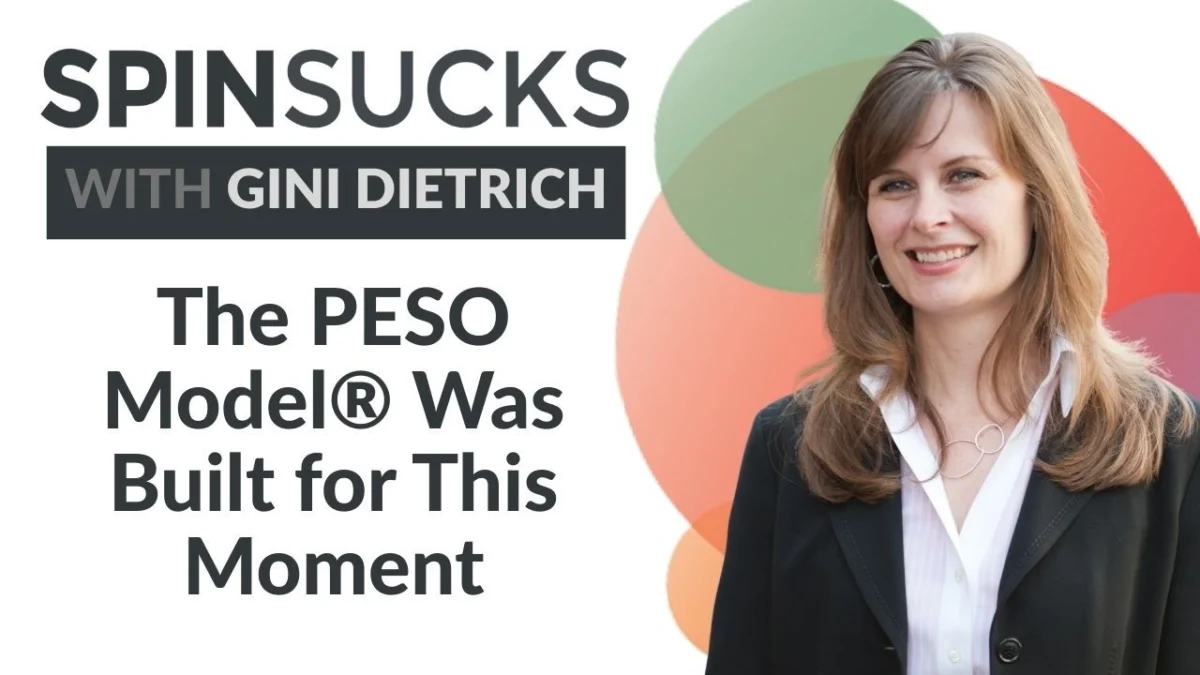
The PESO Model, a cornerstone framework in integrated communications for over a decade, has undergone a fundamental transformation in response to the rise of generative artificial intelligence and the shifting landscape of digital discovery. Contrary to industry speculation that AI-driven search and automated content generation would render traditional communication models obsolete, the PESO Model—encompassing Paid, Earned, Shared, and Owned media—has transitioned from a tactical organizational tool into a comprehensive strategic operating system. In a marketing environment defined by zero-click discovery, AI-generated summaries, and a pervasive fragmentation of consumer trust, the necessity for a unified, cross-channel approach has become more acute than ever.
The Shift from Tactics to Systems
For years, many marketing and public relations practitioners viewed the PESO Model as a simple checklist: write a blog post (Owned), pitch a story to a journalist (Earned), post a link on social media (Shared), and put a small budget behind a sponsored post (Paid). While this approach provided a baseline for activity, it often resulted in siloed efforts that failed to leverage the compounding effects of integration. In the current era, this "fragmented" version of marketing is increasingly visible and ineffective.
The modern iteration of the PESO Model functions as a visibility engine. It recognizes that discovery no longer begins and ends on a brand’s website. Instead, potential customers interact with brands through AI summaries, third-party reviews, creator commentary, and social media screenshots long before they ever click a link. To survive this shift, the model has evolved to ensure that every piece of content works harder, every media hit is repurposed, and every paid dollar accelerates an already proven message.
Chronology of the PESO Model’s Evolution
The journey of the PESO Model reflects the broader shifts in the digital economy over the last two decades. Understanding this timeline is essential for comprehending why the model remains the industry standard.
- 2014: The Inception: Gini Dietrich, founder of Spin Sucks, officially introduced the PESO Model in her book, Spin Sucks: Communication and Advertising in the Networked World. It was the first framework to provide a visual and conceptual bridge between PR, marketing, and advertising.
- 2018–2020: The Integration Phase: As social media algorithms became more restrictive (the "pay-to-play" era), the "Shared" and "Paid" quadrants became more closely linked. During this period, the industry began to move away from vanity metrics like impressions toward more meaningful engagement data.
- 2023: The Generative AI Catalyst: The explosion of Large Language Models (LLMs) like ChatGPT and Google’s Gemini changed how information is synthesized. This forced a redesign of the PESO Model Certification to address "AI discovery"—the process by which AI tools crawl the web to find "sources of truth."
- 2025 and Beyond: The Operating System Era: The current phase sees the PESO Model utilized as a holistic system where the quadrants are no longer distinct silos but interconnected gears. If one gear fails—such as a lack of Earned media corroboration—the entire system loses its authority in the eyes of both humans and AI algorithms.
Supporting Data: The Reality of Modern Discovery
The evolution of the PESO Model is supported by significant shifts in consumer behavior and search engine mechanics. Data from SparkToro and other industry analysts indicate that more than 50% of Google searches now end in "zero clicks," meaning the user finds the answer directly on the search engine results page (SERP) without clicking through to a website. This shift is being accelerated by AI Overviews, which synthesize information from multiple sources.
Furthermore, the 2024 Edelman Trust Barometer highlights a growing skepticism toward traditional advertising, while trust in "peers" and "technical experts" remains high. This data underscores the importance of the "Earned" and "Shared" quadrants of the PESO Model. Without third-party corroboration, a brand’s "Owned" content is often viewed as mere promotion rather than an authoritative source of truth.
From a technical standpoint, AI models are trained on high-quality data. If a brand’s information is not consistently represented across all four quadrants of the PESO Model, AI tools are less likely to cite that brand as a primary source or recommendation. This makes the integration of the model a technical SEO necessity as much as a brand-building one.
The Four Quadrants as a Unified Engine
To understand how the modern PESO Model operates, one must look at how the quadrants interact to create a "compounding effect":
- Owned Media (The Source of Truth): This is the foundation. It includes the content the brand has total control over, such as white papers, blogs, and proprietary research. In the AI era, Owned media must be authoritative and structured in a way that AI crawlers can easily parse.
- Earned Media (The Corroboration): This is the most difficult to obtain but the most valuable for building trust. When a reputable third-party news outlet or industry analyst validates a brand’s message, it provides the "proof" that both consumers and AI algorithms require to establish credibility.
- Shared Media (The Signal Movement): Shared media is the distribution layer. It is not just about posting on LinkedIn or X; it is about community engagement and moving the "signal" of the brand through networks. It serves as the social proof that reinforces the Earned and Owned media.
- Paid Media (The Acceleration): Paid is no longer about "throwing money at a problem." In the PESO system, Paid media is used strategically to amplify content that has already proven its value in the Earned or Shared quadrants. It ensures that the most effective messages reach a wider, targeted audience.
Official Responses and Professional Implications
Industry leaders have noted that the primary challenge facing marketing teams today is not a lack of tools, but a lack of systemic strategy. Many CMOs report that their teams are "looking busy" with disconnected campaigns that fail to move the needle on business objectives.
The PESO Model Certification was specifically updated to address these systemic failures. According to communicators who have undergone the certification, the shift in focus has allowed them to move from reporting on "vanity metrics" (such as likes and impressions) to "business metrics" (such as lead quality, authority scores, and conversion rates). The official stance from Spin Sucks and other practitioners is that AI has not made the model irrelevant; rather, it has acted as a "flashlight," shining a light on the cracks in traditional, siloed marketing strategies.
Professional organizations are increasingly advocating for this integrated approach as a defense against "content fatigue." With AI capable of producing infinite amounts of mediocre content, the only way for a brand to stand out is through a coordinated system that emphasizes quality, authority, and repetition across multiple touchpoints.
Broader Impact and Future Outlook
The broader impact of the evolved PESO Model extends into the very structure of corporate communications departments. Organizations are beginning to move away from separate "PR," "Social Media," and "Digital Marketing" teams in favor of integrated "Content and Visibility" departments that operate under the PESO framework.
The implications for the future are clear: visibility will no longer be determined by who can scream the loudest or spend the most on ads. Instead, visibility will be granted to the brands that provide the clearest, most corroborated signals. As AI continues to mediate the relationship between brands and consumers, the "operating system" approach of the PESO Model will be the primary way organizations maintain their relevance.
In conclusion, the PESO Model has not been bypassed by technology; it has been refined by it. It remains the most effective way to align what a company says about itself with what others say about it, ensuring that every marketing effort contributes to a measurable business outcome. For the modern communicator, the question is no longer whether the PESO Model is relevant, but whether they have the capability to execute it at the level of sophistication that the current market demands. The transition from knowing the acronym to running the system is the defining characteristic of the industry’s most successful practitioners.