
 rifanmuazin
The landscape of digital recruitment has undergone a radical transformation as companies increasingly grapple with rising advertising costs and dwindling candidate attention spans. In a market where organizations frequently spend upwards of $5 per click to drive traffic to job postings, the efficiency of the post-click experience has become a critical determinant of recruitment success. Industry data suggests that a significant portion of recruitment budgets is currently being wasted on "bounces"—potential candidates who click an advertisement but abandon the process because they land on a generic, confusing, or non-responsive career portal. To combat this, a growing number of industry leaders are pivoting toward the use of dedicated recruitment landing pages, a specialized digital strategy designed to streamline the path from discovery to application.
The Economics of Modern Recruitment and the Conversion Gap
The shift toward recruitment landing pages is driven by a fundamental disconnect in traditional hiring pipelines. Most corporate career sites are designed as repositories for dozens, if not hundreds, of job listings. While these sites serve as effective databases, they often fail as marketing tools. When a candidate responds to a specific advertisement for a "Remote Software Engineer," for example, they expect to see that specific role immediately. Instead, they are frequently met with complex navigation menus, corporate mission statements, and search bars that force them to re-find the job they just clicked.
This friction results in high abandonment rates. In the competitive "war for talent," the cost per applicant (CPA) has become a primary KPI for HR departments. If a landing page is not optimized, the cost of acquiring a single completed application can skyrocket, making high-volume hiring unsustainable. Recruitment landing pages solve this by acting as standalone destinations with a singular focus: converting the visitor into an applicant. By removing the "leaks" found in traditional websites—such as external links, social media feeds, and unrelated job listings—companies can focus the candidate’s attention entirely on the value proposition of the specific role at hand.
A Chronology of Digital Recruitment Evolution
The transition to high-conversion landing pages represents the third major era of digital hiring.
- The Job Board Era (1990s–2000s): Recruitment moved from newspaper classifieds to digital boards like Monster and Craigslist. The focus was on reach and volume, but the candidate experience was largely unbranded and transactional.
- The Career Portal Era (2010s): Companies began building internal "Career" sections on their corporate websites. While this improved branding, these sites became increasingly bloated with "Employer Branding" content that, while informative, often distracted from the primary goal of job application.
- The Precision Landing Page Era (2020s–Present): Driven by the rise of the gig economy and the "Great Resignation," companies have adopted the tactics of direct-response marketing. Recruitment is now treated with the same analytical rigor as e-commerce, utilizing dedicated landing pages, A/B testing, and mobile-first design to capture talent in real-time.
Core Principles of High-Converting Recruitment Pages
Market analysis of successful recruitment campaigns reveals a set of "best practices" that distinguish top-tier landing pages from underperforming ones. These principles are rooted in user experience (UX) design and behavioral psychology.
Message Match and Cognitive Ease
The most effective recruitment pages employ "message match," a technique where the landing page headline mirrors the language used in the advertisement that brought the candidate there. If an ad promises "Flexible Hours and Competitive Pay," the landing page must reiterate those exact points in the primary header. This reduces "cognitive load," reassuring the candidate that they are in the right place and that the opportunity is exactly what was advertised.
The "Above the Fold" Mandate
In digital marketing, "above the fold" refers to the content visible on a screen before the user has to scroll. For recruitment, this space is premium real estate. A successful page must communicate the role, three to four key benefits, and a clear Call to Action (CTA) within this initial view. Trust signals, such as company logos or industry awards, should also be visible to establish immediate credibility.
Reducing Form Friction
Data from recruitment technology providers indicates that every additional field in an application form can decrease conversion rates by 5% to 10%. High-performance pages limit initial forms to three to five essential fields: name, email, phone number, and a resume upload. Some organizations have moved toward "multi-step" forms, where the candidate provides basic contact info first, ensuring the company has a "lead" even if the candidate does not complete the full technical application in one sitting.
The Mobile-First Imperative
With over 70% of job seekers now using mobile devices to search for work, page speed and mobile responsiveness are no longer optional. A one-second delay in mobile load time can result in a significant drop in completed applications. Leading firms utilize Content Delivery Networks (CDNs) and image compression to ensure their recruitment pages load in under three seconds.
Industry Case Studies: Lessons from the Gig Economy
The gig economy has been at the forefront of recruitment landing page innovation, as companies like Uber, Lyft, and DoorDash require a constant, high-volume influx of contractors.
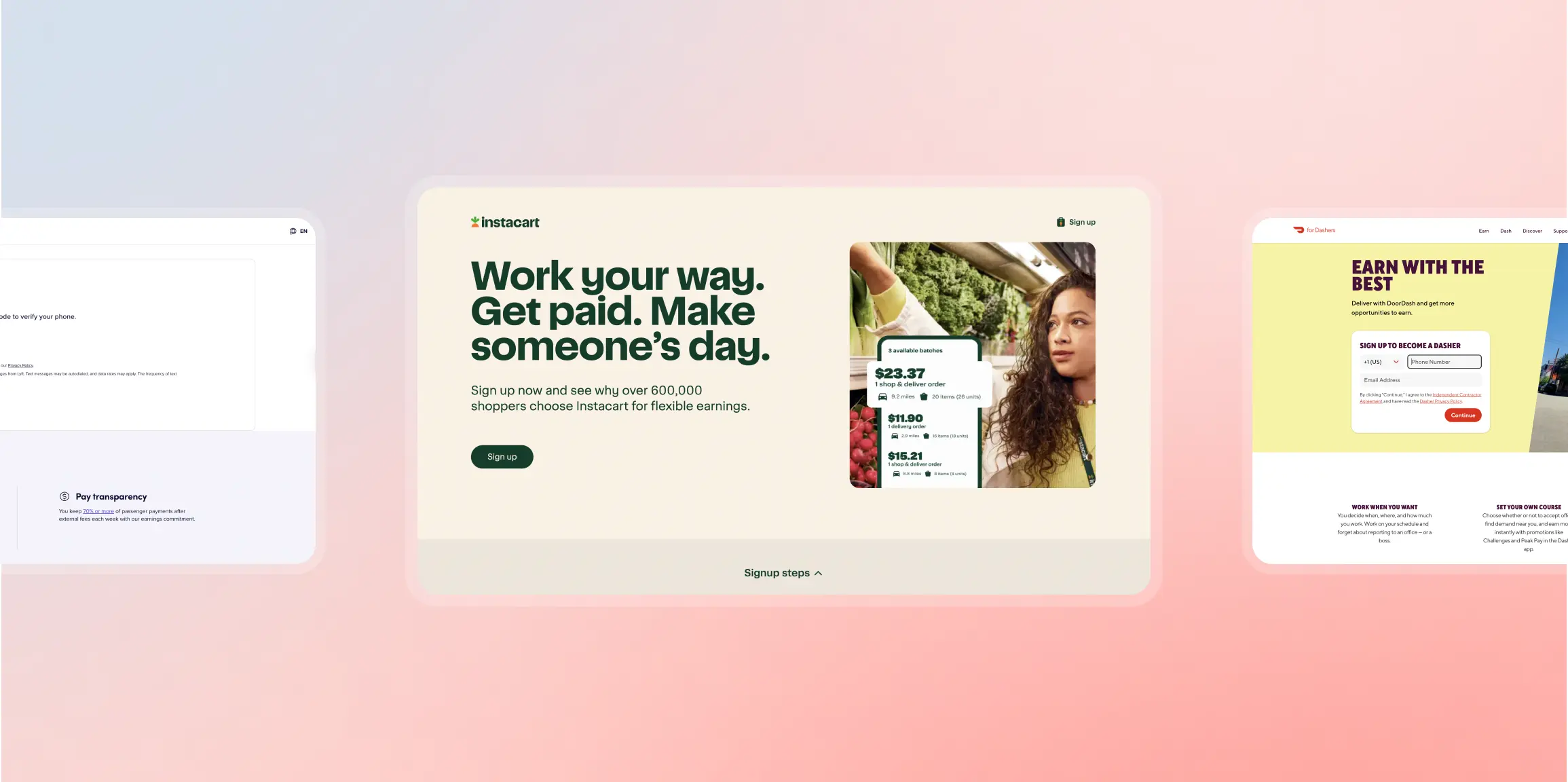
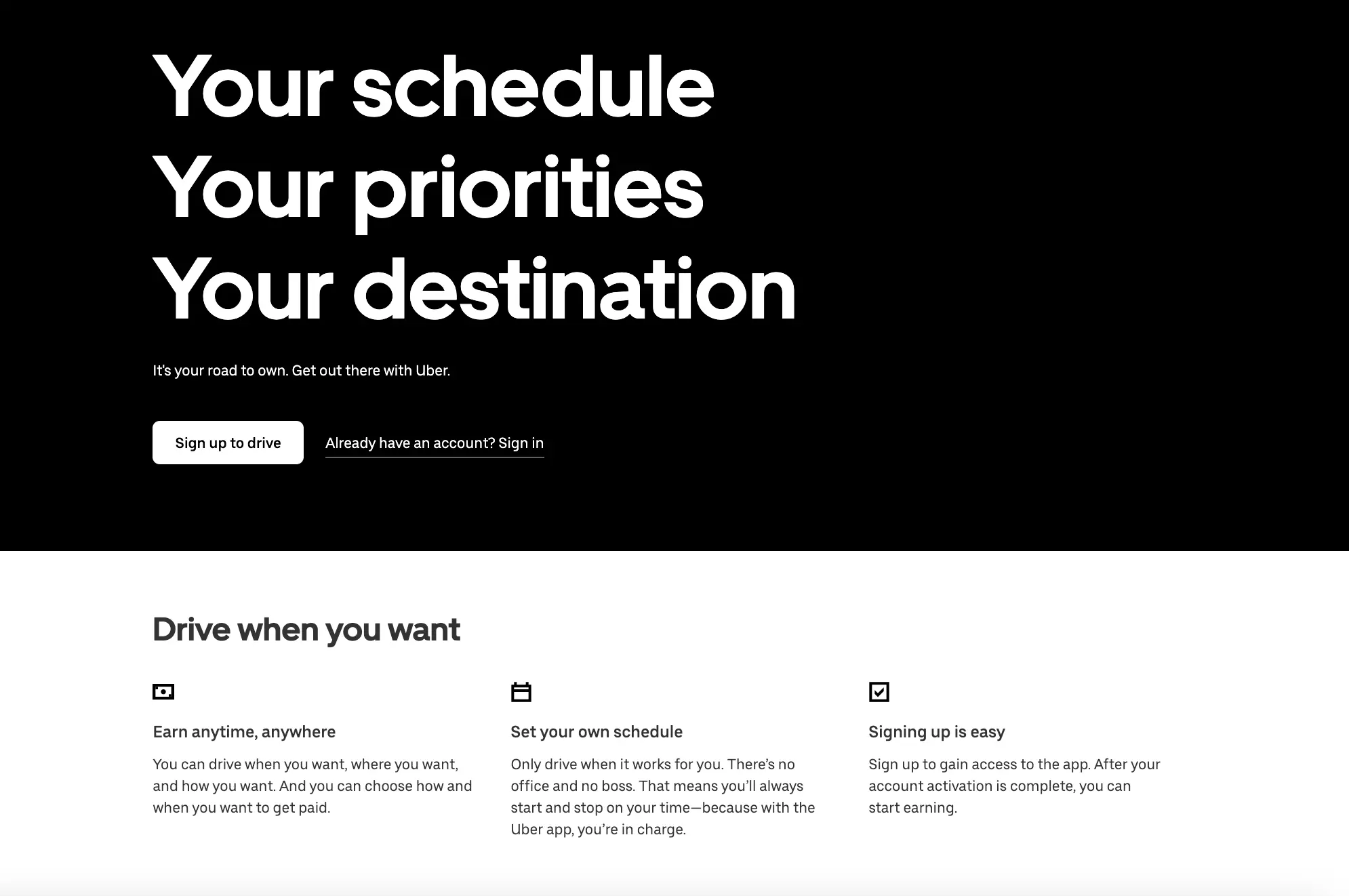
- Uber: Uber’s driver recruitment pages are noted for their extreme simplicity. They utilize a "hero" image that reflects the target demographic and a form that is integrated directly into the top of the page. By placing the "Sign Up to Drive" form front-and-center, they eliminate the need for the user to click through multiple pages.
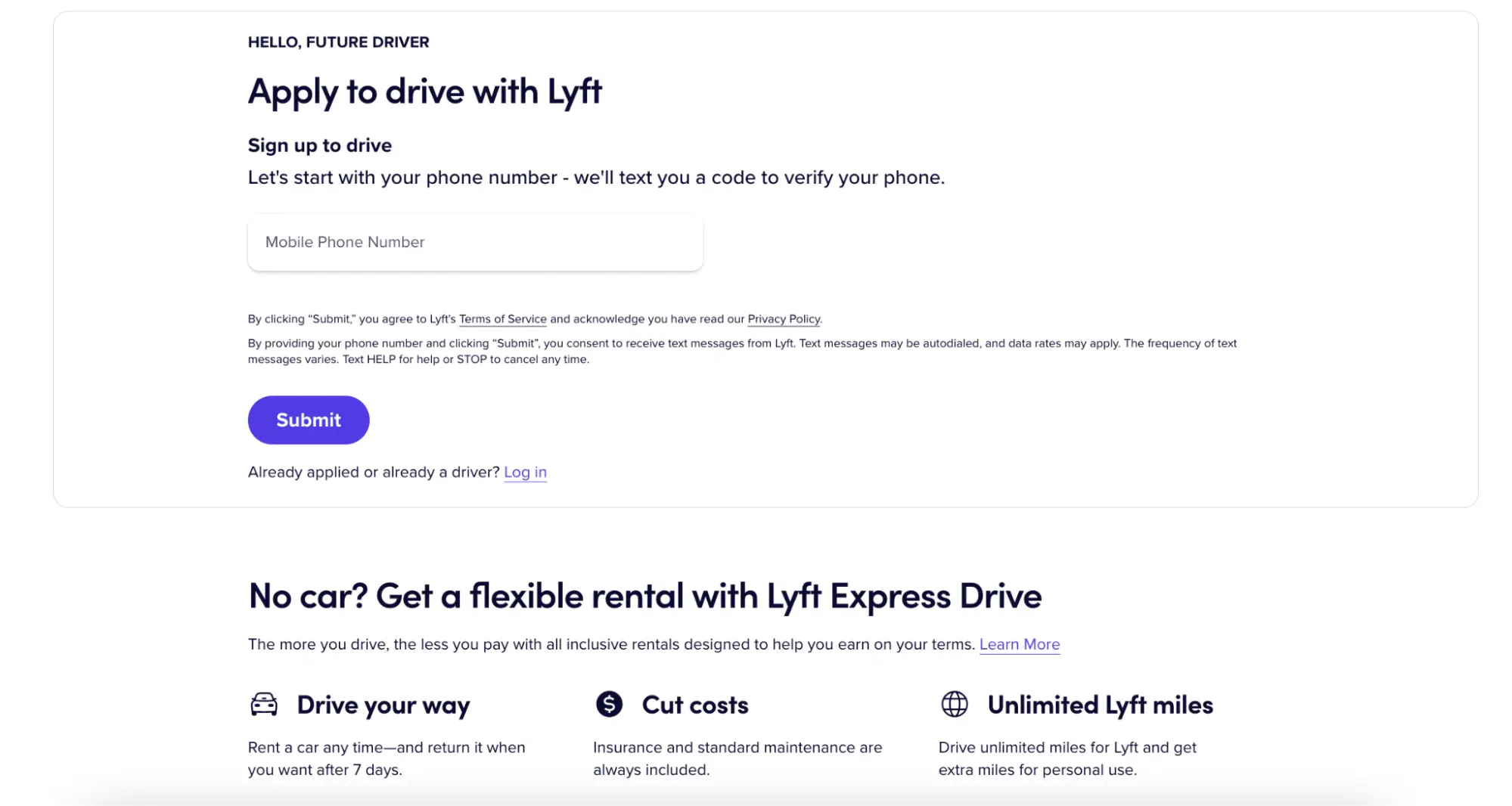
- Lyft: Lyft distinguishes itself by focusing on the financial incentives. Their landing pages often include earnings calculators or prominent mentions of sign-on bonuses. This addresses the candidate’s primary motivation—income—immediately.
- DoorDash: DoorDash employs a strategy of "local relevance," often tailoring landing pages to specific cities. This creates a sense of community and immediate opportunity, which is vital for local delivery roles.
- Writers Work: As a platform for freelancers, Writers Work uses social proof and "lifestyle" imagery to appeal to the desire for remote work flexibility. Their pages often feature testimonials from successful freelancers, which serves to validate the platform’s legitimacy.
The Role of A/B Testing and AI in Talent Acquisition
The most significant advancement in modern recruitment is the shift from static pages to iterative, data-driven experimentation. A/B testing—the process of running two versions of a page simultaneously to see which performs better—allows recruiters to make decisions based on evidence rather than intuition.

Recruitment teams are now testing variables such as:
- CTA Button Color and Text: Testing "Apply Now" versus "Start My Career" or "Join the Team."
- Benefit Ordering: Determining if "High Pay" or "Work-Life Balance" is the more effective hook for a specific demographic.
- Visual Media: Comparing the impact of static photos versus short "day in the life" video testimonials.
Artificial Intelligence is further accelerating this process. Platforms like Instapage have introduced AI-driven experimentation tools that automatically divert traffic to the highest-performing version of a page. This "automated optimization" ensures that even while a test is running, the recruitment budget is being spent as efficiently as possible.
Broader Implications for the Labor Market
The professionalization of recruitment landing pages has broader implications for the global labor market. As companies become more efficient at "capturing" candidates, the friction of job switching decreases. This creates a more fluid labor market but also puts pressure on employers to maintain authentic branding. If a recruitment landing page promises a culture or benefits package that does not exist in reality, the resulting "new hire churn" can be more costly than the original recruitment spend.

Furthermore, the rise of these specialized pages reflects a broader trend toward the "consumerization" of HR. Candidates now expect the same seamless, high-speed experience from a job application that they expect when shopping online or booking a flight.
Conclusion: The Future of Digital Hiring
As digital advertising costs continue to rise and the competition for skilled labor intensifies, the recruitment landing page will remain an essential tool in the HR professional’s arsenal. By focusing on conversion, reducing friction, and leveraging data through A/B testing, organizations can significantly lower their cost-per-applicant and ensure that their recruitment budgets are driving tangible growth. The move away from generic career sites toward precision-engineered landing pages marks a new era of efficiency in the global effort to connect the right talent with the right opportunity.








