
 rifanmuazin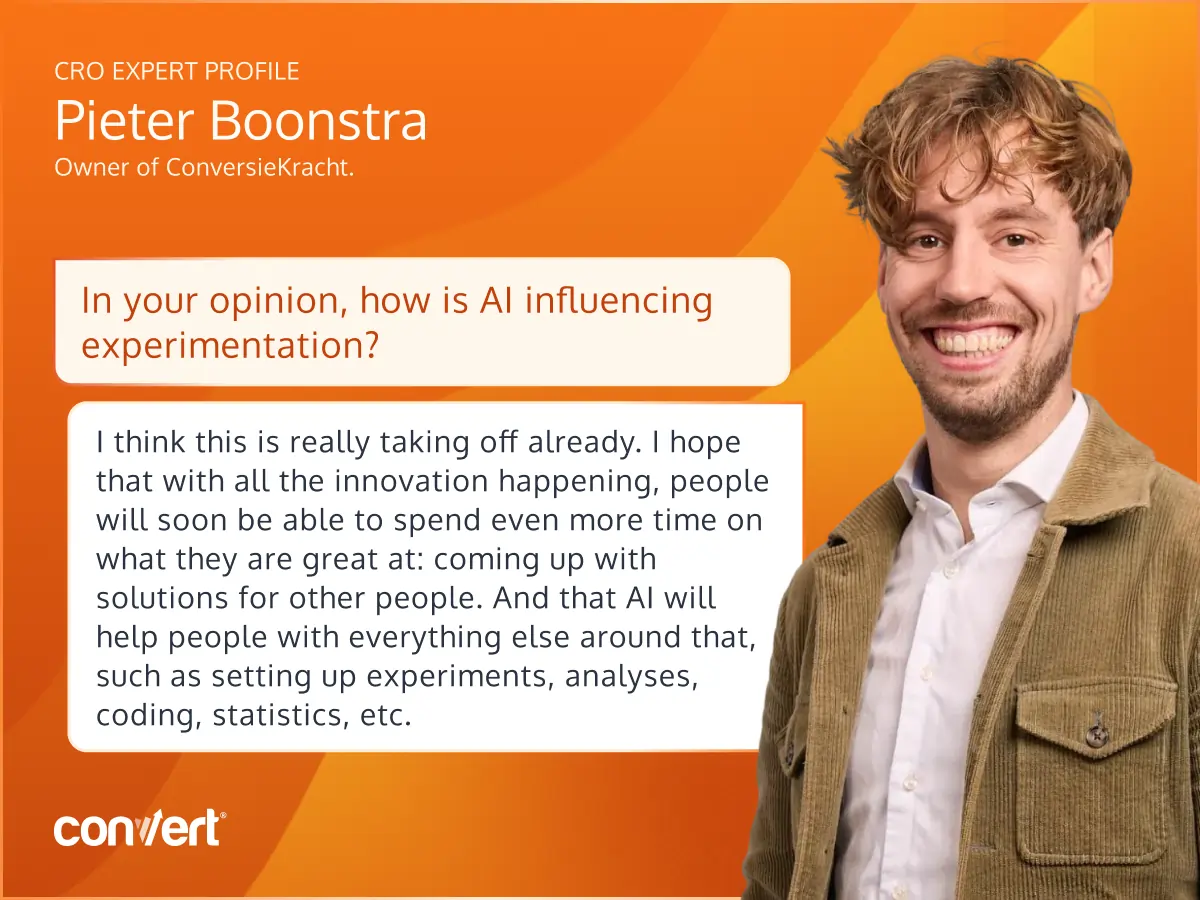
The digital economy has reached a critical juncture where the acquisition of traffic is no longer the sole determinant of commercial success; instead, the ability to convert that traffic through empirical experimentation has become the primary driver of sustainable growth. At the forefront of this shift in the European market is Pieter Boonstra, the founder of ConversieKracht, currently recognized as the fastest-growing Conversion Rate Optimization (CRO) agency in the Netherlands. Boonstra’s methodology, which bridges the gap between academic consumer psychology and hard-coded data analytics, offers a blueprint for how modern enterprises are restructuring their digital operations to prioritize proven business impact over speculative marketing strategies.
The discipline of conversion rate optimization has evolved from a niche technical requirement into a cornerstone of corporate strategy. As global e-commerce competition intensifies, firms are increasingly moving away from "gut-feeling" design changes toward a rigorous scientific method. Boonstra’s career trajectory mirrors this industry-wide maturation, beginning with the application of theoretical frameworks to real-world digital storefronts and culminating in the leadership of a high-growth consultancy that manages complex experimentation programs for a diverse portfolio of clients.

The Genesis of an Experimentation Mindset
Pieter Boonstra’s entry into the field of optimization was rooted in the intersection of academic rigor and entrepreneurial curiosity. While studying Marketing at the university level, Boonstra focused on the intricacies of consumer psychology—the study of why individuals make specific purchasing decisions. However, he identified a disconnect between the static theories taught in lecture halls and the dynamic, measurable reality of the burgeoning webshop industry.
During his university years, Boonstra began freelancing for various e-commerce entities. This period coincided with the widespread availability of tools like Google Optimize, which allowed for accessible A/B testing. By day, Boonstra studied the theory of buying behavior; by night, he applied these theories to live environments, using experiments to validate or debunk marketing assumptions. This early commitment to the "scientific method" in a commercial context laid the foundation for ConversieKracht. The agency’s philosophy remains centered on the idea that every marketing decision should be a testable hypothesis, and every result must be tied to a measurable financial outcome.
The Dutch Influence on Global Experimentation Standards
The Netherlands has emerged as a global hub for conversion rate optimization, home to industry giants such as Booking.com, which is often cited as having one of the most advanced experimentation cultures in the world. This regional expertise has fostered a highly competitive environment where agencies like ConversieKracht must innovate constantly to maintain growth.

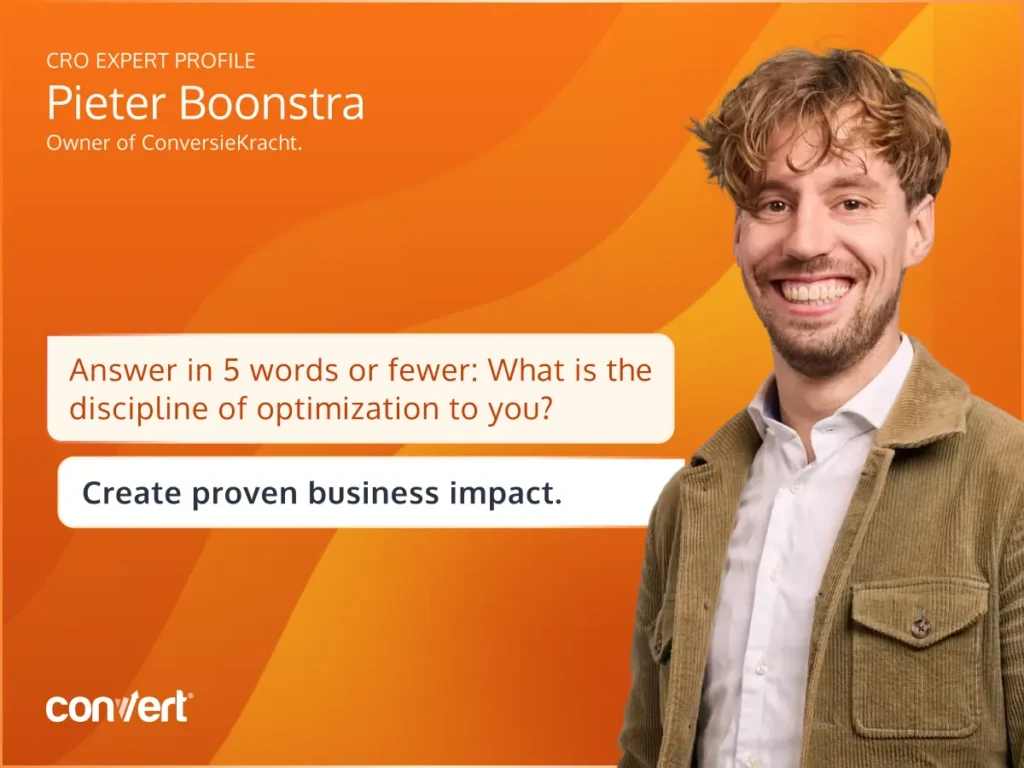
Industry data suggests that the European CRO market is expanding at a compound annual growth rate (CAGR) of over 10%, driven by the rising costs of digital advertising. As platforms like Google and Meta increase their cost-per-click (CPC) rates, businesses are forced to extract more value from their existing traffic. In this economic climate, Boonstra’s definition of optimization—"creating proven business impact"—resonates with stakeholders who are under pressure to demonstrate a clear return on investment (ROI) for their marketing expenditures.
Artificial Intelligence and the Transformation of the Workflow
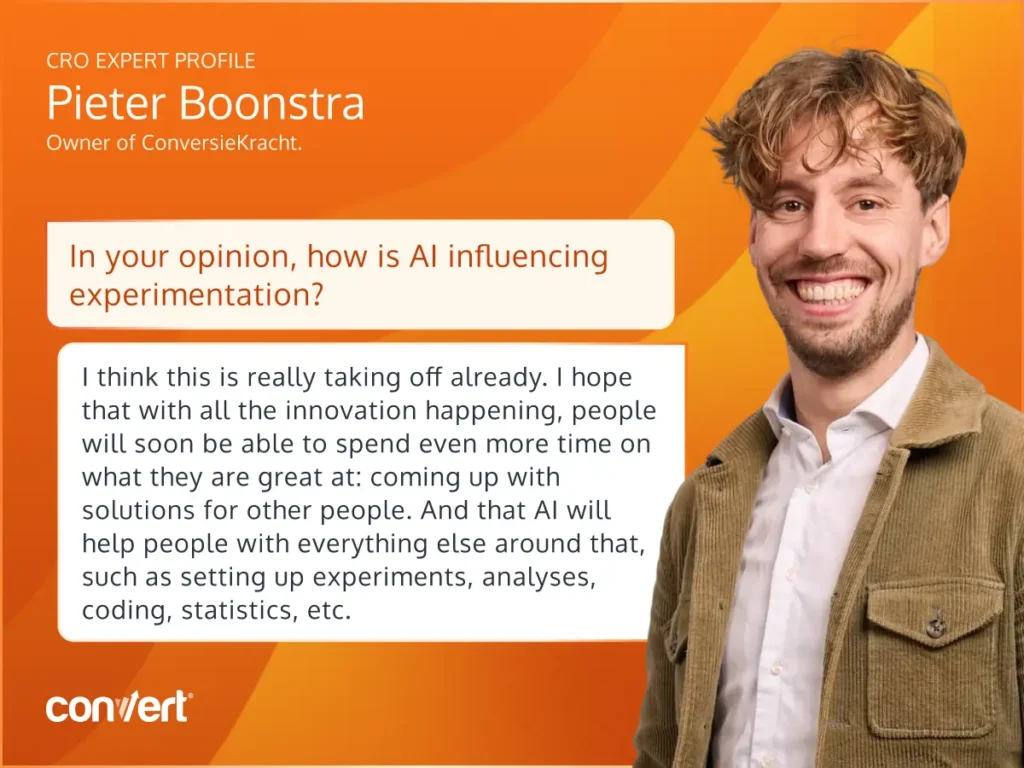
A significant portion of the current discourse in the optimization community revolves around the integration of Artificial Intelligence (AI). Boonstra posits that AI is not merely a trend but a fundamental shift in how optimizers allocate their time. Historically, a significant percentage of a CRO professional’s day was consumed by the technical minutiae of setting up experiments: writing JavaScript for front-end changes, cleaning data sets, and performing manual statistical calculations.
With the advent of advanced LLMs (Large Language Models) and automated analysis tools, these technical barriers are dissolving. Boonstra anticipates a future where AI handles the "labor-intensive" aspects of testing—such as coding and initial data processing—allowing human experts to focus on high-level strategy and the creative development of solutions. This shift is expected to increase the velocity of testing, enabling companies to run hundreds of experiments simultaneously without a linear increase in headcount.
Case Study Analysis: Bridging Logistics and Marketing
One of the most compelling aspects of Boonstra’s approach is the integration of physical logistics with digital marketing. In a landmark experiment for an organic soup manufacturer, Boonstra moved beyond the website interface to investigate the company’s physical supply chain. During a tour of the production facility, he observed a significant operational bottleneck: soups were packaged in boxes of six, but customers often ordered irregular quantities, forcing workers to manually unpack and repack boxes.
Boonstra translated this physical insight into a digital hypothesis. By testing a discount structure that incentivized customers to order in multiples of the factory standard (6, 12, or 24 jars), the agency achieved two simultaneous victories. First, the website saw a 60% increase in revenue per customer. Second, the operational costs plummeted as more orders could be shipped directly from the factory line without manual intervention. This case study highlights a critical evolution in CRO: the transition from "button-color testing" to "business model optimization."
Psychological Triggers: The Tasting Box Experiment
Another notable success involved a high-fiber protein bar company. Through extensive user research, Boonstra identified that the product’s primary competitive advantage was its taste—an "aha moment" that only occurred after the customer consumed the product. However, the high price point and the size of the bars acted as a barrier to entry for new customers.
The solution was the development of a "tasting box" featuring half-sized portions of the five best-selling flavors. This was tested against the standard product offerings on the homepage. The results were significant: a 15% uplift in purchases among new visitors. Crucially, follow-up data revealed that the long-term retention and repeat purchase rates for these "tasting box" customers were identical to those who had purchased full-sized products. This experiment demonstrated how understanding the customer’s sensory journey can inform product development and digital merchandising.
The Shift Toward Integrated Growth Teams
As organizations mature, the siloed nature of departments—where marketing, product development, and operations work in isolation—is becoming a liability. Boonstra observes that the fastest-growing companies are those where the marketing and production departments share responsibility for results.
In the coming years, the role of the "optimizer" is expected to migrate from a standalone unit into the heart of product and growth teams. This integration ensures that experimentation is not an afterthought but a core component of the product development lifecycle. By embedding CRO specialists within product teams, companies can ensure that every new feature is validated through data before a full-scale rollout, significantly reducing the risk of costly product failures.

Broader Implications and Industry Outlook
The rise of agencies like ConversieKracht signifies a broader trend toward the professionalization of the digital growth sector. In an era of data privacy regulations (such as GDPR) and the phasing out of third-party cookies, the ability to utilize first-party data through on-site experimentation has become a primary competitive advantage.
The implications of Boonstra’s work extend beyond individual client wins. They suggest a future where the digital economy is governed by empirical evidence rather than creative intuition. For the global workforce, this means a growing demand for "T-shaped" professionals—individuals who possess a deep understanding of data science and statistics but are also well-versed in human psychology and business strategy.
As we look toward 2025 and beyond, the discipline of optimization will likely continue its expansion into every facet of the corporate structure. From optimizing supply chains to refining user interfaces, the "proven business impact" that Boonstra advocates for is becoming the universal metric for success in the modern age. The success of ConversieKracht serves as a testament to the power of this approach, proving that in the noise of the digital marketplace, the most reliable signal is the one generated by a well-designed experiment.








