rifanmuazin
With the e-commerce landscape continually evolving, the print-on-demand (POD) sector has emerged as a powerful engine for entrepreneurs and creators looking to launch branded merchandise without the upfront investment and logistical complexities of traditional inventory management. In 2026, the market is more crowded than ever, offering hundreds of services, each with unique strengths and weaknesses. This comprehensive guide, built on months of hands-on testing and in-depth research, breaks down the top POD platforms, evaluating them on crucial factors such as pricing, product catalog diversity, global shipping capabilities, profit margins, ease of use, product quality, customer control, and branding options. Whether your goal is to establish a distinct brand identity with a dedicated online store or to leverage the built-in audience of an existing marketplace, this analysis provides the critical insights needed to make an informed decision.
This report scrutinizes 12 leading POD providers, offering a granular review of their performance. The objective is to equip creators, entrepreneurs, and e-commerce sellers with the knowledge to navigate the complex POD ecosystem and select the platform that best aligns with their business objectives and operational needs for the coming year.
Quick Comparison Table: Key POD Platforms at a Glance
To provide a rapid overview of the leading players in the print-on-demand market for 2026, the following table highlights their core characteristics:
| POD Site | Type | Starting Price | Best For |
|---|---|---|---|
| Printful | Fulfillment | Free; Growth plan $24.99/mo | Building a strong, branded identity |
| Printify | Fulfillment | Free; Premium $29-$39/mo | Global scaling and supply chain flexibility |
| Gelato | Fulfillment | Free; Gelato+ $19.99-$23.99/mo | Fast, localized international delivery |
| SPOD | Fulfillment | Free | Simplicity and rapid order fulfillment |
| CustomCat | Fulfillment | Free; PRO $30/mo | Cost-effective US fulfillment |
| Gooten | Fulfillment | Free | Sellers avoiding monthly subscription fees |
| Apliiq | Fulfillment | Free; Optional Pro $39.99/mo | Premium apparel and private labeling |
| Redbubble | Marketplace | Free | Artists seeking passive traffic and niche exposure |
| TeePublic | Marketplace | Free | Effortless design upload and immediate sales |
| Spreadshirt | Marketplace | Free | Commission-based passive income generation |
| Zazzle | Marketplace | Free | Personalized gifts and custom stationery |
| Society6 | Marketplace | Free | Artists focused on home decor and art prints |
Our Top 3 Picks: Pillars of the 2026 POD Landscape
After extensive evaluation, three platforms stand out for their comprehensive offerings and ability to cater to diverse seller needs in 2026. These selections represent a blend of robust branding capabilities, scalable infrastructure, and innovative solutions for the modern creator economy.
1. Printful: The Premier Platform for Brand Cultivation
Starting Price: Free plan available; Growth plan at $24.99/month (waived with $12,000+ annual sales).
Integrations: Extensive, including Shopify, Etsy, WooCommerce, Amazon, Squarespace, and more.
Custom Branding: Robust options, featuring branded labels, custom pack-ins, and personalized packaging.
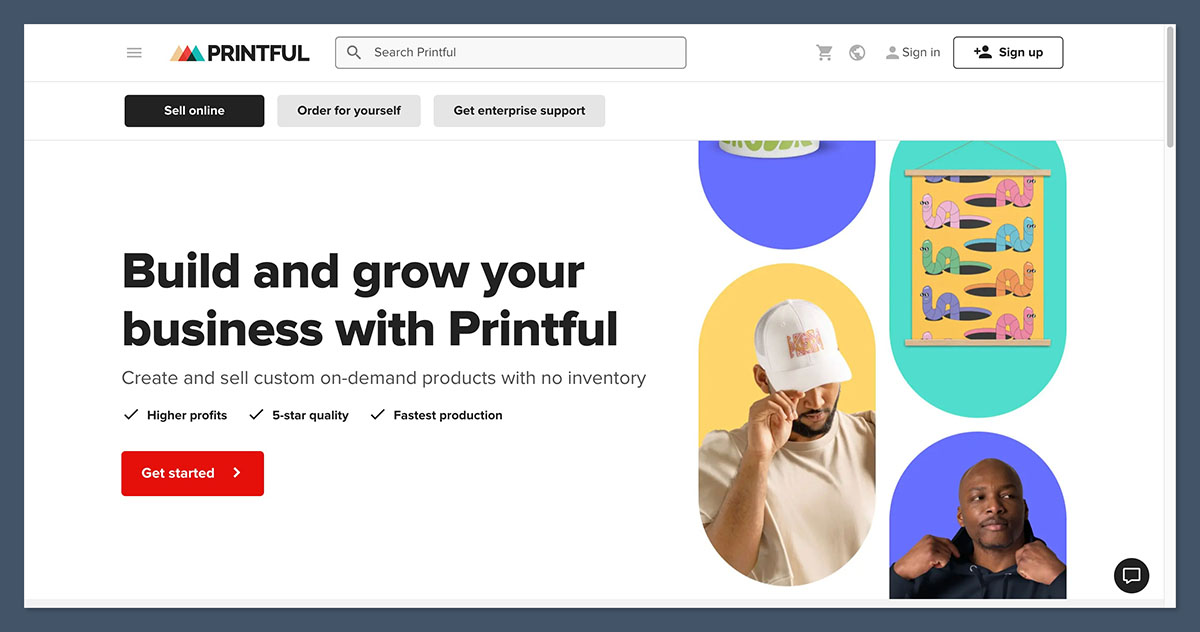
Printful continues to assert its dominance as the most reliable print-on-demand fulfillment partner, consistently ranking at the forefront for creators and e-commerce sellers aiming to establish a distinct brand rather than merely a merchandise outlet. The platform boasts a mature, professional backend, a vast array of e-commerce integrations, and meticulously refined fulfillment workflows. Its core strength lies in its unwavering focus on the end-customer experience. From the quality of packaging and rigorous quality control to the consistency of delivery times, Printful executes operations with a level of polish that remains a benchmark in the industry.
During testing for a Shopify store, Printful’s intuitive product editor facilitated the swift creation and synchronization of mockups for branded mugs and hoodies. This streamlined process significantly reduced setup time, allowing for a quicker launch of product lines.
Pros:
- Exceptional Brand Control: Offers a wide range of customization options to align merchandise with brand identity.
- High-Quality Products: Maintains a consistent standard of product quality across its catalog.
- Reliable Fulfillment: Known for dependable production and timely shipping.
- Extensive Integrations: Seamlessly connects with major e-commerce platforms and marketplaces.
- Professional Backend: User-friendly interface and robust tools for managing orders and designs.
- Customer Experience Focus: Supports branded packaging and inserts to enhance unboxing.
Cons:
- Higher Base Costs: Product and shipping costs can be slightly higher compared to some competitors.
- Growth Plan Investment: While offering significant benefits, the paid Growth plan represents an additional monthly expense for smaller operations.
New in 2026: Printful has continued to expand its product catalog with a focus on sustainable and eco-friendly options, including organic cotton apparel and recycled material accessories. Additionally, they have introduced enhanced analytics tools to provide sellers with deeper insights into sales performance and customer behavior, aiding in data-driven decision-making.
A personal case study involved a branded Etsy store requiring custom labels and thank-you cards within packaging. Printful not only met these expectations regarding quality but also delivered with remarkable speed. The packaging presented a premium feel, leading to positive customer feedback and mentions of the elevated unboxing experience in reviews, a testament to Printful’s commitment to brand presentation.
How Much Does Printful Cost?
| Plan | Price | Key Perks |
|---|---|---|
| Free | $0/month | Full platform access, basic mockups, no minimum order requirements. |
| Growth | $24.99/month (or free at $12k/year sales) | Up to 30% product discounts, premium mockups, enhanced branding options. |
Why Use Printful in 2026?
Printful empowers sellers with significant control over their brand experience, crucial for building customer loyalty and fostering repeat business. Its robust integrations, consistent quality, and branding opportunities make it an ideal choice for those prioritizing a professional, memorable customer journey. For businesses focused on cultivating lasting customer relationships, high satisfaction rates, and a distinguished brand image, Printful offers an unparalleled foundation.
Printful is suitable for:
- E-commerce entrepreneurs building their own brands.
- Creators and influencers seeking to monetize their audience.
- Businesses prioritizing high-quality merchandise and branding.
- Sellers integrating with platforms like Shopify, Etsy, or WooCommerce.
Printful isn’t suitable for:
- Sellers with extremely tight profit margins on low-cost items.
- Those who need the absolute lowest base product costs without premium features.
2. Fourthwall: Streamlined Brand Management with Integrated E-commerce
Starting Price: Free to use (no monthly fee); optional Pro plan at $15/month.
Integrations: YouTube Merch Shelf, TikTok Shop, Twitch, Discord, Streamlabs.
Custom Branding: Built-in storefront, curated premium products, and robust brand-building tools.
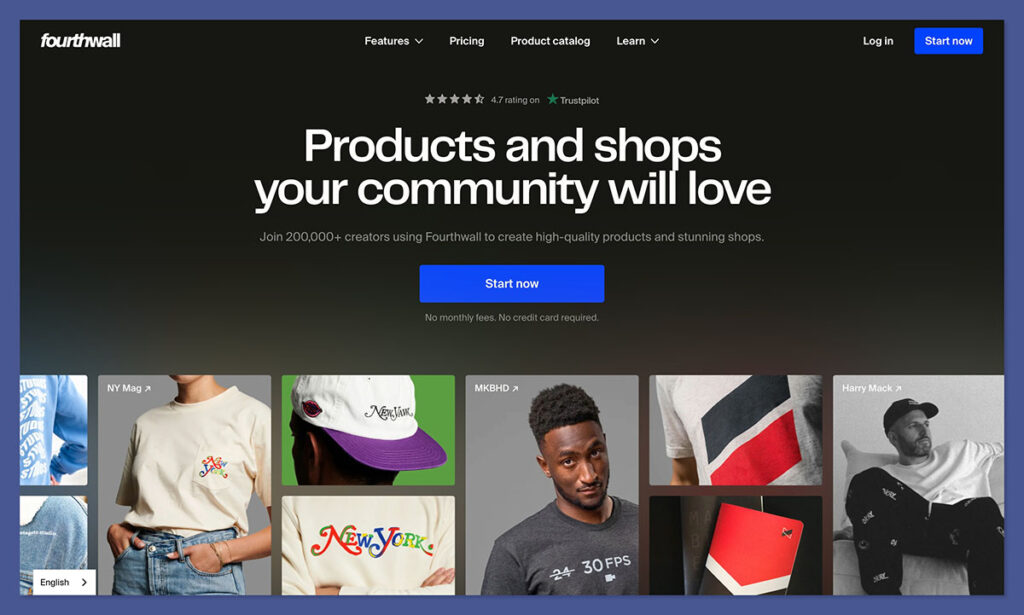
Fourthwall distinguishes itself by offering a holistic e-commerce solution rather than a standalone POD fulfillment service. It integrates premium print-on-demand with capabilities for selling custom items, memberships, subscriptions, and digital products, all within a unified platform. This approach significantly reduces administrative overhead for creators by handling supplier partnerships, product curation, and even acting as the merchant of record, which simplifies tax compliance and customer support for catalog products. While it offers less granular control over manufacturing partners compared to some other platforms, it excels in abstracting away the complexities that often deter creators from managing e-commerce operations.
The platform’s ability to streamline complex processes like tax handling and customer service makes it an attractive option for those prioritizing creative output over operational minutiae. A recent implementation for a small brand looking to sell both merchandise and digital content demonstrated the platform’s efficiency, with setup—including products, pages, and payment processing—completed in under an hour. Crucially, the post-launch period was marked by a notable absence of order-related support tickets or tax compliance concerns, underscoring Fourthwall’s effectiveness in managing backend complexities.
Pros:
- All-in-One Solution: Combines e-commerce, POD, memberships, and digital products.
- Reduced Administrative Burden: Handles merchant of record responsibilities, tax compliance, and customer support for core products.
- Curated Product Selection: Offers high-quality products through established partnerships.
- User-Friendly Interface: Designed for creators to quickly set up and manage their stores.
- Integrated Community Features: Supports engagement with audiences through platforms like Discord and Twitch.
Cons:
- Less Supplier Flexibility: Limited choice in print providers compared to open marketplace models.
- Potentially Higher Product Costs: The convenience and service come with a price, potentially impacting margins on low-priced items.
- Less Customization: Offers less control over checkout flow and backend logistics compared to integrating with standalone e-commerce platforms.
New in 2026: Fourthwall has enhanced its platform with advanced analytics for deeper audience insights and has expanded its integration capabilities to include more social commerce channels. Furthermore, they have introduced new tools for managing recurring revenue streams and digital product delivery, solidifying its position as a comprehensive creator economy platform.
How Much Does Fourthwall Cost?
| Plan | Price | Best For |
|---|---|---|
| Free | $0/month | New store launches and initial product sales. |
| Pro | $19/month | Expanding into digital products, multi-user accounts, and priority support. |
Why Use Fourthwall in 2026?
Fourthwall is engineered for creators who want to focus on their craft and audience engagement, offloading the common pain points of e-commerce like supplier management, tax compliance, and customer service. It makes selling merchandise a realistic endeavor without requiring it to become a full-time operational job.

Fourthwall is suitable for:
- Content creators, influencers, and artists who want to monetize their audience.
- Businesses looking for an integrated platform for merchandise, digital products, and memberships.
- Sellers who want to minimize administrative tasks and focus on creative work.
- New businesses seeking a low-barrier-to-entry e-commerce solution.
Fourthwall isn’t suitable for:
- Sellers requiring absolute control over every aspect of the supply chain and fulfillment process.
- Businesses with highly complex or unique product customization needs beyond standard POD.
- E-commerce veterans who prefer to build their own custom tech stack.
3. Printify: The Champion of Flexibility and Global Scalability
Starting Price: Free plan available; Premium plan at $29/month (increasing to $39/month from February 17, 2026).
Fulfillment Locations: Over 100 print providers worldwide.
Bulk Discounts: Up to 20% off with the Premium plan.
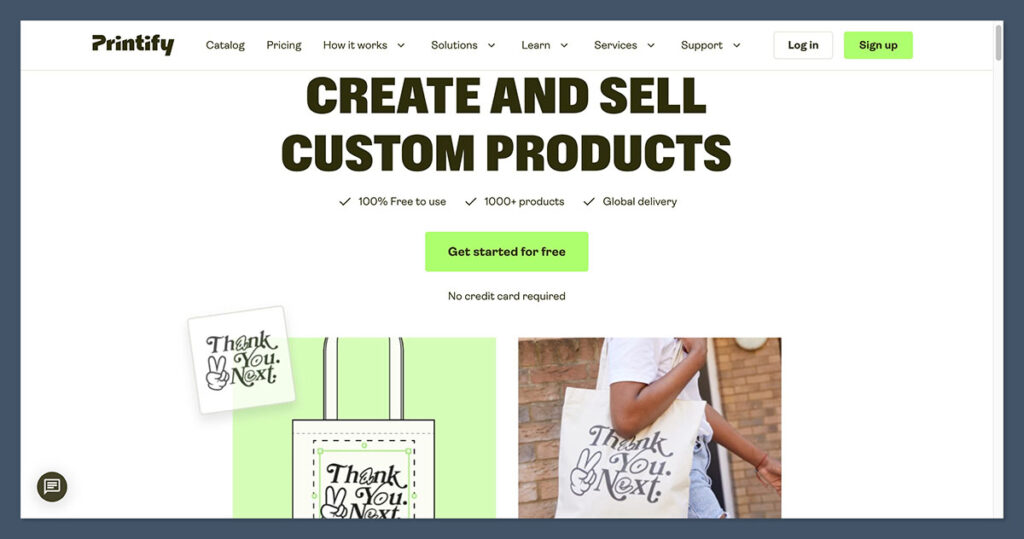
Printify stands out as the most flexible print-on-demand platform, connecting sellers with a vast global network of print providers. This distributed model allows users to select suppliers based on a multitude of factors, including cost, customer reviews, shipping times, and geographical location, granting unparalleled control over pricing and fulfillment strategies. For businesses with an international customer base, this flexibility is a significant advantage. Through Printify, orders can be routed to providers in the UK, US, and Australia, among other regions, optimizing delivery times and shipping costs while maintaining healthy profit margins.
Pros:
- Unmatched Supplier Network: Access to hundreds of print providers worldwide for diverse product sourcing.
- Cost Optimization: Ability to choose suppliers based on pricing to maximize profit margins.
- Global Reach: Facilitates efficient fulfillment for international orders by localizing production.
- Product Variety: Offers a broad range of products through its diverse provider network.
- Competitive Pricing: Generally offers lower base product costs than some competitors.
Cons:
- Variable Quality Control: Product quality and shipping times can vary between different print providers.
- Requires Diligent Research: Sellers need to vet suppliers carefully to ensure consistency and reliability.
- Premium Plan Price Hike: The upcoming price increase for the Premium plan may affect smaller sellers.
New in 2026: Printify has significantly invested in its quality assurance program, introducing new vetting processes for print providers and offering enhanced dispute resolution mechanisms. They have also expanded their integration options, including deeper partnerships with larger e-commerce platforms and marketplaces, aiming to simplify multi-channel selling. A notable development is their improved bulk order management system, designed to cater to businesses with higher sales volumes.
How Much Does Printify Cost?
| Plan | Price | Best For |
|---|---|---|
| Free | $0/month | Testing the market and launching new stores. |
| Premium | $29-$39/month | Higher volume stores seeking better profit margins. |
Why Use Printify in 2026?
Printify is the optimal choice for sellers who prioritize flexibility, a wide selection of suppliers, and the ability to scale their operations globally. Its distributed network allows for strategic optimization of shipping costs and delivery times, making it ideal for businesses with diverse customer bases or those looking to test various products and suppliers. The platform is particularly suited for sellers who are comfortable with managing multiple supplier relationships to achieve the best results.
Printify is suitable for:
- E-commerce businesses aiming for international market expansion.
- Sellers who want to compare and select suppliers based on specific criteria.
- High-volume sellers looking to optimize costs and production locations.
- Entrepreneurs who value a wide product catalog sourced from various providers.
Printify isn’t suitable for:
- Sellers who want a single, highly controlled fulfillment experience without supplier management.
- Beginners who may be overwhelmed by the need to vet multiple print providers.
- Businesses that require absolute consistency in product quality across all orders without manual checks.
Expanding the POD Horizon: Key Players for Specific Needs
Beyond the top three, several other platforms offer distinct advantages for specific niches and business models in the 2026 market.
4. Gelato: Leading the Charge in Fast Global Delivery
Starting Price: Free plan available; Gelato+ at $23.99/month or $19.99/month billed annually.
Fulfillment: Over 130 local production partners in 32 countries.
Focus: Localized fulfillment for international sellers.
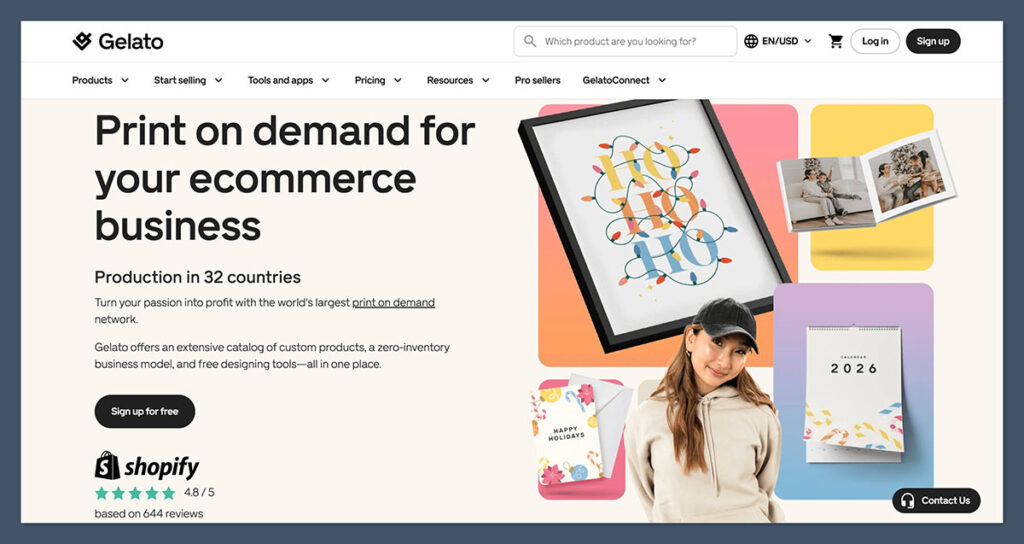
Gelato provides a unique value proposition by focusing on fast, localized fulfillment in over 30 countries. Orders are automatically routed to the nearest production partner, significantly reducing delivery times, lowering shipping costs, and minimizing the carbon footprint. This localized approach makes international fulfillment feel seamless for businesses targeting a global audience. During a product launch across the UK, Germany, and Australia, Gelato’s local printing ensured substantially faster shipping and fewer delivery issues, demonstrating its efficacy in global markets.
Pros:
- Fast International Shipping: Localized production significantly reduces delivery times.
- Reduced Shipping Costs: Lowered distances translate to more affordable shipping fees.
- Global Network: Extensive presence with production partners in numerous countries.
- Sustainability Focus: Minimizes environmental impact through localized manufacturing.
- Automated Routing: Orders are intelligently directed to the most convenient production facility.
Cons:
- Limited Product Catalog: The product range may be more curated than platforms with broader supplier networks.
- Higher Base Costs: Localized production can sometimes lead to slightly higher base product prices.
- Potential for Provider Variation: While managed, quality can still vary slightly between different local partners.
New in 2026: Gelato has expanded its network of production partners and introduced new product categories, including high-quality home decor items and personalized stationery. They have also enhanced their API for deeper integration with custom e-commerce solutions and launched a new subscription service offering premium support and advanced analytics for high-volume sellers.
How Much Does Gelato Cost?
| Plan | Price | Best For |
|---|---|---|
| Free | $0/month | Starting out with international reach. |
| Gelato+ | $19.99-$23.99/month | Scaling globally with better discounts. |
Why Use Gelato in 2026?
Gelato is indispensable for businesses prioritizing speed and efficiency in international print-on-demand. Its localized production model offers a significant competitive advantage for sellers targeting customers worldwide, ensuring a superior customer experience through faster deliveries and reduced logistical friction.
Gelato is suitable for:
- Businesses with a substantial international customer base.
- Sellers aiming to minimize shipping costs and delivery times globally.
- Brands focused on sustainability and reducing their carbon footprint.
- E-commerce operations looking for a streamlined international fulfillment solution.
Gelato isn’t suitable for:
- Sellers who primarily serve a local or domestic market and don’t require international reach.
- Businesses that need the absolute lowest base product costs and are less concerned with shipping speed.
- Users who want an extremely broad and diverse product catalog that might not be available through localized partners.
5. SPOD: Efficiency Through Simplicity and Speed
Starting Price: Free.
Fulfillment Speed: Average 48-hour production time.
Integrations: Shopify, WooCommerce, and more.
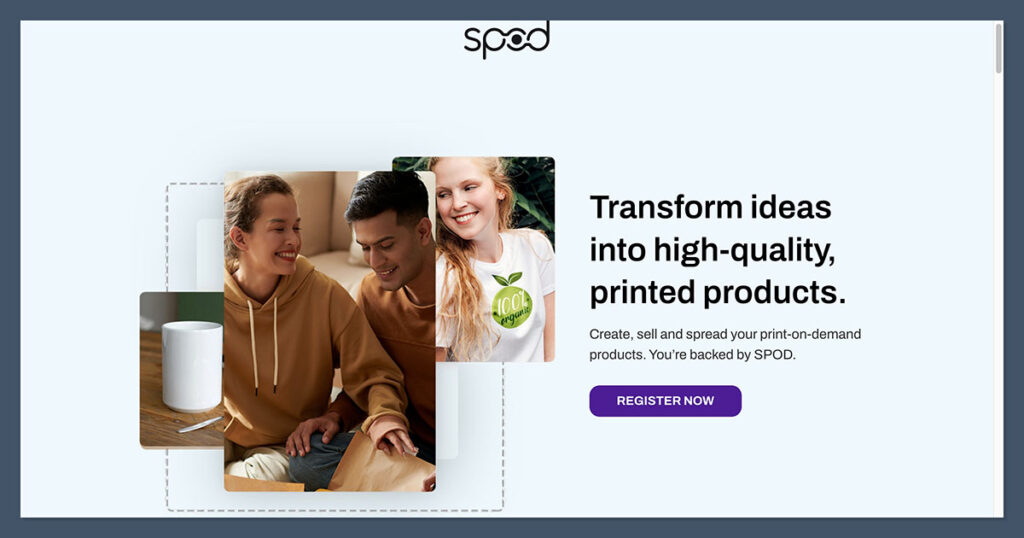
SPOD, a subsidiary of Spreadshirt, emphasizes rapid turnaround times and a straightforward user experience. With a focused product selection and a lack of complex subscription tiers, it presents a practical solution for sellers seeking a functional and efficient online store. The platform’s commitment to quick production, often within 48 hours, makes it ideal for time-sensitive campaigns or businesses that value swift order processing. During a minimalist streetwear brand launch, SPOD’s consistent fast production and simplified operational structure were invaluable assets.
Pros:
- Rapid Production: Fast turnaround times for most orders.
- User-Friendly Interface: Simple and intuitive platform for easy product creation and order management.
- Cost-Effective: Free to use with competitive product pricing.
- Reliable Integrations: Connects smoothly with popular e-commerce platforms.
Cons:
- Limited Product Selection: The catalog is not as extensive as some competitors.
- Basic Branding Options: Fewer customization features for advanced branding.
- Less Flexibility: The streamlined nature means fewer options for highly specific customizations.
New in 2026: SPOD has introduced a new line of eco-friendly apparel and expanded its printing capabilities to include advanced direct-to-garment (DTG) techniques for more detailed designs. They have also improved their API for better integration with custom storefronts and enhanced their analytics dashboard for more granular order tracking.
How Much Does SPOD Cost?
| Plan | Price | Best For |
|---|---|---|
| Free | $0/month | Fast and easy setup for new sellers. |
Why Use SPOD in 2026?
For sellers prioritizing speed and ease of use, SPOD is an excellent low-maintenance option. It is particularly well-suited for basic stores that require reliable fulfillment and predictable operational workflows without the complexity of advanced features.
SPOD is suitable for:
- Sellers who want to launch quickly and efficiently.
- Businesses focused on apparel and basic merchandise.
- Creators who prefer a no-fuss approach to order fulfillment.
- New e-commerce ventures prioritizing speed to market.
SPOD isn’t suitable for:
- Businesses needing a vast product catalog or highly specialized items.
- Sellers who require extensive branding customization options.
- Those looking for advanced e-commerce features beyond core POD fulfillment.
6. CustomCat: Dominating Low-Cost US Fulfillment
Starting Price: Free; PRO plan at $30/month or $25/month paid annually.
Fulfillment: US-based production centers.
Focus: Lower unit costs and fast shipping for US buyers.
CustomCat presents one of the most compelling pricing structures for sellers targeting the US market. The PRO plan unlocks significant wholesale-style discounts, which can substantially boost profit margins for high-volume stores. Its US-centric operations ensure quick domestic shipping and efficient processing. When operating a US-based Shopify store, CustomCat proved to be a reliable choice for t-shirts and hoodies, offering fast fulfillment and competitive pricing with a straightforward setup process.
Pros:
- Highly Competitive Pricing: Especially attractive for US-based sellers on the PRO plan.
- Fast US Fulfillment: Leverages domestic production centers for quick delivery.
- High-Volume Discounts: Significant cost savings for larger order volumes.
- Extensive Product Catalog: Offers a wide range of apparel and accessories.
- Ease of Use: Simple integration and straightforward order management.
Cons:
- Limited International Support: Primarily focused on the US market, making international shipping less efficient.
- PRO Plan Cost: The monthly fee for the PRO plan might be prohibitive for very small or new sellers.
- Less Brand Customization: Offers fewer advanced branding options compared to premium platforms.
New in 2026: CustomCat has expanded its US production facilities and introduced new sustainable product lines. They have also upgraded their integration capabilities to offer more robust data synchronization with e-commerce platforms and enhanced their customer support system for faster issue resolution.
How Much Does CustomCat Cost?
| Plan | Price | Best For |
|---|---|---|
| Free | $0/month | Beginners or testing phases. |
| PRO | $25-$30/month | High-volume US-based sellers. |
Why Use CustomCat in 2026?
For sellers prioritizing profit maximization within the US market, CustomCat offers an exceptional blend of cost-effectiveness and operational efficiency. Its focus on domestic fulfillment ensures speed and reliability, making it a strong contender for businesses looking to optimize their margins through lower unit costs and rapid delivery to American consumers.
CustomCat is suitable for:
- US-based e-commerce businesses focused on apparel and accessories.
- Sellers aiming to maximize profit margins through competitive pricing.
- High-volume stores that can leverage PRO plan discounts.
- Entrepreneurs who value fast domestic shipping.
CustomCat isn’t suitable for:
- Businesses with a primary focus on international sales.
- Sellers who require extensive global fulfillment options.
- Creators who need advanced branding features like custom packaging inserts.
7. Gooten: The No-Subscription Choice for POD
Starting Price: Free.
Platform: Print-on-demand backend with automated fulfillment.
Cost Model: Pay-per-order, no subscriptions.
Gooten provides a straightforward, no-subscription print-on-demand solution with a solid selection of products and an automated fulfillment system. While it may not offer the extensive supplier flexibility of Printify or the deep branding control of Printful, Gooten serves as an effective no-frills option for getting started. The platform’s pay-per-order model eliminates monthly overhead, making it an attractive entry point for new sellers or those looking to minimize recurring costs. Testing Gooten for a niche mug and tote bag store highlighted the simplicity and efficiency of its backend, where orders were processed automatically without requiring significant manual intervention.
Pros:
- No Monthly Fees: Cost-effective for sellers avoiding subscription costs.
- Automated Fulfillment: Streamlines the order processing and production workflow.
- Good Product Range: Offers a decent selection of popular POD items.
- Easy Integration: Connects with major e-commerce platforms.
- Predictable Pricing: Pay only for what you sell.
Cons:
- Limited Branding Options: Fewer advanced customization features for brand building.
- Less Supplier Control: No direct control over selecting specific print providers.
- Potentially Slower Fulfillment: Production times may not be as fast as some specialized platforms.
New in 2026: Gooten has expanded its product catalog to include more home goods and lifestyle accessories and has invested in improving its API for more seamless integration with third-party software. They have also introduced a new loyalty program offering tiered discounts based on sales volume, further incentivizing higher-performing sellers.
How Much Does Gooten Cost?
| Plan | Price | Best For |
|---|---|---|
| Free | $0/month | Sellers with zero overhead. |
Why Use Gooten in 2026?
Gooten is an excellent starting point for sellers seeking a low-risk entry into the print-on-demand market. Its absence of monthly fees, combined with reliable automation and predictable pricing, makes it an easy way to launch an e-commerce store and begin generating sales without significant upfront financial commitment.
Gooten is suitable for:
- Beginner entrepreneurs testing POD products and business models.
- Sellers looking to avoid monthly subscription fees.
- Businesses focused on a core set of popular POD products.
- Creators who want a straightforward, automated fulfillment process.
Gooten isn’t suitable for:
- Sellers requiring highly advanced branding customization or private labeling.
- Businesses that need the absolute fastest fulfillment speeds available.
- Those who want the flexibility to choose from a vast network of diverse print providers.
Marketplaces for Passive Exposure and Niche Audiences
For artists and designers looking to leverage existing audiences, several marketplace platforms offer a direct route to customers without the need to build and manage an independent e-commerce store. These platforms handle marketing, sales, fulfillment, and customer service, allowing creators to focus solely on their designs.
8. Redbubble: Passive Exposure in Creative Niches
Starting Price: Free.
Marketplace Access: Over 30 million monthly visitors.
Earnings Structure: Redbubble retains up to 50% of monthly earnings for Standard accounts.
Redbubble is a prominent print-on-demand marketplace specifically tailored for independent artists. It manages all aspects of the online store, from the storefront and fulfillment to shipping and customer service. Users simply upload their artwork, select desired products, and set their markup. In 2026, Redbubble introduced new account tiers. While the Standard tier, which allows Redbubble to take 50% of monthly earnings, has made consistent earnings more challenging for new sellers, the platform remains one of the most visited POD marketplaces, offering substantial visibility for creative work.
Pros:
- Massive Audience: Access to millions of potential customers monthly.
- Passive Income Potential: Ideal for creators to earn from their art with minimal effort.
- No Store Management: The platform handles all operational aspects.
- Diverse Product Range: Offers a wide variety of items to print on.
- Niche Friendly: Supports a broad spectrum of artistic styles and themes.
Cons:
- High Platform Cut: The 50% commission for Standard accounts significantly impacts profit margins.
- Limited Branding: No control over the customer experience beyond the design itself.
- Intense Competition: High volume of artists can make it difficult to stand out.
- Variable Earnings: Payouts can fluctuate based on platform promotions and sales volume.
New in 2026: Redbubble has enhanced its search algorithm to improve discoverability for niche artists and has introduced new promotional tools for designers to collaborate on collections. The Premium tier, offering a reduced platform commission, has become more accessible to high-performing artists, providing a clearer path to increased profitability.
How Much Does Redbubble Cost?
| Tier | Redbubble Cut | Key Notes |
|---|---|---|
| Standard | 50% of monthly earnings | Default tier for new sellers. |
| Premium | 20% of monthly earnings | Achieved by meeting performance metrics. |
Why Use Redbubble in 2026?
Redbubble is an excellent choice for artists seeking a low-risk, passive income stream. It provides a direct channel to a large, engaged audience, allowing creators to monetize their artwork without the complexities of running their own e-commerce business. Consistent uploads and a strong understanding of popular visual niches are key to success on the platform.
Redbubble is suitable for:
- Independent artists and illustrators.
- Creators looking for passive income from their designs.
- Those who want to test artwork in a marketplace environment.
- Niche designers seeking exposure to specific customer segments.
Redbubble isn’t suitable for:
- Sellers focused on building their own brand identity and customer relationships.
- Businesses requiring higher profit margins per item.
- Those who want control over their pricing and promotional activities.
9. TeePublic: Seamless Upload-and-Sell for Merch
Starting Price: Free.
Payout Model: Approximately $4 per shirt on regular sales, ~$2 on promotional sales.
Product Focus: T-shirts, apparel, stickers, and accessories.
TeePublic offers a refreshingly simple print-on-demand marketplace experience, making it exceptionally easy to list and sell designs. It is particularly attractive to illustrators and graphic designers due to its straightforward interface. TeePublic frequently runs site-wide promotions that reduce the retail price, which in turn lowers artist payouts but can drive higher sales volumes. During a promotional event, designs listed on TeePublic saw rapid sales, with the platform managing all operational aspects without any seller involvement in customer service or fulfillment. However, sellers have no control over sale timing or discount levels.
Pros:
- Extreme Simplicity: Upload designs and start selling almost instantly.
- High Visibility: Regularly features artist work and runs promotions.
- Hands-Off Operation: No need to manage customer service or logistics.
- Consistent Payouts: While lower on sale items, regular sales provide predictable income.
Cons:
- Low Profit Margins: Especially during promotional sales, payouts are minimal.
- No Pricing Control: Sellers cannot influence sale prices or discount events.
- Limited Branding: No opportunity to build a distinct brand identity.
- Focus on Volume: Success often relies on high sales volume rather than high per-item profit.
New in 2026: TeePublic has introduced a new feature allowing artists to upload vector files for higher-resolution prints and expanded its product range to include more lifestyle items. They have also implemented a more transparent reporting system for sales and payouts.
How Much Does TeePublic Cost?
| Sale Type | Payout | Notes |
|---|---|---|
| Regular | ~$4 per shirt | Default base rate. |
| Site-wide Sale | ~$2 per shirt | Frequent events, can reduce margin. |
Why Use TeePublic in 2026?
TeePublic represents one of the quickest avenues for artists to get their designs in front of paying customers. It is ideal for creators who want to monetize their work without concerning themselves with technical aspects, marketing, or logistical challenges.
TeePublic is suitable for:
- Graphic designers and illustrators looking for quick sales.
- Creators who want a simple, passive income model.
- Artists testing new designs without building their own store.
- Those comfortable with lower per-item profits in exchange for high volume.
TeePublic isn’t suitable for:
- Sellers aiming to build a recognizable brand.
- Businesses requiring substantial profit margins per sale.
- Individuals who want control over pricing and promotional strategies.
10. Spreadshirt: Commission-Based Passive Sales
Starting Price: Free.
Earnings Model: Commission per product based on "design price."
Selling Options: Marketplace and hosted "Shop" pages.
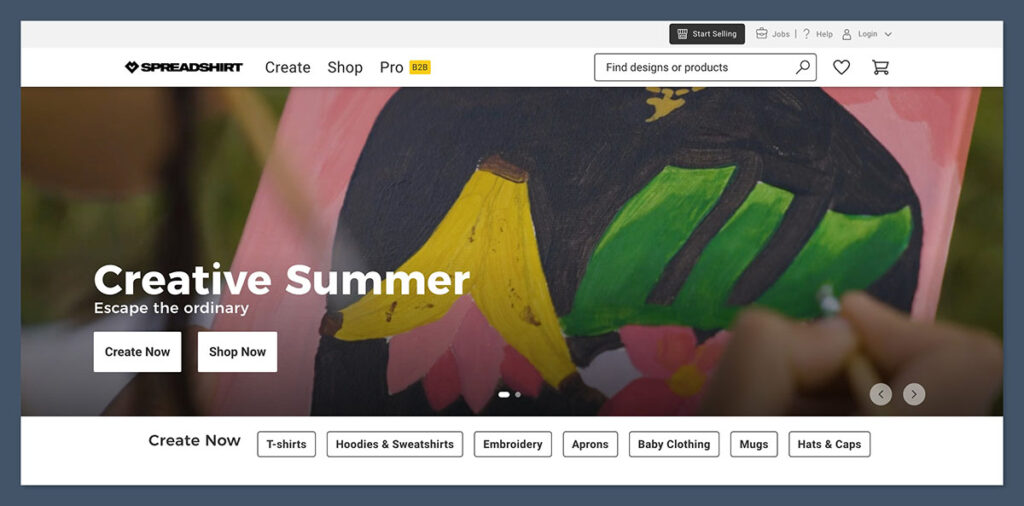
Spreadshirt operates on a commission-based model, allowing users to either list on their main marketplace or create a basic branded shop under Spreadshirt’s domain. While direct pricing control is limited, creators can set a "design price," earning a commission on each sale. Testing with a shop focused on simple, one-liner designs revealed a quick setup process and effective marketplace visibility, leading to sales within two weeks. While per-item earnings were lower than operating an independent store, it served as a reliable source of hands-off income.
Pros:
- Predictable Payouts: Commission-based structure offers clear earning potential.
- Low Commitment: Easy to get started without significant investment.
- Marketplace Visibility: Access to Spreadshirt’s existing customer base.
- Basic Shop Creation: Option to establish a mini-brand presence.
Cons:
- Limited Pricing Control: Base product prices are set by Spreadshirt.
- Lower Per-Item Profit: Commissions may be modest compared to self-hosted stores.
- Brand Limitations: The "Shop" pages are not fully customizable.
- Dependence on Platform: Success is tied to Spreadshirt’s marketing and traffic.
New in 2026: Spreadshirt has enhanced its "Shop" feature with more customization options and introduced new tools for collaborative design projects. They have also expanded their product range to include more premium apparel and accessories.
How Much Does Spreadshirt Cost?
| Item | Design Commission | Platform Control |
|---|---|---|
| T-Shirt | ~$3-$5 | Set per design by seller. |
| Other Items | Varies | Base price set by Spreadshirt. |
Why Use Spreadshirt in 2026?
Spreadshirt offers a low-commitment, predictable earning structure, making it a viable option for monetizing creative work without the complexities of independent e-commerce. While it may not offer the same scalability as a self-hosted store, it provides a straightforward path to earning income from designs.
Spreadshirt is suitable for:
- Creators who prefer a commission-based income model.
- Sellers looking for a simple way to list designs on a marketplace.
- Individuals who want to test designs without managing a full store.
- Those seeking passive income with predictable earnings.
Spreadshirt isn’t suitable for:
- Businesses focused on building a strong, independent brand identity.
- Sellers who require maximum profit margins on each sale.
- Entrepreneurs who want complete control over pricing and product presentation.
11. Zazzle: Personalization for Gifts and Special Occasions
Starting Price: Free.
Earnings: Royalty-based (seller sets their percentage).
Product Types: Over 1,000 items, including invitations, stationery, and wedding goods.
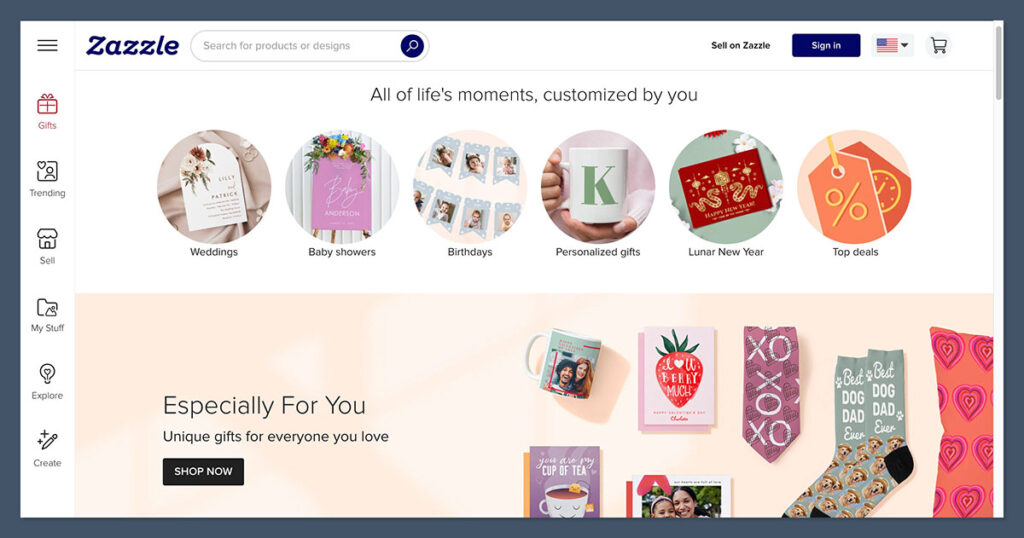
Zazzle specializes in personalized products and boasts one of the most extensive catalogs in the POD space, featuring items like invitations, planners, custom gifts, and holiday decor. Its personalization engine allows customers to easily customize designs with names, dates, and messages, making it a powerful marketplace for seasonal gifting and personalized items. While not a high-volume platform like TeePublic, Zazzle often sees higher average order values due to the added value of personalization. The creation of wedding thank-you cards with Zazzle’s customization tools demonstrated its effectiveness in catering to buyers willing to pay a premium for bespoke touches.
Pros:
- Extensive Personalization Options: Caters to custom gifts and unique customer needs.
- Vast Product Catalog: Offers a wide array of items beyond typical apparel.
- Royalty Flexibility: Sellers can set their own profit margins.
- Strong for Niche Markets: Excellent for wedding, party, and holiday-themed products.
- High Average Order Value: Personalization often commands higher prices.
Cons:
- Lower Sales Volume: Generally sees fewer transactions than mass-market POD sites.
- Complex Pricing: Calculating profits requires careful consideration of base costs and royalties.
- Marketing Fee: Zazzle charges a fee for traffic driven by its own marketing efforts.
- Less Focus on Apparel: While available, apparel is not the primary product category.
New in 2026: Zazzle has introduced AI-powered design assistance tools to help creators generate personalized product ideas and has expanded its integration with corporate gifting platforms. They have also enhanced their mobile shopping experience for on-the-go customization.
How Much Does Zazzle Cost?
| Setting | Value | Notes |
|---|---|---|
| Royalty | 5%-15% | Set by the seller. |
| Marketing Fee |