rifanmuazin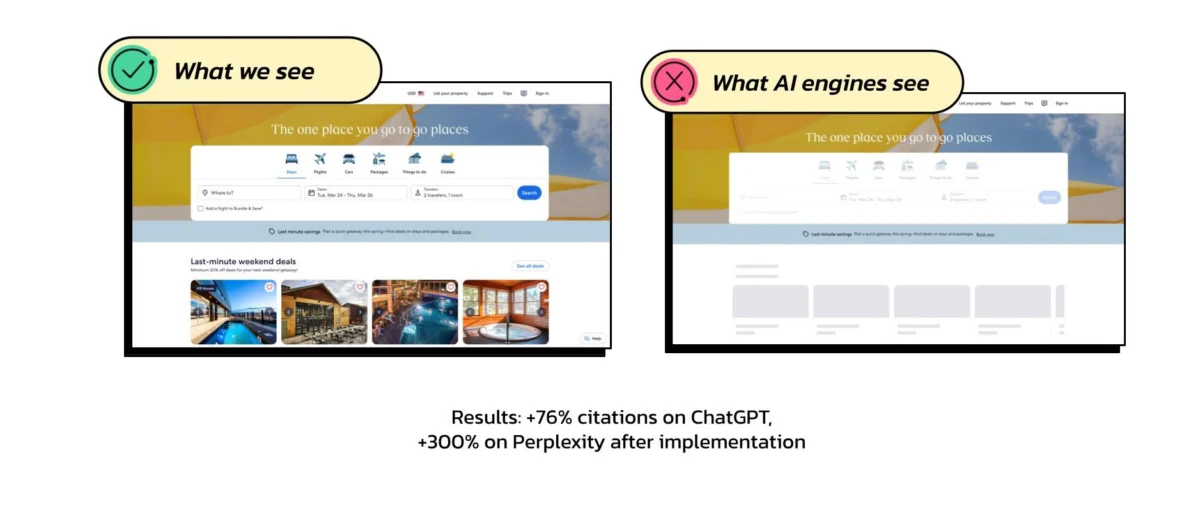
The marketing landscape is undergoing a seismic shift, driven by the rapid ascent of Artificial Intelligence (AI) in search and content consumption. For many marketing departments, the question has evolved from a nascent curiosity about AI’s role to a pressing need for actionable strategies. This transition, however, is proving more complex than initially anticipated, primarily due to the significant cross-functional coordination required to capitalize on AI-driven opportunities. The challenge is not in identifying potential gains, but in effectively orchestrating the internal efforts needed to realize them. While some AI-focused initiatives offer quick wins and can be integrated with existing SEO wishlists, nearly all demand collaboration across multiple departments. Understanding ownership and defining responsibilities are as crucial as grasping the underlying AI principles. As the industry grapples with this new paradigm, a closer examination of the foundational elements for AI visibility reveals a path forward, emphasizing a holistic, collaborative approach.
The Invisible Barrier: Ensuring AI Can Access and Interpret Your Digital Assets
A fundamental, yet often overlooked, hurdle in achieving AI visibility is ensuring that AI systems can actually "see" and process a brand’s website. This may sound basic, but the technical intricacies of modern web development can create significant blind spots for AI crawlers. Unlike human users who interact with dynamic web pages rendered in their browsers, AI search engines typically access content through server-side rendering. This means they interpret the version of a webpage delivered directly from the server, prior to the execution of client-side JavaScript.
The implications are substantial. If a website relies heavily on JavaScript to load essential content—such as navigation menus, product descriptions, or key marketing messages—AI agents may be presented with an incomplete or even inaccurate representation of the brand’s offering. This can lead to AI engines drawing conclusions based on a partial picture, potentially misinterpreting a brand’s value proposition or failing to surface critical information when users query AI for relevant data. This phenomenon is akin to a reader trying to understand a book from a table of contents alone, missing the entire narrative within.
According to industry analysis from leading SEO firms, a significant percentage of enterprise websites utilize JavaScript frameworks that, if not properly configured for server-side rendering, can significantly impede AI crawlability. For instance, a report by Search Engine Journal in late 2023 indicated that up to 30% of websites exhibit issues with client-side rendering that could affect AI indexing. This underscores the urgency for marketing teams to collaborate closely with their engineering and development departments. While SEO specialists can audit sites, identify affected pages, and propose solutions, the actual implementation of server-side rendering or equivalent technical fixes requires dedicated development resources. This necessitates buy-in from leadership, where AI visibility must be prioritized alongside other product development roadmaps. Furthermore, paid media teams can play a pivotal role by providing crucial insights into which pages drive the highest commercial value, thus informing the prioritization of these technical remediation efforts.
Building Trust: Freshness and Credibility Signals for AI Engines
Once a website is technically accessible to AI, the next critical step is establishing trust. AI answer engines, much like human readers, prioritize reliable and up-to-date information. A key signal that AI systems evaluate is the recency and authority of content. This is where structured data, particularly schema markup, becomes indispensable.
Schema markup, while technical in its implementation, serves a straightforward purpose: it provides search engines and AI with explicit context about the content on a webpage. This metadata, invisible to human visitors, can convey vital information such as the last update date, author attribution, content format, and even the specific subject matter of embedded media. For instance, without schema markup, an AI engine might not recognize the presence or relevance of a video on a page, rendering it effectively invisible from an AI visibility standpoint. This lack of explicit signaling can lead to valuable multimedia content being overlooked when AI synthesizes answers for users.
The primary reason brands have historically lagged in schema implementation is not due to insurmountable technical difficulty, but rather the organizational gap it often falls into—a space between SEO and development teams, where ownership of deployment is unclear. Establishing a standing workflow is the most effective solution. The SEO team should be responsible for identifying the necessary schema types and the pages on which they should be applied. The development team, in turn, should integrate schema markup as a routine part of the content publishing process, rather than treating each addition as a bespoke project. This collaborative approach also benefits from the involvement of creative and social media teams, who are directly responsible for producing the content, such as videos and articles, that stands to gain the most from accurate semantic tagging.
The Paradigm Shift: From Keywords to Comprehensive Topics in AI Search
Perhaps the most profound transformation in how brands must approach AI search is the move away from keyword-centric optimization towards topic-based authority. Traditional search engines often ranked pages based on the presence and frequency of specific keywords. However, AI, with its sophisticated natural language processing capabilities, evaluates content differently. It rewards comprehensive, well-organized content that demonstrates deep expertise across an entire subject area, rather than fragmented pieces that merely touch upon individual keywords.

A brand that maintains twenty separate pages, each addressing a facet of a topic without sufficient depth, is likely to be outperformed by a competitor whose content is structured to provide a thorough and authoritative exploration of that subject. This shift necessitates a fundamental change in content strategy and team collaboration. The technique that allows marketers to understand AI’s thematic preferences is embeddings analysis. This advanced analytical method maps words and concepts into a multi-dimensional space based on their semantic relationships. By analyzing these embeddings, marketers can identify the clusters of related ideas that AI engines deem authoritative within a specific industry or category. This reveals the thematic landscape that AI is prioritizing and highlights areas where a brand’s content may be lacking in depth or comprehensive coverage.
The output of embeddings analysis is a data-driven topic framework—a strategic blueprint for content organization designed to align with AI’s understanding of expertise. However, the true value of this framework is unlocked only when it becomes a shared operational logic across content, social media, and public relations teams. It should not remain a siloed SEO document but should inform editorial calendars, content creation initiatives, and external communication strategies. When the PR team pitches stories, they should do so around these identified core themes. Similarly, the social media team’s content calendar should be structured to reinforce these priority topics. While SEO may lead the analysis, the resulting thematic framework must be embraced and utilized by all relevant departments to foster a unified brand narrative.
Beyond the Website: The Holistic Ecosystem of AI Brand Perception
A crucial realization for marketing teams is that a brand’s AI narrative is not solely constructed from its own website. AI answer engines synthesize information from a vast array of sources, including social media discussions, forum posts, video platforms like YouTube, and publisher coverage, in addition to a brand’s owned digital assets. This means that a brand can possess an impeccably optimized website and high-quality content, yet still suffer in AI search rankings if the broader online conversation surrounding it is fragmented, inconsistent, or contains inaccuracies.
The practical implication of this interconnected ecosystem is that maintaining AI visibility requires a proactive and coordinated approach across all digital touchpoints. This necessitates a regular channel of communication between SEO teams and their social media and community management counterparts. By sharing insights on which topics AI is surfacing and rewarding, platform-specific content strategies can be informed by these overarching priorities. This is not about SEO dictating content to other channels, but rather about ensuring that the collective digital footprint of a brand presents a coherent and authoritative signal to AI systems.
The Evolving Role of Public Relations in the AI Era
The influence of AI on public relations is profound, fundamentally altering how success is measured and executed. AI answers often synthesize sentiment from PR coverage, community mentions, and publisher citations simultaneously. A single negative or inaccurate mention, regardless of its original source, can be aggregated and incorporated into the information AI provides to potential customers, impacting brand perception on a massive scale.
Consequently, the primary objective for PR is no longer solely about earning backlinks from high-authority publications. The new imperative is to cultivate positive and accurate mentions across the sources that AI engines actively cite. This also involves a proactive approach to correcting misinformation wherever it appears across the digital ecosystem. This represents a significant departure from traditional PR briefs, which often focused on reach and prestigious placement. Furthermore, the value of paywalled coverage, while prestigious, diminishes for AI visibility purposes if AI engines cannot access and process the content.
To effectively navigate this new landscape, SEO teams must provide PR departments with data indicating which sources LLMs are actively referencing, and where brand mentions may be inaccurate or absent. PR professionals can then leverage this intelligence to target their outreach and correction efforts more effectively. Partnership teams also play a vital role in this domain, as co-created content and third-party endorsements generate open, readable signals that significantly bolster AI credibility, a feat that closed-off, paywalled content cannot achieve.
The Unifying Force: Cross-Functional Synergy for AI Success
The strategies outlined—ensuring AI accessibility, building trust through schema, optimizing for topics, and managing the broader digital ecosystem—are not novel or secret. The methodologies exist, the data is obtainable, and the technical fixes are generally understood. What is often absent in many organizations is the integrated, cross-functional process required for their successful execution.
An SEO team can conduct comprehensive analysis and identify opportunities, but they cannot implement rendering fixes without engineering, deploy schema without development support, align content calendars without the content team’s buy-in, or redirect PR targeting without a shared measurement framework. The brands currently gaining traction in AI search are not necessarily employing more sophisticated individual tactics. Instead, they are those that have successfully elevated AI visibility to a shared organizational priority, rather than confining it to the purview of a single department. This fundamental shift begins with leadership fostering candid internal discussions—not just about the potential of AI search, but about the critical question of who ultimately owns the responsibility and execution of these vital initiatives. The future of digital presence hinges on this collaborative evolution.