rifanmuazin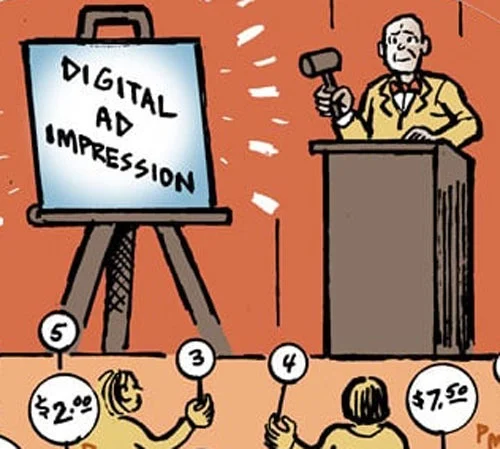
The opaque nature of programmatic advertising, long criticized for its lack of transparency, is facing a significant reckoning. In an effort to demystify the complex "black boxes" of digital ad auctions, the Media Rating Council (MRC) has unveiled a comprehensive set of new standards designed to foster greater clarity and accountability. Alongside these standards, the MRC has launched a voluntary certification program for platforms that commit to adhering to them, signaling a crucial step towards a more trustworthy digital advertising ecosystem.
For years, advertisers and publishers have grappled with the inherent opacity of programmatic auctions. Each platform, operating under its own proprietary rules, has created a fragmented landscape where understanding the precise mechanics of bid placement, win determination, and fee structures has been a formidable challenge. This lack of visibility has not only fueled distrust but has also hampered efforts to optimize campaign performance and ensure fair market practices. The MRC’s initiative aims to address these long-standing concerns by establishing a consistent framework for explaining how these critical auctions function.
Illuminating the Black Box: The MRC’s New Transparency Standards
The newly released standards, detailed in a comprehensive document, are not intended to enforce a single, uniform auction algorithm or dictate specific bidding strategies across all platforms. Instead, they focus on providing a standardized methodology for platforms to disclose their operational nuances. Ron Pinelli, the MRC’s Senior Vice President of Digital Research and Standards, emphasized this point, stating that the goal is to ensure platforms articulate their "key decision variables" that influence auction outcomes and to document any modifications to their auction rules.
However, achieving the MRC’s coveted transparency seal of approval is contingent upon adherence to certain best practices. This includes the adoption of industry-developed specifications, such as the OpenRTB (Open Real-Time Bidding) protocols, some of which have seen slow uptake within the industry due to various debates and complexities. The MRC’s certification process will therefore serve as a catalyst for broader adoption of these foundational industry standards.
The Pillars of Fair Play: Disclosure Requirements for Platforms
To qualify for the MRC’s transparency certification, digital advertising platforms will be required to disclose a detailed list of auction parameters. This transparency extends to the fundamental mechanics of the auction process itself. Platforms must clearly state whether they employ first-price, second-price, or modified second-price auction models. Crucially, they must also reveal if factors beyond the submitted bid price, such as the priority of demand sources or seller-defined rules, play a role in determining which bid ultimately wins.
Publishers and Supply-Side Platforms (SSPs) also bear significant disclosure responsibilities under the new framework. They are mandated to reveal their use of reserve prices or pricing floors. Furthermore, the standards stipulate that these pricing floors must be applied uniformly to all buyers, prohibiting the practice of setting different floors for different entities. This aims to level the playing field and prevent discriminatory pricing practices that could disadvantage certain advertisers or demand partners.
The genesis of this initiative can be traced back to a collaborative effort spearheaded by Omnicom Media Group, a major agency holding company, working in tandem with the MRC. In early 2024, a steering committee was formed to guide the development of these standards, drawing support from a broad coalition of nearly 70 companies and organizations. This influential group includes major technology platforms like Meta, TikTok, and X, alongside leading publishers, prominent advertising agencies, and key ad tech vendors such as The Trade Desk and Hearst. Industry trade organizations, including the 4A’s, ANA, WFA, and the IAB Tech Lab, have also lent their expertise and support to the initiative.
A Driving Force for Clarity: The Vision Behind the Standards
Ben Hovaness, Chief Media Officer at Omnicom-owned OMD Worldwide, has been a central figure in driving this project forward. His deep engagement stems from a long-standing fascination with the theoretical underpinnings of programmatic ad auctions and a growing concern over the industry’s practical shortcomings in disclosing auction mechanisms.
Since 2014, Hovaness has been instrumental in developing internal educational programs on ad auctions at Omnicom. He has also proactively collected official auction rule disclosures from major players like Google, Meta, and Amazon for Omnicom’s Council on Accountability and Standards in Advertising. In 2023, he brought this critical need for standardization to the MRC, aiming to establish the industry’s first robust standard for auction rules and change disclosures.
"It always seemed unreasonable to ask advertisers or agencies to place a bid in an auction where the rules are unknown," Hovaness articulated to AdExchanger. He believes this lack of transparency erodes trust not only between advertisers and sellers but also within the advertiser-agency relationship.
Hovaness drew a stark parallel to traditional auction environments, where transparency is paramount. "If you go to Sotheby’s or Christie’s, you get a term sheet at the door that says exactly how the auction works, how much the auction house is taking – all the associated fees and rules," he explained. "That is how you run a good auction with high integrity." The implication is clear: the digital ad space has fallen short of this fundamental standard.
The increased transparency envisioned by these standards will empower both buyers and sellers to scrutinize each other’s operations, fostering greater accountability. Furthermore, Pinelli noted that a clearer understanding of auction logic will equip advertisers and publishers with the insights needed to optimize their bidding and pricing strategies more effectively.
Technical Foundations: Embracing Industry Specifications
While the MRC standards allow platforms to incorporate proprietary rules into their auction logic, these must be transparently disclosed. However, a set of foundational requirements are non-negotiable for certification. Hovaness described these as essential to eliminate inconsistent, and in some cases, "deliberately deceptive" practices within ad auctions.
According to Pinelli, these mandatory requirements are also designed to encourage the adoption of updated OpenRTB specifications developed by the IAB Tech Lab. Some of these specifications have faced resistance or debate within the industry, but their implementation is now being incentivized by the MRC’s certification.
A key example is the mandated use of the new video.plcmt field for labeling and decisioning in online video ad placements. The IAB Tech Lab introduced video.plcmt in 2023 to clearly differentiate between "instream" and "outstream" video ad formats. Historically, many Demand-Side Platforms (DSPs) and SSPs have continued to use the older, now-deprecated video.placement specification, or even employed both simultaneously. The MRC’s new standards aim to drive universal adoption of the updated and more precise video.plcmt field.
Harmonizing Identifiers: TIDs and GPIDs in Focus
Another significant aspect of the MRC standards is the mandate for universal Transaction IDs (TIDs), aligning with the IAB Tech Lab’s OpenRTB specifications. TIDs are crucial for tracking ad transactions across different platforms and preventing auction duplication.
This mandate comes after a public dispute last year involving Prebid.org and The Trade Desk concerning TIDs. Prebid initially disabled TIDs by default in an update, sparking concerns about potential obfuscation and difficulties in tracking. While Prebid later offered a partial reversion, allowing publishers to opt back into universal TIDs, the initial move highlighted the complexities and disagreements surrounding their implementation.
Notably, Prebid.org is absent from the list of contributors to the MRC’s new transparency standards, and the organization declined to comment on its nonparticipation. However, Pinelli reassured that the MRC is not solely prioritizing buy-side interests.
The new transparency standards also address concerns from the sell-side by requiring DSPs to submit multiple bids per auction. This provides publishers with greater insight into the competitive bidding landscape without resorting to duplicating bid requests or obscuring TIDs to facilitate such duplication. This multi-bidding provision serves as a compromise, balancing the buy-side’s need for comprehensive bidding data with the sell-side’s requirement for publishers and SSPs to include a Global Placement ID (GPID) – a unique identifier for each ad placement – in every bid request.
Catalyzing Adoption: The Path Forward
Despite the MRC’s efforts to foster broad industry involvement, the absence of some key players is noteworthy. Google and Amazon, dominant forces in ad buying and selling who have often faced scrutiny regarding their auction transparency, did not directly participate in the development of these standards. Neither company provided comment by the time of publication.
Ron Pinelli acknowledged this reality, stating, "We can’t compel any organization to [participate]." He did, however, add that "Many organizations did not participate directly, but commented during the public comment period," indicating that feedback was still received from a wide array of stakeholders.
The MRC emphasized that participation in the certification program is voluntary. Platforms that opt in will undergo annual reevaluations to ensure ongoing compliance. It’s also important to note that this transparency accreditation operates independently of other MRC accreditations.
Looking ahead, the MRC’s transparency steering team is planning to develop solutions tailored for mid- and long-tail publishers who may lack the resources to navigate the full accreditation process. Additionally, the group is actively working on new standards for incrementality measurement, another critical area for optimizing digital advertising effectiveness.
Encouraging widespread adoption of these new standards, a perennial challenge in the digital advertising industry, remains a key focus. Hovaness urged advertisers, particularly larger brands, to leverage their relationships with major sell-side platforms. "If there’s enough advertiser interest," he stated, "then this is going to move ahead." This sentiment underscores the power of advertiser demand in driving industry-wide change and ultimately fostering a more transparent and accountable digital advertising ecosystem. The MRC’s initiative represents a significant stride in this direction, promising to shed much-needed light on the intricate workings of programmatic ad auctions.