Lina Hope

The landscape of e-commerce is in constant flux, driven by rapid technological advancements and evolving consumer behaviors. As businesses navigate this dynamic environment, foresight into emerging trends becomes paramount. This year, e-commerce experts Bill D’Alessandro and the author of this piece present their collective predictions for the trajectory of online retail in 2026. Their analysis spans a wide spectrum, from the transformative potential of artificial intelligence in advertising and content creation to the persistent influence of global economic factors like tariffs and inflation, and the strategic imperatives for brands in an increasingly competitive marketplace.
The stakes for these predictions have been heightened this year. Following a critique of overly generous self-assessment of past forecasts, the duo has committed to a novel method of evaluation. At the close of 2026, the transcript of their predictions will be fed into advanced AI models, Claude and Grok, to objectively determine the accuracy of each individual forecast. The outcome will culminate in a rather public display of triumph or humility, with the loser of the prediction contest obligated to treat the winner to a steak dinner, a gesture laden with playful humiliation.
The Dawn of Telepathic Advertising and the Rise of Verified Human Content

One of the most significant shifts anticipated for 2026 lies in the realm of digital advertising, particularly with the imminent integration of advanced AI by major technology platforms. The current capabilities of platforms like Meta in understanding user interests are already sophisticated, but the advent of AI-powered advertising promises to elevate this to an unprecedented level. The prediction posits that platforms like OpenAI, upon launching their advertising services, will offer targeting that moves beyond mere precision to a level that feels "telepathic." This means advertisements will be delivered with such uncanny accuracy, anticipating consumer needs and desires based on a deep, AI-driven understanding of individual psychological profiles and purchasing intentions, that they will seem to read minds. The implication for early adopters is a significant competitive advantage, allowing them to capture market share through hyper-personalized outreach.
This impending wave of AI-driven content generation also raises critical questions about authenticity and trust. The author notes a personal observation on the social media platform X (formerly Twitter), where a significant portion of observed video content appeared to be AI-generated. This erosion of trust is a growing concern across digital spaces. Consequently, a prediction for 2026 is that major online platforms will begin experimenting with "verified human" content badges. This initiative would aim to re-establish credibility by providing users with a clear distinction between content created by humans and that generated by artificial intelligence, potentially through a rigorous verification process. Such a move would be a direct response to the increasing prevalence of synthetic media and the public’s growing skepticism towards digital content.
Furthermore, the practical application of AI in content creation is expected to democratize production capabilities. The prediction is that by the end of 2026, video and audio editing will be largely automated, achieving a respectable 7 out of 10 quality. Tools akin to Descript, which already offer impressive editing functionalities, are expected to evolve significantly. Founders and small businesses will be able to input raw footage and simply instruct an AI on the desired outcome, receiving polished edits that previously would have required a dedicated production team. This will empower scrappier entrepreneurs to produce high-quality content at a fraction of the traditional cost, leveling the playing field in content marketing.
Economic Currents: Tariffs, Inflation, and the Divergent Economy

Global trade dynamics and economic stability remain critical factors influencing the e-commerce sector. The predictions address the ongoing trade relationship with China, forecasting that tariffs will stabilize within a range of 30% to 50%. This projection is informed by an analysis of current economic conditions, including rising inflation and softening economic growth. The author suggests that political responses to market fluctuations, particularly the bond market’s reaction to previous tariff escalations, indicate a reluctance to further destabilize an already fragile economy. This suggests a pragmatic approach to trade policy, avoiding measures that could significantly impede economic recovery.
On the macroeconomic front, inflation is projected to remain a persistent challenge. The prediction is that inflation will exceed 3% in 2026. This forecast is rooted in the belief that there is a lack of political will to significantly curtail government spending. Continued deficit spending, according to this analysis, will inevitably lead to sustained inflationary pressures. This isn’t seen as a short-term phenomenon but rather a sticky economic reality likely to persist for the next decade. The implication for businesses and investors is the necessity of strategic planning to operate and invest within a persistently inflationary environment, adapting portfolios and operational models accordingly.
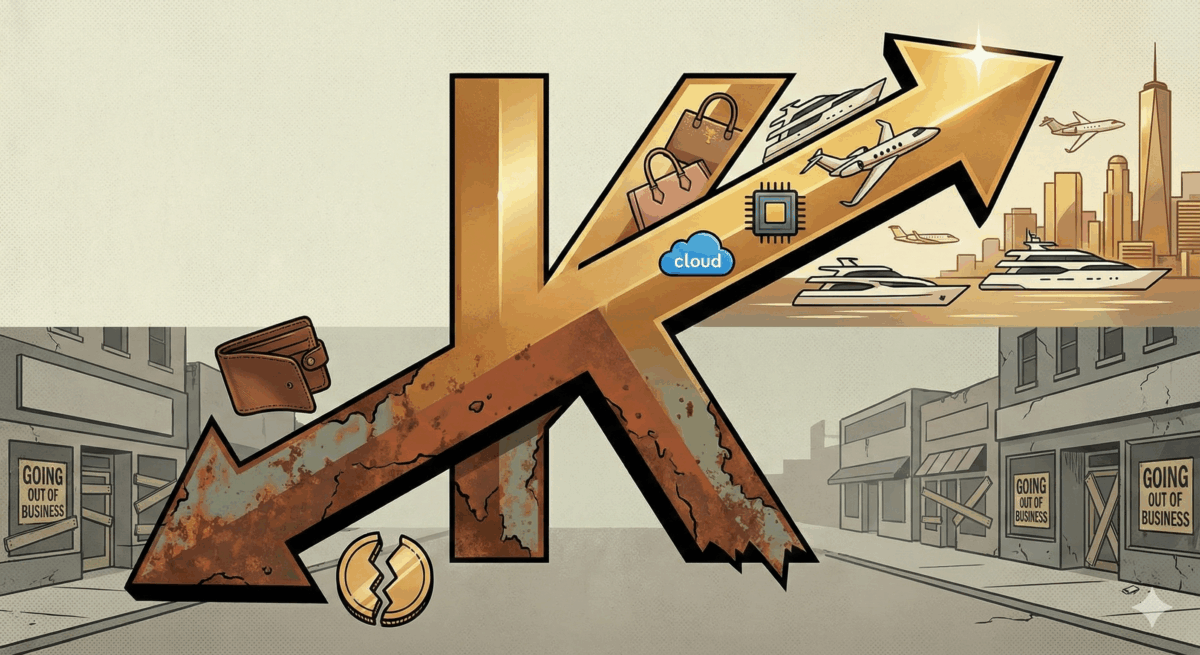
Complementing this view, Bill D’Alessandro predicts that 2026 will be characterized by a "K-shaped economy." This economic model describes a divergence where certain sectors or segments of the population experience significant growth, while others stagnate or decline. Specifically, D’Alessandro anticipates that large technology companies and major market players, often referred to as the "Mag 7," will continue their upward trajectory, potentially seeing gains of 20% or more. Conversely, the broader economy and the average consumer are expected to face ongoing struggles. For e-commerce businesses, this bifurcated economic reality presents a strategic challenge: the need to either target affluent consumers in the "up-market" or focus on offering highly competitive pricing on essential goods in the "down-market." The middle ground is identified as a particularly perilous space for businesses to operate within.
The AI Revolution and the Maturation of E-commerce Brands

The pervasive influence of artificial intelligence is a recurring theme in the 2026 predictions, extending beyond advertising and content creation to encompass core business operations. Bill D’Alessandro’s forecast suggests that AI will "completely take over Meta ads content." This is supported by observations of proof-of-concept initiatives where large brands are developing pipelines capable of generating hundreds of novel advertisements daily. These AI systems are reportedly capable of analyzing customer reviews, leveraging existing brand assets, and generating both static images and, increasingly, video content, which can then be directly launched through APIs. The prediction is that this sophisticated AI-driven ad generation will move from experimental stages to mainstream adoption in 2026.
However, the evolving competitive landscape, amplified by AI-driven efficiencies, is expected to challenge the viability of certain e-commerce business models. D’Alessandro predicts that "the lifestyle brand is dead." Unless a brand possesses robust intellectual property protection or ranks within the top 5-10% of established brands, smaller e-commerce businesses with revenues in the single-digit millions are expected to face significant difficulties. Larger competitors, equipped with AI-powered operational and marketing machines, will be able to outspend rivals on customer acquisition, out-test them in marketing strategies, and sustain higher customer acquisition costs (CACs) than smaller entities can afford. This suggests a consolidation of market power and a need for significant differentiation or scale to survive.
This anticipated market consolidation also impacts the mergers and acquisitions (M&A) landscape. The prediction is that M&A activity will be exceptionally strong at the high end of the market while remaining anemic at the lower end. Data indicates a 19% year-over-year increase in deals exceeding $1 billion, contrasted with an 18% drop in small and mid-sized transactions. This trend is expected to continue, with top-tier businesses commanding premium valuations, while more typical e-commerce brands will find it increasingly challenging to find buyers or achieve favorable deal terms.
The Role of Cryptocurrency in an Uncertain Economy
Amidst these economic and technological shifts, the cryptocurrency market, particularly Bitcoin, is also a subject of prediction. D’Alessandro foresees that Bitcoin will experience a dip below $70,000 in the first half of 2026 but is expected to finish the year above $100,000. This forecast acknowledges competing pressures. A struggling consumer economy could negatively impact Bitcoin as a risk asset. However, persistent inflation is seen as a bullish factor, positioning Bitcoin as a potential "digital gold" hedge against currency devaluation. The predicted volatility suggests a period of adjustment followed by a recovery driven by the narrative of inflation.
The full context of these predictions and a deeper dive into their underlying reasoning can be explored in the original podcast episode.
Beyond Predictions: The Value of Community in Navigating the Future
While predictions offer valuable insights into potential future scenarios, the authors emphasize that staying ahead of the curve requires more than just foresight. True strategic advantage lies in actively participating in a dynamic ecosystem of industry knowledge and shared experience. The article concludes by highlighting the importance of engaging with a community of successful e-commerce entrepreneurs. Such a network, comprising thousands of seven and eight-figure store owners, provides a real-time forum for discussing current operational strategies, identifying emerging challenges, and understanding what is actively working and what is not. By plugging into this "braintrust," businesses can gain practical, actionable intelligence directly from those on the front lines of e-commerce, offering a more tangible and immediate path to navigating the complexities of the evolving market.

 Iffa Jayyana

 Laily UPN