Azzam Bilal Chamdy
The rapid deployment of autonomous artificial intelligence agents has revealed a significant gap between controlled demonstrations and real-world utility, leading to a surge in demand for sophisticated observability and correction frameworks. While large language models serve as the computational engine for these agents, their actual performance is dictated by the "harness"—the surrounding code responsible for managing prompts, executing tool calls, and maintaining context. As developers struggle with non-deterministic outputs and the "moving target" of model updates, platforms like Opik, an open-source initiative by Comet, are introducing automated, self-correcting loops designed to transition engineers from manual debuggers to high-level reviewers.
The Structural Anatomy of the AI Agent Harness
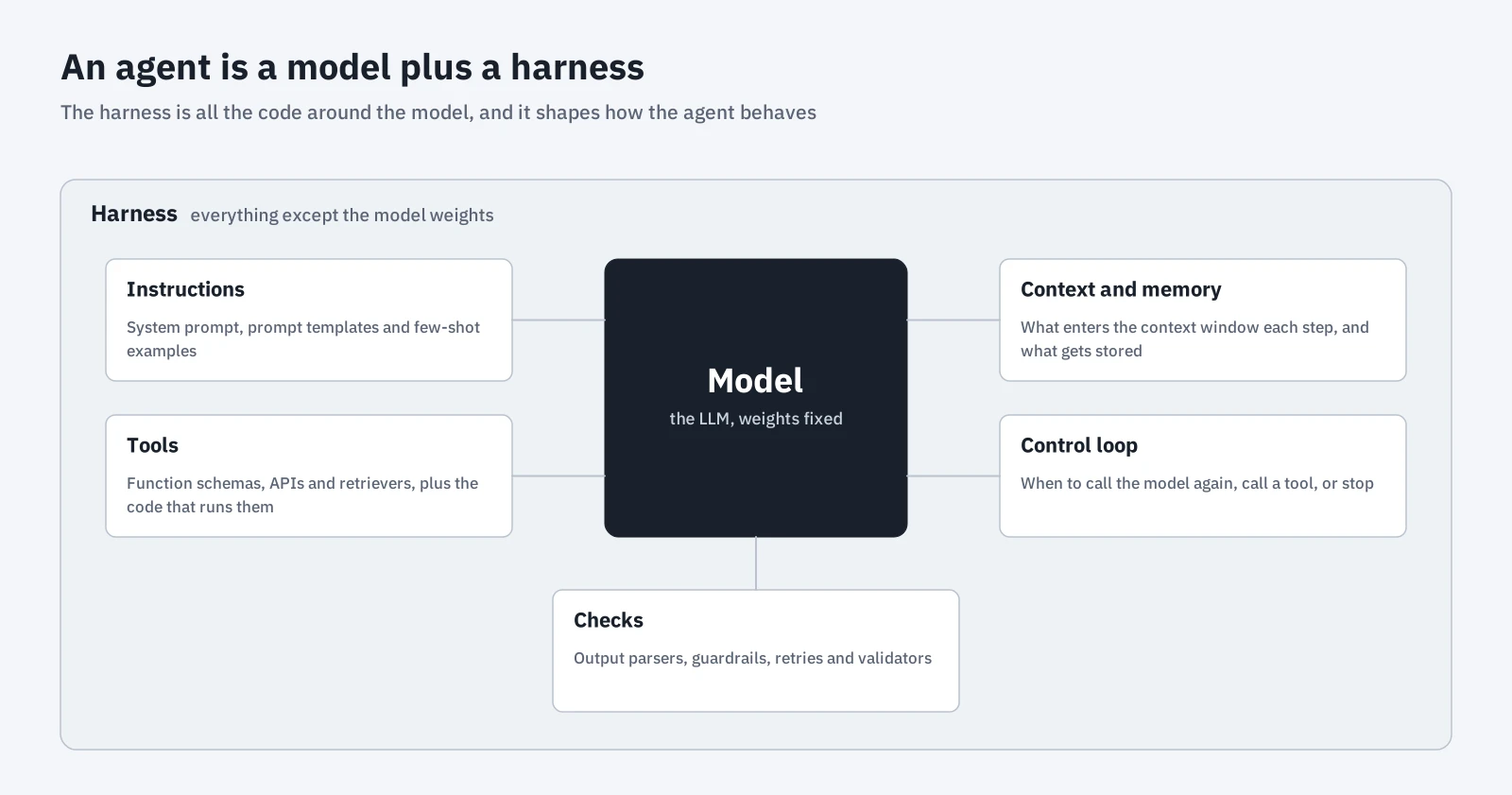
In the current landscape of generative AI development, research has increasingly emphasized that an agent is not merely a model but a composite system. This system is divided between the core Large Language Model (LLM) and the harness. To use an automotive analogy, if the LLM is the engine, the harness represents the chassis, steering, and fuel system that allow the engine to function within a specific environment.
A robust agent harness typically consists of three primary layers. First is the Prompting and Context Management layer, which structures how instructions are delivered and how retrieved data is prioritized. Second is the Tool Execution and API Interaction layer, which governs how the agent interacts with external databases or software. Third is the Control Logic and Execution flow, which determines the sequence of actions and manages the agent’s memory across multi-turn interactions. Industry data suggests that when the model remains constant, optimizing the harness alone can lead to double-digit improvements in task completion rates, yet this component often remains the most fragile part of the stack.
The Limitations of Static Harnesses in Production
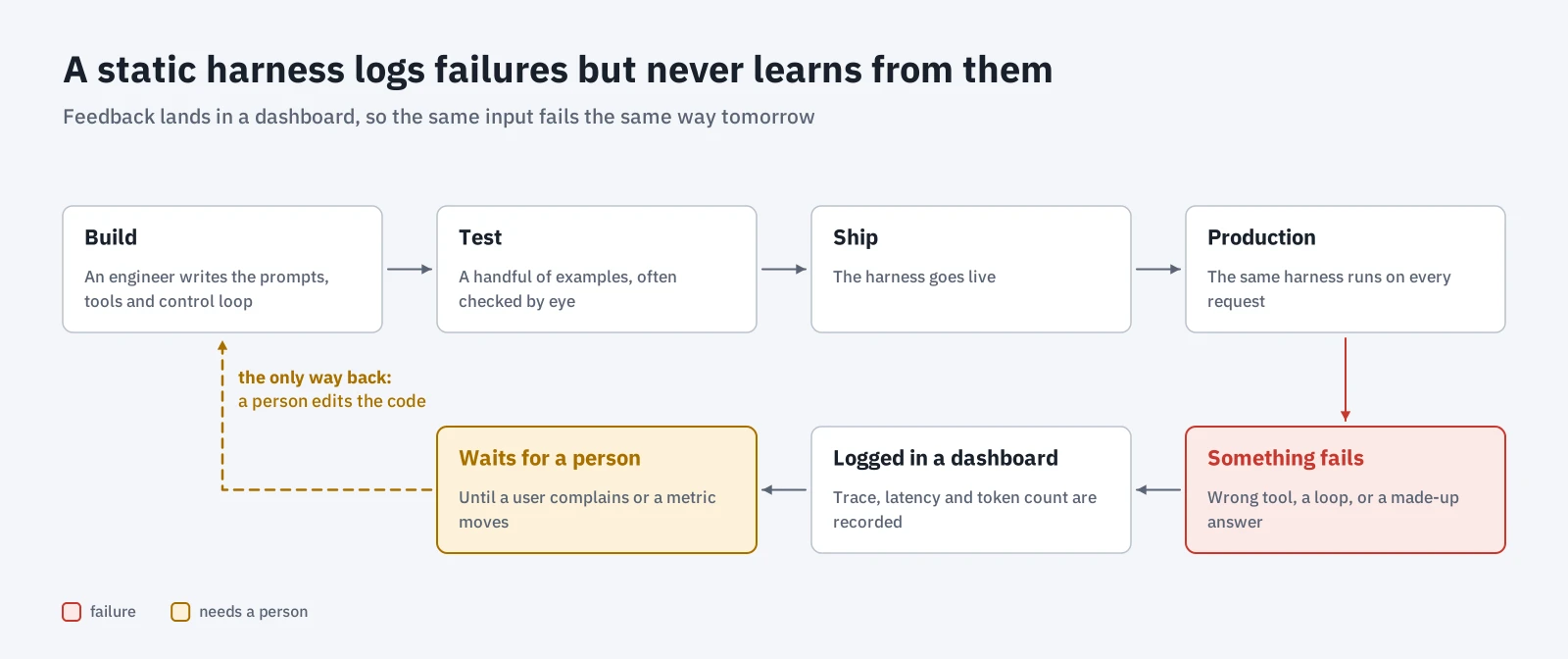
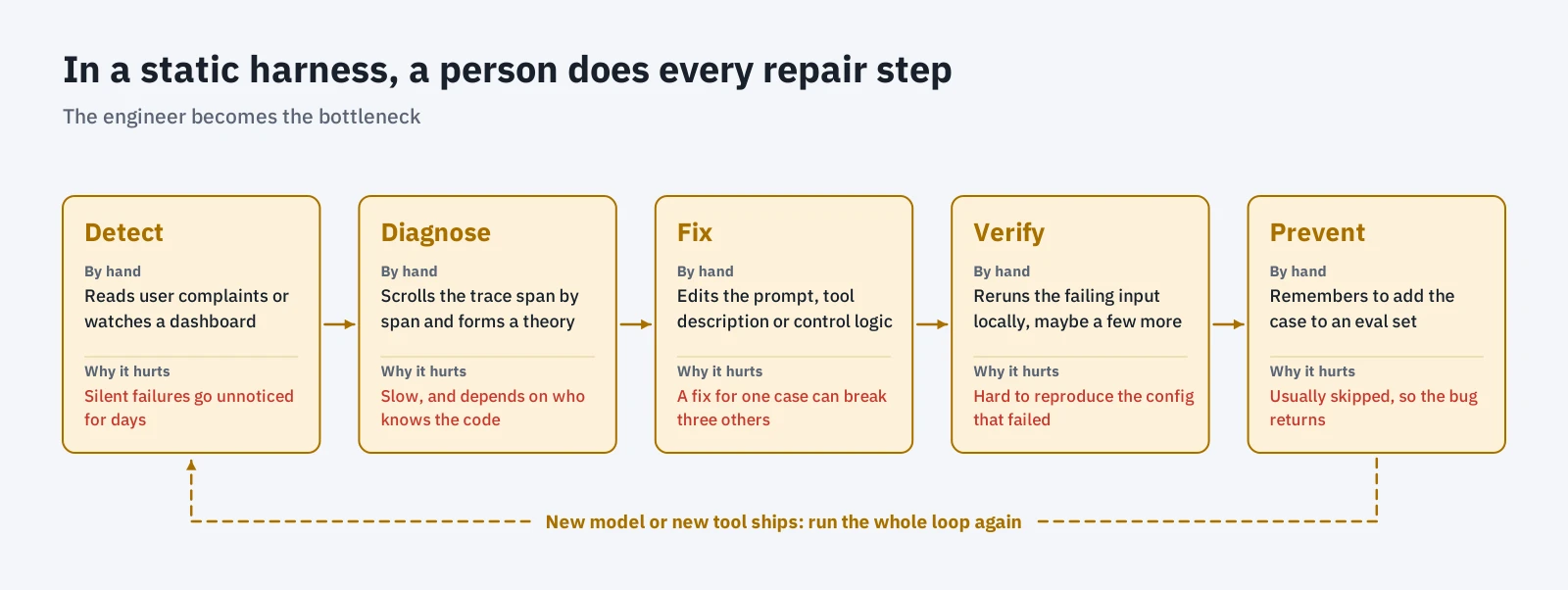
Most AI agents currently deployed in production environments utilize what is known as a "static harness." These systems are characterized by a fixed lifecycle: a human developer writes the code, the agent is deployed, logs are sent to a dashboard, and if a failure occurs, the developer must manually intervene to diagnose and fix the issue. This creates a significant bottleneck in the development cycle.
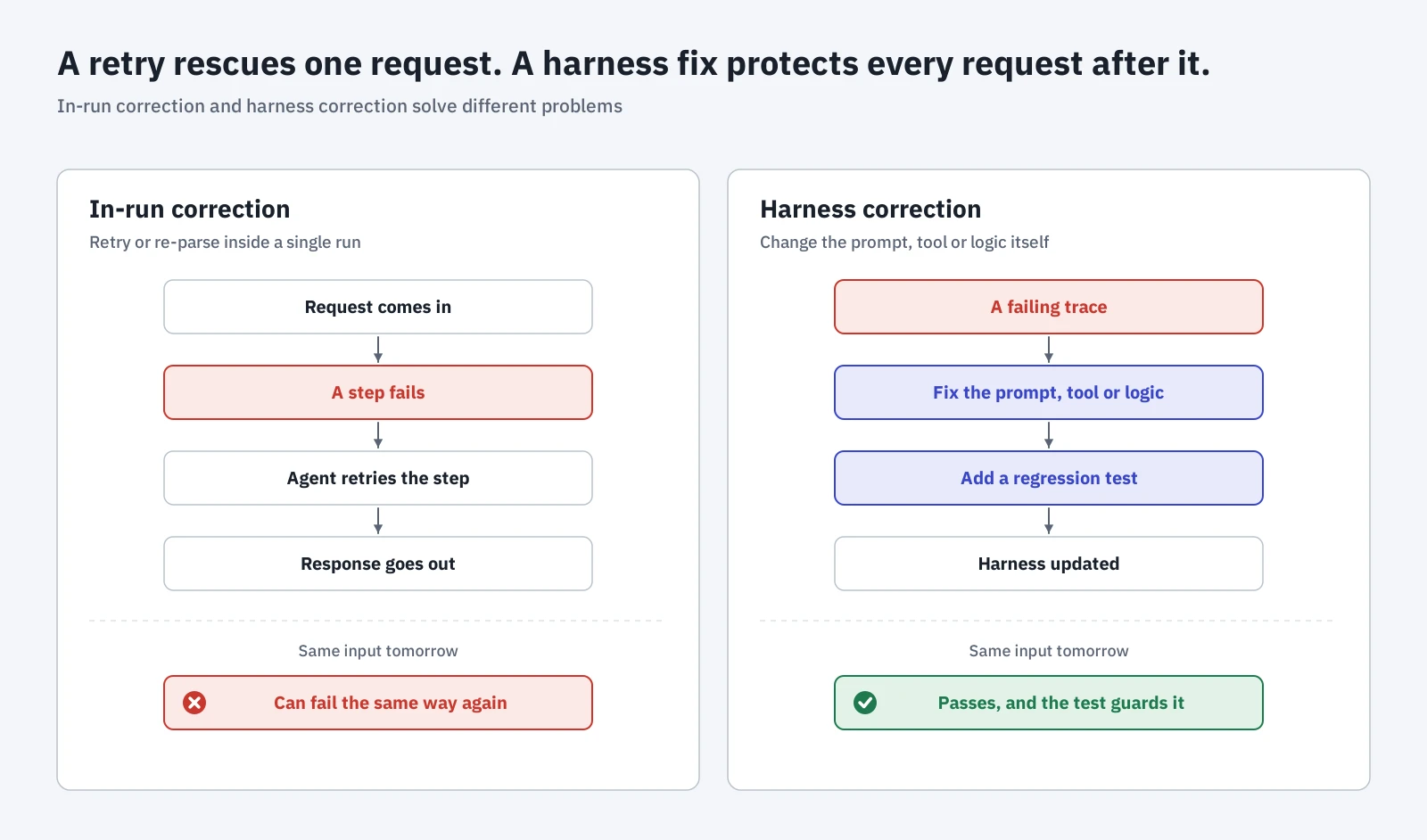
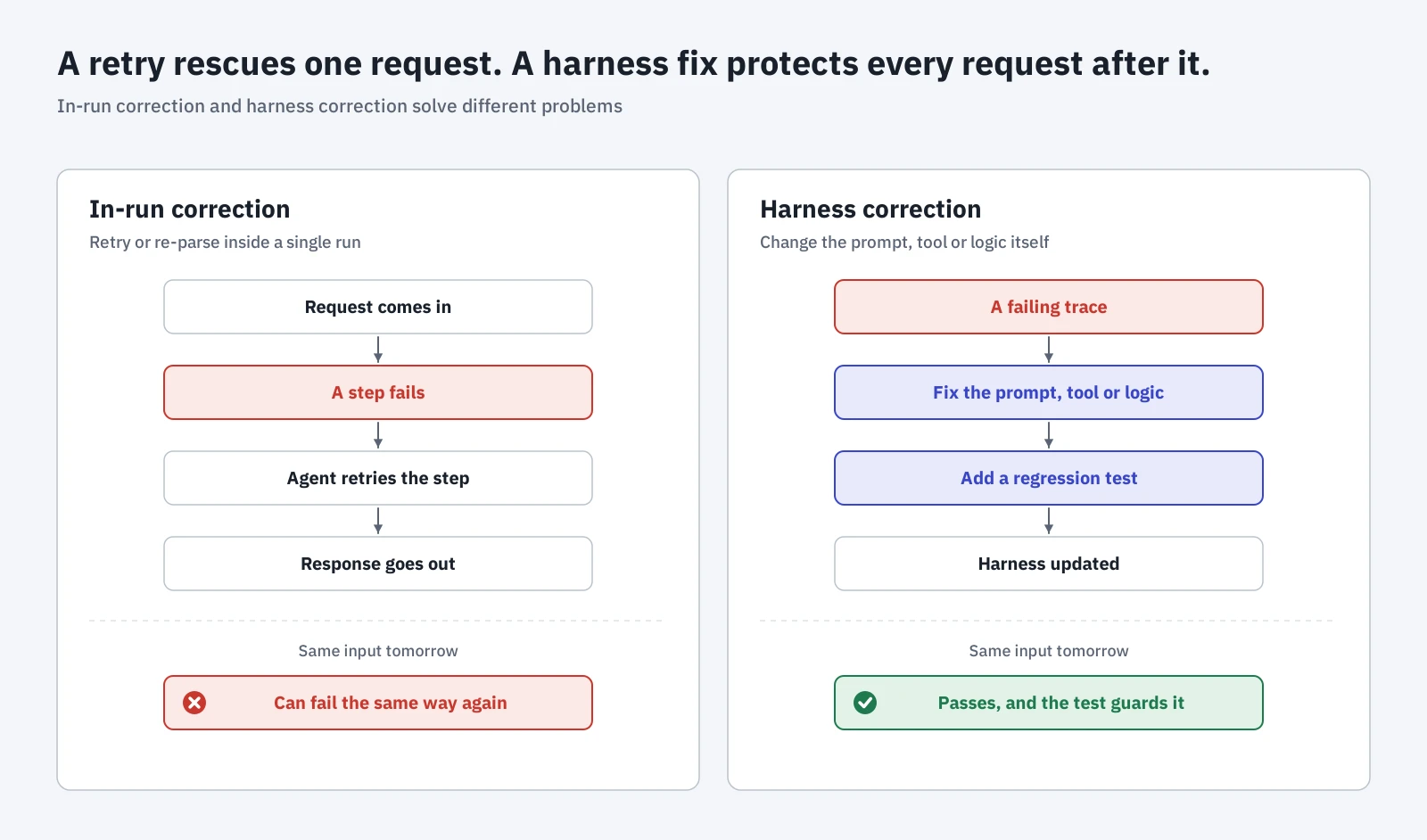
In a static environment, feedback loops are "open." While an agent might have "in-run" correction—such as retrying a failed JSON parse or a timed-out API call—it lacks "harness correction." Harness correction refers to the ability of the system to update its underlying logic so that a specific failure mode does not recur. Without this, silent failures often go unnoticed for days, and the process of diagnosing a failure requires engineers to scroll through thousands of trace spans to form a hypothesis. Furthermore, a fix applied to one specific failure case often inadvertently breaks three other functioning cases, leading to a "whack-a-mole" style of engineering that scales poorly as agents become more complex.
Chronology of the Shift Toward Automated Observability
The transition toward self-correcting agents has followed a clear chronological path over the last twenty-four months. Initially, developers relied on basic logging, which provided text-based outputs of LLM calls. By mid-2023, the industry shifted toward "trace-based observability," where platforms began visualizing the "span tree" of an agent’s execution—showing exactly when a tool was called and what context was retrieved.
However, the sheer volume of data produced by these traces led to "alert fatigue." By early 2024, the focus shifted toward "LLM-as-a-judge" metrics, where a secondary model evaluates the output of the primary agent. The latest evolution, spearheaded by tools like Opik, involves the integration of "coding agents" within the observability platform itself. These agents, such as Opik’s "Ollie," are designed to not only identify that a failure happened but to read the source code, propose a patch, and verify the fix through automated regression testing.
Technical Deep Dive: The Opik Self-Correction Framework
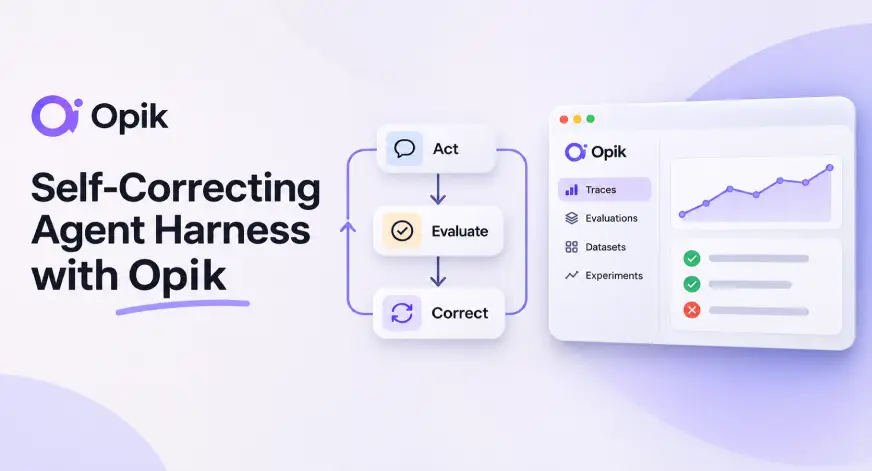
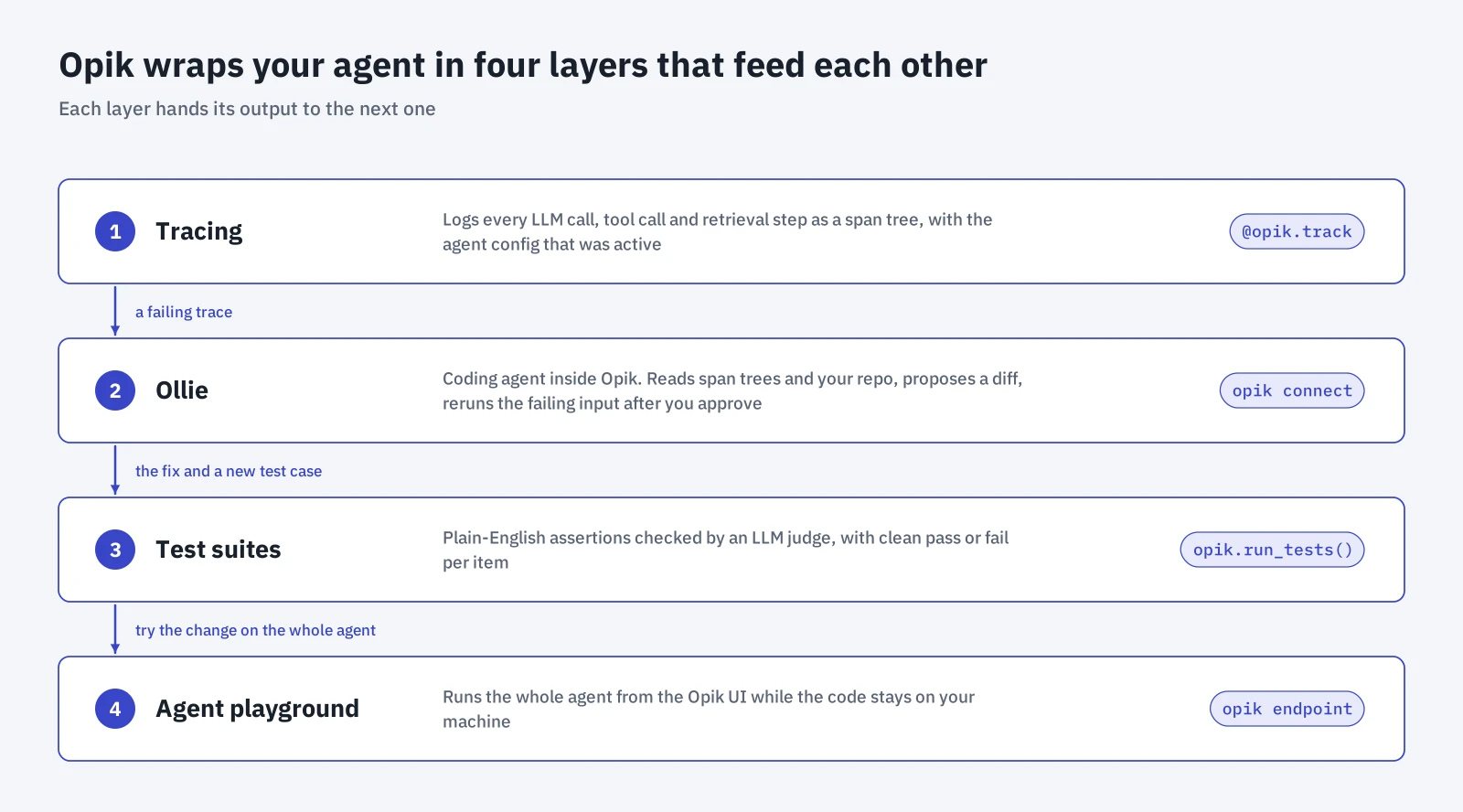
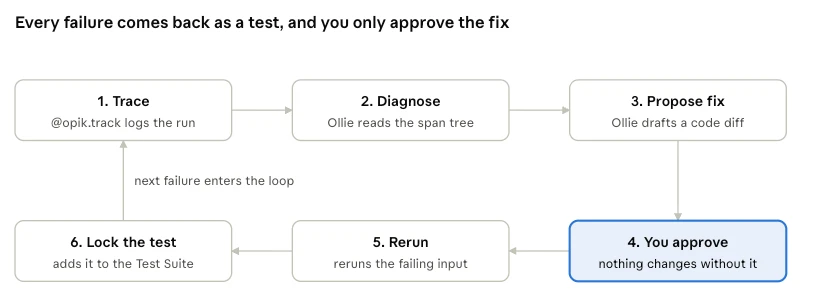
Opik, licensed under Apache-2.0, represents a shift toward a more automated "repair loop." The framework functions through a four-step integrated process designed to minimize human intervention while maintaining oversight.
Step 1: Integrated Tracing and Configuration
The process begins with comprehensive tracing. By utilizing decorators such as @opik.track, developers can log every LLM interaction, tool call, and retrieval step. Unlike traditional logging, this captures the "active configuration" of the agent. This ensures that if an agent fails, it can be rerun later against the exact parameters—temperature, system prompt, and tool versions—that were present at the moment of failure.
Step 2: Diagnostic Analysis via Ollie
The diagnostic phase is handled by Ollie, a specialized coding assistant built into the platform. When a trace indicates a failure—such as an agent ignoring retrieved context—Ollie analyzes the full span tree. By connecting to the local repository via the opik connect command, the assistant can read the underlying Python code, identify the root cause (such as a conflicting instruction in the system prompt), and propose a specific code change or "diff."
Step 3: Natural Language Assertions and Test Suites
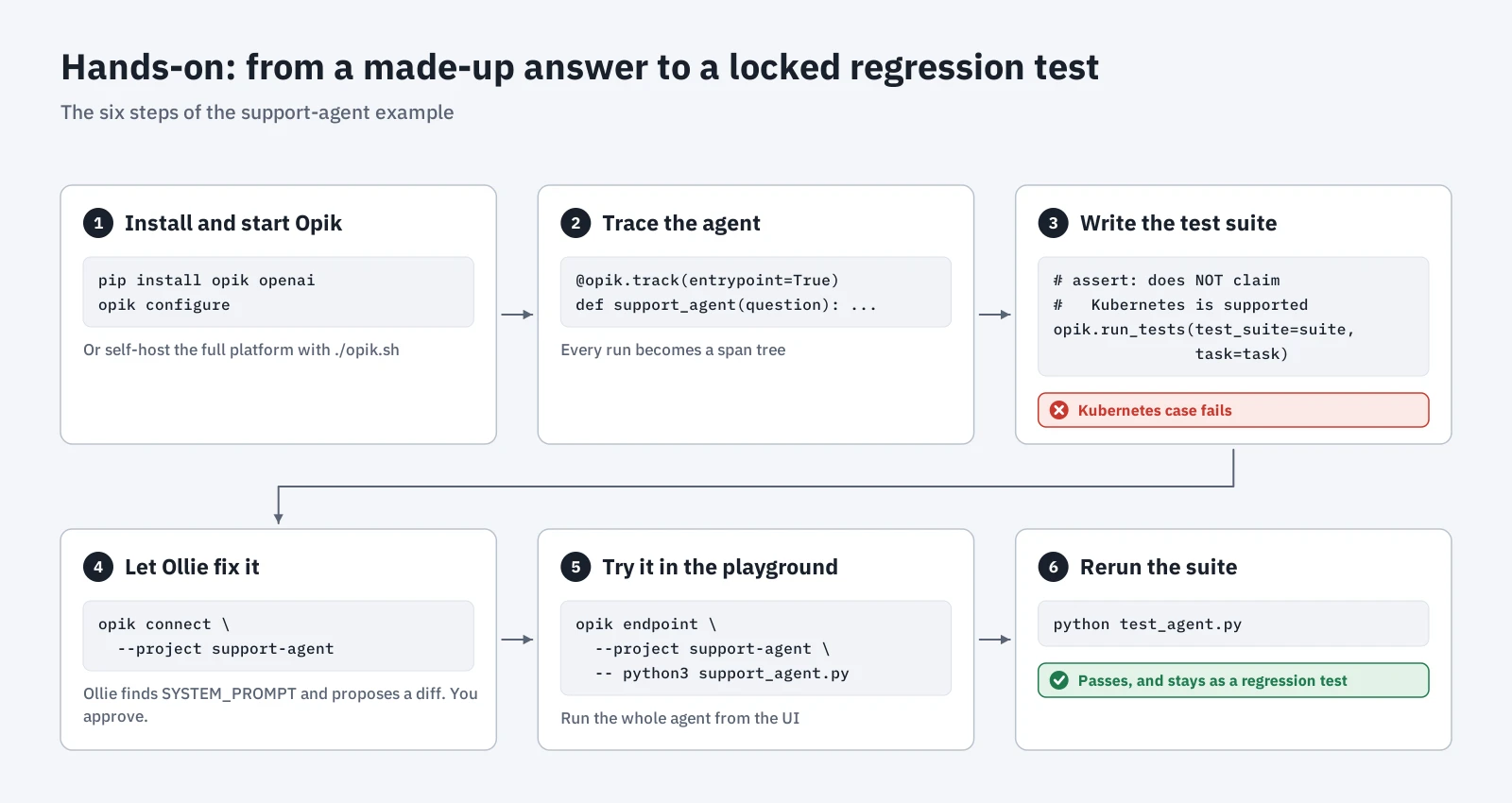
A critical component of this new workflow is the replacement of manual labeling with "plain English assertions." Instead of developers manually checking thousands of outputs, they define rules such as "The response must not claim a specific feature is supported if it is not in the context." These rules are then enforced by an LLM judge. This allows for the rapid creation of test suites that grow dynamically as new failure modes are identified in production.
Step 4: The Agent Playground and Sandbox
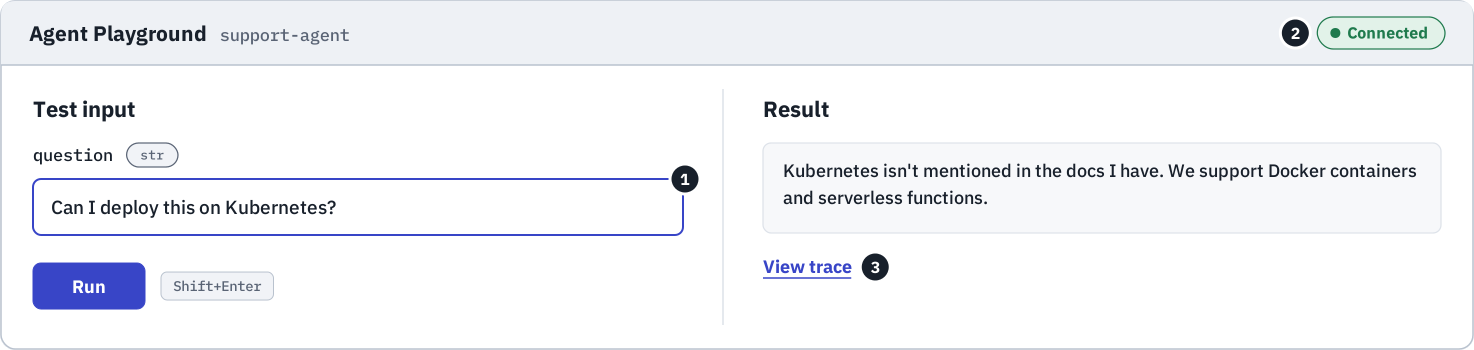
To ensure that code changes do not have downstream negative effects, the platform utilizes an "Agent Playground." This sandbox environment allows developers to run the entire agent end-to-end from a user interface while the code remains on their local machine. This "local-first" approach ensures data security while providing the visual benefits of a cloud-based IDE.
Comparative Market Analysis: Opik, Langfuse, and LangSmith
As the market for AI observability matures, three major players have emerged, each with distinct philosophies regarding licensing and automation.
| Feature | Opik (Comet) | Langfuse | LangSmith (LangChain) |
|---|---|---|---|
| Licensing | Apache-2.0 (Full Platform) | MIT Core (Paid Add-ons) | Closed Source |
| Self-Hosting | Free via Docker/Helm | Available on all tiers | Enterprise Only |
| Correction Logic | Ollie (Proposes code diffs) | None built-in | Engine (Clusters issues) |
| Integration | 50+ Frameworks | 100+ (OpenTelemetry) | LangChain-centric |
| Evaluation | Plain-English Assertions | Code-based/LLM-judge | Online/Offline Datasets |
Opik’s primary differentiator is its focus on the "repair agent." While LangSmith offers powerful clustering of issues and Langfuse provides robust open-source tracing, Opik is specifically built to close the loop between identifying a bug and committing a fix. The "Ollie" assistant acts as a bridge between the observability data and the GitHub repository, a feature that is increasingly vital for teams managing large-scale agentic workflows.
Industry Implications and the Future of AI Engineering
The move toward self-correcting harnesses has profound implications for the role of the software engineer. In traditional software development, the engineer is the primary "mechanic," responsible for every turn of the wrench. In the age of AI agents, the engineer is evolving into a "reviewer."
This shift is necessitated by the non-deterministic nature of LLMs. As models like GPT-4o or Claude 3.5 are updated by their providers, the behavior of agents built upon them can shift overnight. A manual debugging approach cannot keep pace with these changes. By automating the detection and proposal of fixes, organizations can maintain higher reliability standards with smaller teams.
Furthermore, the "democratization of evaluation" is a key trend. By allowing non-technical stakeholders to write "plain English assertions" for test suites, product managers can directly influence agent behavior without writing Python code. This aligns the agent’s performance more closely with business requirements rather than just technical benchmarks.
Conclusion and Practical Implementation
For organizations looking to implement these self-correcting loops, the path forward involves a staged adoption. The first step is the implementation of comprehensive tracing to move away from "black box" deployments. Following this, the establishment of regression test suites—built from real-world failures—ensures that the agent’s reliability increases over time rather than plateaus.
The ultimate goal of the self-correcting harness is not to remove the human from the loop, but to ensure that human effort is spent on high-level logic rather than repetitive debugging. As AI agents move from simple chatbots to complex autonomous workers capable of handling sensitive enterprise data, the infrastructure that surrounds them must be as intelligent and adaptable as the models themselves. Tools like Opik are providing the blueprint for this next generation of AI infrastructure, where failures are treated not as setbacks, but as the primary data points for continuous improvement.

 Layla Zulfa
 Asep Darmawan