Nana Muazin
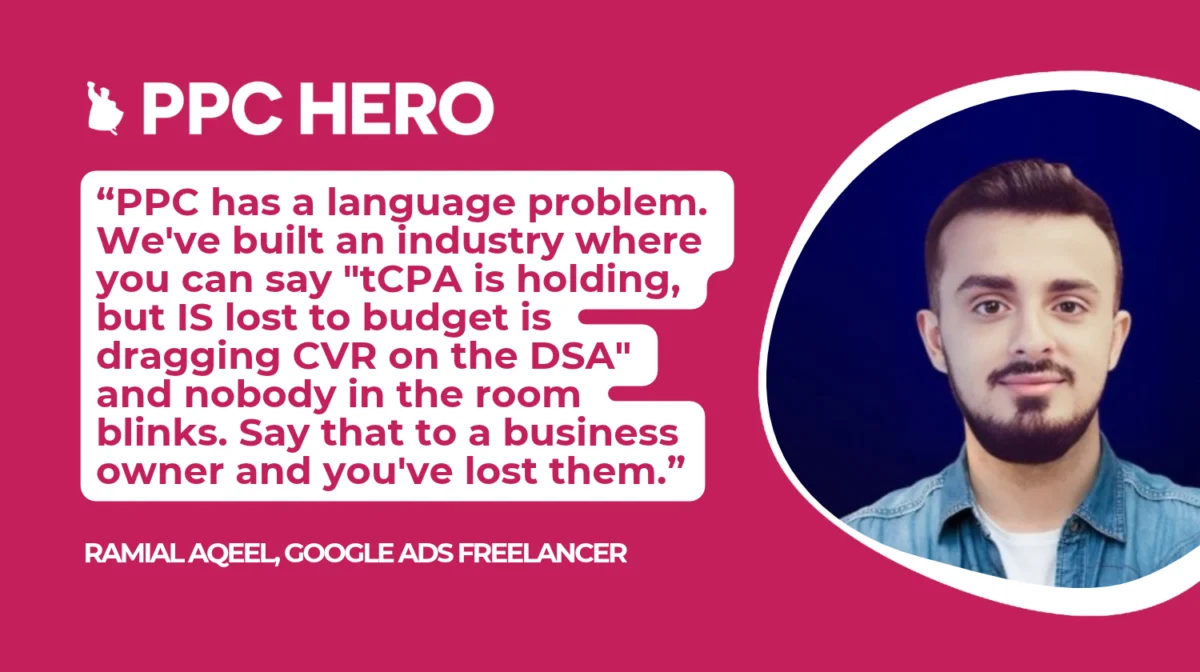
The digital advertising landscape is awash in a specialized lexicon, a constant stream of acronyms that, while efficient for industry insiders, can create significant barriers to understanding for those outside the immediate sphere of Pay-Per-Click (PPC) marketing. This specialized language, a blend of technical terms and shorthand, often leaves business owners and stakeholders feeling disconnected from the very strategies designed to drive their growth. The proliferation of these abbreviations, particularly within PPC, has led to a situation where common phrases like "tCPA is holding, but IS lost to budget is dragging CVR on the DSA" can be uttered without pause by seasoned professionals, yet remain utterly impenetrable to the uninitiated. This article aims to demystify this complex terminology, providing a comprehensive guide to the essential acronyms that underpin the world of PPC, and highlighting the critical importance of clear communication in achieving marketing objectives.
The problem is not inherently with the existence of shorthand; acronyms are, in essence, time-saving devices. However, the widespread, and often imprecise, use of these abbreviations can lead to significant misunderstandings. When definitions are loose, the decisions based upon them can become expensive, impacting campaign performance, budget allocation, and ultimately, the bottom line. This guide seeks to provide clarity by not only defining these terms but also by contextualizing their meaning and significance within the broader PPC ecosystem.
Understanding the Foundational Pillars of PPC
At its core, PPC is a form of internet marketing where advertisers pay a fee each time one of their ads is clicked. This model has evolved into a broader category encompassing all paid media efforts. To navigate this space effectively, a grasp of fundamental terms is crucial.
- PPC (Pay-Per-Click): This is the bedrock of the industry, referring to the model of paying for ad clicks. Today, it’s often used as an umbrella term for all paid media advertising.
- SEM (Search Engine Marketing): This encompasses both paid search advertising and organic search optimization. It is vital to clarify whether SEM refers solely to paid efforts or a combination of paid and organic strategies, as their objectives and performance indicators can differ significantly.
- SERP (Search Engine Results Page): This is the page displayed by a search engine in response to a query. It’s a competitive arena where paid advertisements, local map listings, and increasingly, AI-generated overviews vie for user attention. The evolution of the SERP, with the integration of AI, is rapidly reshaping the advertising landscape, demanding new strategies and a keen understanding of how visibility is achieved.
- KPI (Key Performance Indicator): These are the critical metrics that define the success of a marketing campaign. Typically, a campaign will focus on one or two primary KPIs to measure its effectiveness against its overarching goals.
Deconstructing Performance Metrics: The Language of Success
The effectiveness of any PPC campaign is measured through a variety of performance metrics, each providing a unique lens through which to evaluate results. Understanding these metrics is essential for making informed decisions and optimizing campaigns for better outcomes.
- CPC (Cost Per Click): Calculated as Total Cost divided by Total Clicks, CPC represents the average amount an advertiser pays for each click on their ad. The Maximum CPC is the highest bid an advertiser is willing to pay for a click, acting as a ceiling for their bidding strategy.
- CTR (Click-Through Rate): This metric, calculated as Clicks divided by Impressions, indicates the percentage of users who click on an ad after seeing it. A high CTR is often a signal of ad relevance and effective targeting, contributing positively to ad quality scores.
- CVR (Conversion Rate): Defined as Conversions divided by Clicks (or Sessions in platforms like Google Analytics 4), CVR measures the percentage of users who complete a desired action after clicking on an ad. This action could be a purchase, a form submission, or a sign-up.
- CPA (Cost Per Acquisition): Calculated as Total Cost divided by Total Conversions, CPA represents the average cost to acquire a customer or achieve a specific desired action. The accuracy of CPA is heavily reliant on robust and precise conversion tracking.
- CPL (Cost Per Lead): This is a specific type of CPA, primarily used in lead generation campaigns. It measures the cost to acquire a single lead. It is important to remember that a lead is not equivalent to a paying customer, and further qualification is often necessary.
- ROAS (Return On Ad Spend): Calculated as Conversion Value divided by Total Cost, ROAS measures the revenue generated for every dollar spent on advertising. It’s crucial to note that ROAS typically measures revenue, not profit, so a high ROAS doesn’t automatically equate to profitability.
- AOV (Average Order Value): This metric, representing Total Revenue divided by the Number of Orders, indicates the average amount a customer spends per transaction. AOV can be a powerful lever for improving ROAS, as increasing the value of each conversion can significantly boost overall returns.
- CPM (Cost Per Mille): This metric, meaning Cost Per Thousand impressions, is used for advertising where the primary goal is visibility and brand awareness. It represents the cost to have an ad displayed 1,000 times.
Navigating Bidding Strategies: The Art of Resource Allocation
Bidding is the mechanism by which advertisers compete for ad placements. Understanding the various bidding strategies available is key to optimizing ad spend and achieving campaign objectives.
- MaxConvs (Maximize Conversions): This automated bidding strategy aims to get the most conversions possible within the allocated budget. It dynamically adjusts bids to achieve this goal.
- tCPA (Target Cost Per Action): This strategy builds upon "Maximize Conversions" by allowing advertisers to set a target CPA. The system then aims to achieve as many conversions as possible at or below this target cost.
- MCV (Maximize Conversion Value): Similar to MaxConvs, this strategy focuses on acquiring the highest possible conversion value within a given budget. This is particularly useful for e-commerce businesses where conversions have varying monetary values.
- tROAS (Target Return On Ad Spend): This is the value-focused counterpart to tCPA. Advertisers set a target ROAS, and the system aims to achieve that return by adjusting bids. When setting a tROAS, it’s critical to enter it as a percentage (e.g., 400%) rather than a decimal (e.g., 4) to ensure accurate implementation.
- TIS (Target Impression Share): This strategy focuses on achieving a specific percentage of impression share, aiming for ads to be seen a certain proportion of the time they are eligible. It’s crucial to cap the maximum CPC when using TIS to prevent excessive spending on bids.
Campaign, Ad, and Keyword Management: The Building Blocks of Visibility
The structure and type of campaigns, ads, and keywords employed are fundamental to reaching the right audience and achieving marketing goals. The digital advertising platforms are continually evolving, introducing new campaign types and ad formats.

- PMax (Performance Max): Introduced by Google, Performance Max is a campaign type designed to run across all of Google’s channels, including Search, Display, YouTube, Gmail, and Discover, from a single campaign. It leverages machine learning to find conversions across these networks.
- DG (Demand Gen): This campaign type focuses on visually rich ads across YouTube, Discover, and Gmail. It is designed to drive demand for products and services by reaching users in their discovery phases.
- DSA (Dynamic Search Ads): These ads automatically target relevant searches based on the content of a website. This approach is particularly useful for advertisers with extensive product catalogs or for capturing search terms that might be missed with traditional keyword targeting. Notably, DSA campaigns are slated to transition into "AI Max" in 2027, signaling a shift towards more advanced AI-driven targeting and content generation.
- AI Max (AI Max for Search): This emerging campaign type represents an evolution of search advertising, incorporating broader keyword matching capabilities and AI-generated ad copy to enhance reach and relevance on the Search network.
- RSA (Responsive Search Ad): These ads allow advertisers to provide multiple headlines and descriptions, which Google then mixes and matches to create the most relevant ad for each search query. This dynamic approach aims to improve ad performance by tailoring messages to user intent.
- SQR (Search Query Report): This report reveals the actual search terms that users typed into search engines, leading to their ads being shown. Previously known as the Search Query Report, it is now commonly referred to as "search terms," providing invaluable insights for keyword refinement and negative keyword expansion.
Quality and the Auction: Understanding Ad Rank
The visibility and placement of an ad are determined by its Ad Rank, a complex calculation that takes into account several factors. Understanding these elements is key to improving ad performance and reducing costs.
- QS (Quality Score): This metric, ranging from 1 to 10, is an estimate of the quality of ads, keywords, and landing pages. It is based on expected Click-Through Rate (CTR), Ad Relevance, and Landing Page Experience. While not a direct KPI, a high Quality Score can lead to lower costs and better ad positions.
- IS (Impression Share): This metric represents the percentage of eligible impressions an advertiser’s ads actually received. A low impression share can indicate opportunities for increased visibility, often due to budget constraints or low bids.
- Abs. Top IS (Absolute Top Impression Share): This measures the percentage of impressions received in the absolute top ad position on the search results page. Achieving a high Absolute Top Impression Share is often a goal for advertisers seeking maximum visibility and brand presence.
Audiences and Shopping: Reaching Specific Consumer Segments
Targeting specific audiences and optimizing product visibility are crucial components of successful digital advertising, particularly for e-commerce businesses.
- RLSA (Remarketing Lists for Search Ads): This allows advertisers to customize their search campaigns for people who have previously visited their website. By bidding differently for these users when they return to search, advertisers can leverage their existing audience interest.
- RMKT (Remarketing): This broadly refers to the practice of showing ads to people who have previously interacted with a brand’s website or app. It’s a powerful tool for re-engaging potential customers and encouraging them to complete a desired action.
- CM (Customer Match): This feature enables advertisers to upload lists of their existing customers to target or exclude them in advertising campaigns. This allows for highly personalized messaging and more efficient audience segmentation.
- GMC (Google Merchant Center): This is a platform where businesses upload their product data (product feed) for use in Google Shopping ads and other Google surfaces. A well-maintained product feed is essential for effective Shopping campaigns.
- GTIN (Global Trade Item Number): These are unique product identifiers such as UPCs, EANs, or ISBNs. Missing GTINs can significantly limit the reach and visibility of product listings in Google Shopping.
Landing Pages and Conversion Optimization: The Crucial Post-Click Experience
Once a user clicks on an ad, the landing page experience becomes paramount. Optimizing this experience is critical for converting clicks into valuable actions.
- LP (Landing Page): This is the specific page on a website that a user is directed to after clicking an ad. It should be designed to be highly relevant to the ad’s message and focused on a single, clear objective. Building landing pages specifically for ad campaigns, rather than directing traffic to a generic homepage, is a best practice.
- CTA (Call To Action): This is the directive that prompts the user to take a specific next step on the landing page, such as "Buy Now," "Sign Up," or "Download." A clear and compelling CTA is essential for guiding user behavior.
- CRO (Conversion Rate Optimisation): This is the systematic process of increasing the percentage of website visitors who take a desired action. It involves analyzing user behavior, identifying friction points, and implementing changes to improve the conversion rate.
- A/B (A vs B Test or Experiment): This is a method of testing two versions of a webpage, ad, or other marketing asset to determine which performs better. By splitting traffic between version A and version B, marketers can identify the most effective elements and drive incremental improvements.
Tracking and Attribution: Measuring What Matters
Accurate tracking and attribution are the backbone of any data-driven marketing strategy, providing insights into campaign performance and the customer journey.
- GA4 (Google Analytics 4): This is Google’s latest analytics platform. It’s important to note that GA4’s key events may not always align directly with advertising platform conversions, requiring careful configuration and understanding of its event-based model.
- GTM (Google Tag Manager): This is a tag management system that allows marketers to deploy and manage various tracking tags (e.g., Google Analytics, Facebook Pixel) on their website without needing to directly edit website code.
- GCLID (Google Click Identifier): This is a unique identifier appended to ad URLs that links an ad click to a subsequent conversion. It’s a crucial piece of information for accurate conversion tracking.
- UTM (Urchin Tracking Module): These are URL parameters added to the end of a website link that allow analytics tools to track the source, medium, and campaign of incoming traffic. They provide granular data on where users are coming from.
- EC (Enhanced Conversions): This feature uses hashed customer data (like email addresses) to improve the accuracy of conversion measurement, helping to recover conversions that might otherwise be lost due to privacy changes or cookie limitations.
- OCT (Offline Conversion Tracking): This allows advertisers to upload conversion data from offline sources, such as sales made through a CRM or qualified leads from a call center, back to advertising platforms like Google Ads. This provides a more complete picture of the customer journey.
- DDA (Data-Driven Attribution): This is Google’s default attribution model, which assigns credit for conversions across multiple touchpoints in the customer journey. Unlike simpler models that might give all credit to the last click, DDA uses machine learning to distribute credit more holistically.
The Business Perspective: Beyond Ad Spend
While PPC metrics are vital for campaign management, it’s essential to connect these efforts to broader business objectives and financial outcomes.
- ROI (Return On Investment): This is a profit-based metric, calculated as (Net Profit – Investment Cost) / Investment Cost. It provides a measure of the profitability of an investment. Unlike ROAS, which focuses on revenue, ROI considers the actual profit generated.
- POAS (Profit On Ad Spend): This metric, calculated as Gross Profit divided by Ad Spend, offers a more direct view of the profitability of advertising efforts.
- MER (Marketing Efficiency Ratio): This ratio, calculated as Total Revenue divided by Total Marketing Spend, provides an overall measure of the effectiveness of all marketing activities in generating revenue.
- CAC (Customer Acquisition Cost): This metric represents the total cost of acquiring a new customer, calculated as Total Spend divided by the Number of New Customers. It’s crucial to differentiate CAC from CPA, as CAC typically encompasses all marketing and sales expenses associated with acquiring a customer, not just ad spend.
- LTV (Lifetime Value): This estimates the total revenue a business can expect from a single customer account over the duration of their relationship. Understanding LTV is critical for determining how much can be profitably spent on acquiring new customers.
- MQL / SQL (Marketing Qualified Lead / Sales Qualified Lead): MQLs are leads identified by marketing as likely to become customers based on their engagement. SQLs are leads that have been vetted by sales and are deemed ready for direct sales engagement. This distinction is vital for aligning marketing and sales efforts.
The Final Word: Clarity Over Jargon
The proliferation of acronyms in PPC, while understandable for industry professionals, can inadvertently create a communication chasm between marketing teams and the business stakeholders they serve. The true measure of success lies not in the ability to recite a litany of abbreviations, but in the capacity to translate them into clear, actionable insights that resonate with business objectives. For instance, instead of stating "IS Lost (Budget) is 40%," a more effective communication would be, "we’re missing four out of every ten potential customer searches because our advertising budget runs out before the end of the day." Such a statement not only conveys the same critical information but does so in a way that is easily understood, fostering trust and informed decision-making. Ultimately, the goal of any marketing effort is to drive business growth, and clear, unambiguous communication is a fundamental prerequisite for achieving that objective. By demystifying the language of PPC, we empower clearer strategies, more effective collaborations, and ultimately, more impactful results.


 Muslim
 Sagoh