Sagoh
As the year-end approaches, a recurring question emerges within the business-to-business Software-as-a-Service (SaaS) sector: should companies intensify their investment in paid media campaigns during the holiday season? While the immediate allure of increased budget approvals and a seemingly robust lead generation volume can be tempting, a closer examination reveals a nuanced reality for B2B buyers, whose decision-making cycles rarely align with retail holiday shopping patterns. This article delves into the strategic considerations for B2B SaaS companies aiming to optimize their paid media efforts during this critical period, emphasizing a buyer-centric approach over traditional seasonal marketing tactics.
The Siren Song of Holiday Lead Volume
The end-of-year period often presents a deceptive picture for digital marketers. Ad platforms may show a surge in lead form submissions, fueled by a sense of urgency or budget deployment before fiscal year-end. However, for B2B SaaS purchases, the journey from initial interest to a closed deal is typically protracted. A comprehensive security review, the involvement of a multi-stakeholder buying committee, and the meticulous planning of implementation timelines are standard components of the B2B procurement process. These stages can easily span weeks, if not months, irrespective of the immediate availability of budget.
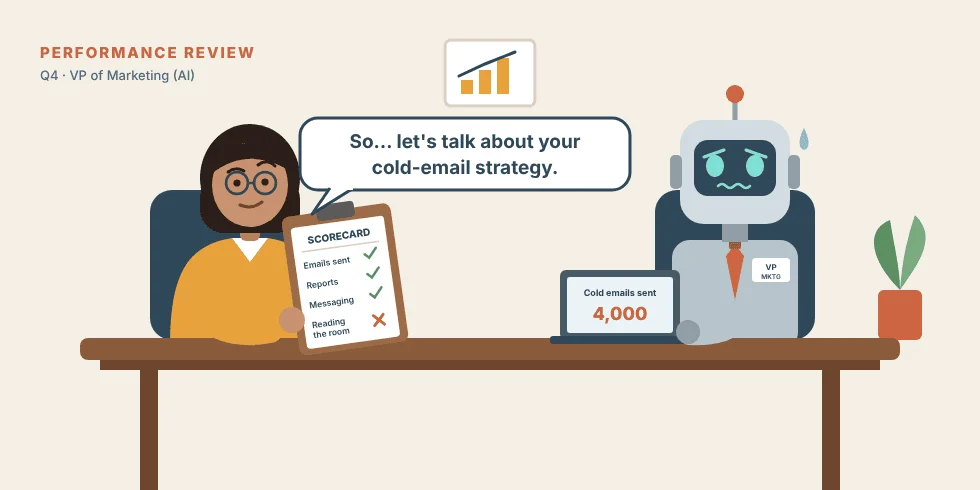
A stark illustration of this phenomenon was observed last December with a particular SaaS client’s LinkedIn campaign. While the campaign generated a seemingly healthy volume of raw leads, sales outreach revealed a significant disconnect. A substantial portion of these leads failed to respond to direct sales engagement. This disconnect prompted a crucial adjustment: the implementation of a more rigorous qualification step and a shift in focus from raw lead volume to tracking Sales Qualified Leads (SQLs). This experience underscored a fundamental challenge: the potential for a deceptively low Cost Per Lead (CPL) in December to mask an anemic sales pipeline in January.
Strategic Re-evaluation: Buyer Deadlines Over Retail Calendars
The prevailing wisdom suggests that instead of aligning marketing efforts with the retail calendar, B2B SaaS companies should pivot to understanding and leveraging the genuine deadlines and operational imperatives of their target buyers. A Black Friday or Cyber Monday countdown, for instance, does not inherently create a procurement requirement. Conversely, events such as an impending contract renewal, a security review mandated for completion before year-end, a financial close requiring budget allocation, or an already approved migration project serve as authentic triggers for urgent action. These are the precise drivers around which a focused December campaign should be constructed.
For B2B SaaS entities targeting accounts with genuine year-end deadlines, a strategic segmentation of the remaining holiday period becomes essential. This approach necessitates a granular understanding of when key decision-makers and influencers are genuinely available and receptive to engagement.
Adapting to Global Market Nuances
It is imperative to acknowledge that the availability of B2B buyers is not uniform across all markets and can be significantly influenced by regional holidays and cultural observances. For companies operating in a global landscape, these localized timelines are critical. For example, the festive periods of Diwali, Lunar New Year, and Australia’s extended summer shutdown significantly alter when buyers are actively engaged in procurement processes. Therefore, campaign windows and outreach strategies must be meticulously adjusted to align with these diverse market rhythms.
Pre-Campaign Sales Alignment: A Critical Prerequisite

Before any significant increase in conversion spending, a direct and candid conversation with the sales team is paramount. Key questions to address include: Who will be responsible for following up on leads generated during this period? What is the expected response time? Will sales representatives be actively online and available between Christmas and New Year’s? Misaligned expectations can lead to significant inefficiencies. If a landing page promises an immediate consultation, but the earliest available slot is well into January, an honest "book a January call" button will serve the prospect and the sales team far better than a form that generates an unanswered inquiry for two weeks.
Maintaining Momentum: The "Low-Budget, High-Awareness" Strategy
While the number of active B2B buyers demonstrably decreases during the holiday season, a complete pause on campaigns is often counterproductive. The effort and time required for ad platforms and campaigns to "warm up" again in January can lead to a delayed start to the new year. A more prudent approach involves reducing campaign budgets to a minimum level, thereby maintaining a baseline presence and brand awareness without incurring significant expenditure on potentially low-converting activities. This strategy ensures that the momentum built throughout the year is not entirely lost.
For accounts lacking a compelling year-end trigger, it is advisable to resist the temptation to artificially create one. Fabricated deadlines are often quickly identified and dismissed by procurement departments, leading to wasted marketing efforts and potential damage to credibility. Instead, the focus should be on supporting these buyers in building a strong internal case for their needs in the upcoming year.
Channel Optimization: Assigning Specific Roles
A common pitfall in holiday budget allocation is the reliance on historical percentage splits across different marketing channels. A more effective strategy begins by defining the specific role and objective for each platform. For a typical sales-led B2B SaaS client, this might involve:
- LinkedIn: Primarily used for reaching key buying committee members who may not yet be actively searching for solutions.
- Google Search: Designed to capture high-intent demand from prospects actively seeking specific solutions.
- Meta (Facebook/Instagram): Leveraged for retargeting campaigns and for nurturing audiences through founder-led educational content.
- Testing Reserve: A dedicated portion of the budget allocated for experimenting with new strategies and platforms without jeopardizing the performance of established, successful campaigns.
A foundational example of a holiday media mix might allocate 45% to LinkedIn, 30% to Search, 15% to Meta, and 10% for testing initiatives. However, this is merely an illustrative starting point and must be adapted based on the specific industry, search volume, and competitive landscape. For instance, a category with minimal search demand would necessitate a significantly different channel allocation.
Delivering Value Worthy of Sharing: Content for the Buying Group
By the time a B2B buyer submits a form, the shortlist of preferred vendors is typically already established. According to 6sense’s 2025 Buyer Experience Report, which surveyed over 4,000 buyers, an overwhelming 94% of buying groups had ranked their preferred vendors prior to initial contact. Consequently, holiday creative must be designed to earn an early spot on this crucial list.
Instead of generic "holiday savings" messaging, consider a more value-driven approach. For a security SaaS vendor targeting IT leaders planning their 2027 budgets, an effective strategy could involve offering a downloadable tool-consolidation worksheet. This simple yet powerful resource would enable internal champions to compare current tools, assess implementation efforts, and evaluate costs without requiring immediate engagement with a sales representative.
Such a worksheet provides an internal champion with tangible content to share among colleagues, facilitating discussions without demanding a formal demo. This can be followed by a concise video from a technical leader addressing migration risks, or a customer testimonial highlighting a seamless implementation experience. Each piece of content is tailored to address specific concerns of different stakeholders within the buying group. Procurement professionals will appreciate a defensible cost comparison, while engineers will seek detailed integration information.

For many SaaS clients, these types of reports and valuable offers have consistently outperformed direct demo requests. Offers, in particular, tend to drive higher product engagement and reduce the cost per SQL. The key differentiator lies in the framing: pitching the offer as a strategic enabler for a strong start to 2027, rather than merely a year-end deal.
Ensuring Landing Page Alignment and Conversion Tracking
Crucially, the landing page experience must precisely match the promise made in the advertising creative. A campaign promoting migration assistance should direct users to a page detailing implementation specifics, not a generic product overview. Furthermore, worksheet downloads should be recorded as distinct conversions, separate from sales-ready demand, to provide accurate performance metrics.
Defining a Qualified Lead: Collaboration Between Marketing and Sales
Before empowering ad platforms to optimize for increased spend, a clear and mutually agreed-upon definition of what constitutes a lead worthy of sales follow-up is essential. For the aforementioned security vendor, this might include specific account characteristics, documented project initiatives, and a realistic implementation timeframe. A worksheet download, while indicating interest, does not inherently signal that a purchase is imminent.
Once this definition is established, it must be communicated to the advertising platforms. On LinkedIn, for instance, this translates to utilizing "qualified lead optimization" for Lead Generation campaigns. This involves setting up a qualified-lead conversion event through the Conversions API or a supported CRM integration, and then designating it as the optimization goal. This process allows the platform to intelligently target users who are more likely to meet the defined qualification criteria.
Key considerations for implementing qualified lead optimization include:
- Lead Source Data: Ensuring that the source of the qualified lead is accurately captured for effective attribution.
- Data Accuracy: Maintaining the integrity of the data passed between the CRM and the advertising platform.
- Conversion Volume: Requiring sufficient qualified lead conversions for the platform’s algorithms to learn effectively.
- Exclusion Lists: Implementing robust exclusion lists to prevent re-engagement with leads that have already progressed through the sales funnel.
This qualified lead optimization is effectively implemented for clients on both LinkedIn and Google platforms, typically through CRM integrations like HubSpot. The setup process usually commences two to three months after campaign initiation, with the objective of refining targeting and ultimately generating higher-quality leads.
Pre-Launch Rehearsal: A Crucial Step
A comprehensive 48-hour rehearsal before any significant Q4 campaign launch is highly recommended. This dry run should meticulously test the entire lead management funnel: from ad click-through to landing page submission, CRM integration, sales development representative (SDR) follow-up, automation rules, and suppression logic. It also involves verifying buyer readiness and establishing clear protocols for pausing spend if technical issues arise. Resources like OneMetrik’s free Festive Marketing Guide 2026 provide a step-by-step framework for such rehearsals.
Google Ads: Resisting the Urge to Over-Tinker

On Google Ads, the holiday season can trigger an impulse to react to market fluctuations. Rising competition and fluctuating conversion rates may lead to calls for immediate setting adjustments. However, in many cases, the more strategic approach is to allow stable, well-performing campaigns to continue operating without significant alteration.
Seasonality adjustments, a common temptation, are often an overreaction. Google’s own guidance suggests their use only when a substantial change in conversion rate is anticipated and for short durations (one to seven days). Smart Bidding strategies already incorporate normal seasonal trends. Moreover, these adjustments are only applicable to Smart Bidding strategies like Target CPA and Target ROAS, rendering them irrelevant for manual bidding approaches.
A higher December Cost Per Click (CPC) is not inherently a conversion-rate shock. However, a brief, three-day flash offer targeted at an existing pipeline might warrant such adjustments. The key is to differentiate between normal market fluctuations and genuine, short-term opportunities that require a tactical response.
Establishing Spending Ceilings and Cohort Measurement
A fundamental safeguard against overspending is the implementation of a clear ceiling on the cost per qualified opportunity. This ceiling should be derived by working backward from the projected gross profit per customer and the acceptable payback window defined by finance.
For example, if finance approves a maximum media cost of $3,000 per new customer, and historical data indicates that 20% of qualified opportunities convert into customers, then the ceiling for a qualified opportunity would be $600 ($3,000 / 20%). Exceeding this threshold means that the seemingly "cheap" leads acquired in December are, in fact, becoming financially unsustainable. This calculation should be revisited whenever win rates or contract values undergo significant changes.
Reconciliation between ad platforms and the CRM is crucial for accurate performance evaluation. This involves tracking sales acceptance rates, the volume of qualified opportunities generated, pipeline value per dollar spent, and ultimately, Customer Acquisition Cost (CAC) segmented by cohort. Without conducting a holdout or lift test, it is more accurate to refer to results as "attributed" rather than "incremental."
Two common timing traps to avoid during this period include:
- Premature Budget Increases: Avoid raising budgets based solely on short-term lead volume surges, without considering the quality and conversion potential of those leads.
- Ignoring Sales Cycle Length: Do not assume that leads generated late in December will close in January. The B2B sales cycle remains a constant, and leads require nurturing and progression.
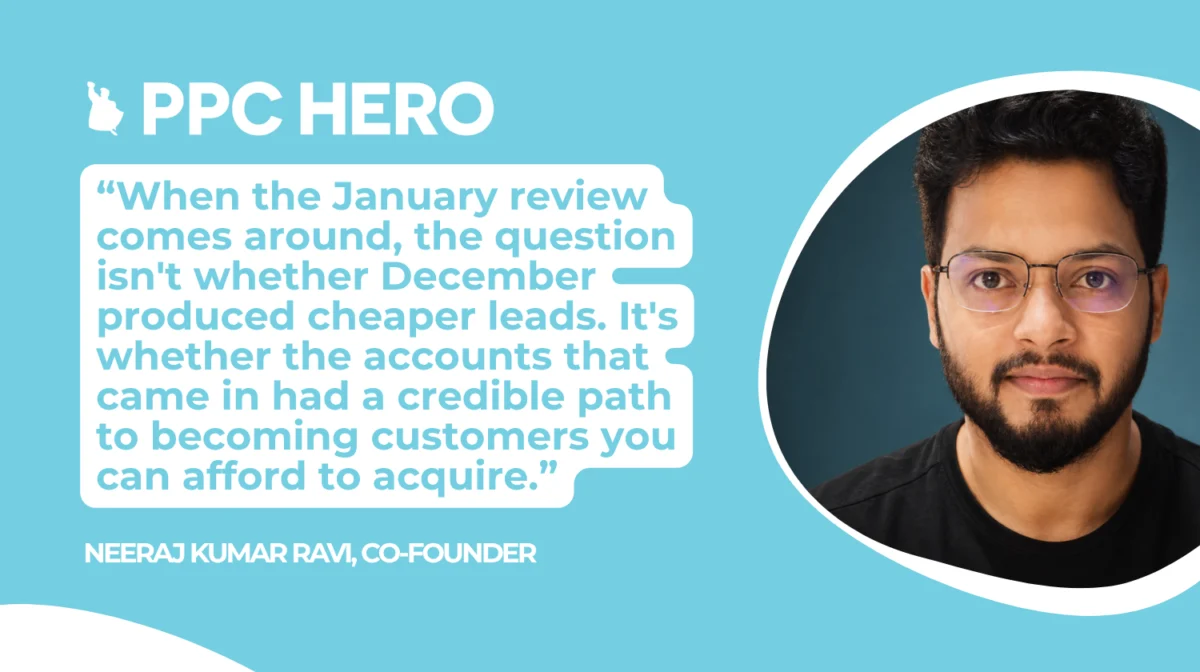
As the January review commences, the critical question will not be about the cost per lead achieved in December. Instead, it will focus on whether the accounts acquired during that period possessed a credible pathway to becoming customers at an economically viable acquisition cost. This longer-term perspective provides the most valuable insights for informing future strategic planning.
To facilitate this evaluation, resources such as a 12-point readiness scorecard and a 30-day action plan, often found in comprehensive festive marketing guides, can be invaluable. Self-assessment against these frameworks before committing to increased holiday spending can prevent costly missteps.


 Dwi Wanna

 Nana Wu