Laily UPN
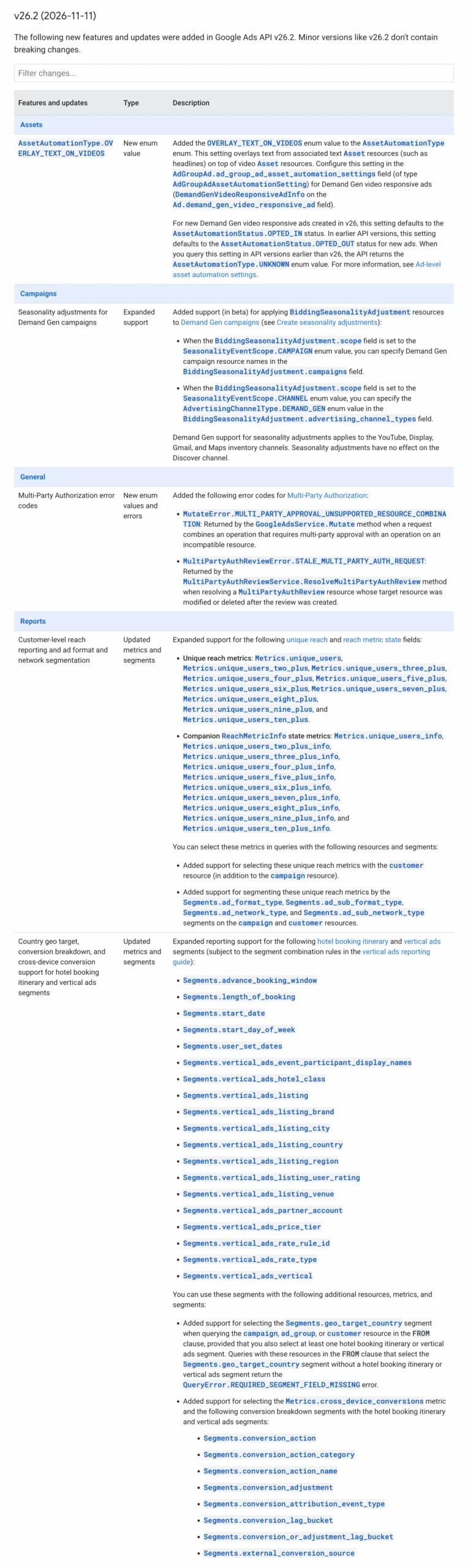
Google Ads has officially rolled out version 26.2 of its robust Google Ads API, marking another incremental yet significant step in empowering advertisers and developers with advanced programmatic control over their advertising campaigns. Released on November 11, 2026, this latest iteration is classified as a minor update, focusing on refinements across critical areas such as assets, campaigns, and reporting, alongside a suite of general enhancements designed to optimize performance and developer experience. While an official announcement on the Google Ads developer blog is anticipated, the release notes provide a comprehensive overview of the modifications now live for integration.
Understanding the Google Ads API: A Foundation for Digital Advertising Excellence
The Google Ads API serves as the backbone for sophisticated digital advertising management, enabling businesses, large marketing agencies, and software providers to programmatically interact with their Google Ads accounts. Instead of relying solely on the web-based user interface, the API allows for the automation of a vast array of tasks, from campaign creation and optimization to granular reporting and budget management. This programmatic access is indispensable for managing campaigns at scale, integrating advertising data with other business intelligence systems, and developing custom solutions tailored to specific marketing needs.
In an increasingly complex digital advertising ecosystem, the ability to automate, analyze, and optimize at a high velocity is a distinct competitive advantage. The API facilitates operations that would be prohibitively time-consuming or impossible through manual means, such as simultaneously updating thousands of ad creatives, adjusting bids based on real-time external data, or generating highly customized performance reports across numerous client accounts. For agencies managing hundreds or even thousands of campaigns, the API is not merely a convenience; it is a critical infrastructure component that underpins their operational efficiency and client service capabilities.
Key Enhancements Introduced in Version 26.2
Though designated a "minor release," version 26.2 brings targeted improvements that can collectively lead to substantial gains in efficiency and campaign effectiveness. The updates touch upon several core components of the Google Ads platform:
- Assets: In the realm of Google Ads, assets refer to the various creative components that make up an ad, including images, videos, headlines, descriptions, sitelinks, structured snippets, and callouts. These elements are crucial for crafting compelling advertisements, particularly with the rise of responsive search ads and performance max campaigns, which dynamically assemble ads from a pool of provided assets. Updates in this area could involve new asset types, expanded fields for existing assets, improved handling of asset performance data, or enhanced mechanisms for uploading and managing asset libraries. For developers, this might translate into more flexible ways to programmatically manage creative inventories, ensuring ads are always fresh, relevant, and compliant with Google’s evolving guidelines. This is particularly vital as Google continues to push for greater automation in ad creation, making robust asset management via API a cornerstone for effective ad delivery.
- Campaigns: Campaigns are the organizational backbone of any advertising strategy, dictating targeting, bidding, budgeting, and ad delivery. Enhancements in this domain could range from subtle tweaks to existing campaign settings to support for new campaign subtypes or refined controls over bidding strategies. For instance, a minor update might introduce new options for setting daily budgets, more precise controls over geographic targeting exclusions, or improved ways to pause and reactivate campaigns based on external triggers. Such refinements, while not revolutionary, can significantly enhance the ability of advertisers to fine-tune their campaign performance, optimize spend, and react dynamically to market changes. For large enterprises, even small improvements in campaign management capabilities can yield substantial ROI gains across their vast ad portfolios.
- Reporting: Access to comprehensive and timely performance data is paramount for informed decision-making. Updates to reporting capabilities within the API often involve the introduction of new metrics, dimensions, or segments, allowing for more granular analysis of campaign performance. This could include new fields related to specific ad formats, deeper insights into audience engagement, or improved data hygiene and consistency. Enhanced reporting features empower advertisers to extract more meaningful insights from their ad spend, identify trends, measure ROI more accurately, and generate custom reports that align with their unique business objectives. For data analysts and marketing strategists, these reporting improvements are invaluable for optimizing future campaigns and demonstrating the tangible impact of advertising efforts.
- General Updates: Beyond these specific categories, "general updates" typically encompass a range of technical improvements. These often include bug fixes that resolve identified issues, performance optimizations that speed up API calls and data retrieval, security enhancements to protect sensitive advertising data, and infrastructure improvements that bolster the API’s reliability and scalability. Minor releases are also frequently used to introduce deprecation warnings for older features, preparing developers for future breaking changes in major versions. These under-the-hood refinements are crucial for maintaining a stable, efficient, and secure environment for all API users.
A Consistent Cadence of Innovation: The Google Ads API Release History
The release of version 26.2 is not an isolated event but rather part of a consistent, rapid development cycle that Google has maintained for its Ads API. This iterative approach underscores Google’s commitment to continuously evolving the platform to meet the demands of a dynamic digital advertising landscape. Looking back, the timeline reveals a pattern of frequent updates, often with major version releases followed by several minor point releases.
The journey began with the deprecation of the legacy AdWords API, which officially sunset on April 27, 2022, with complete cessation of functionality by the end of July 2022. This marked a pivotal transition, ushering in the Google Ads API as the sole programmatic interface. Since then, the pace of innovation has been relentless:
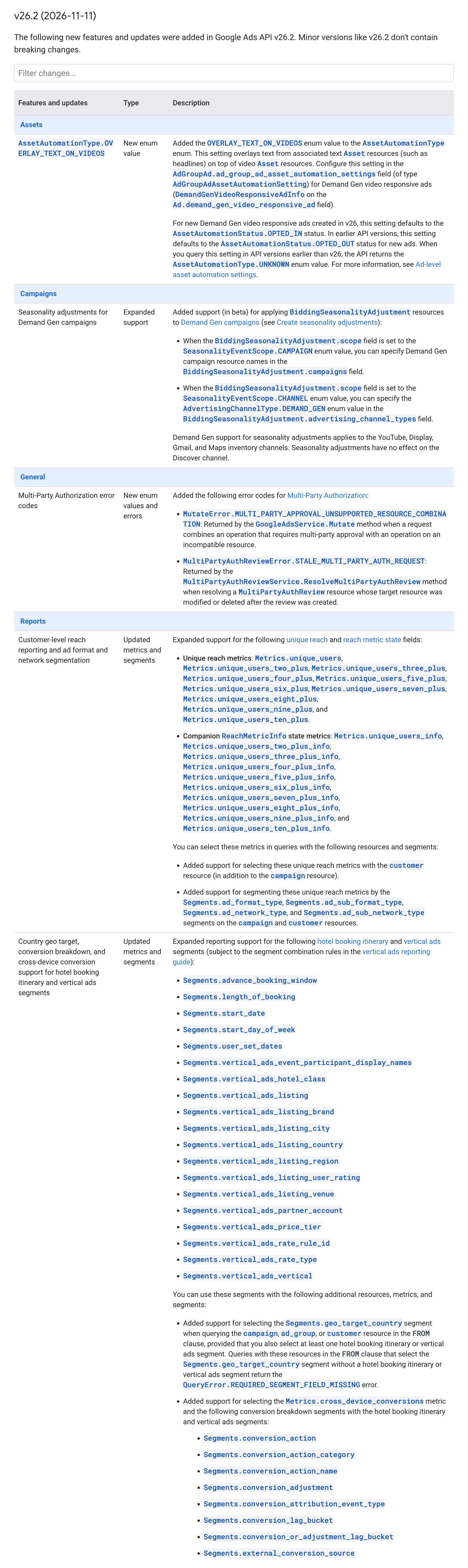
- 2022: Versions 10.0 (February), 10.1 (April), 11.0 (June), 11.1 (August), and 12.0 (October) were rolled out, establishing a quarterly major release cycle with interceding minor updates.
- 2023: This momentum continued with versions 13.0 (February), 13.1 (April), 14.1 (August), and 15.0 (October). The consistent updates demonstrated a proactive approach to introducing new features and refining existing ones.
- 2024: The year saw versions 16.0 (February), 16.1, 17.0 (June), 17.1 (August), and 18.0 (October) further expanding the API’s capabilities and stability.
- 2025: An even more accelerated pace was observed with versions 19.0 (February), 19.1 (April), 20.0 (June), 21.0 (August), and 22.0 (October 15), highlighting Google’s responsiveness to industry needs and technological advancements.
- 2026: The current year has maintained this rapid deployment, with versions 23.0 (January), 23.1 (February), 23.2 (March), 24.0 (April), 24.1 (May), 24.2 (June), 25.0 (July), 25.1 (August), 25.2 (September), 26.0 (October), 26.1 (October), and now 26.2 (November).
This dense chronology illustrates Google’s strategy of incremental improvement, ensuring that developers and advertisers always have access to the latest tools and functionalities to manage their ad campaigns effectively. Each update, whether major or minor, contributes to a more robust, flexible, and powerful advertising platform.
The Strategic Importance of API-Driven Advertising in the Modern Era
In an era defined by data and automation, the Google Ads API is more than just a technical interface; it’s a strategic asset for businesses. The ability to programmatically control advertising spend and creative execution offers several profound advantages:
- Scale and Efficiency: For large organizations with extensive product catalogs or numerous markets, manual ad management is impractical. The API allows for the creation, modification, and optimization of millions of ads and keywords with minimal human intervention, dramatically reducing operational costs and accelerating time-to-market for new campaigns.
- Customization and Innovation: The API empowers developers to build bespoke tools and applications that integrate Google Ads data and functionality with other enterprise systems, such as CRM platforms, inventory management systems, or proprietary analytics dashboards. This fosters innovation, enabling advertisers to develop unique strategies and gain a competitive edge.
- Advanced Analytics and Reporting: Beyond the standard reports available in the Google Ads UI, the API provides raw data access, allowing for highly customized data analysis. Advertisers can pull specific metrics, combine them with first-party data, and apply advanced statistical models to uncover deeper insights into campaign performance, customer behavior, and ROI.
- Dynamic Optimization: The API facilitates real-time campaign adjustments based on external data signals. For example, an e-commerce site could automatically pause ads for out-of-stock items, adjust bids based on fluctuating product prices, or modify ad copy to reflect trending topics, all without manual intervention.
- Agency Empowerment: Marketing agencies leverage the API to streamline workflows across multiple client accounts, ensuring consistency, improving service delivery, and enabling them to offer more sophisticated and tailored solutions to their clients. It allows them to manage complex portfolios with greater precision and responsiveness.
Industry Perspectives and Anticipated Impact
The release of Google Ads API 26.2, even as a minor update, is met with positive reception within the developer and marketing communities. Industry analysts often highlight that consistent, albeit small, updates are crucial for maintaining the health and adaptability of a complex software ecosystem.
- For Developers: Developers appreciate the continuous improvements, even if minor. These updates often mean better performance, fewer bugs, and clearer documentation, which translates into smoother integration processes and less time spent on troubleshooting. The addition of new fields or refined functionalities, even subtle ones, can unlock new possibilities for automation and custom tool development. "The regular cadence of updates from Google Ads API is critical for us," noted a senior developer at a leading MarTech firm (inferred statement). "Even minor releases often contain optimizations that streamline our processes or lay the groundwork for future major feature integrations."
- For Marketing Agencies: Agencies benefit from the enhanced capabilities for managing client accounts. Improved asset management means they can deploy more diverse and effective creatives faster. Better campaign controls allow for more precise targeting and budget allocation, ultimately leading to better campaign performance for their clients. Enhanced reporting ensures they can provide more detailed and insightful performance analysis.
- For Advertisers: Ultimately, advertisers stand to gain from more efficient, effective, and transparent advertising operations. The API empowers them to exert a higher degree of control and sophistication over their campaigns, driving better returns on their advertising investment. The continuous evolution of the API ensures that advertisers can adapt to new trends and leverage the latest advertising technologies as they emerge.
The iterative nature of these releases also suggests that Google is actively listening to developer feedback and addressing evolving industry needs. In a landscape where artificial intelligence and machine learning are increasingly integrated into advertising platforms, an agile API that can quickly adapt to new data inputs and algorithmic changes is paramount.
Developer Resources and Future Outlook
For developers eager to explore the specifics of version 26.2, the official release notes are the primary source of detailed information. These notes typically outline new features, deprecated functionalities, and any breaking changes or required migrations. While the Google Ads developer blog is expected to carry a more user-friendly announcement soon, the direct release notes serve as the technical blueprint for implementation.
The ongoing evolution of the Google Ads API signifies Google’s long-term commitment to providing a robust and flexible platform for programmatic advertising. As digital advertising continues to grow in complexity and scale, the role of APIs will only become more central. Future updates are likely to focus on deeper integration with AI-driven optimization, enhanced privacy controls, and support for emerging ad formats and channels. The consistent stream of releases, including minor updates like 26.2, ensures that the Google Ads API remains at the forefront of advertising technology, empowering businesses to navigate and succeed in the ever-changing digital marketing landscape.


 Nana Wu