Sagoh

Social media platforms, once primarily seen as channels for connecting with friends and sharing personal updates, have rapidly evolved into powerful search engines, fundamentally altering how users discover information, products, and trends. This transformative shift, driven largely by younger demographics like Gen Z and Alpha, presents both challenges and unparalleled opportunities for brands and marketers. Unlike traditional search engines such as Google, which prioritize websites and established authority, social platforms like TikTok, Instagram, and LinkedIn rank content based on a dynamic interplay of keywords, engagement signals, and creator credibility, necessitating a recalibration of digital strategies.
The Evolution of Digital Discovery: From Feeds to Queries

For years, the dominant mode of interaction on social media revolved around passive consumption, where algorithms curated a feed of content believed to be relevant to the user. While algorithms remain central to content delivery, a significant behavioral pivot has occurred: users are increasingly actively seeking information by typing queries into search bars, transforming these platforms into active discovery engines. This active method of content seeking marks a departure from simply scrolling through algorithm-fed content.
Pew Research Center data highlights this profound shift, revealing that a staggering 90% of U.S. teens regularly use YouTube, and 63% are active on TikTok. These platforms are not merely for entertainment; they serve as routine entry points for information. A striking one-in-five teens report being on TikTok and YouTube almost constantly, underscoring their integration into daily information-seeking habits. As Gen Alpha comes of age, they arrive with an ingrained expectation that social platforms will provide curated, easily digestible answers to their queries, often preferring visual formats over traditional text-heavy web pages.
Recognizing this burgeoning trend, social media giants have heavily invested in enhancing their search capabilities. TikTok, Instagram, and YouTube have all rolled out sophisticated, AI-assisted search features. These include suggested queries embedded within comment threads, advanced keyword search functionalities that extend beyond simple hashtags, and results that are often summarized or grouped by topic for immediate comprehension. Search is no longer a peripheral feature; it has ascended to a core function, reflecting user demand for instant, relevant, and trustworthy information delivered in a mobile-first, thumb-scrollable format. This preference for "curated, easily scrollable results from brands and creators they trust" positions social search as a formidable alternative to traditional engines for discovery and evaluation.

Social Search vs. Traditional Search: A Paradigm Shift in Ranking and Intent
The fundamental difference between social media search engines and their traditional counterparts lies in their underlying mechanics and the types of answers they aim to surface. While both are critical for online visibility, they operate on distinct principles.
On Google, a webpage’s ranking is predominantly influenced by factors such as the quantity and quality of backlinks, domain authority, and the precise relevance of its content to a user’s query. The emphasis is on established, authoritative websites. In contrast, on platforms like TikTok or Instagram, a piece of content’s visibility in search results is determined by a more dynamic set of signals. These include keywords embedded in captions and on-screen text, user engagement metrics such as watch time, saves, shares, and comments, and the content’s alignment with a user’s past viewing behavior. This system allows even nascent accounts to outrank established ones if their content resonates strongly and performs well, rewarding creativity and immediate engagement over historical web authority.
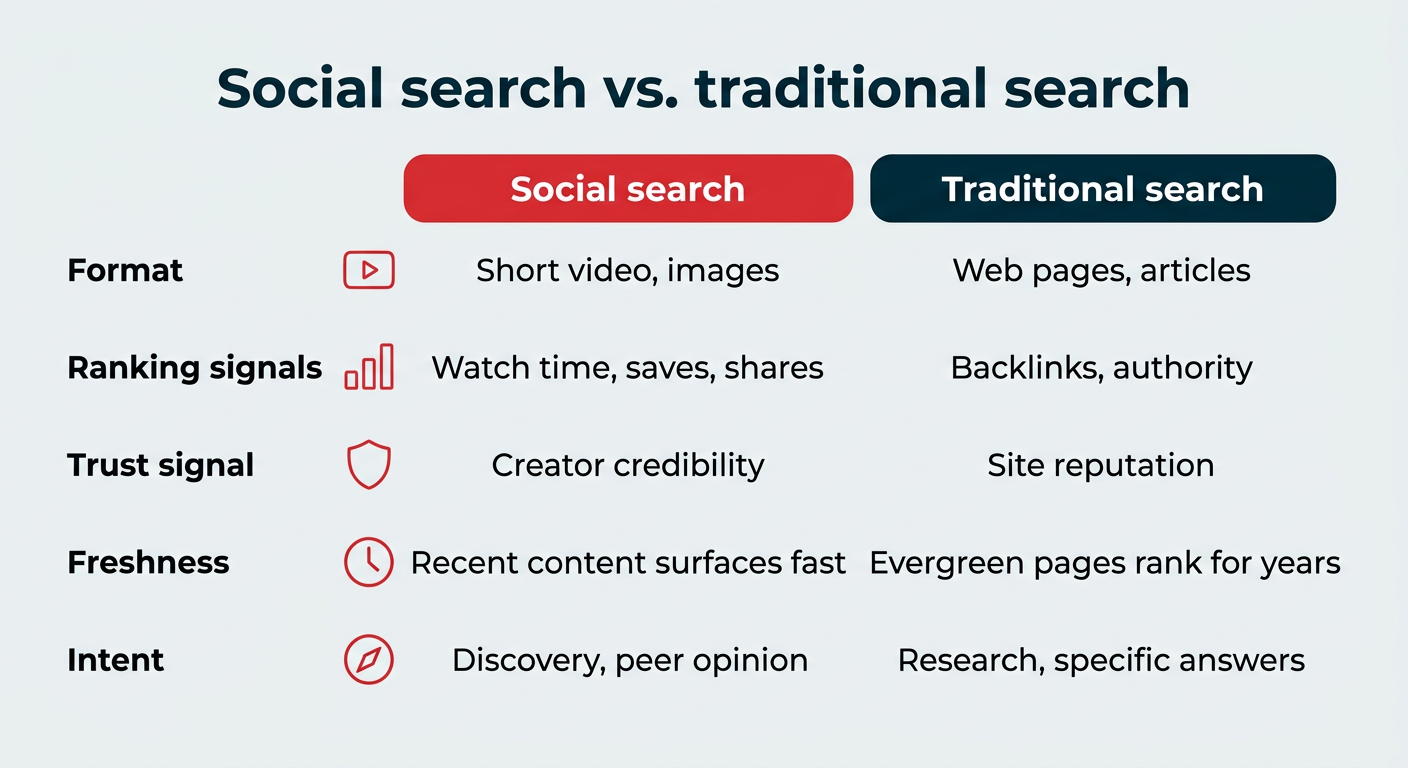
| Dimension | Social Media Search Engines | Traditional Search Engines |
|---|---|---|
| Dominant Format | Short-form video, images, comment threads | Web pages, articles, structured data |
| Main Ranking Signals | Keywords, watch time, saves, shares, comments | Backlinks, domain authority, on-page relevance |
| Trust Signal | Creator credibility and social proof | Site reputation and citations |
| Personalization | Heavy, shaped by individual viewing history | Moderate, shaped by location and search history |
| Freshness Bias | Strong, recent content surfaces fast | Mixed, evergreen pages can rank for years |
| Typical Intent | Discovery, inspiration, peer opinion | Research, transactions, specific answers |
These two search ecosystems are not entirely siloed; they often feed into each other. Social posts from TikTok, Instagram, Reddit, and LinkedIn are increasingly indexed by Google and appear prominently on traditional search results pages. This means a single, well-optimized social post can achieve dual visibility, appearing in both social and traditional search contexts. The strategic implication is clear: marketers should not choose one over the other. Traditional SEO targets users who have a defined need, while social search captures them earlier in the decision-making process, often during the exploratory or inspirational phase.
Navigating the Social Search Landscape: Platform-Specific Strategies
The mechanics of search vary significantly across platforms, necessitating tailored optimization strategies. Understanding these nuances is key to maximizing content visibility.

TikTok: With over 3 billion searches occurring daily, TikTok’s search engine is a powerhouse. It analyzes not just hashtags but also captions, on-screen text, audio transcripts, and even comments to grasp a video’s content. Its proactive approach includes surfacing suggested searches directly under videos and within comment threads, seamlessly guiding users into search behavior. TikTok’s foray into selling search ads further solidifies its position as a central search platform. For effective TikTok SEO, creators must audibly state keywords, display them on-screen, and incorporate them into captions.
Instagram: Instagram’s search functionality has moved beyond hashtags and account names to embrace plain keywords. A query like "sourdough starter" now yields accounts, Reels, and posts, with Reels often dominating results. The Explore page acts as a secondary discovery engine, pushing content based on prior engagement. Since Instagram processes captions, alt text, and on-screen text, the quickest win for brands is to craft captions that describe content using the natural language people would search for.
LinkedIn: LinkedIn’s search is meticulously designed around people, companies, and content. It heavily leverages profile and page fields, giving significant weight to job titles, skills, headlines, and company descriptions. For B2B marketers, LinkedIn search is a direct pipeline, as buyers frequently research vendors and individuals here before initiating contact. Optimizing every profile and page field with industry-relevant language that buyers use is paramount.

YouTube, Pinterest, and Reddit:
- YouTube functions as much as a search engine as it does a social platform. Video titles, descriptions, chapters, and transcripts are crucial for ranking, and sustained watch time determines long-term visibility.
- Pinterest serves as a visual search engine, particularly for planning and purchase intent. Boards, pin titles, and descriptions are the primary drivers of discovery.
- Reddit has emerged as a formidable search destination, showing significant momentum. Its threads frequently appear in Google search results for opinion and review-based queries. While direct optimization is limited, brands can monitor relevant subreddits and engage authentically where appropriate.
Strategic Imperatives for Brands in the Social Search Era
The rise of social search fundamentally alters how brands must approach their digital presence. It influences discovery earlier in the buying cycle than traditional search, making it an indispensable component of modern marketing. With 73% of Gen Zers citing social media as their primary source for new product information, social search drives discovery, amplifies word-of-mouth, and even influences traditional search results.

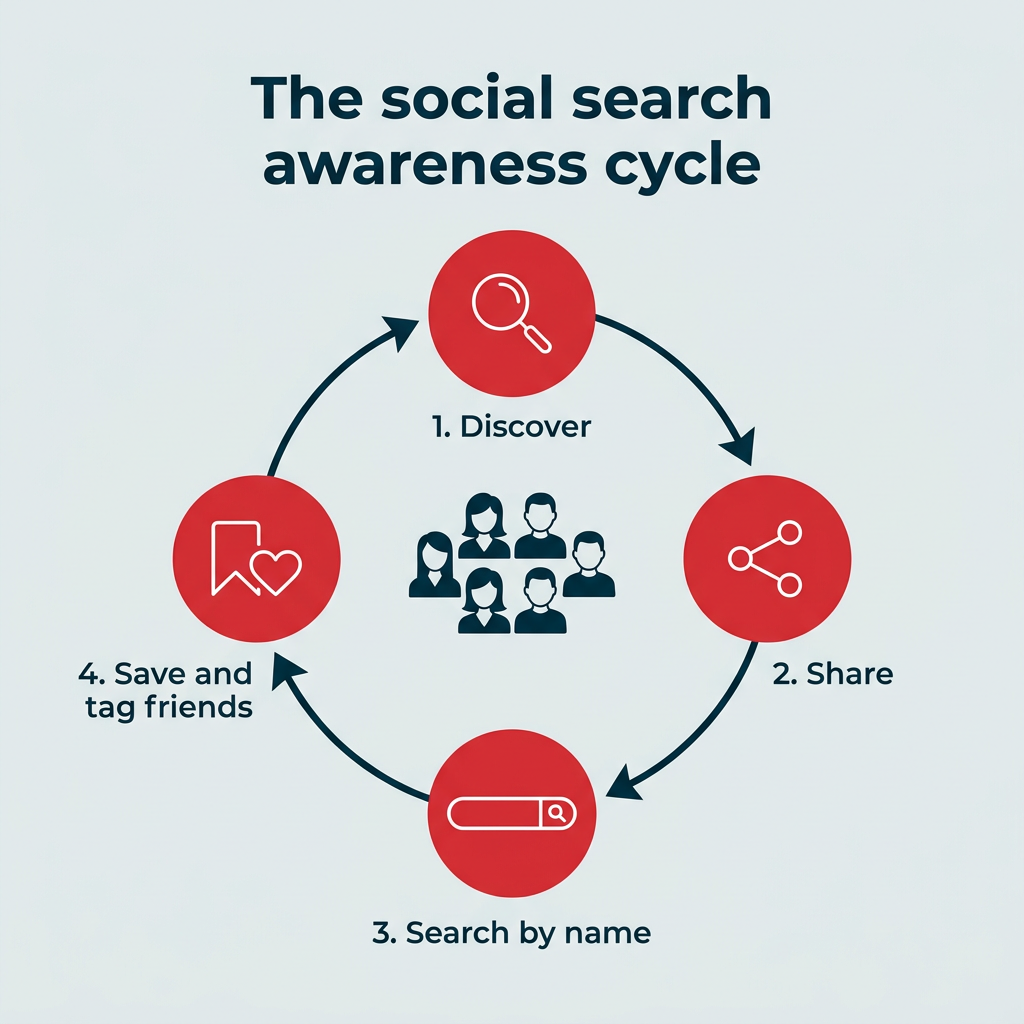
Driving Brand Awareness: Social search is a powerful engine for brand awareness. Consider the anecdote of a Gen X marketer asking a Gen Z bartender for New York recommendations; the immediate suggestion was to "search TikTok," highlighting a profound shift in information-seeking behavior. The bartender’s recommendation of Summit One Vanderbilt, influenced by its frequent appearance on her "For You page," illustrates a compounding cycle:
- Digital natives discover brands through social media lookup or algorithmic content.
- They share this information, both with other digital natives and those less accustomed to social search. This often leads to user-generated content (UGC).
- Word-of-mouth fuels brand-name searches on social platforms, surfacing both official brand content and UGC.
- Social searchers engage (like, save, tag friends), restarting the cycle.
This cycle ensures that optimizing for social search extends brand reach beyond existing followers, getting content in front of entirely new audiences. Furthermore, the indexing of TikTok and Instagram content by traditional search engines means a single, well-tagged video can continue to garner impressions long after its initial algorithmic push.
Fueling Competitive Intelligence: Social search offers invaluable insights into the competitive landscape. By actively searching relevant keywords and competitor names, brands can uncover who their rivals are, what content performs well for them, and how their target audience discusses specific niches. Regular searches can identify emerging competitors, while integrating established rivals into benchmarking tools, such as Hootsuite’s analytics, allows for continuous monitoring of opportunities and threats. This process also reveals the hashtags and keywords competitors are leveraging most effectively, enabling brands to refine their own tagging and content strategies. Observing competitor engagement on various platforms also provides a nuanced understanding of audience conversations and preferences, informing broader market strategy.

Monitoring Brand Mentions and Audience Insights: Understanding how audiences discuss a brand, product, or service on social media is a goldmine for actionable data. Consistent social listening, driven by social search, reveals:
- Real-time sentiment towards the brand.
- Emerging trends and topics within the industry.
- Customer pain points and common questions.
- Key influencers and brand advocates.
This process helps define a broader listening strategy, identifying critical hashtags, keywords, and accounts to monitor. It also serves as invaluable market research, pointing to the problems audiences are trying to solve and the information they struggle to find. For instance, a skincare brand noticing "dupe for" alongside its product name highlights a pricing sensitivity, while a software company seeing "how to export from" signals a documentation gap—both actionable insights for content creation or product development. Social search also naturally surfaces potential influencers and brand advocates for partnership opportunities or user-generated content campaigns.
Optimizing Content for Social Search (Social SEO)

While platform specifics vary, several universal strategies will help content rise in social search results:
-
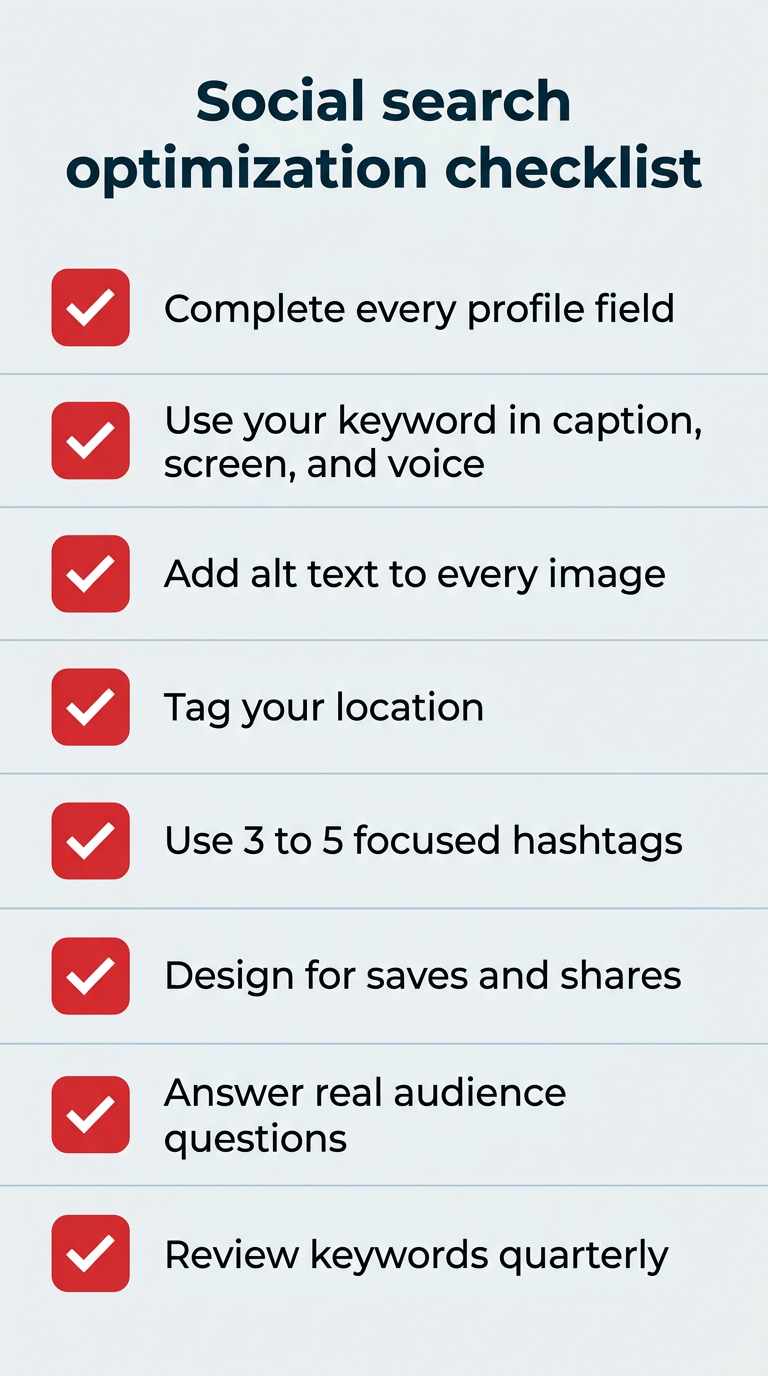
Optimize Your Profile for Search: The profile is a brand’s most visible asset in name-based searches. Utilize relevant, descriptive keywords in your name, handle, bio, and "About" sections. Complete all available fields, including category, location, and contact options. On LinkedIn, this extends to job titles and skills. The goal is clear identification by both users and algorithms, using language your audience would naturally search.
-
Use Keywords Naturally in Posts and Captions: Integrate the most relevant keywords into posts and captions using natural, conversational language. For video content, this means incorporating keywords into the caption, on-screen text, and the spoken audio, as platforms transcribe video content. Prioritize audience language over internal product jargon (e.g., "waterproof hiking boots" instead of "all-weather trail footwear system").
-
Leverage Location Tags, Hashtags, and Engagement Signals:
- Location tagging is an underutilized tool, particularly on TikTok, Facebook, and Instagram, surfacing content to geographically relevant, high-intent searchers.
- Alt text, while primarily an accessibility feature, offers another opportunity to describe content to algorithms.
- Hashtags still aid categorization, but their role has narrowed. Three to five specific, relevant hashtags are now more effective than a lengthy, generic list.
- Engagement signals are paramount: saves, shares, comments, and watch time all tell platforms that content is valuable and answers a query effectively. Content that prompts users to save it is particularly favored for sustained ranking.
Essential Tools for Social Media Search and Listening
Effectively navigating the social search landscape requires dedicated tools, often combining robust listening platforms with free search workarounds.

| Tool | Coverage | Key Strengths | Pricing Tier | Best For |
|---|---|---|---|---|
| Lumen in Hootsuite Social OS | Major social networks plus web sources | Quick Search, sentiment analysis, theme detection | Included in Hootsuite plans from $99/user/month | Teams wanting search tied to publishing and analytics |
| Google Advanced Search | Anything indexed by Google | Boolean operators, site filters, date ranges | Free | Ad hoc research and username lookups |
| Social Searcher | Select social networks and web sources (free tier) | Mentions, hashtags, username search | Free tier plus paid premium | Quick cross-platform spot checks |
| Lumen by Talkwalker (Enterprise) | Social networks, news, blogs, forums, reviews, podcasts | Visual and audio listening, historical data, API access | Enterprise, custom pricing | Large brands with crisis and global monitoring needs |
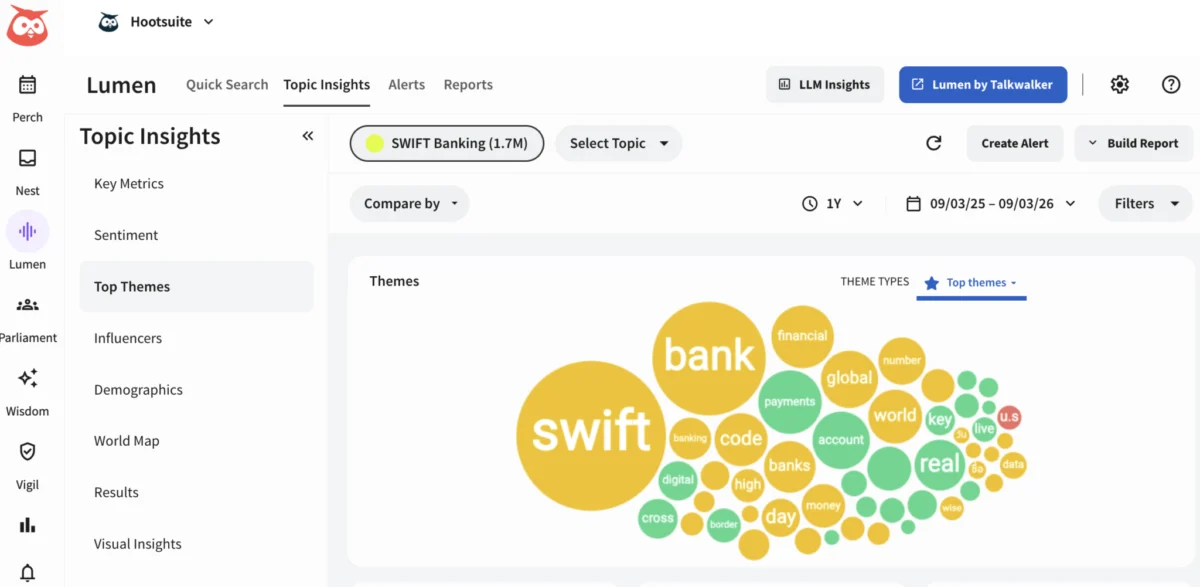
1. Lumen in Hootsuite Social OS: Integrated within the Hootsuite Social OS, Lumen provides essential social search and listening capabilities. Its Quick Search feature enables discovery of trending hashtags, brands, and events globally, while deeper dives offer personalized insights into brand performance, competitor activities, and product discussions. Users can track keyword mentions across recent conversations, analyze sentiment, and identify top themes. The seamless integration of Lumen within Hootsuite’s publishing and reporting ecosystem allows insights gained from search to directly inform content calendars, streamlining workflows.
2. Google Advanced Search for Social Media: Despite the rise of social search, Google remains a powerful tool, particularly its advanced search capabilities. Google now indexes and surfaces Reddit threads and social posts more prominently, making it a valuable proxy for finding social content. Utilizing Boolean operators (AND, OR, NOT) and site filters (e.g., site:instagram.com) allows for precise targeting of social results. This is ideal for tasks like verifying an influencer’s presence across platforms or finding fan-generated content related to a brand.
3. Social Searcher: This multi-platform tool allows for username searches, mentions, and hashtag tracking across a selection of social networks and web sources in its free version. A paid premium subscription expands coverage and enables email alerts, making it a reasonable option for quick, cross-platform spot checks rather than comprehensive monitoring.

4. Lumen by Talkwalker (Enterprise): For organizations with advanced needs, Lumen by Talkwalker offers enterprise-grade social listening. It monitors over 30 social networks and 150 million websites globally, covering 239 countries and regions, including blogs, forums, news sites, and podcasts. Its capabilities extend to visual listening, tracking brand logos and products in images and videos, and audio listening, interpreting mentions in podcasts. Leveraging natural language processing, it interprets human emotions, including irony and sarcasm, and identifies influential social creators. With up to five years of historical data and API access, it supports comprehensive competitive analysis, trend spotting, and crisis management, flagging anomalies in social data for early intervention.
Privacy and Ethical Considerations for Social Media Search
While searching publicly available social content constitutes legitimate research, the collection and storage of this data are governed by platform rules and evolving privacy laws. Key considerations include:
- Data Usage: Ensure compliance with platform terms of service regarding data collection and usage.
- Privacy Laws: Adhere to global and local privacy regulations (e.g., GDPR, CCPA) when processing any personal data.
- Anonymization: Anonymize data where possible to protect individual privacy, especially for qualitative research.
- Transparency: Be transparent about data collection practices if engaging directly with users.
- Data Security: Implement robust security measures to protect collected data from breaches.
- Consent: Obtain explicit consent if collecting private user data or engaging in activities beyond publicly available information.
- Ethical Boundaries: Avoid using data for discriminatory purposes or to exploit vulnerabilities.
- Employee Monitoring: Be mindful of privacy implications when monitoring employee social media activity.
When in doubt, consulting with legal or compliance teams before scaling up social media monitoring is crucial. Establishing governed workflows from the outset is far simpler than retrofitting them later.
Conclusion
The transformation of social media platforms into powerful search engines marks a significant evolution in the digital landscape. For brands and marketers, understanding and adapting to this shift is no longer optional but a strategic imperative. By recognizing the distinct mechanics of social search, optimizing content for platform-specific algorithms, and leveraging advanced listening tools, organizations can unlock new avenues for discovery, enhance brand awareness, gain critical competitive intelligence, and foster deeper connections with their target audiences. As younger generations continue to reshape digital consumption habits, proficiency in social SEO and proactive social listening will be key determinants of success in the ever-evolving quest for online visibility and engagement.


 Lina Hope