Nana
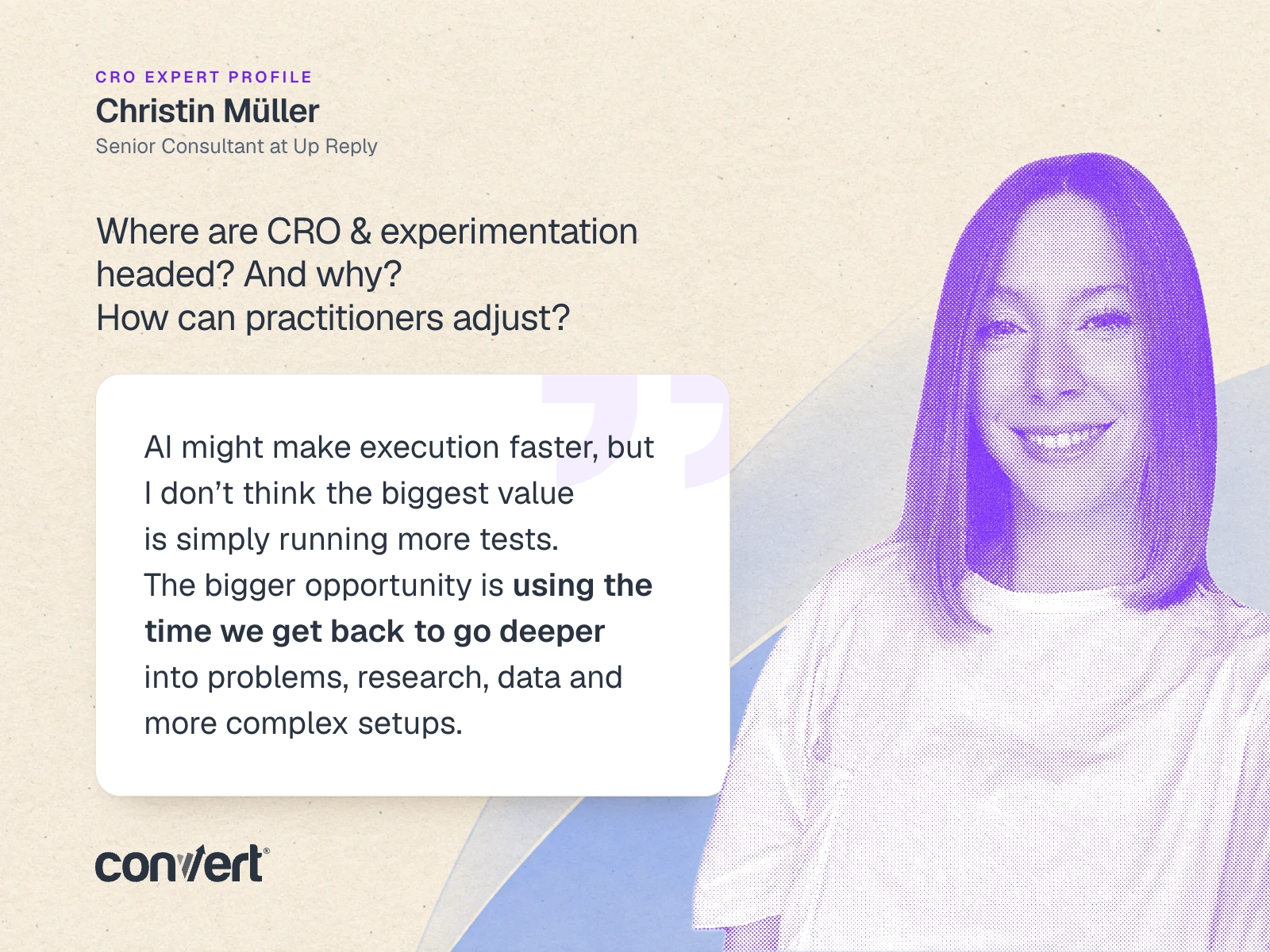
The discipline of digital experimentation is currently undergoing a fundamental transformation as practitioners move away from isolated website adjustments toward a comprehensive, data-driven approach to business strategy. Christin Müller, a Senior Consultant at Up Reply, has emerged as a prominent voice in this evolution, advocating for a shift in how organizations perceive the intersection of user behavior, creativity, and technical execution. As part of the ongoing Testing Mind Map series, Müller’s professional trajectory and her insights into the deployment of Artificial Intelligence (AI) provide a blueprint for the next generation of Conversion Rate Optimization (CRO) professionals. Her methodology emphasizes that the true value of experimentation lies not in the volume of tests conducted, but in the depth of the insights gathered and the systematic removal of institutional knowledge silos.

The Evolution of a Discipline: From Academic Curiosity to Strategic Consultancy
The career path of Christin Müller illustrates the rapid professionalization of the CRO field over the last decade. What began as an academic encounter with web analytics has matured into a specialized role focusing on the complex interplay of personalization and conversion strategy. During her university studies, Müller’s introduction to the field occurred through a presentation on Google Optimize—a tool that, until its sunset in 2023, served as the entry point for thousands of digital marketers into the world of A/B testing.
This accidental entry into the field highlights a broader industry trend where experimentation has transitioned from a sub-task of web development to a standalone strategic pillar. Upon joining Up Reply, a consultancy that operates within the broader Reply network—a global group of highly specialized companies—Müller recognized that the discipline required a unique synthesis of skills. The modern CRO professional must navigate quantitative data, qualitative user behavior insights, and creative problem-solving while maintaining a rigorous commitment to the scientific method. This evolution mirrors the global growth of the CRO market, which was valued at approximately USD 771 million in 2022 and is projected to reach nearly USD 2 billion by 2030, driven by the increasing necessity for businesses to maximize the efficiency of their existing digital traffic.

The AI Paradigm Shift: Automating Execution to Prioritize Judgment
The integration of Artificial Intelligence into the experimentation workflow represents the most significant technological shift since the advent of real-time analytics. Müller posits that AI should be viewed as a "door opener" into a new era rather than a mere replacement for human effort. Currently, the application of AI in CRO is often fragmented, utilized for specific tasks such as copy generation or code snippets for test variations. However, the strategic value lies in its ability to handle repetitive, low-stakes execution, thereby liberating human consultants to focus on high-level strategy and complex research.
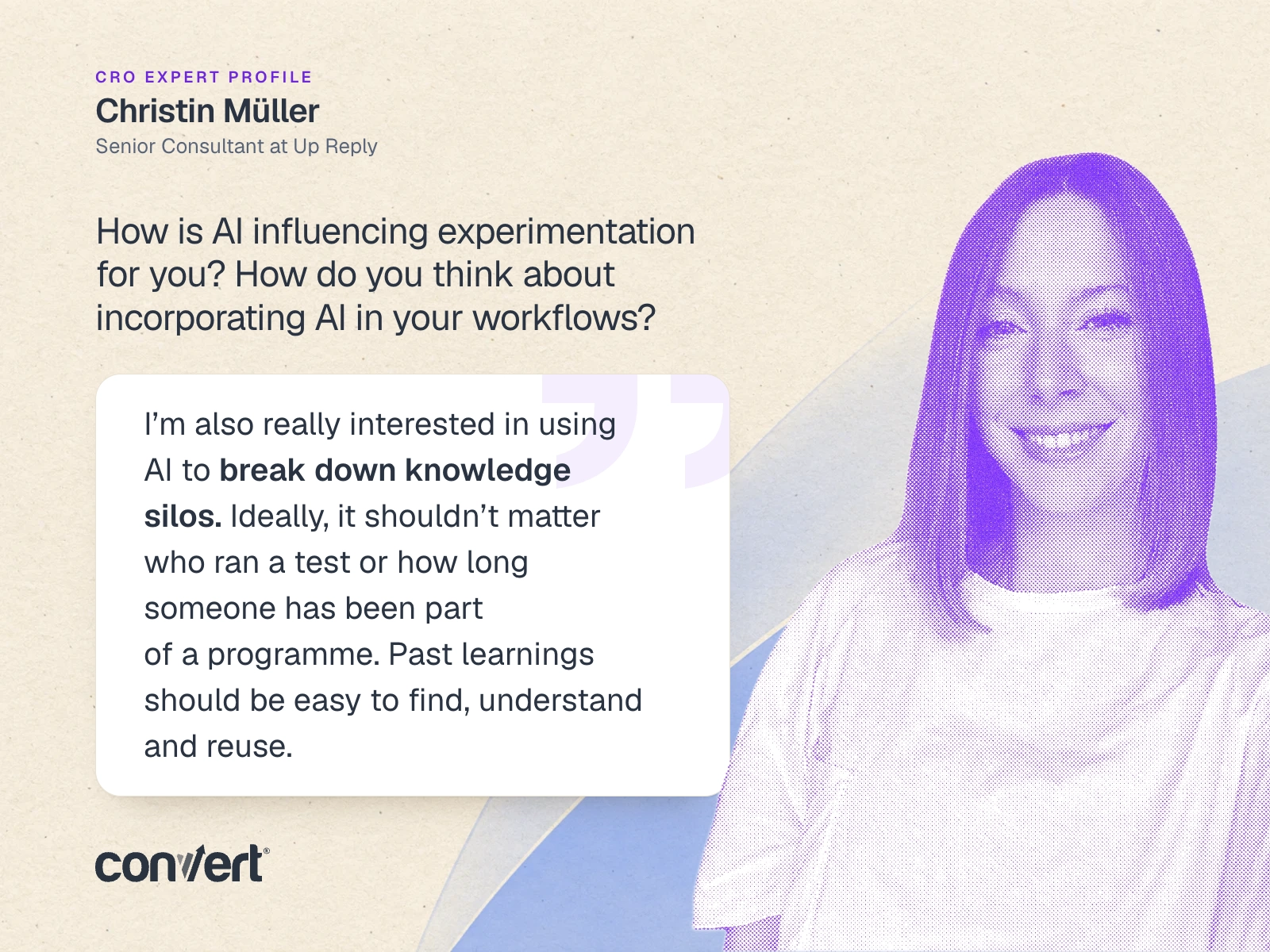
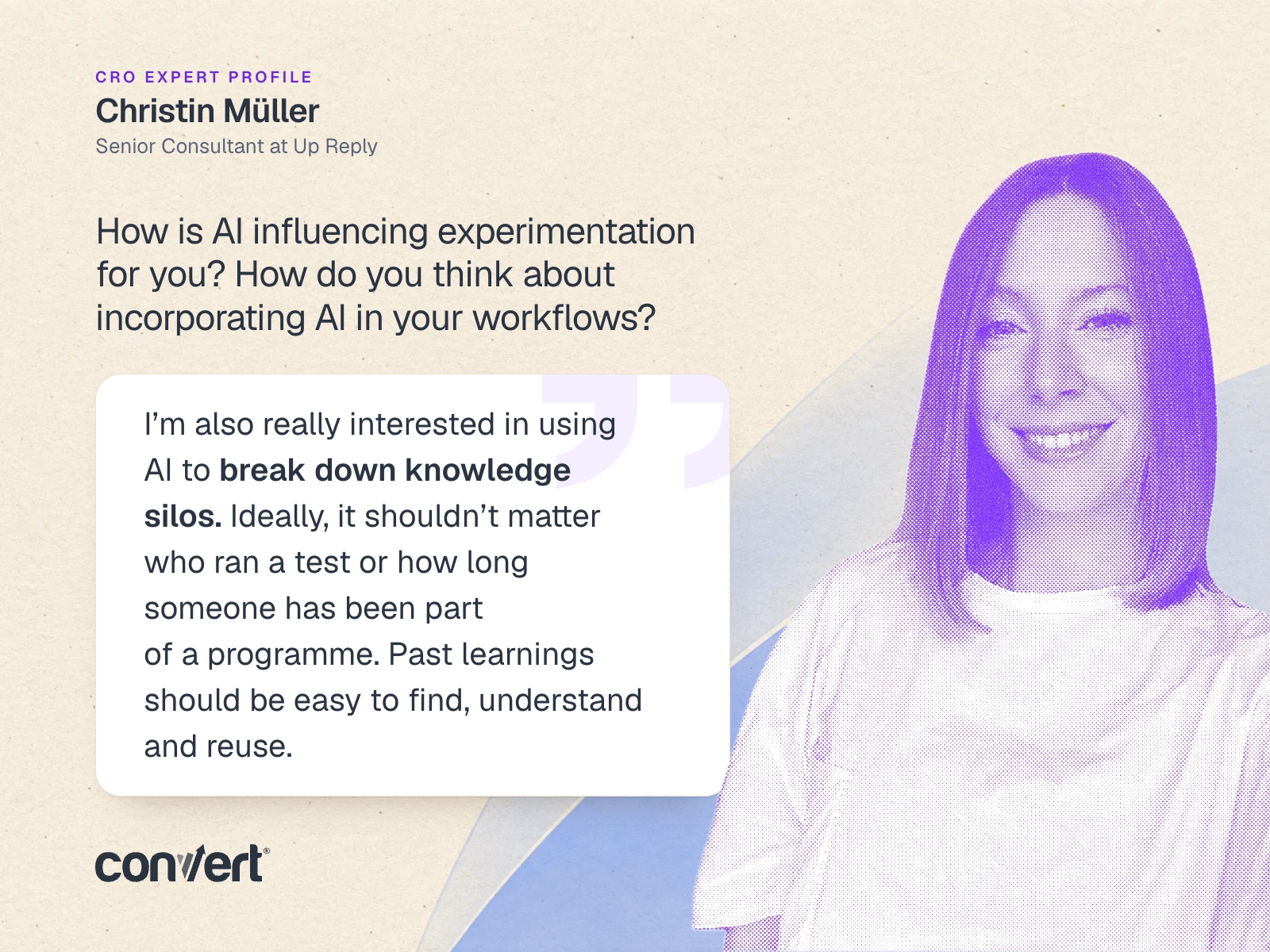
In the contemporary workflow, AI serves as a bridge for communication between diverse stakeholders. By translating technical experiment results into language tailored for executive leadership or marketing teams, AI ensures that the "language of experimentation" is understood across the entire organization. This is a critical function in large-scale enterprises where technical jargon often creates barriers to the adoption of an experimentation culture. Furthermore, the use of AI to synthesize past learnings addresses one of the most persistent challenges in consultancy: the loss of institutional memory. Müller is actively involved in developing "CRO Hubs" that utilize AI to link insights, hypotheses, and experiment designs across different programs, ensuring that past failures and successes are accessible to all team members regardless of their tenure.
Supporting Data: The Impact of Systematic Experimentation
The shift toward a more rigorous, AI-enhanced experimentation framework is supported by significant industry data. According to research from the Harvard Business Review, companies that foster a "culture of experimentation" and utilize sophisticated testing frameworks see significantly higher growth rates than their competitors. For instance, tech giants like Amazon, Netflix, and Booking.com run tens of thousands of experiments annually, a volume that would be impossible to manage without the automated efficiencies that Müller describes.
Data indicates that the average win rate for A/B tests across the industry hovers between 12% and 25%. This statistic underscores Müller’s assertion that "winners" are not the only valuable outcome. In a professionalized CRO environment, a "losing" test provides critical data that prevents the implementation of features that could negatively impact the user experience or revenue. By utilizing AI to analyze these non-significant or negative results, practitioners can identify patterns in user friction that might otherwise go unnoticed. This objective, data-centric approach reduces the influence of the "HiPPO" (Highest Paid Person’s Opinion), grounding business decisions in empirical evidence rather than executive intuition.
Chronology of Technological Integration in CRO
To understand the current state of the industry, it is essential to trace the technological milestones that have led to the current AI-integrated landscape:
- The Era of Manual Analytics (Pre-2010): Optimization was largely based on basic heatmaps and log-file analysis, with testing requiring heavy developer involvement.
- The Rise of Visual Editors (2010–2018): The emergence of tools like Optimizely, VWO, and Google Optimize democratized testing, allowing non-technical marketers to launch experiments.
- The Personalization Wave (2018–2022): Focus shifted from "one-size-fits-all" testing to segment-based personalization, requiring more sophisticated data integration.
- The AI and Server-Side Era (2023–Present): With the deprecation of third-party cookies and the sunsetting of legacy tools, the industry has moved toward server-side testing and the deep integration of Large Language Models (LLMs) to automate the hypothesis-generation and data-analysis phases.
Müller’s work at Up Reply sits at the vanguard of this fourth era, where the focus is on "full-journey" experimentation. This involves tracking a user’s interaction across multiple touchpoints—from an initial social media ad to an email follow-up and finally to a website conversion—rather than merely optimizing a single landing page button.
Strategic Implications for Modern Practitioners
The transition toward AI-driven experimentation requires a fundamental recalibration of the practitioner’s skillset. Müller emphasizes that as execution becomes commoditized, the value of human judgment, curiosity, and empathy increases. Professionals must now act as "experimentation architects" who design the systems that AI will then help to populate and analyze.
One of the primary implications of this shift is the need for improved knowledge management. In many organizations, data exists in "silos," where the results of a marketing experiment are not shared with the product team or the customer service department. Müller advocates for a connected workflow where insights are centralized. This approach not only prevents the duplication of effort but also allows for the identification of broader consumer trends. For example, if multiple experiments across different categories show that users are sensitive to shipping transparency, this insight can be escalated to a business-wide strategic priority rather than being treated as a localized website fix.

Broader Impact on Business Decision-Making
The ultimate goal of the methodologies proposed by Müller is to integrate experimentation into the core of business decision-making. In this model, CRO is no longer a "nice-to-have" marketing tactic but a risk-mitigation tool for the entire enterprise. Before a company invests millions in a new product line or a brand pivot, experimentation allows them to test the underlying assumptions on a smaller, controlled scale.
The future of the discipline, according to Müller, involves looking at how different user personas behave across complex journeys. This requires a move away from binary "win/loss" metrics toward a more nuanced understanding of user psychology. As AI continues to simplify the technical execution of these tests, the industry is likely to see a surge in "complex experiments"—those that test multiple variables simultaneously (multivariate testing) or those that adapt in real-time to user behavior through machine learning loops.

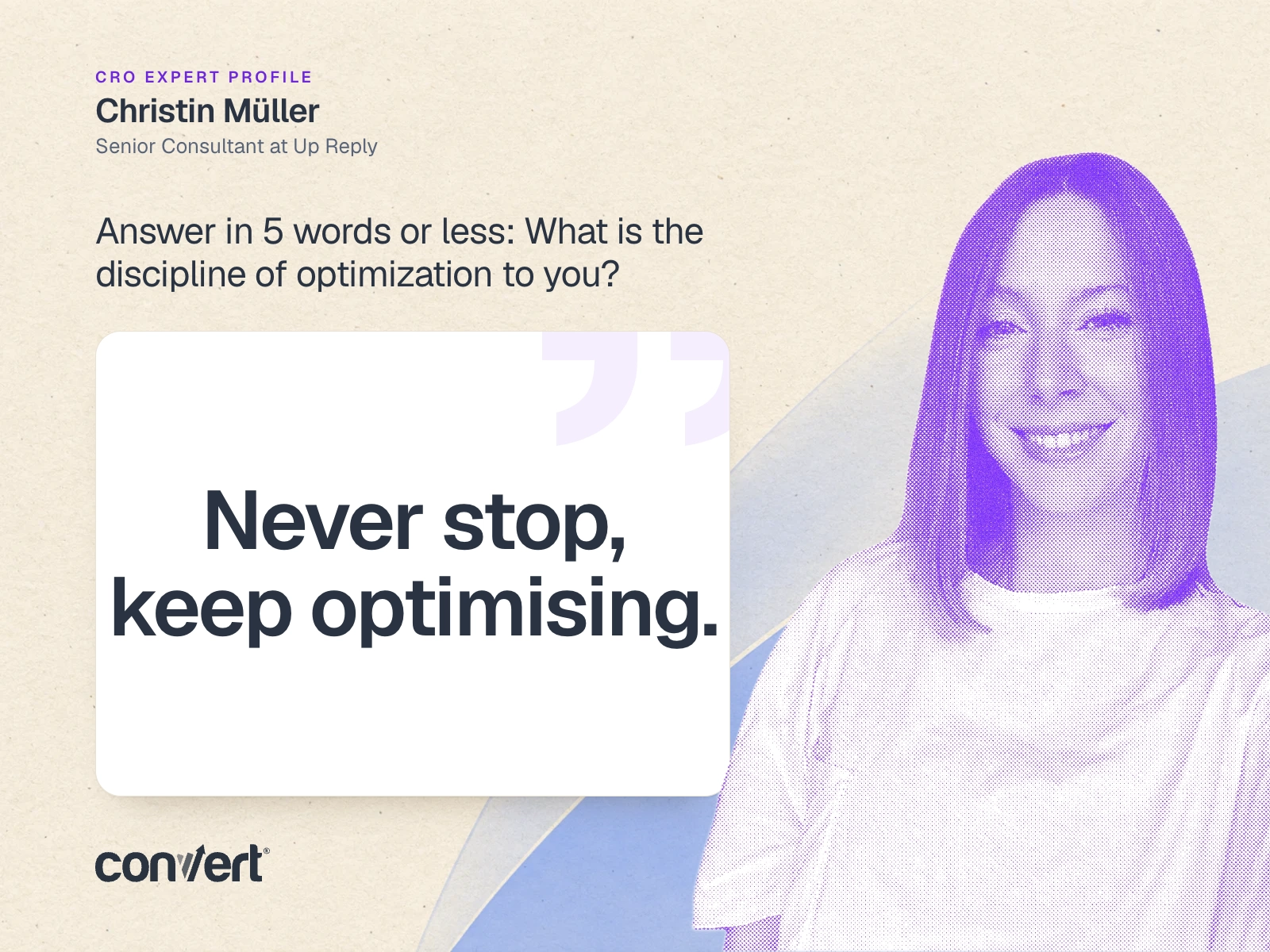
In conclusion, the insights provided by Christin Müller reflect a maturing industry that is successfully navigating the challenges of the AI revolution. By focusing on the quality of research, the breaking down of internal silos, and the strategic value of every experimental result, CRO professionals can ensure that they remain indispensable in an increasingly automated digital economy. The mantra "Never stop, keep optimising" serves as both a professional philosophy and a necessary business strategy in an era where consumer expectations and technological capabilities are in a state of constant flux. As organizations continue to adopt these advanced experimentation frameworks, the gap between data-driven leaders and intuition-based laggards is expected to widen, making the role of the Senior Consultant more critical than ever before.


 Neng Nana
 Lina Hope