Sagoh
The digital landscape has fundamentally reshaped how brands interact with their audience, making online reputation management (ORM) an indispensable cornerstone of modern business strategy. In an era where a single tweet can spark a crisis and a handful of negative reviews can deter thousands of potential customers, businesses are increasingly turning to specialized software to monitor, protect, and enhance their digital standing. This evolving market, projected to grow significantly, offers a diverse array of tools designed to track brand mentions, analyze sentiment, and streamline responses across an ever-expanding universe of online channels, from social media platforms to niche review sites and global news outlets.

The Evolving Landscape of Digital Reputation
The genesis of online reputation management can be traced back to the early days of the internet, when rudimentary web monitoring tools began to track keyword mentions. However, the true imperative for sophisticated ORM emerged with the explosion of Web 2.0 and the advent of social media platforms in the mid-2000s. Sites like MySpace, Facebook (now Meta), Twitter (now X), and later Instagram and TikTok, democratized publishing, giving every individual a voice and an audience. Concurrently, dedicated review platforms such as Yelp, TripAdvisor, and industry-specific sites like G2 and Capterra, alongside Google Business Profile, became critical touchpoints for consumer decision-making.

This shift has created a complex, interconnected web of conversations about brands. Historically, public relations focused on managing media narratives through controlled channels. Today, the conversation is decentralized, real-time, and often originates directly from consumers. Data from sources like CapitalOne Shopping indicates that Yelp alone hosts over 330 million reviews, underscoring the sheer volume of unsolicited public feedback. Moreover, the 2025 Pew Research report highlighted a significant trend: adults under 30 now place equal trust in information from news organizations and social media, blurring the lines between traditional media and user-generated content and amplifying the reach of every online mention. This context makes comprehensive monitoring not just beneficial, but essential.
The Imperative of Proactive Reputation Management
Investing in robust reputation management software is no longer a luxury but a strategic necessity for businesses aiming for sustained growth and resilience. The tangible benefits extend beyond mere damage control, directly influencing customer acquisition, retention, and overall brand value. The 2025 Edelman Trust Barometer, a globally recognized benchmark for trust in institutions, unequivocally demonstrated that trust has become a critical purchase consideration, on par with product quality and price. This means a strong, positive online reputation translates directly into consumer confidence and, subsequently, revenue.
Conversely, a compromised reputation carries significant costs. Unaddressed negative feedback can rapidly escalate into a full-blown public relations crisis, demanding substantial resources for mitigation and repair. The speed at which misinformation or dissatisfaction can spread across digital channels means that delayed responses are often ineffective. Beyond crisis prevention, ORM tools enable brands to identify and amplify positive feedback, transforming satisfied customers into powerful advocates. By actively listening to online conversations, tracking brand sentiment, and engaging promptly, businesses can cultivate an image of trustworthiness and authenticity, turning reputation management into a distinct competitive advantage.
Understanding Online Reputation Management Software
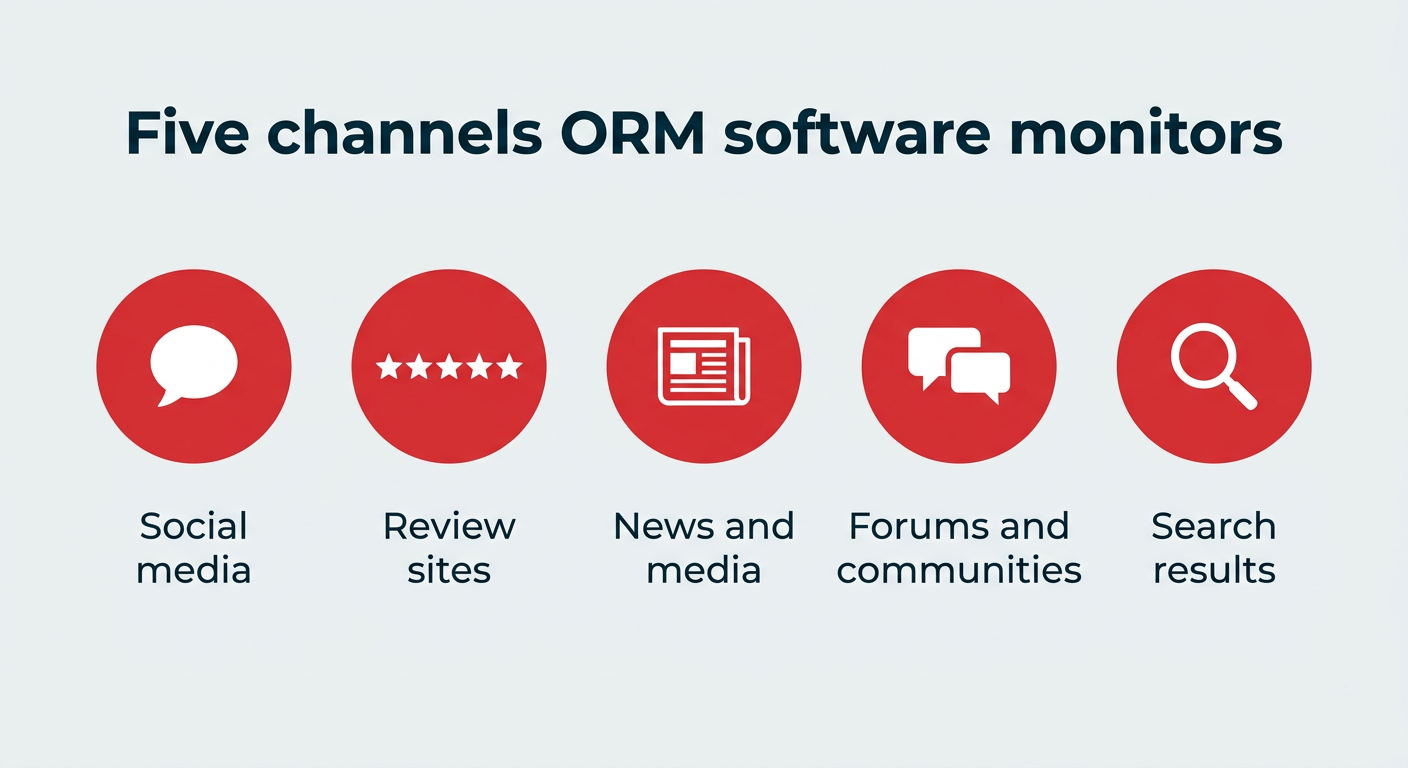
Online reputation management software serves as a centralized intelligence hub, designed to systematically monitor, track, analyze, and facilitate responses to brand mentions, reviews, and overall sentiment across a broad spectrum of digital channels. Unlike basic social media monitoring tools, which primarily focus on platforms like Instagram, TikTok, and X, ORM software extends its reach to encompass:

- Social Media: Real-time tracking of mentions, comments, and discussions.
- Review Sites: Aggregating and analyzing feedback from platforms like Yelp, Google Business Profile, Trustpilot, G2, and industry-specific review platforms.
- News & Media Outlets: Monitoring coverage across traditional news websites, blogs, and online publications.
- Forums & Communities: Tapping into discussions on Reddit, specialized industry forums, and community groups.
- Search Engine Results: Analyzing what appears when your brand is searched, including suggested searches and featured snippets.
By consolidating these diverse data streams into a single dashboard, ORM software empowers teams to proactively identify potential risks, address customer concerns swiftly, and capitalize on positive feedback, providing a holistic view of the brand’s digital presence.
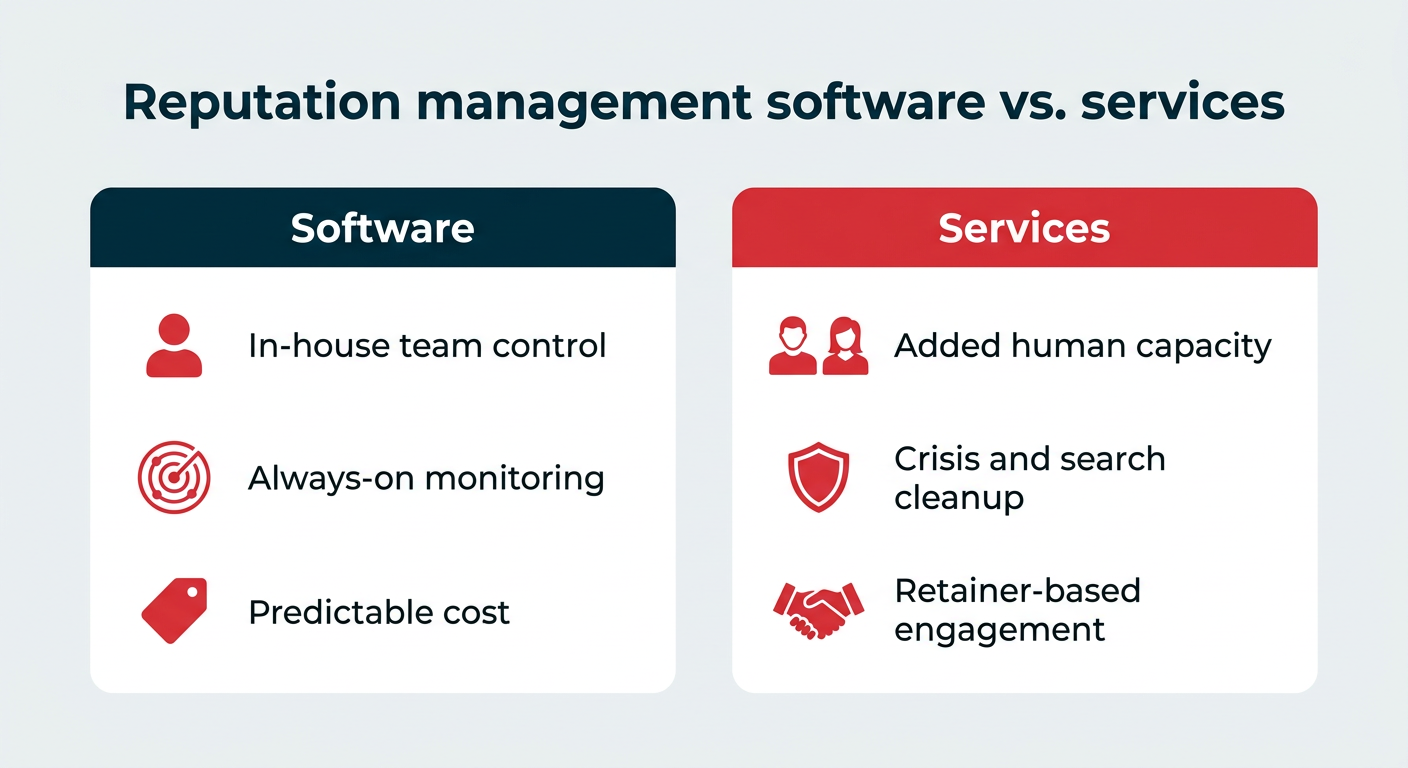
It is crucial to distinguish ORM software from reputation management services. While software provides the in-house team with dashboards, alerts, and workflows for direct action at a predictable cost, services involve engaging external agencies or consultancies. These agencies typically offer retainer-based engagements to monitor, repair, and improve reputation, often handling crisis communications, search result cleanup, and detailed sentiment reporting. Many organizations adopt a hybrid approach, utilizing software for ongoing monitoring and an agency for specialized tasks or during severe crises. For teams seeking day-to-day control and operational efficiency, software generally serves as the optimal starting point.

Key Considerations for Tool Selection
Choosing the right ORM software is a critical decision that should align with an organization’s specific needs, scale, and strategic objectives. A structured evaluation process is essential to avoid overpaying for unused functionalities or acquiring a tool that falls short of critical requirements. The selection process can be framed around key questions and features:
- Channel Coverage: Identify the primary platforms where your customers discuss your brand. Prioritize tools that offer comprehensive monitoring across these essential channels.
- Response Capabilities: Determine if your team needs to respond directly within the tool or if monitoring and reporting suffice. Integrated response workflows can significantly reduce reaction times.
- Budget and Reporting: Establish clear budget parameters and define your reporting requirements, including the depth of analytics and customization needed.
- Team Structure and Scale: Consider the size of your team, the number of brands or locations you manage, and the need for collaboration features, approval workflows, and multi-brand support.
- Integration with Existing Tech Stack: Assess the tool’s compatibility with your current CRM, business intelligence, and helpdesk systems to ensure seamless data flow and workflow integration.
- AI Capabilities: Look for features like AI-powered sentiment analysis, trend detection, and response suggestions, which can significantly enhance efficiency and accuracy.
- Real-time Alerts: The ability to receive immediate notifications for significant shifts in sentiment or mention volume is crucial for proactive crisis management.
Specific features that should be prioritized include:
- Multi-channel monitoring: Comprehensive coverage across social, review sites, news, and forums.
- AI-powered sentiment analysis: To accurately gauge the emotional tone of mentions.
- Review management: Features for collecting, monitoring, and responding to customer reviews.
- Competitive benchmarking: Insights into how your brand’s reputation compares to competitors.
- Real-time alerts: Instant notifications for critical events.
- Customizable reporting: Tailored reports for various stakeholders.
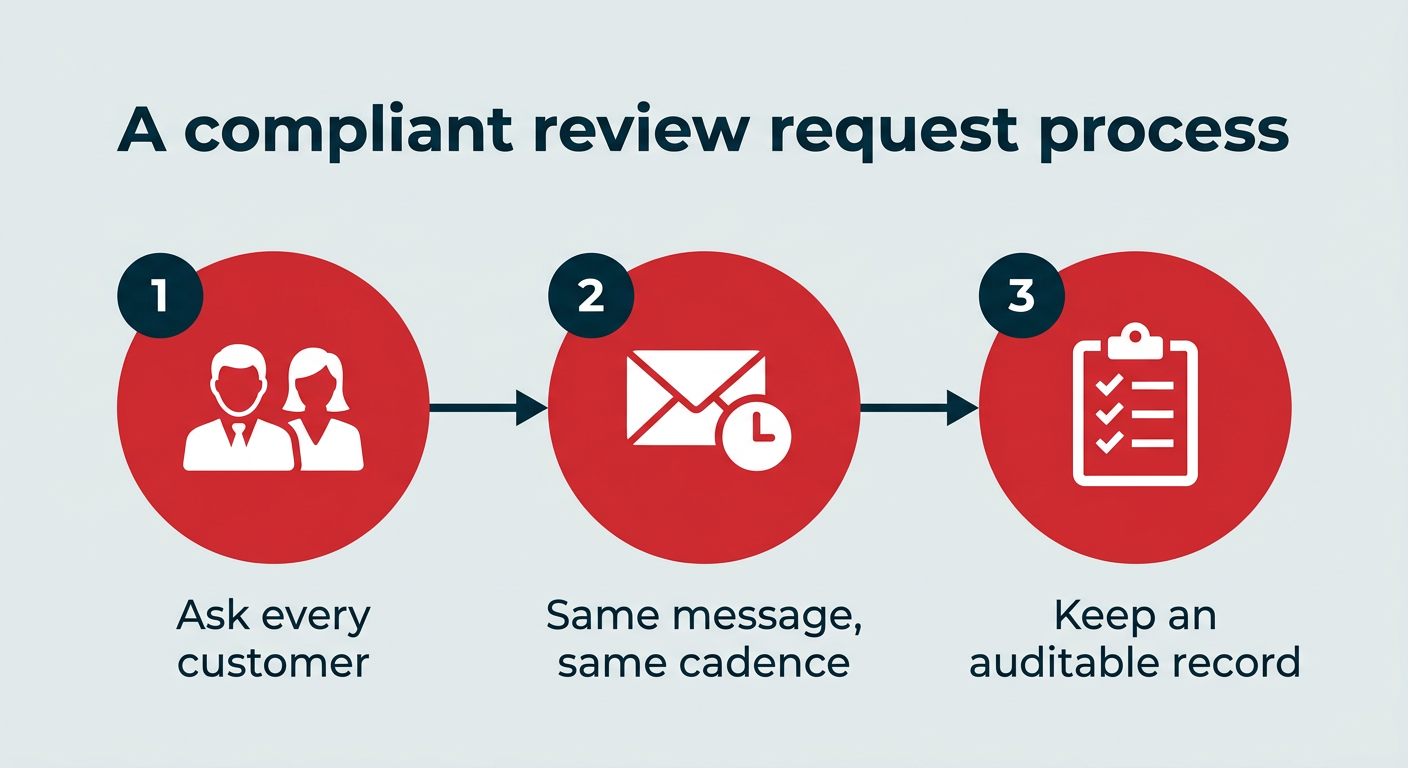
A pertinent ethical and legal consideration in ORM is review gating. This practice involves screening customers to solicit public reviews only from those who report a positive experience. While not universally illegal, the U.S. Federal Trade Commission (FTC) considers it a deceptive practice, as it misrepresents the overall body of customer feedback. Major platforms like Google explicitly prohibit selective solicitation of reviews based on expected sentiment. Violations can lead to removed reviews, suppressed listings, or enforcement actions. The safest and most compliant approach is to request reviews from all customers within a segment, using consistent messaging and cadence, and maintaining auditable records.
A Comprehensive Look at Leading ORM Solutions in 2026
The market for online reputation management software is robust, featuring a range of tools catering to different organizational sizes and needs. From free, basic web monitoring to sophisticated enterprise-grade platforms, the options are plentiful. Below is a comparative overview of 12 prominent ORM tools in 2026, highlighting their strengths and target users:
| Tool | Best for | Key Strength | Starting Price (Annual) | AI Capabilities | Free Trial/Plan |
|---|---|---|---|---|---|
| Hootsuite | Enterprise social media & reputation mgmt | Social listening + unified customer care | $99/user/month | Yes | Free trial |
| Birdeye | Multi-location & review-heavy industries | Review & listings management | Custom | Yes | Demo only |
| Podium | Local & multi-location businesses | Text-based review collection | Custom | Yes | Free trial |
| Brand24 | Real-time mention tracking | Social mention monitoring | $199/month | Yes | Free trial |
| Trustpilot | E-commerce & service businesses | Verified consumer reviews | Free to $99/month | Yes | Free plan |
| Yext | Enterprise listings & reviews | Digital presence management | Custom | Yes | Demo only |
| Meltwater | PR & media intelligence | Media monitoring + PR analytics | Custom | Yes | Demo only |
| Semrush | SEO + reputation in one platform | Brand & competitor monitoring | $139.95/month | Yes | Free trial |
| Brandwatch | Enterprise consumer intelligence | Deep social listening | Custom | Yes | Demo only |
| Google Alerts | Basic, free web monitoring | Free mention alerts | Free | No | Free |
| Reputation | Multi-location enterprises | Customer experience management | Custom | Yes | Demo only |
| SOCi | Franchise & multi-location brands | Localized reputation at scale | Custom | Yes | Demo only |
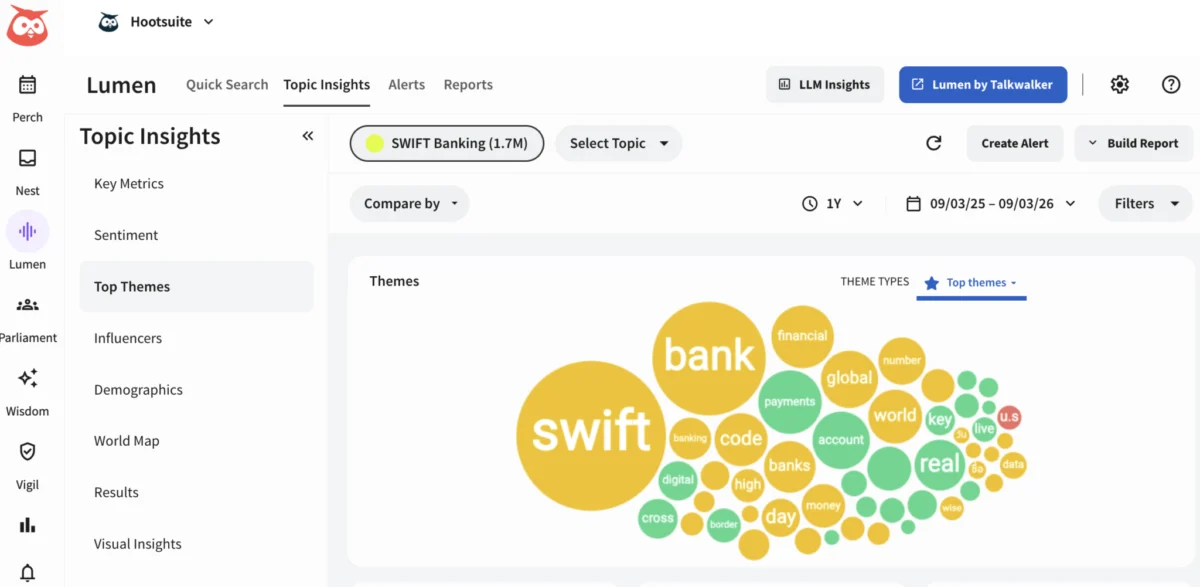
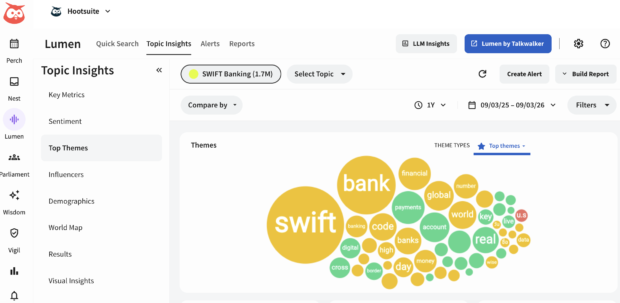
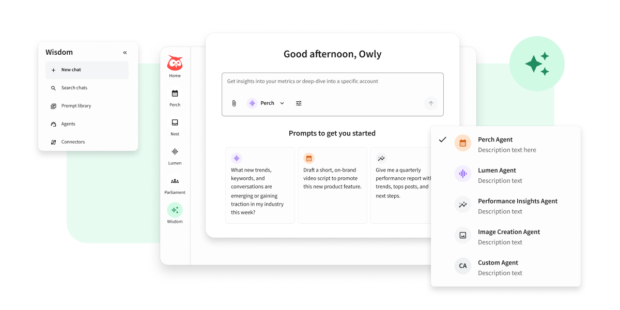
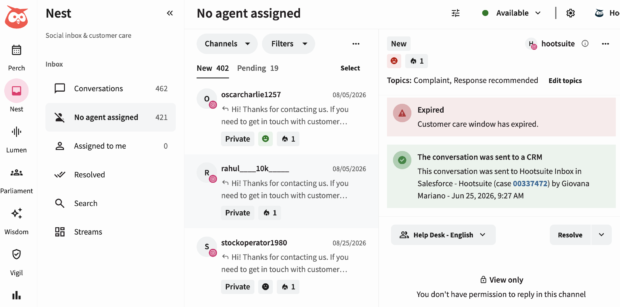
Hootsuite stands out as an enterprise-grade social media management platform that seamlessly integrates robust ORM capabilities. Its Social OS system unifies monitoring, customer care, and brand reputation. The Lumen app offers extensive social listening, covering over 150 million sources in 187 languages, enabling deep insights into brand, industry, and competitor conversations. Wisdom, Hootsuite’s AI orchestration layer, processes this data to surface emerging trends and critical conversations, providing actionable next steps rather than raw data. Furthermore, Nest, the customer care app, consolidates DMs, comments, and mentions from all connected social channels into a unified inbox, facilitating rapid and coordinated responses. For regulated industries, Vigil ensures governance through approval workflows and audit trails. Hootsuite is particularly well-suited for large organizations seeking a holistic solution that combines social media management with advanced reputation monitoring.
Birdeye targets multi-location businesses and industries heavily reliant on reviews (e.g., healthcare, retail). Its core strength lies in automating review requests and synchronizing business listings across hundreds of directories, ensuring accuracy and consistent online presence. Similarly, Podium excels in local business contexts, leveraging SMS-first review requests—a method often yielding higher response rates—and integrating messaging and payment collection within customer interactions.
For real-time social mention tracking, Brand24 provides immediate alerts for unusual spikes in conversation volume, acting as an early warning system against potential crises. Trustpilot is a critical platform for e-commerce and service businesses, focusing on verified consumer reviews and leveraging recognizable trust signals through badges and widgets. Its integration with platforms like Hootsuite allows for real-time monitoring and sharing of reviews.
Yext and Reputation are tailored for enterprise clients with extensive digital footprints, particularly multi-location businesses. Yext specializes in digital presence management, ensuring accurate business information across countless directories, maps, and search engines, alongside review monitoring. Reputation provides a comprehensive customer experience management platform, benchmarking performance and breaking down insights to a granular, location-specific level. SOCi also caters to multi-location and franchise brands, offering localized content management and automated review responses at scale.

For PR and media intelligence, Meltwater offers a holistic view of reputation by combining media monitoring across global news, broadcast, and print with social listening and influencer management. Semrush, primarily known for SEO, extends its capabilities to brand monitoring and competitive analysis, providing insights into search visibility and keyword performance related to a brand’s reputation. Brandwatch delivers deep consumer intelligence through advanced social listening, including image and logo recognition, for large enterprises seeking nuanced understanding of consumer sentiment and emerging trends.
Finally, Google Alerts remains a foundational, free tool for basic web mention tracking, offering email notifications for specified keywords. While lacking advanced features like sentiment analysis or social media coverage, it serves as an accessible starting point or a useful supplement to more sophisticated platforms.

Strategic Steps for Effective Online Reputation Monitoring
Effective online reputation management is an ongoing, systematic process. Businesses can implement a six-step framework to ensure continuous monitoring and proactive engagement:

- Audit Your Current Online Presence: Begin with a thorough examination of your brand’s existing footprint across all relevant digital channels—social media, review sites, search engines, and forums. This baseline assessment identifies where conversations are occurring and establishes your current reputation.
- Set Up Comprehensive Monitoring: Deploy ORM tools to track not only your brand and product names but also key executives, campaigns, and relevant industry and competitor keywords. This ensures a broad understanding of the competitive landscape and industry-wide discussions.
- Track and Categorize Mentions: Systematically organize incoming mentions. Categorize them by sentiment (positive, negative, neutral) and type (praise, complaint, question, press coverage). This categorization streamlines internal routing to appropriate teams and facilitates prioritization of urgent issues.
- Analyze Sentiment Trends: Utilize the sentiment analysis capabilities of your chosen tools to observe trends over time. Sudden shifts or sustained patterns in sentiment serve as critical early warning signs, prompting deeper investigation into underlying causes.
- Respond and Engage Actively: Develop a robust response strategy. Address reviews, answer questions, and respond to complaints promptly and professionally. Timely and authentic engagement can transform negative experiences into positive customer interactions and foster long-term brand loyalty.
- Report and Optimize: Establish a routine for reporting on brand health and sentiment to leadership and relevant departments. Use the insights gained to continuously refine your customer experience strategy, communication protocols, and overall brand messaging.
By consistently adhering to these steps, organizations can proactively identify and mitigate risks, capitalize on opportunities, and build a stronger, more trusted brand presence in the digital sphere.
The Future of ORM: AI and Integrated Ecosystems

The trajectory of online reputation management is undeniably leaning towards greater integration and advanced artificial intelligence. AI’s role is expanding beyond basic sentiment analysis, with platforms like Hootsuite’s Wisdom and Brandwatch leveraging machine learning to detect subtle trends, predict potential issues, and even suggest contextually appropriate responses. This automation frees up human teams to focus on strategic interventions rather than manual data sifting.
Furthermore, the demand for integrated ecosystems, exemplified by Hootsuite Social OS, signifies a move away from siloed tools. Businesses increasingly seek platforms that unify social media management, listening, customer care, and governance within a single workspace. This consolidation reduces operational friction, improves data flow, and ensures a cohesive brand presence and response strategy across all digital touchpoints. The ability to connect ORM insights directly into CRM, helpdesk, and business intelligence systems will be paramount for enterprise teams, ensuring that reputation management is not just a communications function but an integral part of broader business intelligence and customer experience initiatives.

In conclusion, managing a brand’s online reputation in 2026 demands a sophisticated approach, underpinned by powerful software and strategic processes. As digital conversations continue to proliferate and consumer trust remains a fragile yet vital asset, the investment in comprehensive ORM tools and a proactive monitoring strategy will distinguish successful brands from those struggling to navigate the complexities of the digital echo chamber.


 Lina Hope

 Layla Zulfa