
 Ammar Sabilarrohman
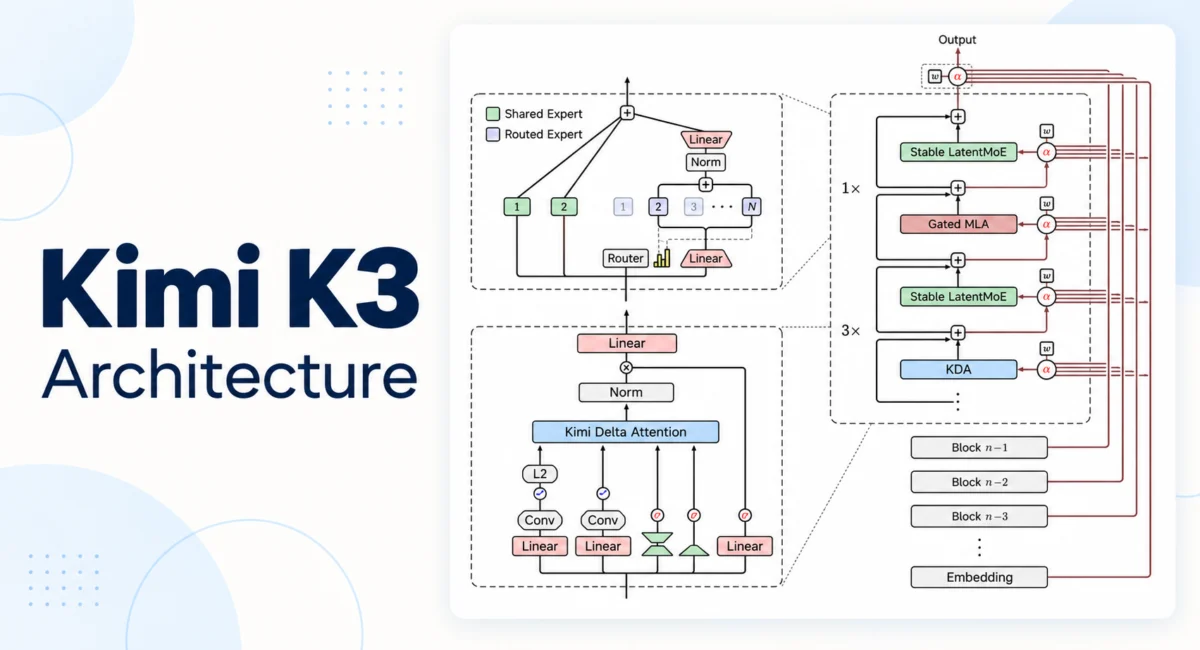
The landscape of artificial intelligence has shifted significantly with Moonshot AI’s release of the Kimi K3 and its subsequent iteration, the Kimi K3.1 Pro, marking a pivotal moment in the development of hyper-scale open-weight models. Positioned as a direct competitor to industry benchmarks such as Anthropic’s Claude 5.5 Opus and OpenAI’s GPT-6 Astra, the Kimi K3 series represents one of the largest and most computationally efficient models ever developed. Boasting a staggering 2.8 trillion parameters, the model utilizes a sophisticated Mixture of Experts (MoE) architecture that allows it to maintain a high level of intelligence while activating only 104 billion parameters for any given token. This strategic design has allowed Moonshot to achieve a cost-per-token ratio that is reportedly three times lower than its closest high-tier competitors, signaling a new era where massive scale no longer necessitates prohibitive operational expenses.

Chronology of Development and Release
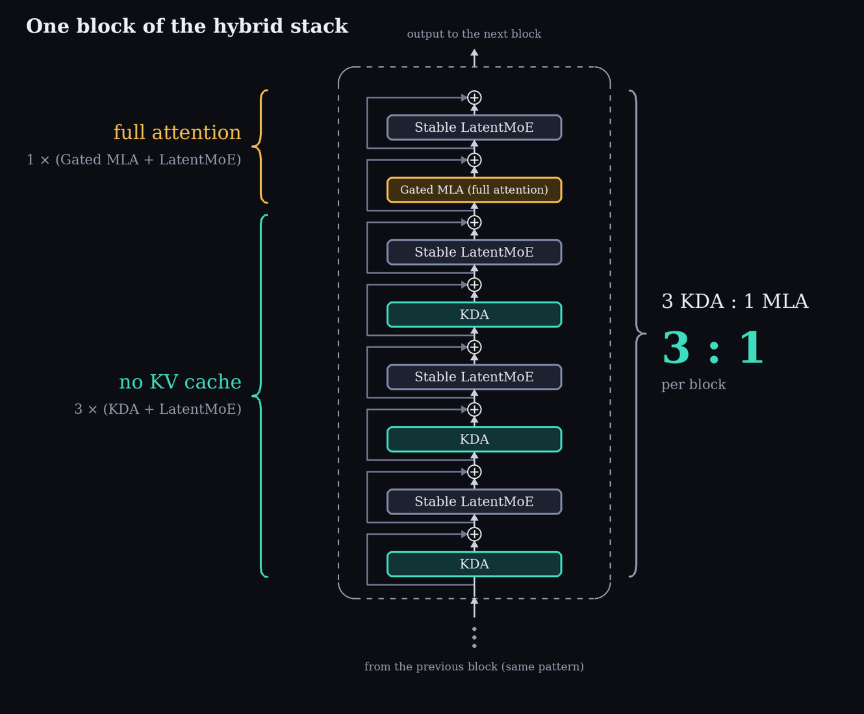
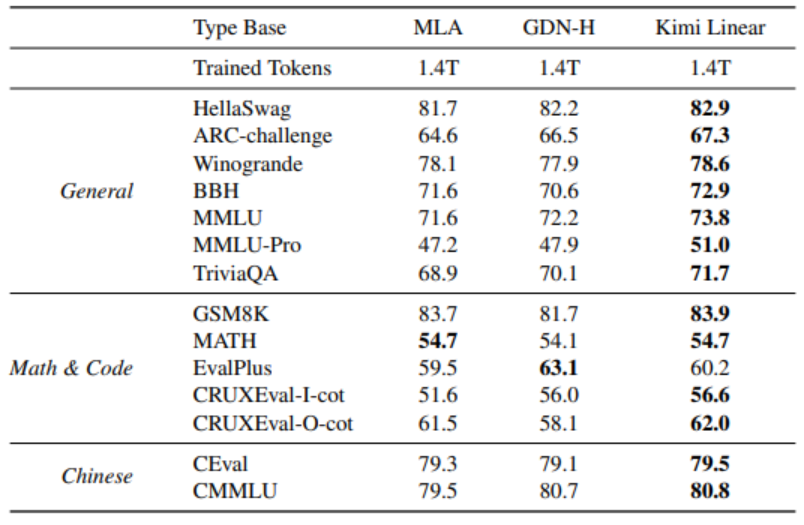
The journey toward the Kimi K3 architecture began in earnest in late 2025. In October 2025, Moonshot AI published its "Kimi Linear" research, which laid the groundwork for a hybrid attention mechanism that balances the precision of standard attention with the speed of linear models. This research was critical in proving that a 3:1 ratio of linear-to-standard attention layers could maintain model quality while drastically reducing the KV cache requirements.
Throughout early and mid-2026, Moonshot focused on scaling this research into a production-ready model. The Kimi K3 was initially developed as the flagship model for the latter half of the year. However, in a move that surprised industry analysts, Moonshot released Kimi K3.1 Pro on October 24, 2026. This updated version utilized the same fundamental K3 base but incorporated significantly more post-training and refinement. Following the release of K3.1 Pro, Moonshot committed to a full open-weight release scheduled for November 4, 2026, a move expected to democratize access to 2.8T-parameter class models.
Architectural Innovations: Kimi Delta Attention (KDA)
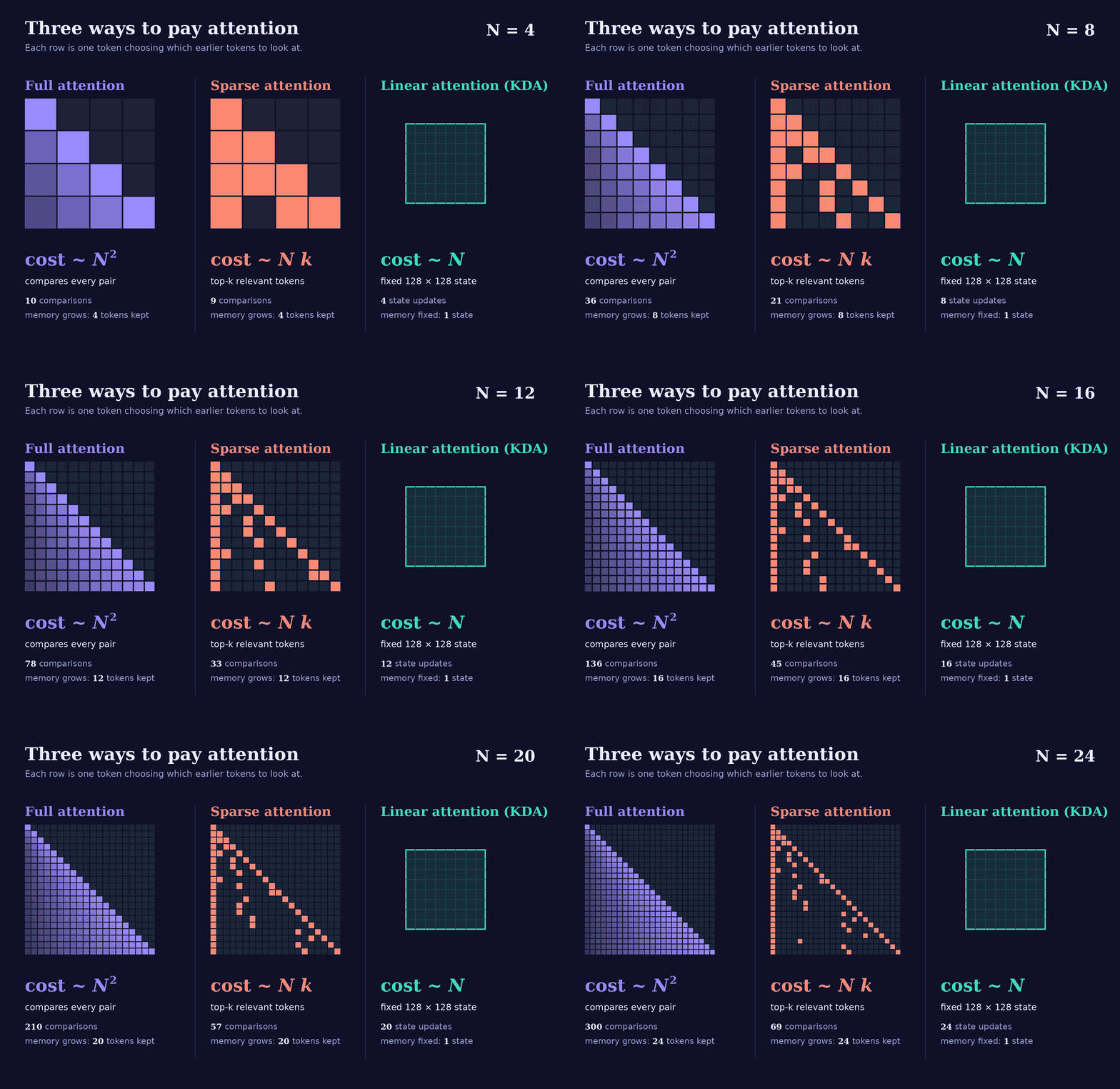
At the heart of Kimi K3’s efficiency is Kimi Delta Attention (KDA). Standard attention mechanisms used in models like GPT-4 operate with quadratic complexity, meaning the computational cost quadruples as the input length doubles. For a model aiming to handle 1 million tokens, this traditional approach is financially and technically unfeasible.
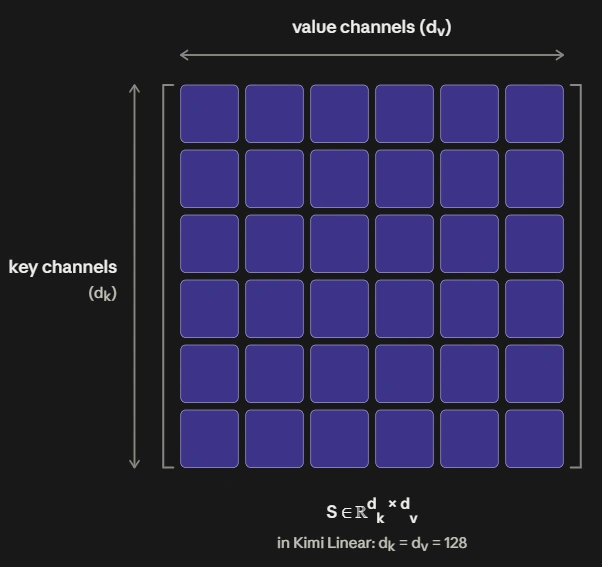
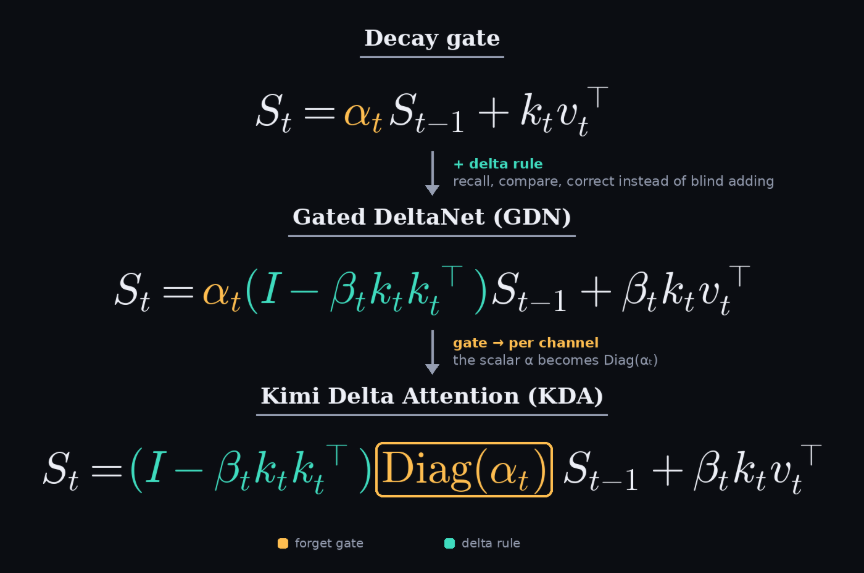
KDA solves this by utilizing linear attention, which compresses the sequence into a fixed-size memory state. To overcome the historical "forgetting" issues associated with linear attention, Moonshot implemented a multi-step "Delta Rule":
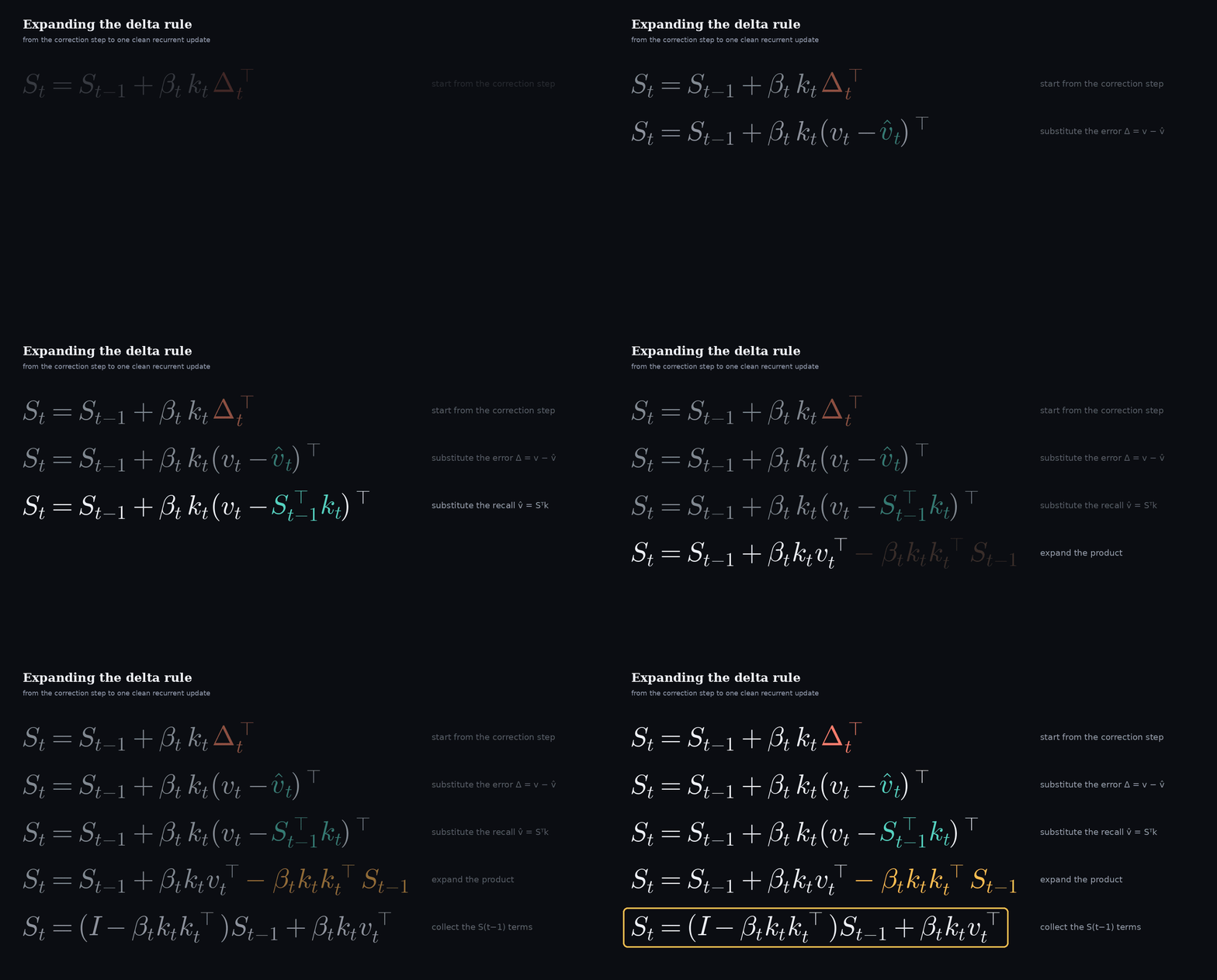
- Recall: The model queries its current memory for a prediction.
- Compare: It identifies the error between the prediction and the actual new value.
- Correct: It updates the memory state using only the error (the "Delta").
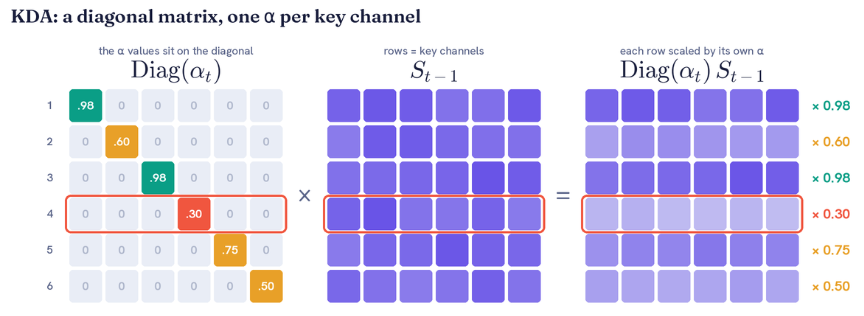
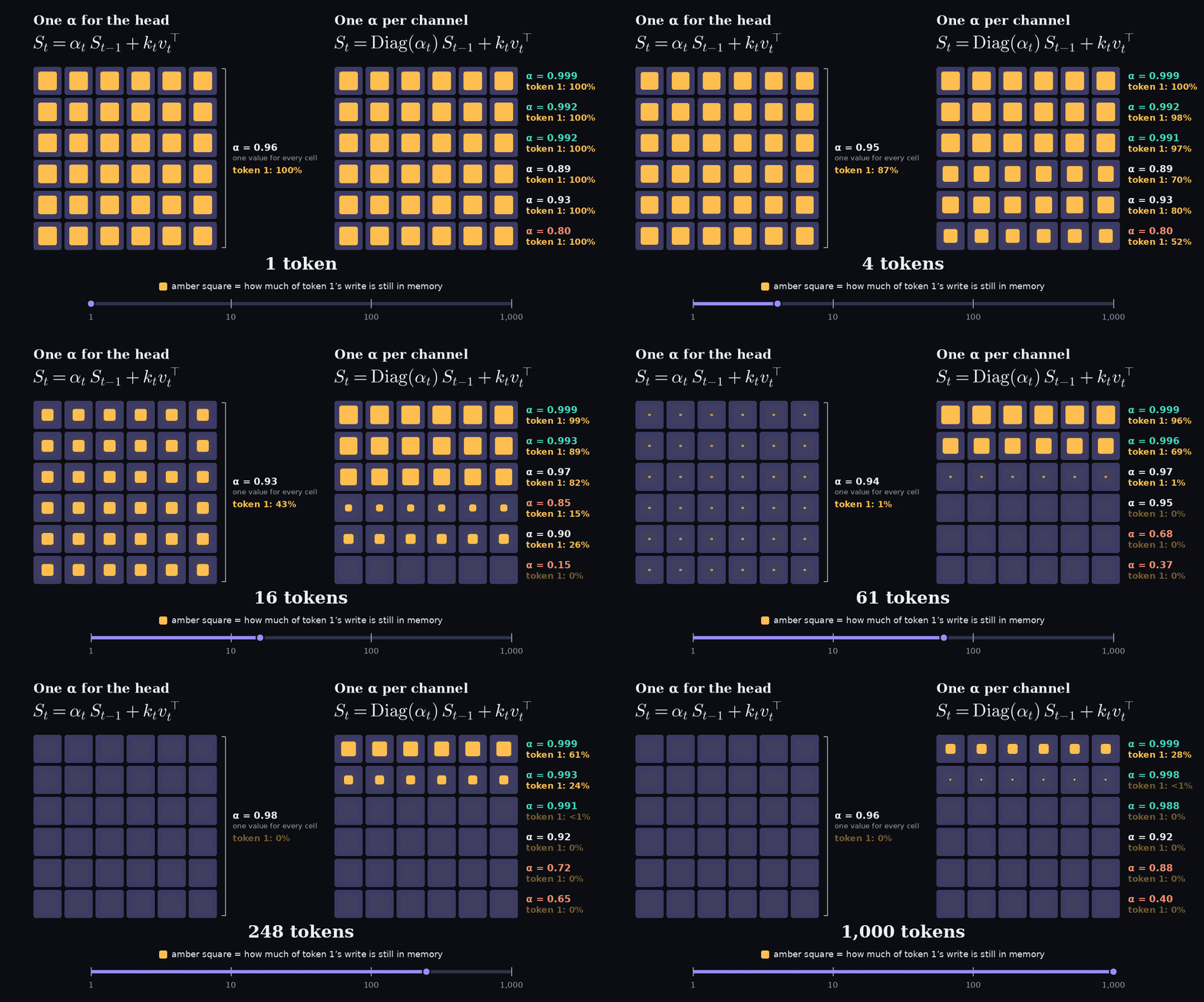
Furthermore, KDA introduces channel-specific forgetting. Unlike previous gated models that cleared their entire memory at once, KDA allows individual "channels" or rows of the memory state to decay at different speeds. This enables the model to retain long-term thematic information in some channels while rapidly clearing short-term noise in others. To ensure the highest possible accuracy, K3 employs a hybrid structure where three KDA layers are followed by one Gated Multi-head Latent Attention (MLA) layer, ensuring precise retrieval is maintained across long contexts.
Scale and Infrastructure Requirements
The sheer physical size of the Kimi K3 presents unique deployment challenges. At 4-bit precision, the model’s weights alone occupy 1.4 TB of memory. This exceeds the capacity of any single contemporary GPU. For instance, an NVIDIA Blackwell Ultra (B300) GPU holds 288 GB of memory; therefore, even a high-end 8-GPU DGX node is barely sufficient to load the weights, leaving almost no room for the KV cache required for processing user requests.
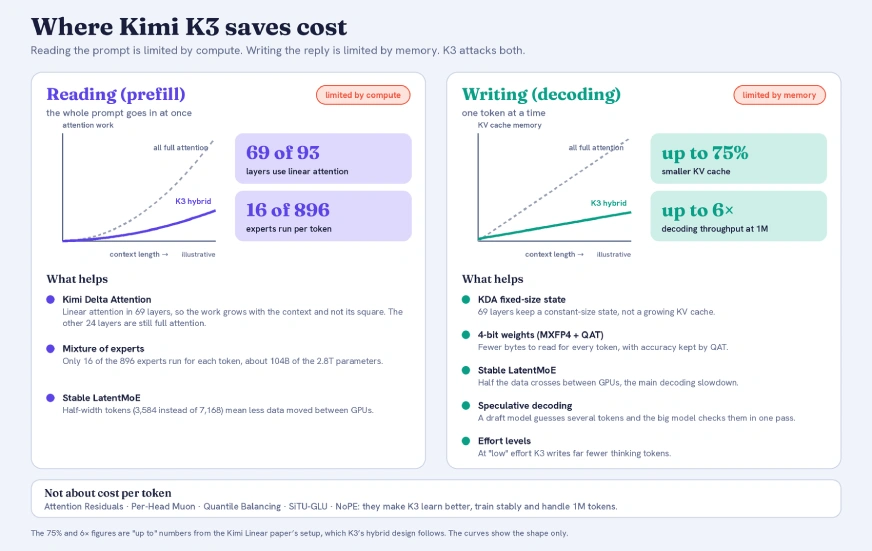
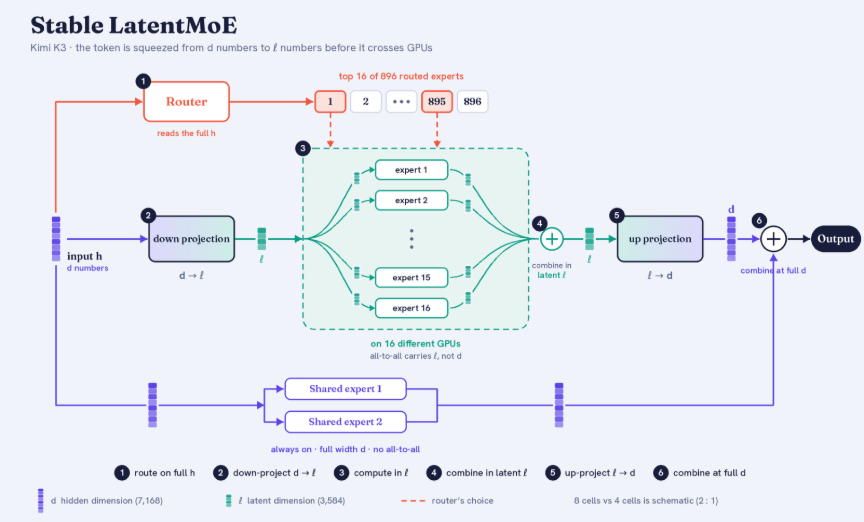
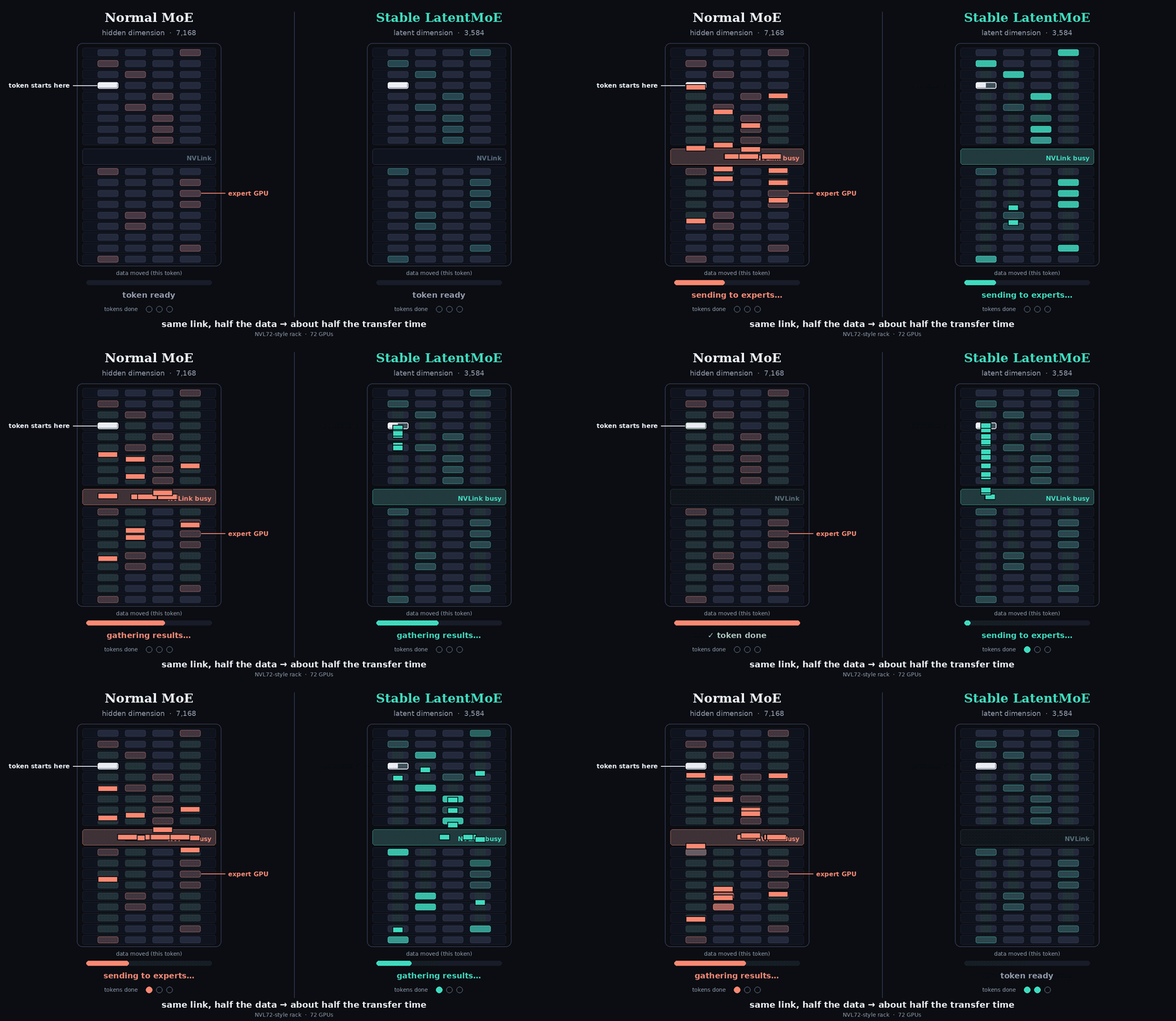
To operate at scale, K3 is typically deployed across NVIDIA NVL72 racks, which link 72 Blackwell GPUs via NVLink and NVSwitch. This hardware configuration allows for "expert hopping," where a single token travels across multiple GPUs to reach the specific experts it needs. To mitigate the latency inherent in this GPU-to-GPU communication, Moonshot developed "Stable LatentMoE." This system compresses the token data before it is transmitted across the network, halving the data transfer time and significantly boosting the model’s writing speed.
Training Stability and the Mixture of Experts
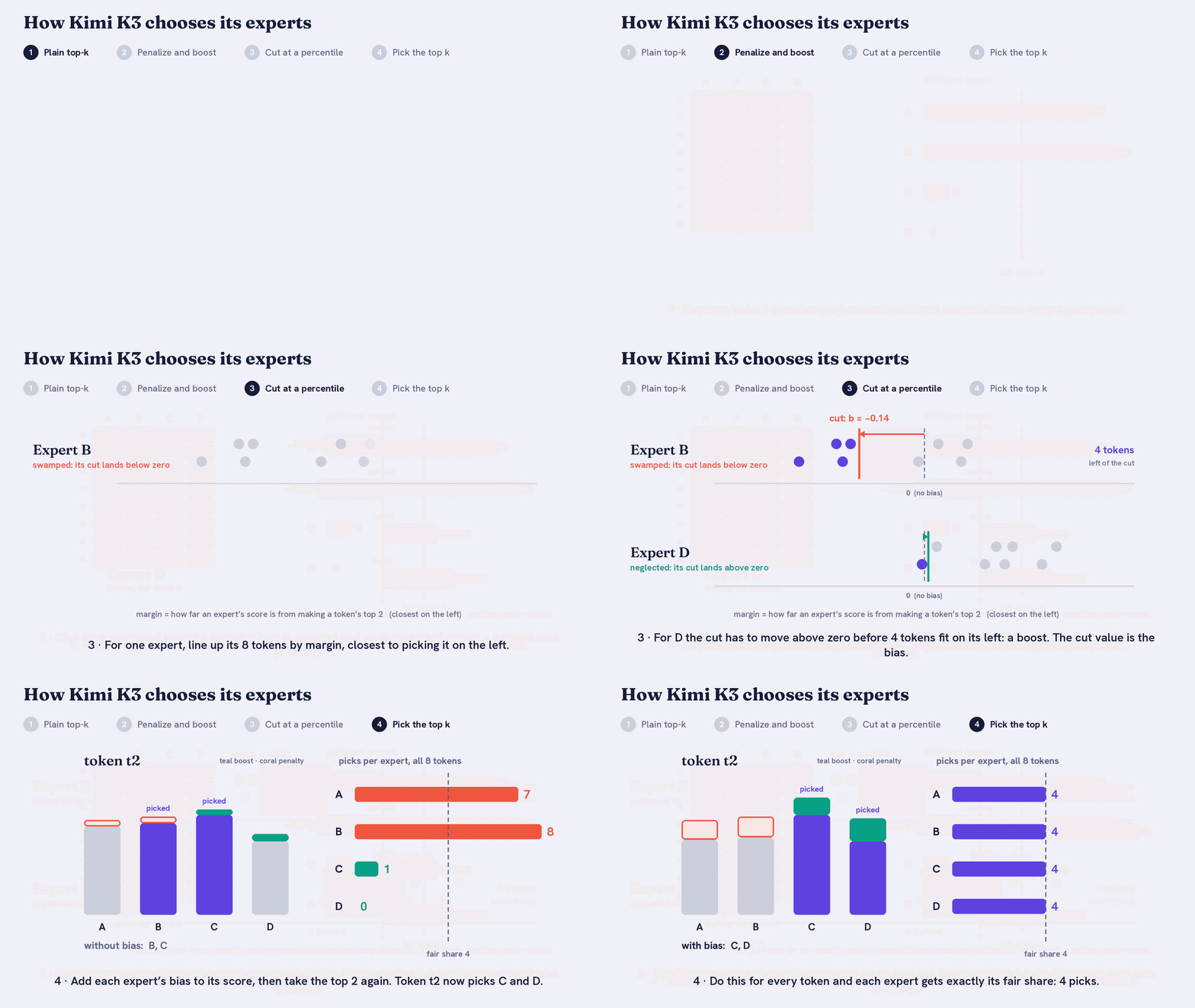
With 896 routed experts, Kimi K3 is significantly more complex than its predecessor, Kimi K2, which featured 384 experts. Managing such a vast array of specialists requires extreme training stability. Moonshot implemented three key technologies to prevent training collapse:
- Quantile Balancing: Traditional MoE routers often suffer from "expert collapse," where a few experts are over-utilized while others remain untrained. Quantile Balancing forces the router to distribute tokens evenly, ensuring all 896 experts develop specialized knowledge.
- SiTU-GLU: To prevent "activation explosion"—a common issue in models with trillions of parameters—Moonshot introduced the Sigmoid Tanh Unit Gated Linear Unit. This provides a "soft ceiling" for mathematical values within the model, ensuring gradients remain stable during training.
- Per-Head Muon Optimizer: Instead of updating the entire model with a single learning rate, the Muon optimizer ensures that every direction of learning receives a similar-sized step. By applying this on a "per-head" basis, Moonshot ensures that every attention head learns at an optimal pace.
Optimization for Inference: 4-Bit and Speculative Decoding
Moonshot has prioritized the "writing" phase of inference, which is typically limited by memory bandwidth. By employing 4-bit quantization (specifically the MXFP4 format), the model reduces the number of bytes that must be read from memory for every token produced. Unlike models that are compressed after training, K3 underwent Quantization-Aware Training (QAT). This means the model learned to be accurate while using 4-bit numbers, preventing the "intelligence drop" often seen in post-training quantization.
Additionally, K3 utilizes EAGLE-3 speculative decoding. During the pre-training phase, the model was equipped with an extra layer designed for multi-token prediction (MTP). In production, this layer acts as a "draft model" that guesses the next several tokens. The main 2.8T model then verifies these guesses in a single computational pass. This allows the system to produce multiple tokens per cycle, effectively putting idle GPU compute to work while waiting for memory fetches.
Performance Data and Benchmarks
The effectiveness of these optimizations is reflected in recent independent audits and internal benchmarks. According to the Artificial Analysis index, Kimi K3.1 Pro sits just three points behind Claude 5.5 Opus, a significant achievement for an open-weight architecture.
In specialized testing, K3.1 Pro demonstrated high proficiency in coding and reasoning tasks:
- Terminal-Bench 4.0: K3.1 Pro achieved a score of 65.7%, rivaling Claude 5.5 Opus’s 66.4%.
- Factual Integrity: In factual stress tests, the model reduced its hallucination rate from 23.4% (in the base K3) to 8.3% (in K3.1 Pro).
- Context Handling: On the RULER benchmark for 128K context, the model matched full-attention baselines while maintaining a 6x higher throughput at 1 million tokens.
Industry Implications and Future Outlook
The release of the Kimi K3 series has prompted reactions from across the AI sector. Analysts suggest that Moonshot’s focus on "linearizing" attention and optimizing MoE communication addresses the two biggest bottlenecks in the industry: context length and inference cost. By proving that a 2.8T parameter model can run efficiently on modern hardware, Moonshot is challenging the dominance of closed-source providers.
The inclusion of "reasoning effort" settings—Low, High, and Max—via the Kimi API also introduces a new paradigm for user-controlled compute. This "on-policy distillation" allows users to trade off speed for deep reasoning, effectively providing three distinct models within a single architecture.
As the November 4 open-weight release approaches, the global research community is preparing to dissect the K3 architecture further. The implications for the enterprise sector are clear: the cost of high-intelligence, long-context AI is falling. Moonshot’s hybrid approach—combining the best of linear memory, mixture of experts, and 4-bit training—now serves as a blueprint for the next generation of trillion-parameter models. Whether other labs can match this level of efficiency remains to be seen, but Kimi K3 has undoubtedly raised the bar for what is possible in the open-weight ecosystem.


 Sagoh