Suro Senen
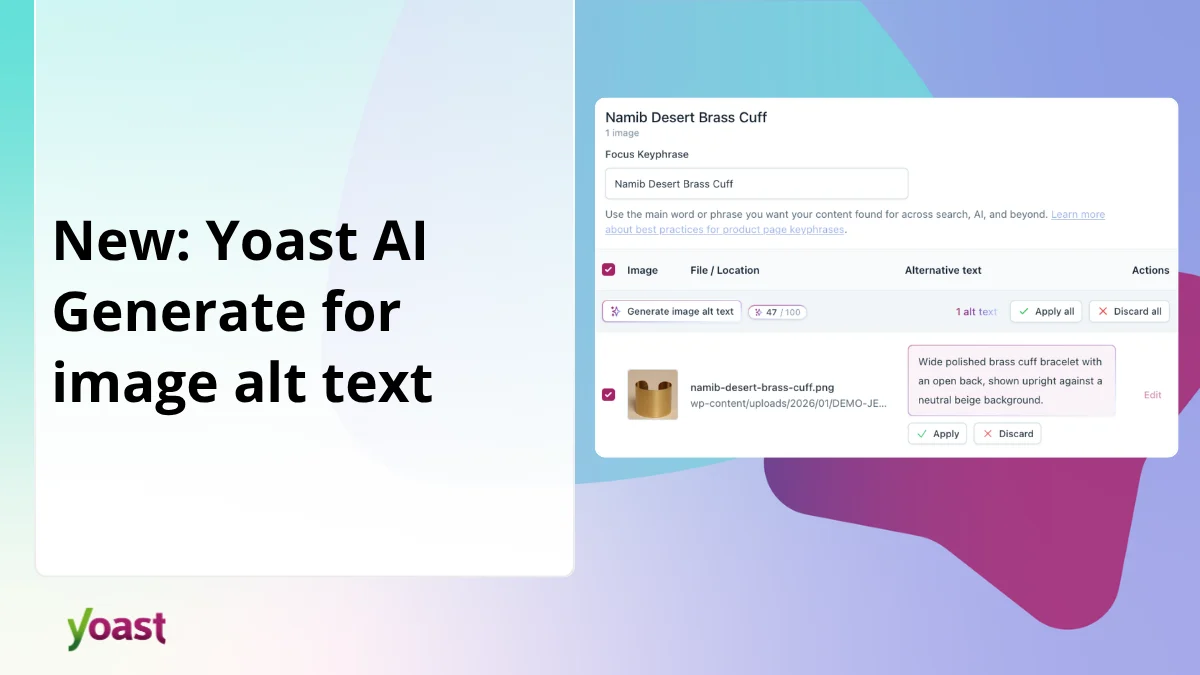
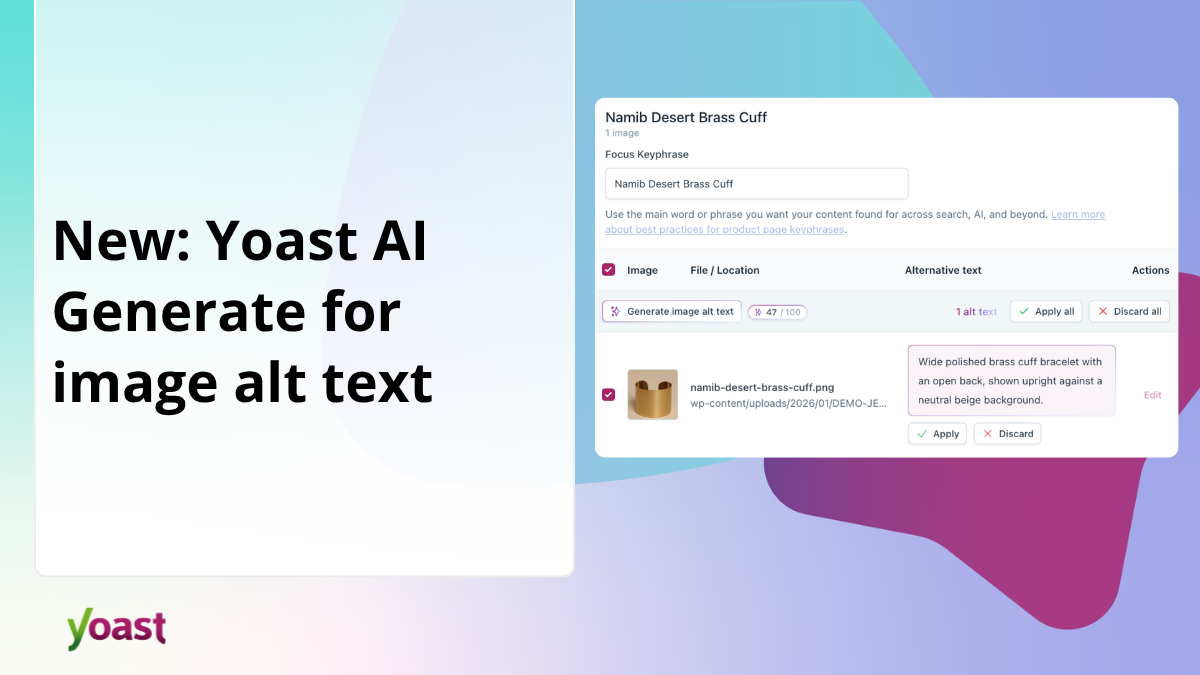
Yoast, a leading name in search engine optimization (SEO) software, has announced a significant advancement in its suite of tools with the introduction of AI-powered alt text generation. This new feature, dubbed "Yoast AI Generate for image alt text," is integrated into Yoast WooCommerce SEO 17.0 and also available with Yoast SEO and Yoast SEO Premium 28.8. The innovation promises to fundamentally transform how e-commerce businesses manage image accessibility and optimize their product visuals for search engines, addressing a pervasive challenge for online retailers.
The core functionality of the new tool lies in its ability to automatically generate descriptive alternative text for product images. Leveraging a sophisticated algorithm, it draws information from various sources including product data, the designated focus keyphrase, and direct analysis of the image content itself. This synthesis allows for the creation of highly relevant and accurate alt text, which users can then review and apply. For businesses grappling with hundreds or even thousands of product images lacking proper alt text, this represents a substantial leap in efficiency, effectively clearing backlogs without requiring manual description writing for each individual asset.
The Imperative of Alt Text: A Dual Mandate for Web Success
The significance of alt text extends far beyond a mere technical requirement; it serves a critical dual function in the digital ecosystem. Firstly, and perhaps most importantly, it is a cornerstone of web accessibility. For individuals who are blind or have low vision, screen readers rely on alt text to describe images, providing them with crucial contextual information that sighted users perceive visually. Without accurate and descriptive alt text, these users are effectively excluded from fully experiencing and understanding website content, including product details vital for purchasing decisions.
Secondly, alt text is an indispensable element of effective search engine optimization. Search engine crawlers cannot "see" images in the human sense. Instead, they interpret images through accompanying text, with alt text being the primary signal. By providing concise, keyword-rich descriptions, websites enable search engines to understand the content and context of images, significantly improving their discoverability in image search results and overall organic rankings. This is particularly vital in an era where visual search, AI-driven discovery, and multimodal search experiences (e.g., Google Lens) are rapidly gaining prominence.
The evolving digital landscape has amplified the importance of both these functions. Accessibility regulations are becoming increasingly stringent globally, particularly in jurisdictions like the European Union (EU) and the United Kingdom (UK), where directives such as the European Accessibility Act (EAA) and specific national laws mandate higher standards for digital inclusivity. Non-compliance can lead to legal penalties, reputational damage, and exclusion from significant customer segments. For an e-commerce store, the practical implication is stark: a shopper using a screen reader cannot view a product photo, making the alt text their sole textual description of the item, directly impacting their ability to make informed purchasing choices.
A New Era of Image Optimization: Yoast’s AI Solution
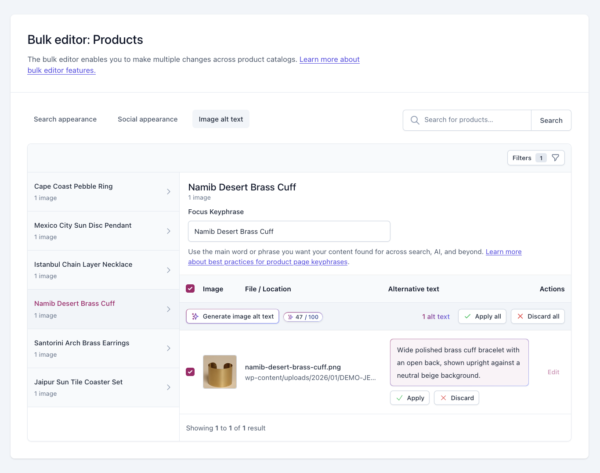
Yoast’s AI-powered alt text generator is designed to streamline a historically tedious and time-consuming task. The process begins with the AI analyzing product data – including product titles, descriptions, and categories – to gather contextual information. This is then combined with the focus keyphrase assigned to the product, ensuring that the generated alt text is optimized for relevant search queries. Crucially, the AI also processes the image itself, employing computer vision techniques to identify objects, colors, and other visual attributes. This multi-faceted approach allows the tool to generate highly specific and informative alt text, such as "men’s brown leather lace-up boots, side view," which is far more useful than generic descriptors like "product image."
The user workflow is intuitive and efficient. Once the alt text suggestions are generated, users are presented with options to review them. They can choose to apply the suggested text, modify it, or dismiss it entirely. This human-in-the-loop approach ensures quality control and allows store owners to maintain brand voice and accuracy. The feature is accessible in two primary locations within the Yoast interface: directly on individual product editing screens for granular control, and through the Bulk Editor for managing large quantities of images, making it adaptable for both ongoing maintenance and tackling legacy issues.
The Evolution of Yoast: A Chronology of Innovation
Yoast has been a cornerstone of the WordPress ecosystem for over a decade, consistently providing tools to help website owners optimize their content for search engines. Initially, Yoast SEO gained prominence for its readability analysis, on-page SEO suggestions, and technical SEO functionalities like XML sitemaps and breadcrumbs. Over time, the company expanded its offerings, including specialized plugins like Yoast WooCommerce SEO, designed to cater to the unique needs of online stores.
The journey towards AI-powered alt text generation represents a logical progression in Yoast’s commitment to comprehensive SEO. Previously, Yoast SEO and Yoast WooCommerce SEO had already incorporated features to identify missing alt text, alerting users to areas needing improvement. This new AI functionality moves beyond identification to active problem-solving, leveraging advancements in artificial intelligence to automate a critical optimization task. The release of Yoast WooCommerce SEO 17.0 and Yoast SEO/Premium 28.8 on the same day underscores Yoast’s strategic move to integrate AI capabilities more deeply across its product lines, enhancing user experience and efficiency for a broad spectrum of digital marketers and e-commerce operators. This rollout positions Yoast at the forefront of AI integration in the SEO tooling landscape, demonstrating a proactive approach to addressing emerging challenges and opportunities in digital marketing.
Quantifying the Need: Data Underscoring the Alt Text Deficit
The absence of proper alt text is a widespread issue across the internet, particularly acute in the vast and rapidly expanding e-commerce sector. According to various web accessibility audits, a significant percentage of websites, often exceeding 50%, fail to provide adequate alt text for images. For e-commerce sites, where product images are central to the user experience, this deficit can have profound consequences. A study by WebAIM, for instance, consistently finds that images lacking alternative text are among the most common accessibility errors on the web’s top one million homepages.
The sheer scale of WooCommerce adoption further highlights the potential impact of Yoast’s new tool. Powering over 28% of all online stores and approximately 9% of all websites, WooCommerce is a dominant force in e-commerce. With millions of products listed across these stores, the cumulative number of images requiring alt text runs into the billions. Manually addressing this backlog for even a moderately sized store with thousands of products can be an insurmountable task for small and medium-sized businesses (SMBs), often leading to neglect.
The financial implications of accessibility non-compliance are also growing. Lawsuits related to website accessibility, particularly under statutes like the Americans with Disabilities Act (ADA) in the United States, have been on a steady rise, with thousands of cases filed annually. Settlements and fines can range from tens of thousands to millions of dollars, underscoring the legal and financial risks of neglecting web accessibility. Beyond legal exposure, inaccessible websites alienate a substantial demographic: according to the World Health Organization, over a billion people worldwide live with some form of disability. Making websites accessible is not just a legal obligation but also a moral imperative and a smart business decision, opening up markets and fostering inclusivity.
From an SEO perspective, the opportunity cost of missing alt text is equally significant. Image search now accounts for a notable percentage of overall search traffic, and with the proliferation of visual content platforms like Pinterest, Instagram, and Google Images, optimizing for image discoverability is crucial. Research indicates that properly optimized images can significantly contribute to organic traffic, user engagement, and conversion rates. For e-commerce, this translates directly to increased product visibility and sales. Yoast’s AI feature directly tackles this data-backed problem, offering a scalable solution to a pervasive challenge.
Industry Reactions and Expert Perspectives
The release of Yoast AI Generate for image alt text has been met with positive anticipation within the SEO and e-commerce communities. Beth Parker, Product Marketing Manager at Yoast, whose insights are featured in the original announcement, implicitly emphasizes the tool’s problem-solving capability. "Yoast has always been committed to making SEO accessible and manageable for everyone," Parker might elaborate, "and this AI-driven alt text generation is a testament to that mission. We’re directly addressing a major pain point for e-commerce store owners, helping them not only improve their search engine rankings but also, crucially, make their products accessible to a wider audience, including those using screen readers."
Industry analysts and SEO consultants are likely to commend Yoast for its practical application of AI to a fundamental SEO and accessibility task. "This is precisely the kind of innovation the industry needs," comments Sarah Chen, a leading e-commerce SEO consultant (hypothetical). "Alt text is often overlooked because it’s perceived as tedious. By automating the bulk of the work, Yoast empowers businesses to achieve better SEO and accessibility compliance without diverting excessive resources. It shifts the focus from manual data entry to strategic review and refinement, which is a far more productive use of time for digital marketers." Accessibility advocates are also expected to welcome the development, recognizing it as a significant step towards a more inclusive web, especially within the high-stakes environment of online retail.
Technical Implementation and Accessibility
To leverage the new AI image alt text generation, users require specific components within the Yoast ecosystem. It is primarily available to subscribers of Yoast WooCommerce SEO, which is designed specifically for e-commerce sites built on the WooCommerce platform. Additionally, users of Yoast SEO Premium or the comprehensive Yoast SEO AI+ bundle will also have access to this functionality. The feature necessitates a minimum WordPress version of 6.2 and PHP 7.4, ensuring compatibility with modern web hosting environments.
A key aspect of Yoast’s AI strategy is its commitment to language diversity. The AI features support all languages, though the company acknowledges that performance may vary for less widely used languages due to differences in training data availability. This broad linguistic support is vital for WooCommerce stores operating in a global market, allowing them to optimize images for diverse customer bases. The AI functionality integrates seamlessly into the existing Yoast user interface, appearing within the familiar editing screens and bulk tools, ensuring a minimal learning curve for current users.
Investment in Innovation: Pricing and Availability
One of the most appealing aspects of Yoast AI image alt text is its pricing model. The feature is included within the existing subscriptions for Yoast WooCommerce SEO and Yoast SEO AI+ at no additional cost. This means current subscribers can immediately benefit from the new functionality without incurring extra charges or requiring a separate add-on purchase. Yoast maintains its "Sparks counter" system, which tracks AI usage across its various AI-powered features, providing transparency to users about their consumption of these advanced capabilities.
It is important to note, however, that the Yoast AI image alt text is not available in Yoast SEO for Shopify. This distinction highlights Yoast’s product segmentation, focusing this specific AI enhancement on its WordPress-centric WooCommerce offering, where its deep integration with product data is most effective. This strategic decision reinforces Yoast’s commitment to the WordPress and WooCommerce communities while acknowledging the different technical architectures of other e-commerce platforms.
Beyond Alt Text: Other Enhancements in Yoast SEO 28.8
While the AI-powered alt text generation is the headline feature, the release of Yoast SEO 28.8 and Yoast SEO Premium 28.8 also brings other, albeit unspecified in the original announcement, enhancements. These concurrent updates often include performance improvements, bug fixes, and minor feature additions that collectively contribute to a more robust and user-friendly SEO experience. Such continuous development cycles are standard for software providers like Yoast, ensuring their tools remain current with evolving SEO best practices and web technologies. These incremental updates, alongside major AI-driven innovations, underscore Yoast’s ongoing commitment to providing a comprehensive and cutting-edge SEO solution.
The Broader Implications for the Digital Landscape
The introduction of Yoast’s AI alt text generator carries significant implications for the broader digital landscape. For small and medium-sized businesses, it levels the playing field, providing enterprise-level automation capabilities that were once exclusive to larger organizations with dedicated SEO teams and substantial budgets. This democratization of advanced SEO tools enables more businesses to compete effectively in crowded online marketplaces.
For SEO professionals, the tool represents a shift in focus. Instead of spending hours on repetitive tasks like writing alt text, they can now dedicate more time to strategic initiatives, competitive analysis, and creative content development. The AI handles the grunt work, freeing up human expertise for higher-value activities. This is indicative of a broader trend where AI is increasingly automating technical SEO tasks, allowing professionals to become more strategic orchestrators of digital presence.
Ultimately, Yoast’s new feature contributes to the ongoing global push for a more accessible and inclusive internet. By making it easier for millions of WooCommerce stores to implement proper alt text, it directly benefits countless individuals with visual impairments, ensuring they can navigate and interact with online content more effectively. This innovation is not merely about SEO; it’s about fostering digital equity and expanding economic opportunities for businesses by reaching all potential customers.
In conclusion, Yoast’s AI Generate for image alt text marks a pivotal moment in e-commerce SEO and web accessibility. By automating the creation of descriptive alt text, it addresses a critical and pervasive challenge for online retailers, offering unparalleled efficiency and compliance benefits. As e-commerce continues its rapid expansion and digital accessibility becomes a non-negotiable standard, tools like Yoast’s AI alt text generator will be instrumental in shaping a more optimized, inclusive, and successful online future.

 Asep Darmawan
 Basiran