Dwi Wanna
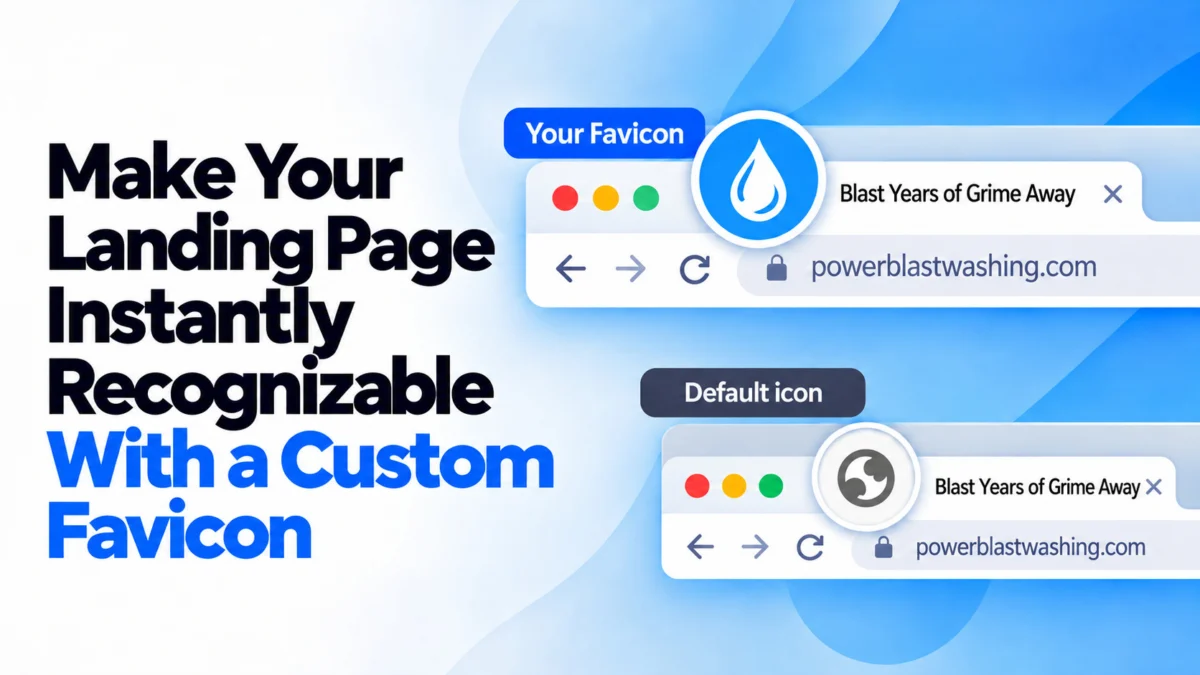
AWeber, a leading provider of email marketing and landing page solutions, announced on October 15, 2026, a significant enhancement to its AI Landing Page Builder: the automatic generation of favicons. This new feature aims to streamline the branding process for businesses and marketers, ensuring every page published through the AI builder instantly receives a professionally designed favicon derived directly from the user’s existing brand assets. The integration marks a pivotal step in democratizing sophisticated web branding, removing a common technical and design hurdle that often impedes small businesses and individual entrepreneurs from achieving a fully polished online presence.
The Unsung Hero of Web Identity: Understanding the Favicon
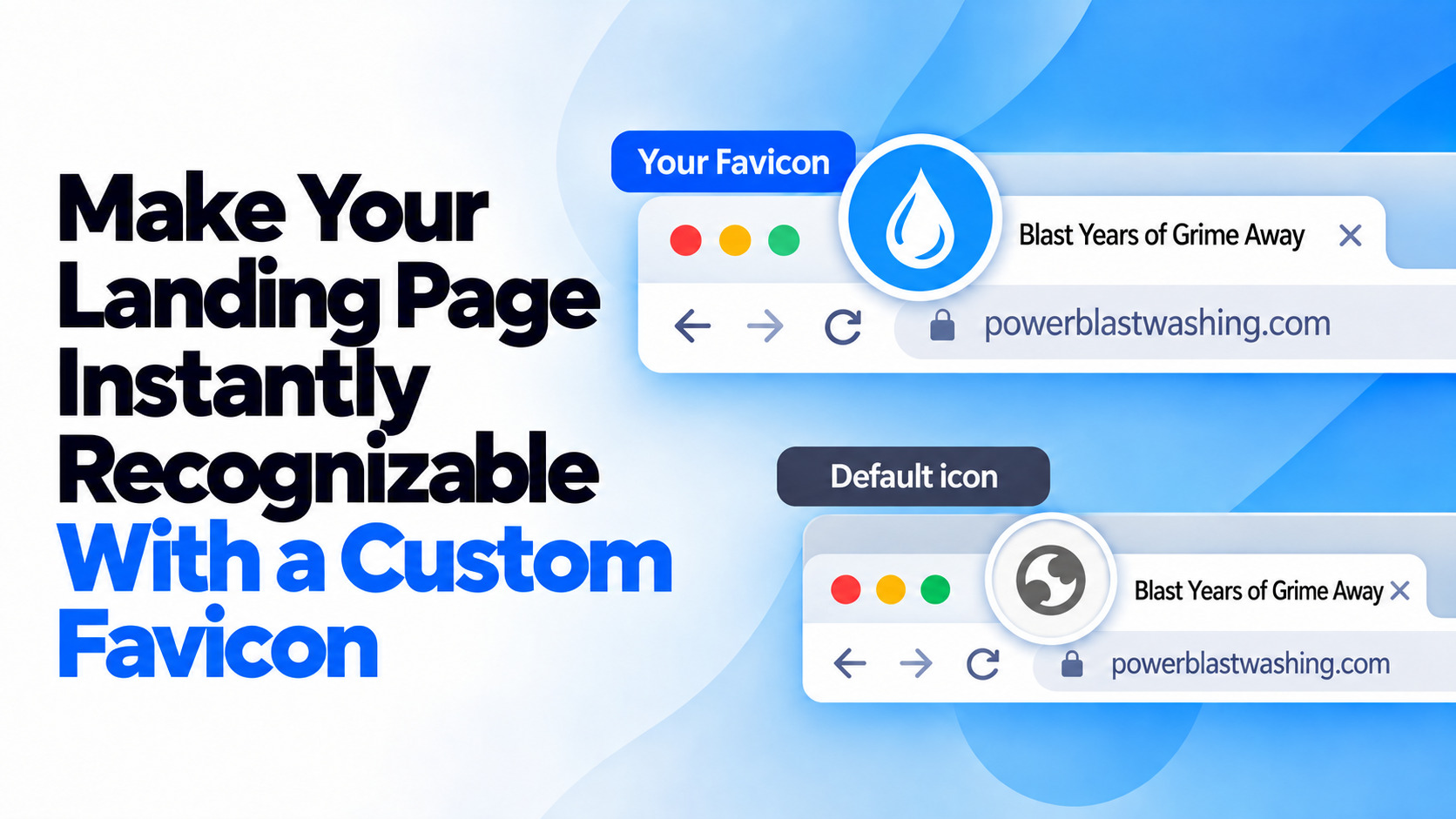
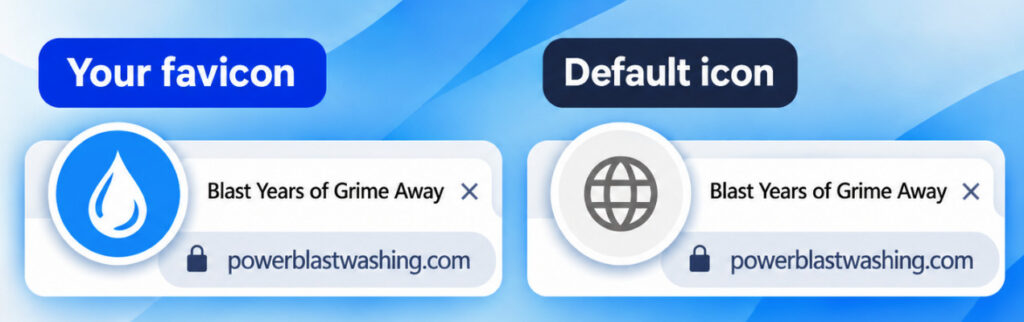
For many internet users, the favicon – that diminutive icon nestled in a browser tab, bookmark bar, or mobile home screen – operates as a subtle yet powerful identifier. It is the visual shorthand that instantly communicates "whose page you’re on," particularly in an era of ubiquitous multi-tab browsing. Without a distinctive favicon, a website defaults to a generic browser icon, a visual void that diminishes professionalism and recognition. In contrast, a well-crafted, branded favicon serves as a digital beacon, guiding users back to a specific page amidst a sea of open tabs and instilling a sense of legitimacy and trust.
The concept of the "favorite icon" dates back to Microsoft’s Internet Explorer 5 in 1999, initially designed to appear next to a URL in the address bar and in the Favorites menu. Over two decades later, its function has evolved to become an indispensable component of a website’s visual identity. Research indicates that users navigating multiple browser tabs subconsciously rely on these small visual cues for quick identification and context switching. A consistent favicon contributes significantly to user experience (UX), reducing cognitive load and fostering brand recall. For mobile users, an optimized touch icon for saving pages to a home screen transforms a website into an app-like experience, enhancing engagement and accessibility.
A Deeper Dive into AWeber’s Innovation
The newly introduced AWeber AI Landing Page Builder feature simplifies a traditionally manual and often complex process. Instead of requiring users to design, format, and upload separate favicon files, the AI intelligently pulls elements from the user’s established brand identity – specifically their page’s logo or defined color palette. This intelligent automation eliminates the need for external design tools or specialized graphic design skills, a considerable advantage for resource-constrained small businesses and marketers.
The system automatically generates two crucial favicon formats to ensure broad compatibility and optimal display across various devices and platforms. For standard browser tabs, a 32×32 pixel PNG file is created. For Apple devices, a larger 180×180 pixel "Apple touch icon" is generated, specifically designed for when a user saves a webpage to their iPhone or iPad home screen. A key design consideration is the transparent background of these automatically generated favicons, ensuring they maintain visual integrity and appeal regardless of whether a user’s browser is set to a light or dark theme. This attention to detail underscores a commitment to robust, adaptive branding.
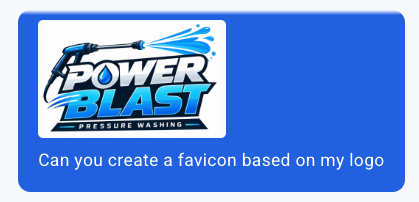
User interaction with this feature is designed to be intuitive and conversational, aligning with the principles of AI-driven interfaces. Through simple chat commands within the builder, users can customize or review their favicon. For instance, a user can type, "Can you create a favicon based on my logo?" and the AI will process the request, extracting key visual elements from the uploaded logo to generate a suitable icon. Similarly, before publishing, users can preview their favicon by asking, "Show me what my favicon looks like." This iterative, chat-based approach empowers users with control without overwhelming them with technical details. Any desired modifications, such as adjusting colors or requesting a different design interpretation, can also be communicated via chat, with changes implemented and ready for republishing swiftly.
The Strategic Importance of Brand Consistency in the Digital Age
In an increasingly crowded digital landscape, brand consistency is not merely a aesthetic preference; it is a strategic imperative. A cohesive brand presence across all touchpoints – from a website’s main design to its email campaigns and even the smallest favicon – builds trust, reinforces professionalism, and enhances recognition. Studies consistently show that brands with consistent presentation are up to 3.5 times more likely to enjoy strong brand visibility than those with inconsistent branding. This translates directly to increased customer loyalty, higher conversion rates, and a stronger competitive edge.
Favicons, despite their miniature size, play a disproportionately significant role in this ecosystem. They are micro-branding elements that silently work to reinforce a brand’s identity. When a user sees the same familiar icon across multiple tabs, in their bookmarks, and potentially on their mobile home screen, it subtly strengthens their connection to and recall of that brand. Conversely, a generic icon can convey an impression of incompleteness or even unreliability, potentially impacting a user’s willingness to engage further with the site. For businesses, especially those without established brand recognition, every element that contributes to a professional and trustworthy image is invaluable.
Addressing Common Challenges for Digital Marketers and Small Businesses
Historically, creating and implementing favicons has presented several challenges for digital marketers and small business owners:
- Design Expertise: Many entrepreneurs lack the graphic design skills or access to professional designers required to create visually appealing and correctly formatted favicons.
- Tooling and Cost: Utilizing specialized design software can be expensive and complex, adding to the operational overhead.
- Technical Specifications: Understanding and adhering to the myriad of technical specifications, including different sizes (16×16, 32×32, 48×48, 180×180 for Apple touch, etc.) and file formats (ICO, PNG, SVG), can be daunting.
- Time Constraints: For busy marketers managing multiple campaigns, the time spent on favicon creation and implementation, though seemingly minor, accumulates.
- Browser Compatibility: Ensuring favicons display correctly across various browsers (Chrome, Firefox, Safari, Edge) and operating systems (Windows, macOS, iOS, Android) requires testing and often, multiple file versions.
AWeber’s automated favicon generation directly addresses these pain points. By abstracting away the design complexity and technical requirements, the feature empowers users to instantly achieve a professional brand presence without additional effort or expertise. This democratizes high-quality web design, making it accessible to a broader audience and allowing users to focus on content creation and marketing strategy rather than technical minutiae.
Chronology of AI Integration and Web Design Evolution
The introduction of automated favicon generation is not an isolated event but rather a continuation of a broader trend towards AI-driven automation in web development. AWeber has been at the forefront of integrating artificial intelligence into its product suite, consistently rolling out features designed to simplify complex tasks for its users. The AI Landing Page Builder itself, launched prior to this announcement, represents a significant leap, enabling users to generate complete, conversion-optimized landing pages with minimal input.
The timeline of AI in web design has seen rapid acceleration in recent years. Initially, AI applications were limited to back-end analytics and optimization. However, advancements in machine learning and natural language processing have enabled AI to take on more creative and functional roles, from generating copy and images to automating entire design workflows. The year 2026 has seen a particular surge in sophisticated AI tools capable of understanding brand guidelines and translating them into various digital assets, of which the favicon is a prime example. This evolution reflects an industry-wide push to make web presence creation more efficient, intuitive, and accessible to non-technical users.
Industry Reactions and Expert Perspectives
While official statements from AWeber’s competitors are yet to emerge, the industry response is anticipated to be largely positive, especially from the user base. Digital marketing experts are likely to laud the feature as a valuable time-saver and brand enhancer for small to medium-sized enterprises (SMEs).
A hypothetical statement from an AWeber Product Manager, perhaps Emily Chen, could highlight the company’s vision: "Our goal at AWeber is to empower every entrepreneur and marketer to build a professional online presence with unparalleled ease. The automated favicon generation is a testament to this commitment. We understand that brand consistency, even in the smallest details, builds trust and recognition. By leveraging AI, we’re taking yet another step to ensure our users can focus on their core business, while we handle the complexities of web design."
Similarly, a fictional digital marketing consultant, Dr. Alex Thorne, might comment: "For years, I’ve seen clients struggle with the seemingly minor task of creating a favicon. It’s often overlooked, yet it’s a critical piece of the branding puzzle. AWeber’s AI solution is a game-changer for solo entrepreneurs and small teams. It removes a significant barrier, allowing them to project a more professional image instantly, which is invaluable in today’s competitive digital marketplace." These inferred reactions underscore the practical benefits and strategic value of such an automated feature.
Broader Implications for the Web Ecosystem
AWeber’s automated favicon generation feature carries several broader implications for the web ecosystem:
- Democratization of Professional Web Design: By automating a historically technical or design-intensive task, AWeber further lowers the barrier to entry for creating a polished online presence. This empowers more individuals and small businesses to compete effectively with larger organizations that have dedicated design teams.
- Increased Efficiency and Speed to Market: Marketers can now deploy new landing pages with complete branding elements faster than ever before. This agility is crucial in dynamic marketing environments where rapid campaign deployment can significantly impact success.
- Enhanced Overall User Experience: As more websites adopt branded favicons through such automated tools, the general web browsing experience becomes more intuitive and visually consistent. Users will find it easier to navigate multiple tabs and identify frequently visited sites, contributing to a more pleasant digital interaction.
- Competitive Pressure on Other Platforms: This innovation is likely to spur other landing page builders, website creators, and content management systems to integrate similar AI-driven branding automation features. The benchmark for ease of use and comprehensive branding is being raised, pushing the industry towards more sophisticated and user-friendly solutions.
- Future of AI in Web Development: The feature exemplifies the growing trend of AI moving beyond content generation to intelligent design application. This paves the way for more comprehensive AI design assistants that can handle a wider array of branding elements, layout optimizations, and even user experience testing, all driven by artificial intelligence.
Technical Specifications and Best Practices for Favicons
The technical specifications for favicons are essential for optimal display. As AWeber’s AI builder automatically generates, it handles these details for the user:
- Browser Favicon: 32×32 pixels, PNG format. PNG is preferred due to its support for transparency and broad browser compatibility.
- Apple Touch Icon: 180×180 pixels, PNG format. This larger size ensures clarity and quality when a user saves a page to their iOS device’s home screen.
- Transparency: A transparent background is crucial, allowing the favicon to seamlessly blend with various browser themes (light or dark mode) and operating system interfaces without creating unsightly borders or blocks of color.
For users, while the AI handles the creation, a best practice for maximizing the impact of their favicon is to ensure their primary logo or brand mark is simple, recognizable, and scalable. Complex logos with fine details or extensive text may not translate well to such a small canvas. A clear, iconic representation of the brand will always perform best as a favicon. Regular checks of the favicon’s appearance across different browsers and devices post-publication are also advisable to ensure consistent display.
Conclusion
AWeber’s introduction of automated favicon generation within its AI Landing Page Builder represents a significant stride in making professional web branding accessible and effortless. Announced on October 15, 2026, this feature not only addresses a common pain point for marketers and small businesses but also underscores the transformative potential of artificial intelligence in simplifying complex digital tasks. By ensuring every page published is instantly equipped with a branded favicon, AWeber empowers its users to project a more legitimate, trustworthy, and consistent brand image, ultimately enhancing user experience and driving digital success. This innovation sets a new standard for ease of use in web development platforms and solidifies AWeber’s position as a leader in leveraging AI to democratize powerful marketing tools. Users are encouraged to explore the AI Landing Page Builder to experience this seamless branding capability and publish their next page with confidence and complete brand identity.

 Siti Muinah
 Raul Delapena Setiawan