Nana Wu
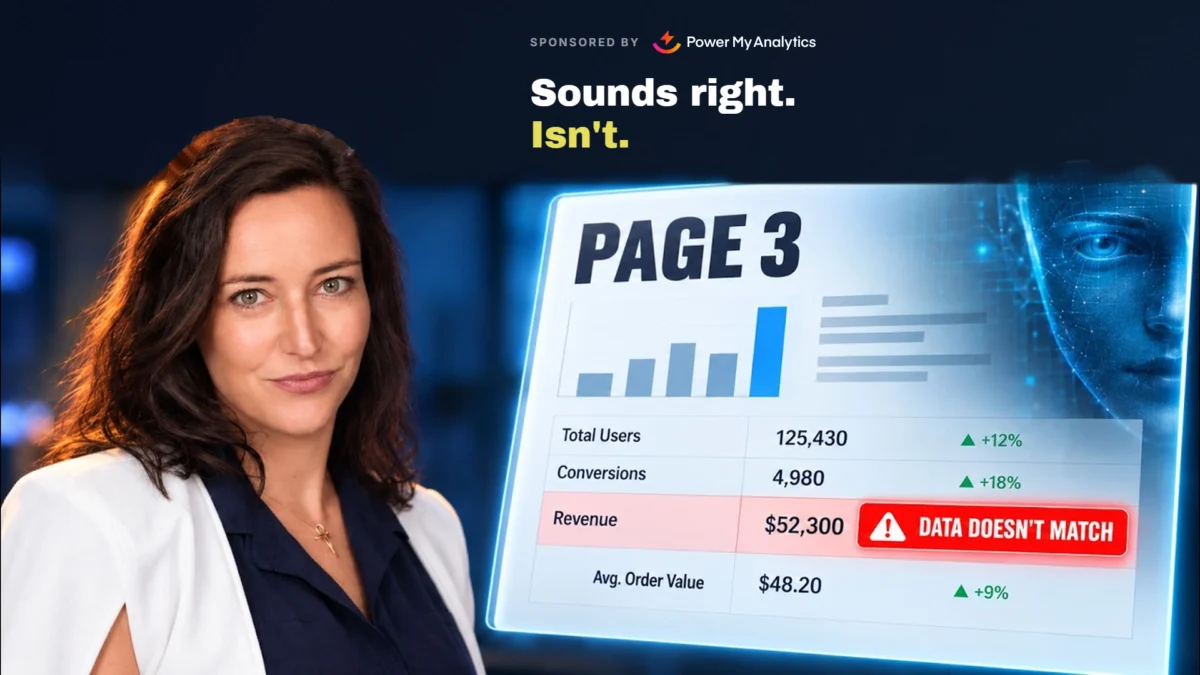
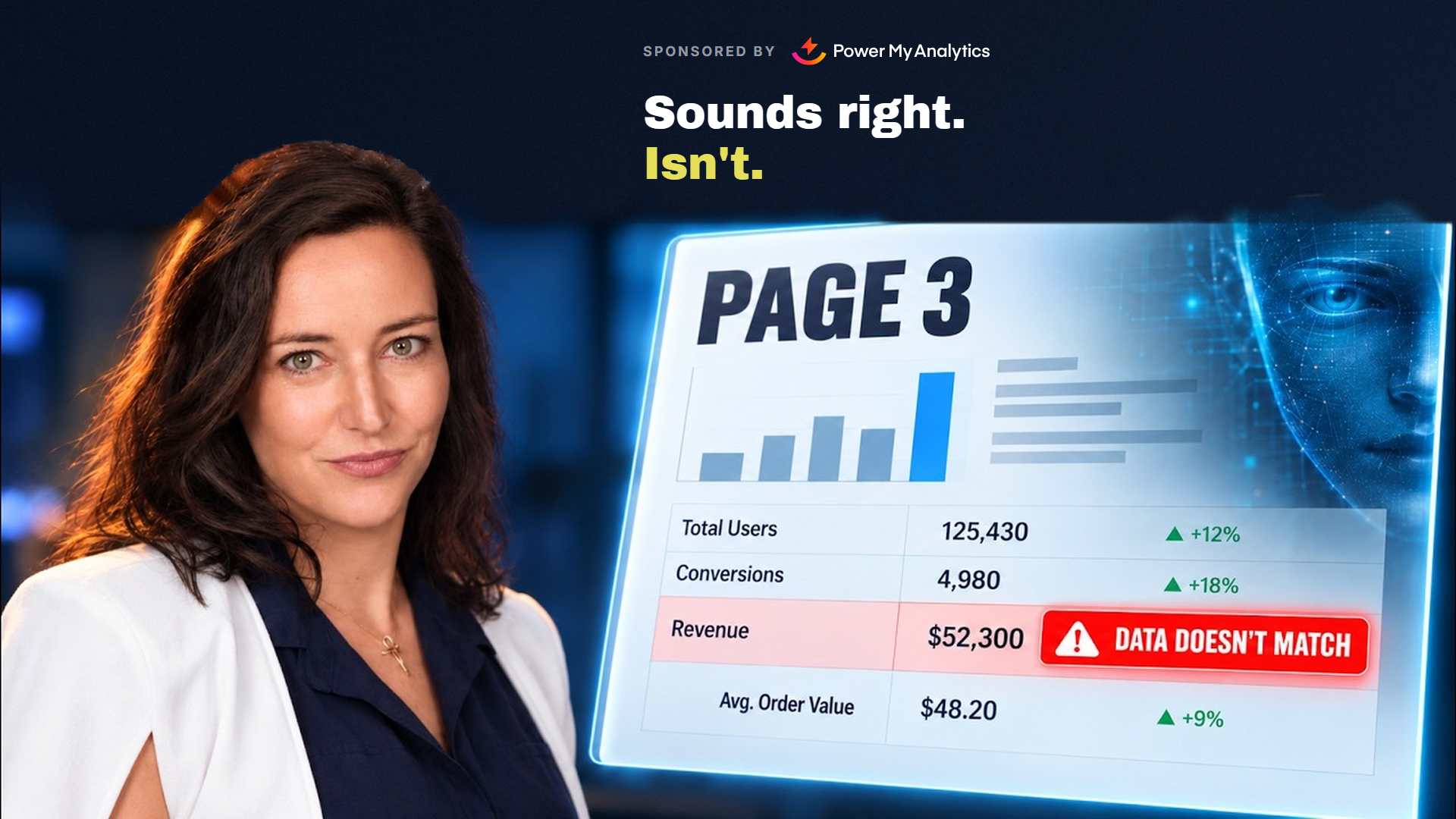
The marketing technology landscape has reached a critical inflection point where the rapid adoption of generative artificial intelligence has outpaced the structural integrity of the data it is intended to analyze. During a recent MeasureU Lunch and Learn session, industry experts highlighted a growing phenomenon in digital marketing: AI tools like ChatGPT and Claude providing highly confident, yet fundamentally incorrect, analyses of Google Analytics 4 (GA4) and advertising data. This discrepancy arises not from a failure of the AI’s processing capabilities, but from a lack of "business context"—a missing structural layer that bridges the gap between raw metrics and strategic objectives.
The Fragmented State of Modern Marketing Analytics
The current challenge in marketing analytics is frequently compared to the "1998 MapQuest Problem." In the late 1990s, travelers relied on printed multi-page directions to navigate. If several pages were lost, the traveler might possess the middle section of the route—knowing which exit to take or which highway to follow—without understanding the point of origin or the final destination.
In 2024, digital marketing teams face a digital equivalent of this fragmentation. While modern GPS has solved physical navigation, marketing data remains siloed across disparate platforms. A typical enterprise may use Facebook Ads for top-of-funnel awareness, Google Ads for intent-based search, GA4 for web behavior, and a proprietary CRM for sales tracking. Each of these platforms provides a "fragment of the middle." They offer real-time metrics, but they lack a unified narrative that connects a specific ad click to a long-term business outcome. When this fragmented data is fed into an AI, the system attempts to "navigate the whole trip" using only a single page of directions, leading to hallucinations or logically sound but factually bankrupt conclusions.
The Evolution of Data Infrastructure: From Lakes to Swamps
The shift toward AI-driven analysis was preceded by the era of the "data lake." For the past decade, the prevailing wisdom suggested that organizations should aggregate as much data as possible into centralized repositories. However, without rigorous governance, these data lakes have devolved into "data swamps."
In a data swamp, information is stored without hierarchy or standardized labeling. AI models, which operate as sophisticated pattern-recognition engines, treat all data points with equal weight unless instructed otherwise. For instance, an AI may not inherently recognize that a "revenue" metric in a Meta Ads dashboard represents an attributed estimate, whereas "revenue" in a CRM represents cleared bank transactions. Without a layer of logic to differentiate these values, the AI may synthesize them into a single, misleading figure.
Industry data supports the severity of this issue. According to recent surveys on data quality, nearly 60% of marketers admit they do not fully trust their data for decision-making. Furthermore, Gartner research indicates that poor data quality costs organizations an average of $12.9 million annually. As AI becomes the primary interface through which marketers interact with this data, the financial risks associated with "confident incorrectness" are expected to escalate.
Defining the Ontology Layer: The Missing Piece of the AI Puzzle
To rectify the disconnect between AI processing and marketing reality, experts at Power My Analytics propose the implementation of an "Ontology Layer." In information science, an ontology is a set of concepts and categories in a subject area or domain that shows their properties and the relations between them. In a marketing context, this means encoding business logic directly into the data structure before it reaches the AI.

The ontology layer acts as a translator. It ensures that the AI understands not just the "what" (the numbers), but the "why" (the business intent). There are three primary components to a functional marketing ontology:
- Standardized Data and Consistency: This involves ensuring that naming conventions are identical across all platforms. If a campaign is titled "Summer_Sale_2024" in Google Ads but "SS-24-Promo" in the CRM, the AI must be told they are the same entity.
- Structural Hierarchy: Not all metrics are created equal. An ontology layer defines which metrics are primary KPIs (such as net profit) and which are secondary signals (such as impressions or click-through rates).
- Business Context and Benchmarks: This layer includes qualitative information, such as brand goals, audience definitions, and historical performance benchmarks.
Practical Applications and Case Studies in Business Logic
During the MeasureU session, Antoinette “Tony” Scott, Head of Sales and Marketing at Power My Analytics, and CEO Morgan Jones provided several real-world examples of how business context alters AI outcomes.
The Profitability vs. Volume Dilemma
In one instance, an AI was tasked with analyzing a pricing change for a retail product. The AI initially concluded that the price increase was a failure because unit sales had decreased. However, once the "business context"—specifically the Cost of Goods Sold (COGS) and the primary objective of profit maximization—was introduced via an ontology layer, the AI reversed its recommendation. It identified that while unit volume had dropped, total profit had significantly increased, leading the AI to suggest further price testing to find the optimal ceiling.
The "Skid Steer" Categorization Problem
Data integrity is often compromised by human error in manual entry systems, such as CRMs. Scott noted a case in the tool rental industry where manual entries for "skid steer" loaders were frequently misspelled as "skid marks" or other variations. An ontology layer allows for the creation of a mapping table that groups these variations under a single, correct category. By cleaning the data at the structural level, the AI can provide accurate inventory and demand forecasts that would otherwise be skewed by "garbage" data.

Campaign Goal Alignment
A common pitfall occurs when AI evaluates a brand awareness campaign based on conversion metrics. Without context, the AI might recommend pausing a high-performing awareness ad because its direct return on ad spend (ROAS) is low. An ontology layer tags campaigns by their specific objectives—awareness, consideration, or conversion—allowing the AI to apply the correct evaluative framework to each.
The Role of the Marketing Analyst in the Age of Automation
A prevailing narrative in the technology sector suggests that AI will render data analysts obsolete. However, the emergence of the ontology layer suggests the opposite. The role of the analyst is shifting from "data puller" to "infrastructure architect."
While AI can "drive the car" by performing rapid calculations and generating reports, humans must still "build the road." This involves defining the parameters of the ontology, auditing the data for biases, and ensuring that the AI’s objectives remain aligned with the organization’s shifting priorities. The technical expertise required to structure data for AI consumption is becoming one of the most valuable skill sets in the marketing industry.
Future Implications: From Read-Only to Write-Access AI
The urgency of building a robust data foundation is underscored by the impending shift toward "write-access" AI. Currently, most marketing AI is used for "read-only" purposes—analyzing past performance and generating reports. The next evolution involves AI tools with the authority to make real-time changes to active campaigns.

If an AI is granted the power to adjust budgets or pause ads without a complete understanding of the business context, the potential for catastrophic error increases. For example, an AI might pause a vital lead-generation campaign during a temporary tracking glitch because it perceives a "drop" in performance that doesn’t exist in reality. Establishing an ontology layer is not merely about better reporting; it is a necessary safety protocol for the future of automated marketing execution.
Conclusion: Navigating the Path to Success
As organizations transition away from legacy analytics and toward AI-integrated workflows, the focus must shift from the quantity of data to the quality of the logic governing that data. The MeasureU session concluded with a clear directive for marketing leaders: audit the "context gaps" in current dashboards.
The transition from GA4’s raw event tracking to a sophisticated, AI-ready data ecosystem requires a deliberate investment in the "missing layer." By ensuring that AI has access to all "six pages" of the business map—including origin, destination, and the rules of the road—companies can move past the era of digital fragmentation and toward a future of data-driven growth. The destination is no longer just a plausible-sounding report, but a verified, strategic advantage.


 Ammar Sabilarrohman

 Pevita Pearce