Nana Wu
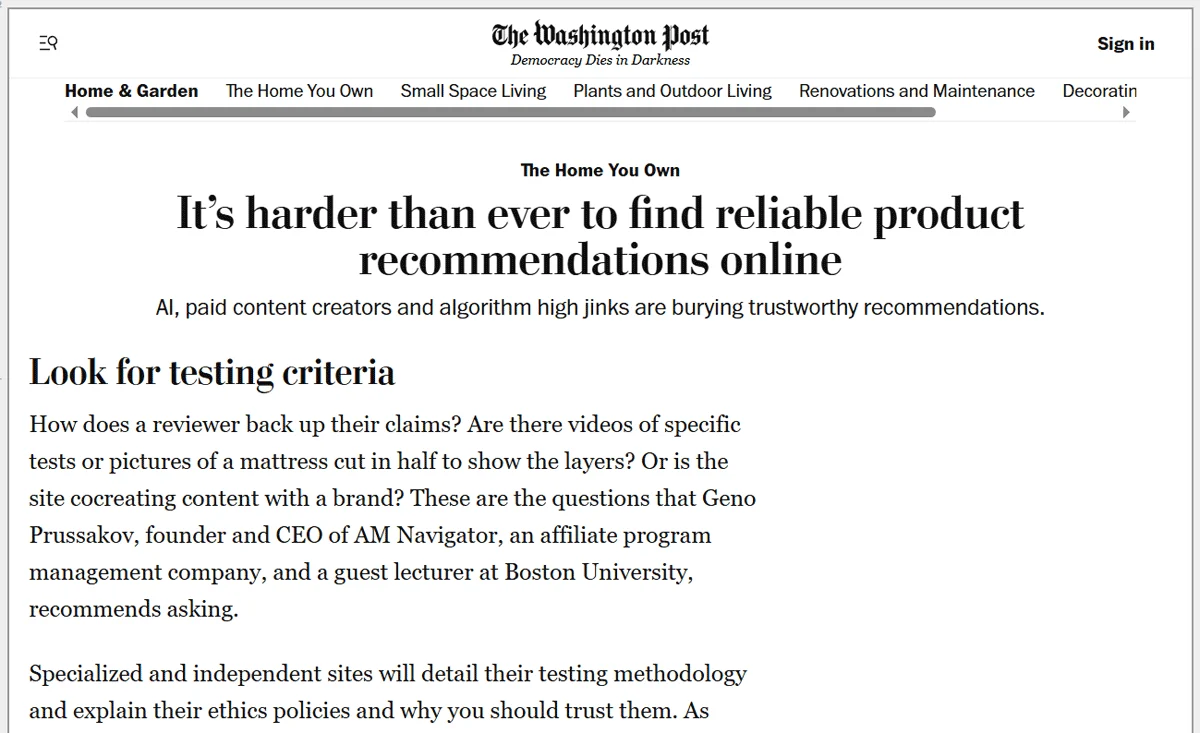
The landscape of digital consumerism underwent a significant transformation in early 2025 as major media outlets faced increasing scrutiny over the monetization of their editorial authority. On January 13, 2025, The Washington Post published an investigative piece detailing the mechanisms behind online product "roundups" and recommendation lists, a staple of modern digital journalism. This report highlighted a growing tension between traditional editorial integrity and the financial imperatives of affiliate marketing. As legacy media companies transition from advertising-dependent models to commerce-driven revenue streams, the distinction between objective product testing and paid placement has become increasingly opaque for the average consumer.
The Shift Toward Commerce Journalism
For over a decade, the media industry has grappled with the decline of traditional print and display advertising. In response, publishers have pivoted toward "commerce content"—articles designed specifically to drive sales through affiliate links. When a reader clicks a link in a "Best Vacuum Cleaners of 2025" list and makes a purchase, the publisher receives a percentage of the sale. This model, once the domain of niche review sites, is now a primary revenue driver for global entities such as The New York Times (via Wirecutter), Hearst, and Dotdash Meredith.
The monetization of search engine authority has become a cornerstone of this strategy. Legacy brands leverage their high domain authority to rank at the top of Google search results for lucrative "best of" keywords. However, this practice raises fundamental questions about the reliability of recommendations when the publisher has a direct financial stake in the transaction. Industry experts, including Geno Prussakov of AM Navigator, have noted that while many large media houses maintain rigorous testing standards, the influence of financial arrangements cannot be entirely discounted.
Chronology of the Media Monetization Evolution
The transition from objective reporting to affiliate-driven recommendations did not happen overnight. The following timeline illustrates the progression of this industry shift:
- 2010–2015: Niche affiliate sites dominate the "product review" space. Major media outlets primarily rely on banner ads and sponsored content.
- 2016: The New York Times acquires Wirecutter for approximately $30 million, signaling to the industry that affiliate revenue is a viable and prestigious business model.
- 2018–2020: The "Pivot to Commerce" accelerates as Google’s algorithms begin to favor established media brands in product-related searches. Major publishers establish dedicated "commerce teams" separate from their traditional newsrooms.
- 2021–2023: The rise of "Experience, Expertise, Authoritativeness, and Trustworthiness" (E-E-A-T) guidelines from search engines forces publishers to invest in physical testing labs to maintain their rankings.
- January 2025: The Washington Post’s report brings mainstream attention to the potential conflicts of interest in these recommendation lists, sparking a broader conversation about consumer transparency.
The Mechanics of Modern Product Testing
To maintain credibility and satisfy search engine requirements for "originality," big media players have standardized their approach to product reviews. Most high-tier publishers now employ a four-pillar strategy to validate their recommendations:
- Dedicated Testing Facilities: Many outlets have invested in physical laboratories where products are subjected to standardized stress tests, performance measurements, and comparative analysis.
- Subject Matter Experts (SMEs): Rather than general assignment reporters, publishers hire specialists—such as former engineers, chefs, or professional photographers—to evaluate products within their specific fields of expertise.
- Aggregation of Consumer Sentiment: Editorial teams often supplement their own findings with data from thousands of verified purchaser reviews to identify long-term durability issues that a short-term lab test might miss.
- Editorial Transparency: Reputable outlets typically include a disclosure stating that they may earn a commission from purchases made through their links, theoretically separating the "church" of editorial selection from the "state" of business operations.
The Influence of Financial Arrangements
Despite the rigorous testing protocols, the commercial reality of affiliate marketing introduces variables that can skew rankings. In the affiliate ecosystem, not all partnerships are created equal. Several financial factors can influence which product ends up as the "Top Pick":
- Commission Rates: Some manufacturers offer higher percentage payouts than others. A 10% commission on a $500 item is significantly more attractive to a publisher’s bottom line than a 2% commission on a similar product.
- Placement Fees: Also known as "tenancy fees," some brands pay flat sums to be featured prominently in a roundup, regardless of their performance in tests.
- Earnings Per Click (EPC) Guarantees: Large publishers often prioritize products that have a proven track record of high conversion rates, ensuring that every click generated by their content maximizes revenue.
- Data-Driven Sorting: Algorithms on the backend of large media sites may automatically reorder product lists based on real-time sales data, effectively promoting the most "profitable" items to the top of the page.
Supporting Data: The Growth of the Affiliate Industry
The scale of this issue is reflected in the explosive growth of the affiliate marketing sector. According to marketing industry data, spending on affiliate marketing in the United States alone reached an estimated $14.3 billion in 2023, with projections suggesting a continued upward trajectory.

A survey of digital publishers conducted in late 2024 revealed that over 60% of major media outlets now derive at least 25% of their total digital revenue from affiliate-related content. Furthermore, search engine analysis shows that for "buying intent" keywords (e.g., "best laptop for students"), legacy media brands occupy nearly 80% of the first-page results, effectively crowding out smaller, independent review sites that may offer more unbiased perspectives.
Consumer Protection and Due Diligence
As the line between editorial content and advertising continues to blur, consumers must adopt a more analytical approach to online shopping. Industry analysts suggest four critical steps for verifying the integrity of a product recommendation:
- Analyze Disclosure Statements: Look beyond the standard affiliate disclaimer. Check if the article specifies exactly how the products were tested and whether the brand provided the item for free.
- Cross-Reference Multiple Sources: Never rely on a single "Best of" list. Compare the top picks from three or four different major outlets. If one product appears at the top of every list despite mediocre consumer reviews elsewhere, it may be the result of a coordinated marketing push.
- Evaluate the Testing Methodology: A trustworthy review will detail the specific metrics used for evaluation. If a "review" consists only of a product description and a list of features found on the manufacturer’s website, it is likely a "thin" content piece designed solely for SEO.
- Check for "Hands-On" Evidence: Look for original photography or videos showing the reviewer actually using the product. The absence of original imagery is a red flag that the outlet may not have physically handled the item.
Official Responses and Industry Reactions
Following the increased scrutiny of commerce content, several media advocacy groups have called for clearer labeling. The Federal Trade Commission (FTC) in the United States has updated its "Guides Concerning the Use of Endorsements and Testimonials in Advertising" to address the nuances of affiliate marketing. These guidelines stipulate that disclosures must be "clear and conspicuous," appearing in a location that is difficult for the consumer to miss.
In response to the Washington Post report, spokespersons for several major publishing houses defended their practices. A common defense is the "Editorial Independence Policy," which dictates that commerce teams and editorial teams operate in silos. They argue that the financial side of the business only seeks partnerships for products that the editorial side has already vetted and approved. However, skeptics point out that the high cost of laboratory testing often necessitates focusing only on products from brands that are known to have robust affiliate programs, creating a "selection bias" from the outset.
Broader Impact and Future Implications
The debate over the monetization of media authority is part of a larger conversation regarding the future of the internet. As AI-generated content begins to flood search results, the "human-vetted" recommendations of legacy media brands have become more valuable than ever. Yet, if these brands sacrifice their integrity for short-term affiliate gains, they risk permanent damage to the very authority they are trying to monetize.
For the affiliate marketing industry, the trend is moving toward "quality over quantity." Brands are increasingly looking for "authentic influencers" and trusted media partners who can provide genuine value to the consumer. For the media outlets, the challenge will be maintaining a balance where commerce supports journalism without dictating its conclusions.
As we move further into 2025, the relationship between publishers, advertisers, and consumers will likely be defined by a demand for greater transparency. The era of the "blindly trusted" recommendation list is ending, replaced by a more skeptical, data-driven consumer base that values evidence-based reporting over brand-name authority alone. The survival of legacy media in the digital age may depend not just on their ability to generate revenue, but on their ability to prove that their recommendations are worth the price of the click.


 Muslim

 Nila Kartika Wati