Lina Hope
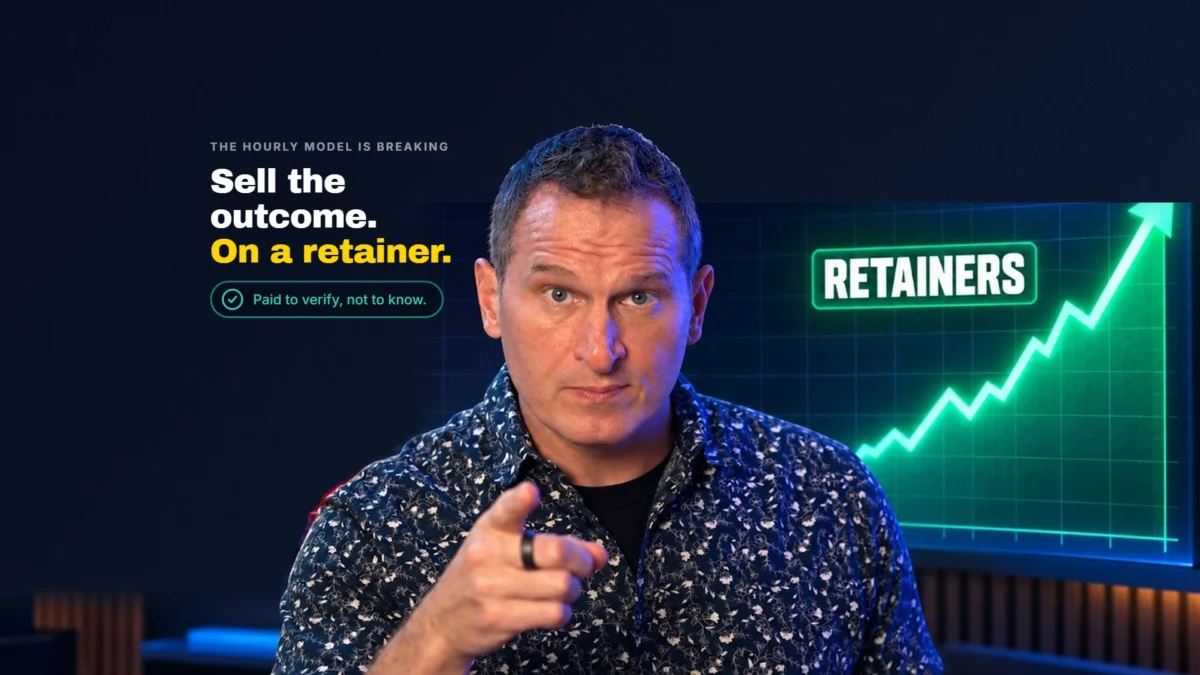
The rapid integration of generative artificial intelligence into professional workflows is precipitating a fundamental shift in the economic structure of knowledge work. As professionals utilize AI to compress complex tasks—transforming week-long projects into afternoon deliverables—the traditional hourly billing model is facing a crisis of obsolescence. This transition marks the beginning of a new era where value is derived not from the time spent on a task, but from the outcomes achieved and the strategic oversight provided. Industry analysts suggest that we are currently within a critical "arbitrage window," where the gap between AI capability and business adoption presents a significant opportunity for a new class of professional: the Fractional AI Officer.
The Historical Context of Economic Disruption
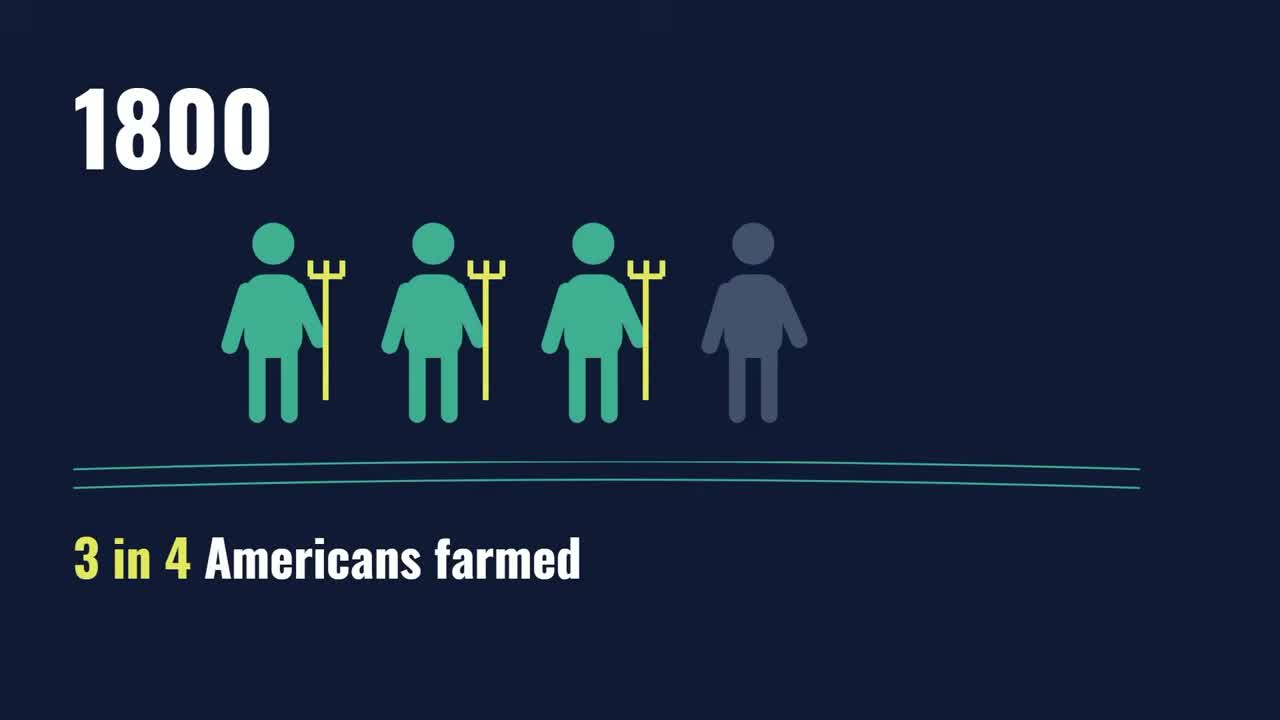
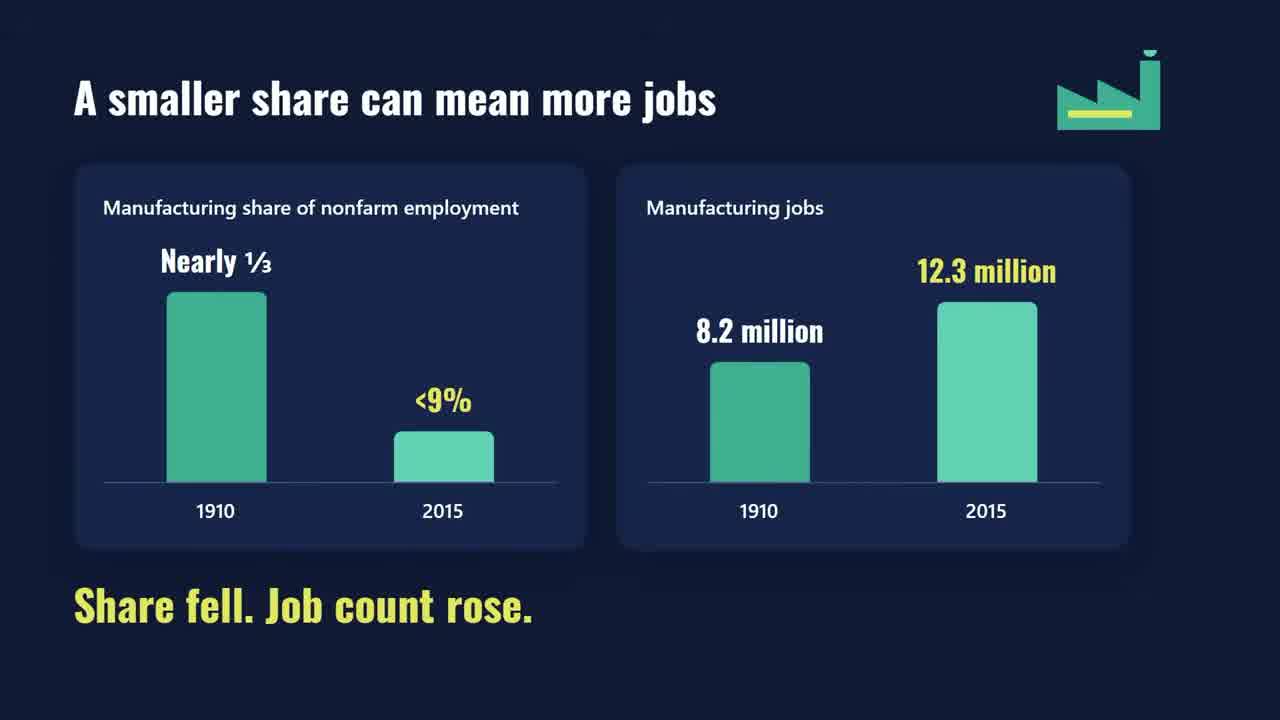
To understand the current shift in the information economy, one must examine the precedents set by the agricultural and industrial revolutions. In the early 19th century, approximately 75% of the American workforce was employed in agriculture. By the 21st century, that figure had plummeted to less than 1%, yet food production reached record highs due to mechanization and technological advancement. Similarly, the manufacturing sector saw a dramatic shift in the 20th century. In 1910, nearly one-third of non-farm workers were engaged in manufacturing. By 2015, that share fell below 9%, even as the total number of manufacturing jobs rose from 8.2 million to over 12 million.

The current "Intelligence Revolution" mirrors these historical patterns but operates on a significantly accelerated timeline. While the transition from agrarian to industrial economies took generations, and the shift from manufacturing to information took decades, the AI-driven transformation of the knowledge economy is unfolding over a span of a few years. This acceleration places immense pressure on traditional business models that rely on the commoditization of time.
The Value-Time Paradox in the AI Era
The core challenge facing modern consultants and agencies is the "Value-Time Paradox." In a traditional service model, expertise is billed by the hour, creating a direct correlation between effort and revenue. However, AI tools now allow for the automation of deliverables that previously required intensive manual labor. When a professional uses AI to increase efficiency by five or ten times, an hourly pricing model effectively penalizes the worker for their proficiency.
Market observations indicate that while clients are increasingly unwilling to pay for "effort," their demand for speed, accuracy, and specific outcomes remains high. This shift necessitates a move away from project-based hourly billing toward a retainer-based model focused on ongoing accountability and strategic implementation. The value proposition is no longer "knowing things," but rather "verifying results" and managing the complex systems that generate them.
Analyzing the Small Business AI Adoption Gap
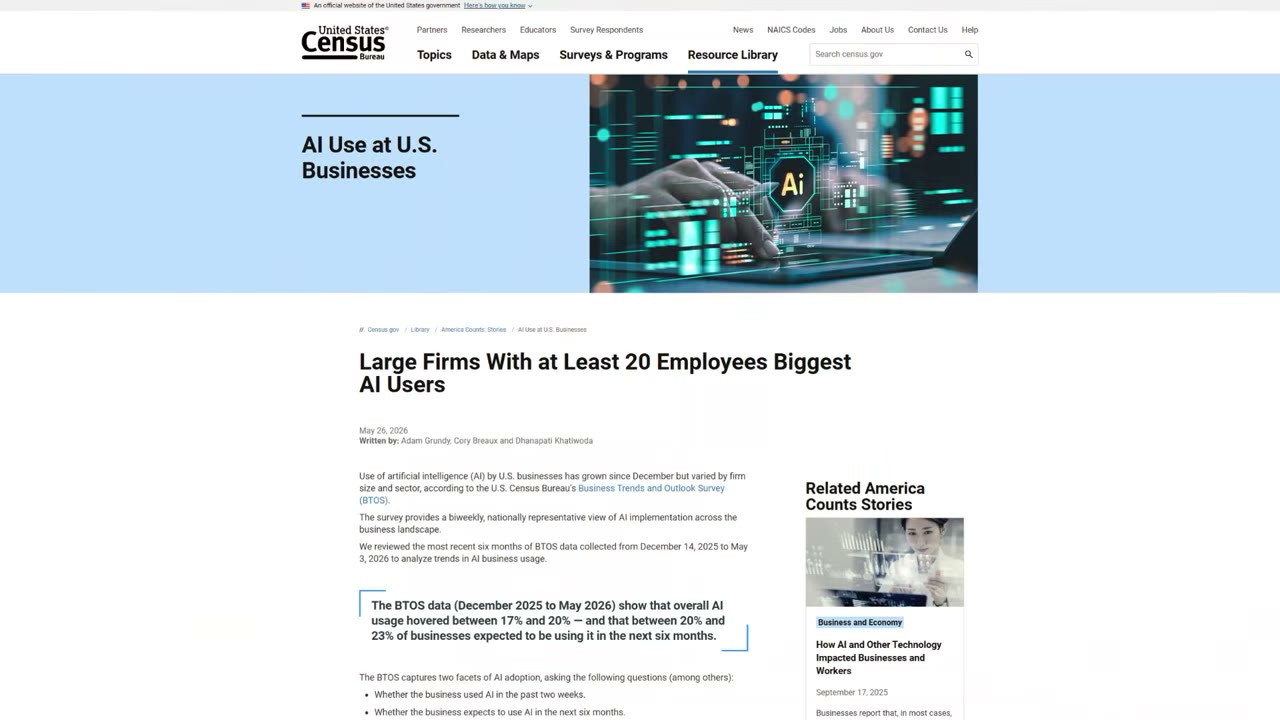
Data from the U.S. Census Bureau highlights a significant disparity in AI adoption across different business scales. Currently, approximately 37% of firms with more than 250 employees have integrated AI into their operations. In contrast, fewer than 20% of small businesses—those with four or fewer employees—have adopted the technology. This creates what economists call an "arbitrage window."
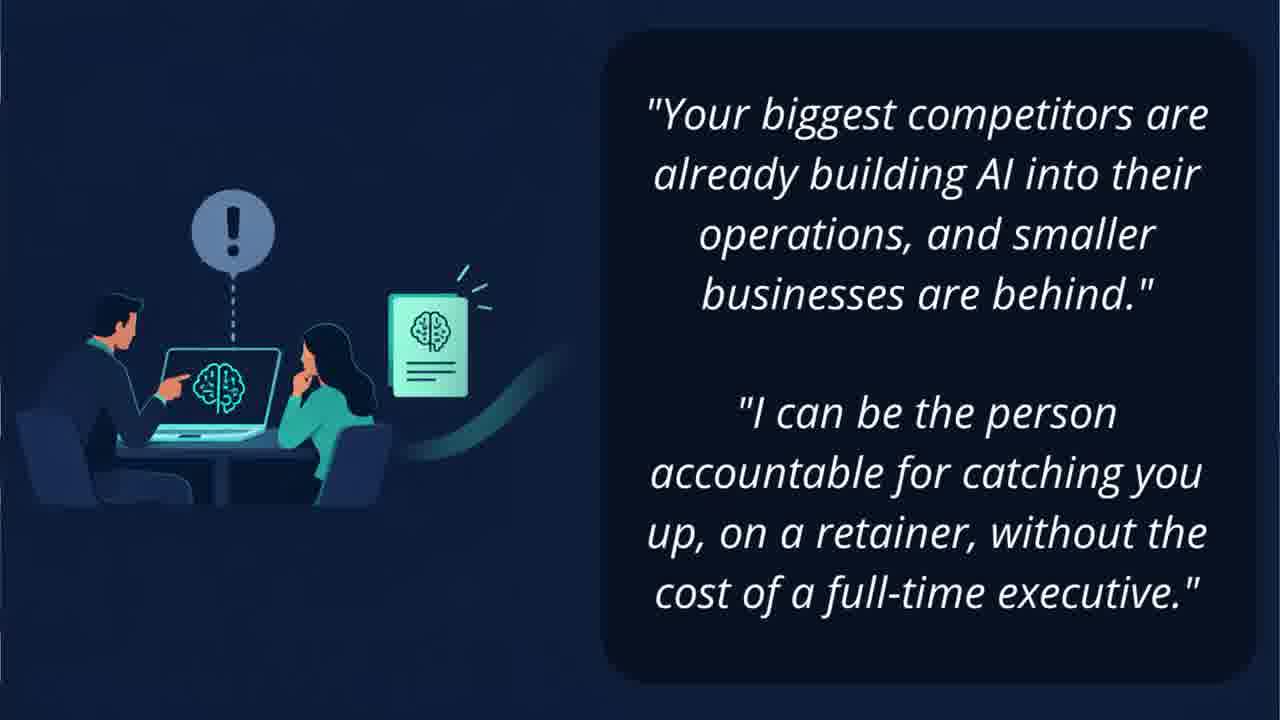
Large corporations have the capital to hire full-time Chief AI Officers and dedicated data science teams. Small to medium-sized enterprises (SMEs) recognize the competitive necessity of AI but lack the internal expertise to implement it. They are often overwhelmed by the sheer volume of new tools and the technical requirements of integration. This gap represents the primary market for the AI consultant and, more specifically, the Fractional AI Officer.
Defining the Fractional AI Officer Role
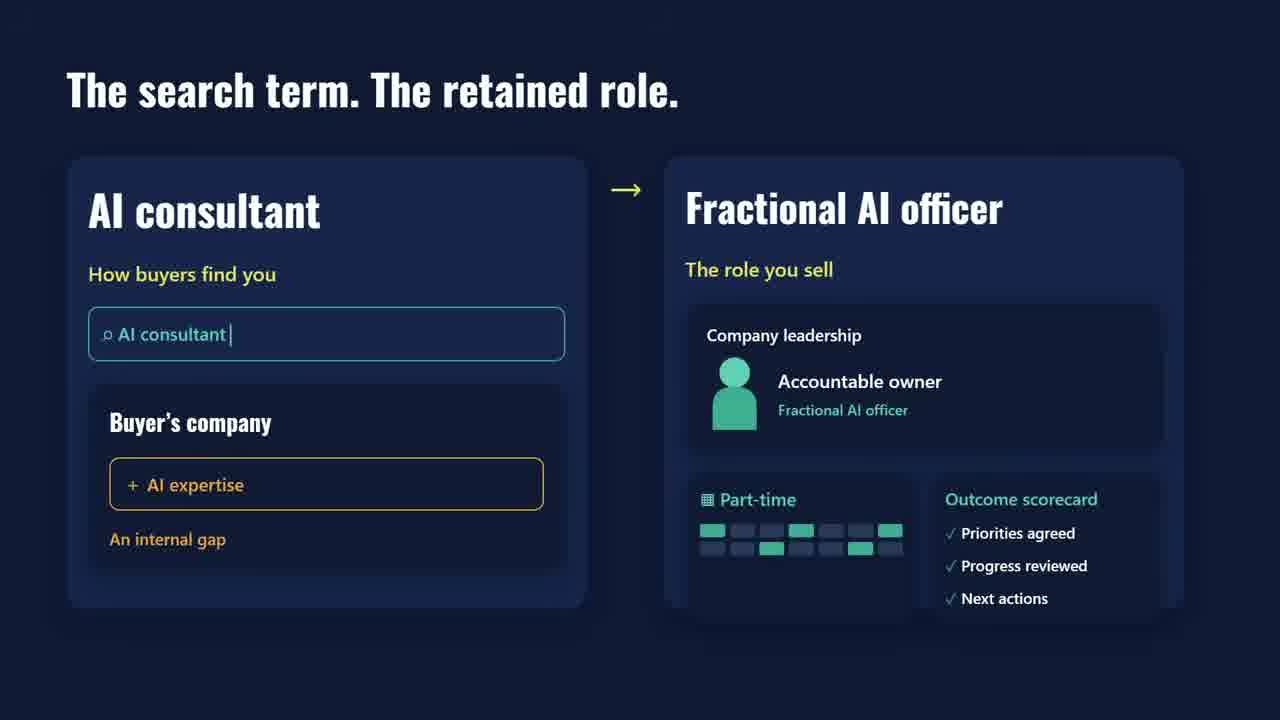
While "AI Consultant" is a common search term used by businesses looking for external help, the emerging retained role is more accurately described as a "Fractional AI Officer." This distinction is critical for the long-term sustainability of the service provider’s business model.
The Consultant vs. The Fractional Officer
A consultant is typically hired for a discrete project: a one-time implementation or a specific training session. Once the project is delivered, the engagement ends. Conversely, a Fractional AI Officer functions as a part-time executive. They are responsible for the company’s ongoing AI strategy, ensuring that the organization remains current with technological shifts, maintains data security, and continuously optimizes its workflows.
Key Responsibilities of the Role
The Fractional AI Officer is expected to manage several critical areas:
- Tool Selection and Auditing: Identifying which of the thousands of emerging AI tools are relevant to the specific business needs.
- Workflow Integration: Connecting AI tools to existing business processes, such as CRMs, marketing stacks, and operational databases.
- Risk Management: Overseeing the ethical use of AI, data privacy, and the verification of AI-generated outputs to prevent "hallucinations" or inaccuracies.
- Accountability: Providing a consistent point of contact for the leadership team to ensure that AI investments are yielding a measurable return on investment (ROI).
Practical Implementation: Case Studies in AI Consulting
The transition to an AI-focused retained model is already being seen across various sectors. Professionals are moving beyond simple "prompt engineering" to complex system architecture.

CRM and Automation
Consultants are increasingly being retained to build "AI-powered business operating systems." For example, using platforms like GoHighLevel or Salesforce, consultants can implement automated lead nurturing systems that use AI to qualify prospects, schedule appointments, and update records without human intervention. The value here is not in the hours spent setting up the software, but in the permanent reduction of overhead for the client.
Data Visualization and Real-Time Dashboards
The ability to synthesize vast amounts of company data into actionable insights is another high-value service. Fractional AI Officers are building custom dashboards that use API integrations to pull data from multiple sources, providing business owners with real-time visibility into their operations. This moves the consultant from a "service provider" to a "strategic partner."
Bespoke API Integrations
For more specialized needs, the role involves connecting disparate software through custom API scripts. This might include automating the flow of information between a front-end customer interface and a back-end fulfillment system. By leveraging AI to write and debug these scripts, the consultant can deliver complex technical solutions that were previously the domain of high-cost development firms.
Strategic Repositioning for Professionals and Agencies
For existing service providers, the path to becoming an AI-focused entity involves a deliberate repositioning strategy. Industry experts recommend a phased approach to this transition.
Step 1: Internal Audit
Professionals must first document how they are currently using AI to improve their own internal efficiencies. Identifying the specific tools and workflows that have yielded the most significant time savings provides the "proof of concept" necessary to sell these services to others.
Step 2: Market Education
Because many small business owners do not yet have the vocabulary to ask for a "Fractional AI Officer," providers must bridge the gap through education. This involves highlighting the competitive risks of non-adoption and demonstrating the tangible outcomes of AI implementation within the client’s specific industry (e.g., AI for law firms, AI for real estate, etc.).
Step 3: Transitioning to Retainers
The final stage is the structural change of the service agreement. Instead of quoting for a project, the provider offers a monthly retainer that covers ongoing optimization and accountability. This stabilizes the provider’s income while ensuring the client has continuous access to expertise in a rapidly changing field.
Broader Economic Impact and Future Outlook
The shift toward AI-mediated knowledge work is likely to have profound implications for the global labor market. As "superintelligence" becomes a commodity accessible to anyone with an internet connection, the premium on human labor will shift toward judgment, ethics, and high-level strategy.
The compression of the information economy suggests that the "standard" 40-hour workweek may become increasingly decoupled from productivity. In this new landscape, the most successful professionals will be those who can act as the "verifiers" of AI output. They will serve as the essential human layer between raw technological capability and practical business application.
As we move toward 2025 and beyond, the "arbitrage window" will eventually close as AI becomes a standard component of all business software. However, for the next several years, those who can successfully position themselves as the bridge between current business operations and future AI possibilities will likely define the new elite of the professional services industry. The transition from selling hours to selling outcomes is not merely a pricing strategy; it is a necessary evolution for survival in the age of artificial intelligence.

 Asep Darmawan

 rifanmuazin