Sagoh
The landscape of digital analytics has undergone a significant transformation with the introduction of automated reporting tools designed to bridge the gap between data collection and actionable insight. In a recent update to its core functionality, the heatmap and user behavior platform has launched "Scheduled Exports," a feature that allows users to automate the delivery of critical data files directly to their email inboxes. This development represents a strategic shift toward asynchronous reporting, enabling digital marketers, user experience (UX) designers, and product managers to maintain a consistent pulse on website performance without the need for manual data extraction.
The new feature addresses a common friction point in the conversion rate optimization (CRO) workflow: the time-consuming process of logging into a platform, navigating to specific reports, and manually exporting files for stakeholder review. By automating this cycle, the platform ensures that data is consistently distributed to the right people at the right time, fostering a culture of data-driven decision-making across organizations.
Technical Overview and Functional Mechanics
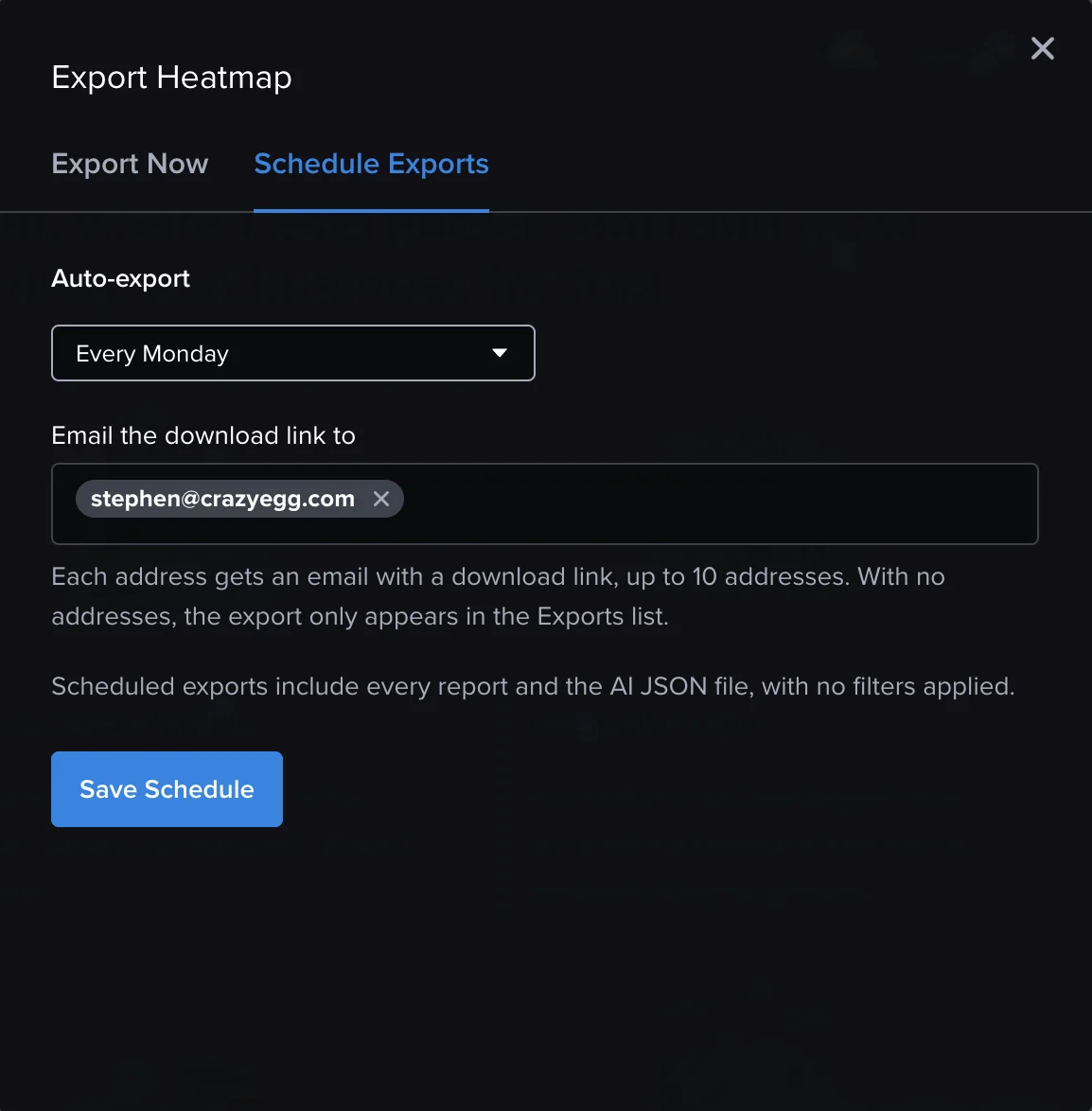
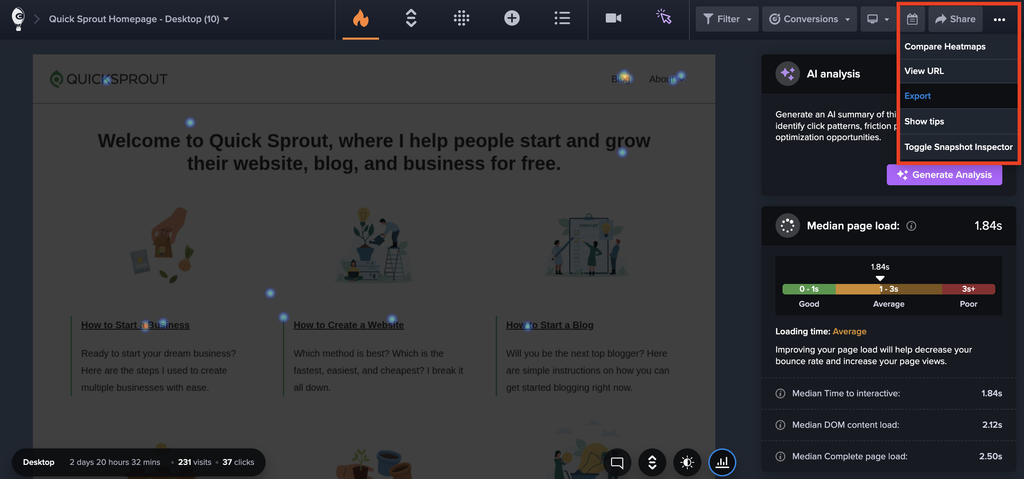
The Scheduled Exports feature is integrated directly into the existing heatmap interface, maintaining a seamless user experience. To access the tool, users navigate to the dropdown menu located in the top-right corner of any active heatmap and select the “Export” option. This action opens a specialized interface featuring a dedicated “Schedule Exports” tab. Within this tab, users can configure the frequency and format of their automated reports.
One of the most notable aspects of this update is the comprehensive nature of the supported file formats. Recognizing that different departments require data in different structures, the platform includes three primary export types:
- Visual Heatmap Screenshots: High-resolution images that provide an immediate visual representation of user engagement, including click maps, scroll maps, and move maps. These are primarily used for executive summaries and design reviews.
- List Reports (CSV): Tabular data files that allow for deep-dive analysis in spreadsheet software like Microsoft Excel or Google Sheets. This format is essential for data analysts who need to perform quantitative comparisons or integrate heatmap data with other performance metrics.
- AI Export (JSON): A machine-readable format that captures the structured data processed by the platform’s artificial intelligence. This is particularly valuable for technical teams and data scientists who wish to feed heatmap insights into custom internal dashboards or machine learning models to predict user behavior patterns.
The scheduling engine allows for multiple frequencies, typically ranging from daily updates for high-traffic sites undergoing rapid testing to weekly or monthly summaries for long-term trend monitoring. This flexibility ensures that the volume of data remains manageable and relevant to the specific goals of the project.
The Evolution of Heatmapping and User Behavior Analytics
To understand the significance of this update, one must consider the broader history of heatmapping technology. Heatmaps first gained prominence in the early 2000s as a way to visualize the "eye-tracking" and "click-tracking" patterns of website visitors. Early iterations were often static and required significant manual configuration. As the web evolved into a more dynamic environment, heatmaps had to adapt to track single-page applications (SPAs), responsive designs, and mobile-first interfaces.
The transition from manual to automated reporting is the latest phase in this evolution. In the early days of CRO, practitioners would spend hours compiling "before and after" screenshots to prove the efficacy of a design change. Today, the focus has shifted from mere visualization to integration. The inclusion of JSON exports in the new scheduling feature highlights how modern analytics tools are no longer standalone silos; they are now part of an interconnected ecosystem where data flows between platforms via APIs and automated exports.
Supporting Data and Market Trends
The push for automation in the analytics sector is backed by compelling industry data. According to recent surveys of digital marketing professionals, the average analyst spends upwards of 30% of their workweek on data collection and organization rather than actual analysis. Tools that automate these repetitive tasks are increasingly prioritized in enterprise budgets.
Furthermore, the rise of "Remote-First" and "Async-First" work cultures has increased the demand for automated "push" reporting. In a distributed environment, having a weekly heatmap report arrive in a shared inbox or a Slack-integrated email address ensures that the entire team stays informed without requiring synchronized meetings. Market research suggests that organizations that utilize automated reporting are 2.5 times more likely to identify and fix critical UX bugs within 24 hours compared to those relying on manual audits.
Strategic Implications for Stakeholders
The implementation of Scheduled Exports carries different implications for various roles within a modern business:
For Product Managers:
Product managers are often tasked with balancing feature requests with user needs. Automated heatmap exports provide a continuous stream of evidence regarding how new features are being received. If a "Daily Export" shows a sudden drop in engagement on a critical CTA (Call to Action) after a deployment, the product team can react immediately, minimizing potential revenue loss.
For UX/UI Designers:
Designers rely on visual evidence to justify aesthetic and functional choices. The ability to receive high-resolution images of user interactions on a weekly basis allows for an iterative design process. By reviewing these screenshots over time, designers can observe how seasonal changes or marketing campaigns affect user navigation patterns.
For Data Scientists and Developers:
The AI-driven JSON export is perhaps the most forward-looking component of this update. As companies move toward building "Digital Twins" of their customer journeys, the ability to programmatically ingest heatmap data becomes vital. This structured data can be used to train internal models that predict where a user is likely to click next, allowing for real-time website personalization.
Analysis of the "Set and Forget" Reporting Model
While automation offers undeniable efficiency, industry experts caution against a "set and forget" mentality that can lead to data blindness. The value of the Scheduled Exports feature lies not just in the delivery of the data, but in the institutionalization of the review process.
A factual analysis of the workflow suggests that the most successful teams use these automated reports as "triggers" for deeper investigation. For instance, a monthly CSV export might reveal a slow, 5% decline in scroll depth on a landing page. While this might go unnoticed in a daily manual check, the longitudinal view provided by scheduled reporting makes the trend clear, prompting a comprehensive audit of the page’s content strategy.
Chronology of Feature Development
The rollout of Scheduled Exports follows a series of updates aimed at enhancing the platform’s utility for enterprise-level clients.
- Phase 1 (Q1-Q2): Expansion of AI-driven insights, which began categorizing user behavior automatically to identify "rage clicks" and "dead clicks."
- Phase 2 (Q3): Optimization of the export engine to handle larger datasets without compromising the speed of the web interface.
- Phase 3 (Current): The launch of the scheduling interface and the integration of multi-format support (Image, CSV, JSON).
This trajectory indicates a clear roadmap toward making the platform an indispensable part of the automated marketing stack.
Broader Impact on the Analytics Industry
The move by major heatmap providers to offer sophisticated scheduling reflects a maturing market. Competitors in the space, such as Hotjar and Mouseflow, have also been investing in automation, but the inclusion of AI-specific JSON exports in this latest update sets a new benchmark for technical depth.
As privacy regulations like GDPR and CCPA continue to evolve, the way data is exported and stored is also under scrutiny. The platform’s approach to sending these reports directly to verified user inboxes provides a layer of security, ensuring that sensitive behavioral data is handled within the organization’s existing communication infrastructure.
Conclusion and Future Outlook
The introduction of Scheduled Exports is more than a simple convenience feature; it is a structural enhancement that aligns with the modern need for speed, accuracy, and integration in digital business. By providing visual, tabular, and machine-readable data on a recurring basis, the platform empowers teams to move from reactive troubleshooting to proactive optimization.
Looking forward, the industry can expect further refinements in how this data is delivered. Future iterations may include conditional scheduling—where an export is only triggered if certain thresholds are met, such as a 20% spike in traffic or a significant drop in conversion rate. For now, the ability to automate the delivery of Heatmaps, List reports, and AI data marks a significant milestone in the democratization of web analytics, making high-level insights accessible to every member of the digital team.

 Suro Senen
 Raul Delapena Setiawan