Raul Delapena Setiawan
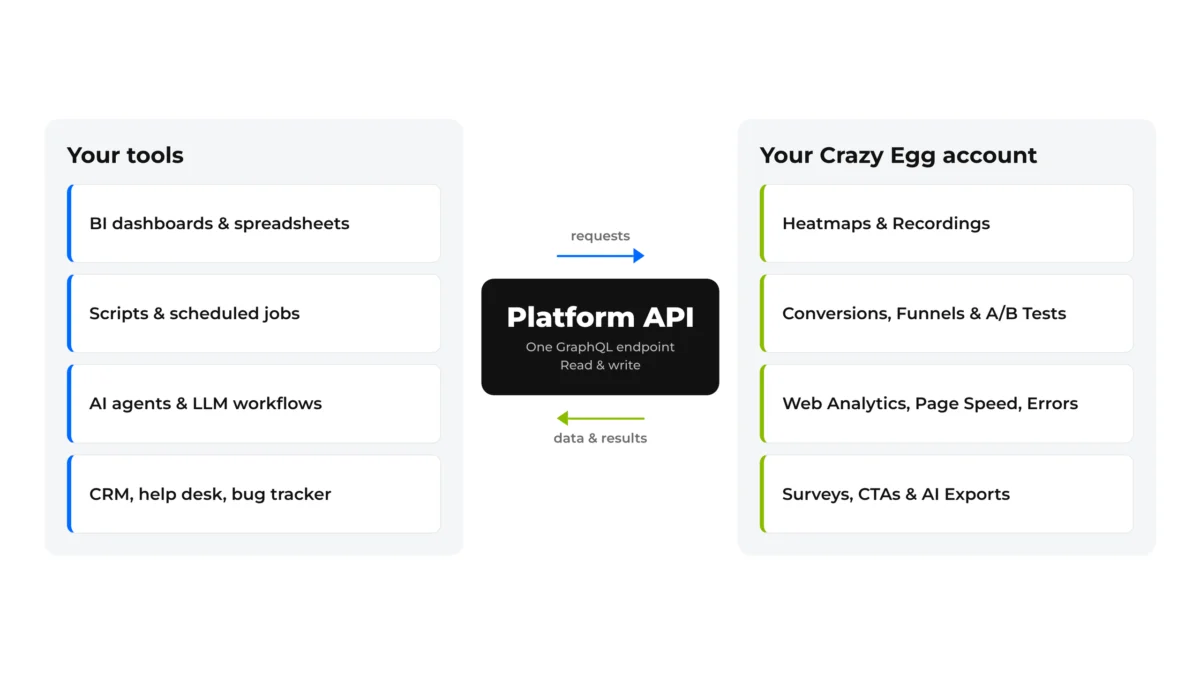
The digital analytics landscape underwent a significant shift on October 29, 2026, as Crazy Egg, a pioneer in heatmapping and conversion rate optimization (CRO) technology, officially announced the release of its Platform API. This new infrastructure is designed to bridge the gap between raw behavioral data and the diverse software ecosystems used by modern marketing, product, and engineering teams. Available to all subscribers on paid plans, the API represents a strategic pivot for the company, moving from a standalone visualization tool to an integrated data hub that facilitates the automated export of user insights directly into external reports and operational workflows.
By providing a programmatic interface to its core features, Crazy Egg is addressing a long-standing challenge in the MarTech industry: data fragmentation. Traditionally, growth teams had to manually export CSV files or toggle between browser tabs to correlate heatmaps and session recordings with broader business metrics. The Platform API eliminates these manual hurdles, allowing for the seamless transfer of data into business intelligence (BI) tools, customer relationship management (CRM) systems, and custom internal dashboards.
Technical Architecture and Core Capabilities
The Crazy Egg Platform API is built on a RESTful architecture, ensuring compatibility with a wide range of programming languages and development environments. The primary function of the API is to allow organizations to pull granular data points into the tools their teams already use, effectively automating the administrative tasks associated with conversion rate optimization.
Key functionalities enabled by the API include the programmatic retrieval of snapshot data, the management of user permissions across large organizations, and the synchronization of A/B test results with external data warehouses. For developers, the API provides a robust set of endpoints that can be used to trigger specific actions in Crazy Egg based on external events. For instance, a deployment of a new website feature via a CI/CD pipeline can now automatically trigger the creation of a new Crazy Egg snapshot to monitor the immediate impact on user behavior.
To support the rollout, Crazy Egg has launched a comprehensive technical documentation portal. This resource provides developers with the necessary authentication protocols, endpoint definitions, and code samples required to build custom integrations. The documentation emphasizes ease of use, aiming to reduce the "time to value" for organizations looking to leverage their behavioral data at scale.
Historical Context and the Evolution of Crazy Egg
To understand the significance of the Platform API, it is necessary to examine the trajectory of Crazy Egg since its inception. Founded by Hiten Shah and Neil Patel, Crazy Egg was among the first tools to popularize heatmaps, providing a visual representation of where users click, scroll, and spend time on a webpage. For over a decade, the platform focused on providing intuitive, visual-first insights that democratized web analytics for non-technical users.
However, as the "Modern Data Stack" emerged in the early 2020s, the requirements of enterprise clients shifted. Organizations began prioritizing interoperability, seeking tools that could "talk" to one another. The demand moved from isolated visual reports to integrated data streams that could power machine learning models and complex attribution frameworks. The launch of the Platform API in late 2026 marks the culmination of a multi-year development cycle aimed at transforming Crazy Egg from a visual diagnostic tool into a foundational component of the enterprise data pipeline.
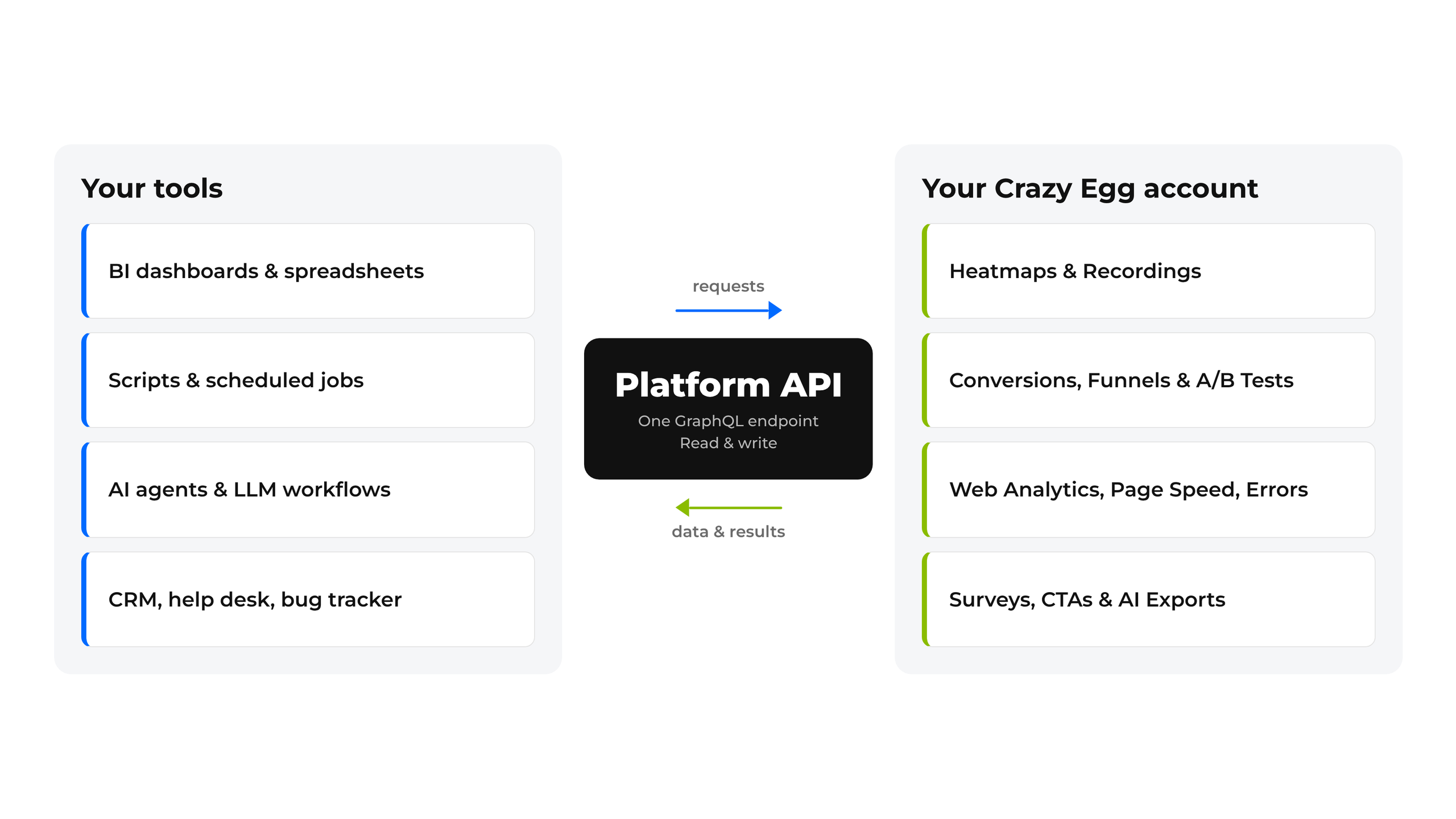
This transition follows a broader trend in the software-as-a-service (SaaS) industry where "platformization" has become the standard. By opening up its API to all paid tiers, Crazy Egg is positioning itself against competitors who often gate advanced integration features behind high-cost enterprise contracts.
Supporting Data and Industry Implications
The move toward automated data integration is supported by significant industry trends. According to recent market research, the average enterprise now utilizes over 90 different marketing technology tools. The resulting "data silos" are estimated to cost businesses billions in lost productivity and missed opportunities. A study by the MarTech Council recently highlighted that teams spending more than five hours a week on manual data entry or report consolidation see a 15% decrease in overall campaign ROI.
By automating these processes through an API, Crazy Egg users can reclaim significant portions of their workweek. Early adoption data suggests that companies utilizing the API for automated reporting have reduced their "insight-to-action" cycle by up to 40%. This efficiency is particularly critical in the high-stakes environment of e-commerce and SaaS, where the ability to react to user friction in real-time can result in substantial revenue gains.
Furthermore, the integration of heatmapping data into BI tools like Tableau, Looker, and Microsoft Power BI allows for a more holistic view of the customer journey. Instead of viewing "clicks" in a vacuum, data scientists can now overlay behavioral heatmaps with lifetime value (LTV) data or churn risk scores, leading to more sophisticated customer segmentation strategies.
Strategic Perspectives from Growth Leadership
Stephen Ngo, Director of Growth Marketing at Crazy Egg, has emphasized that the API is not merely a technical feature but a strategic enabler for growth teams. With a background in leading go-to-market strategies for B2B startups such as Nira, Paddle, and ProfitWell, Ngo has frequently advocated for the necessity of data transparency and workflow automation.
Under Ngo’s leadership, the development of the Platform API focused on real-world use cases. Internal reports suggest that the growth team at Crazy Egg viewed the API as a way to empower "citizen developers"—marketers and product managers who may not be full-stack engineers but possess the technical literacy to use tools like Zapier or Make to connect APIs.
"The goal is to make Crazy Egg data as portable as possible," a source close to the development team stated. "We recognize that our users don’t live inside our dashboard 24/7. They live in Slack, they live in Jira, and they live in their own custom reporting tools. The Platform API is about meeting the user where they are."
Analysis of Broader Market Impact
The release of the Crazy Egg Platform API is likely to trigger a response from other players in the session replay and heatmap space. Competitors such as Hotjar, Microsoft Clarity, and FullStory have also been expanding their integration capabilities, but Crazy Egg’s decision to include API access across all paid plans sets a new benchmark for accessibility.

From a market perspective, this move signals a maturation of the CRO industry. Behavioral data is no longer seen as a "nice-to-have" visual aid; it is now recognized as a critical data input for the broader business. As artificial intelligence and predictive analytics become more prevalent, the demand for clean, accessible behavioral data will only increase. APIs are the essential "pipes" through which this data must flow to feed AI models.
Furthermore, this development reflects a shift in user expectations. Today’s growth professionals are increasingly technical. They expect to be able to query data directly and build automated systems that scale. By providing a robust API, Crazy Egg is catering to this "technical marketer" persona, ensuring the platform remains relevant in an increasingly sophisticated technological environment.
Chronology of the API Rollout
The journey toward the Platform API began in early 2025 with a closed beta program involving a select group of enterprise partners. These early testers were primarily large-scale e-commerce retailers and financial services firms that required high-volume data exports for compliance and advanced analytics.
By mid-2026, the API entered an open beta phase, during which the documentation was refined based on developer feedback. The focus during this period was on optimizing endpoint latency and ensuring the security of data transmissions. On October 29, 2026, the API was officially graduated to "General Availability," marked by the public release of the technical documentation and the integration of API key management within the Crazy Egg user dashboard.
Looking ahead, the company has indicated that the Platform API will continue to evolve. Future updates are expected to include webhooks, which would allow Crazy Egg to "push" real-time alerts to other applications when specific user behaviors are detected—such as a sudden spike in "rage clicks" on a checkout page.
Conclusion and Future Outlook
The launch of the Crazy Egg Platform API marks a definitive step toward a more integrated and automated future for conversion rate optimization. By allowing data to flow freely between platforms, Crazy Egg is enabling its users to build more resilient, data-driven organizations. The move addresses the immediate need for efficiency and the long-term need for data centralization, ensuring that behavioral insights are at the heart of every business decision.
As organizations continue to navigate the complexities of the digital experience, the ability to automate the collection and distribution of user data will remain a competitive necessity. With this update, Crazy Egg has transitioned from a provider of visual tools to a provider of essential data infrastructure, reinforcing its position as a leader in the global analytics market. For growth teams, the message is clear: the era of manual data silos is coming to an end, replaced by a new standard of programmatic, integrated, and actionable intelligence.


 Ammar Sabilarrohman