Neng Nana

The landscape of digital commerce has reached a critical inflection point where traditional manual oversight of partner programs is no longer viable for scaling enterprises. As affiliate programs expand beyond a core group of trusted partners, the reliance on manual spreadsheets often leads to systemic inefficiencies, including the unauthorized leakage of promotional codes to coupon-aggregation sites and a significant lack of clarity regarding attribution. In response to these challenges, the marketing technology sector has seen a surge in specialized platforms designed to automate tracking, streamline payouts, and secure brand integrity. Choosing the correct platform, however, requires a nuanced understanding of four distinct categories: creator-led programs, self-serve tracking tools, traditional affiliate networks, and enterprise partnership platforms.
The shift toward specialized software is driven by the increasing complexity of the "creator economy" and the demand for more granular data. Industry data suggests that once a program exceeds approximately ten active partners, the administrative burden of tracking links and managing commissions manually begins to erode the return on investment (ROI). Consequently, the market has bifurcated into solutions that offer end-to-end management versus those that provide simple, cost-effective tracking for self-managed teams.
The Evolution of Affiliate Marketing: From Networks to Direct Partnerships
The history of affiliate marketing is marked by a transition from broad, "black-box" networks to transparent, direct-to-partner relationships. In the early 2000s, networks like CJ Affiliate and Rakuten Advertising dominated the space by providing brands with access to a massive pool of publishers. However, the rise of social media and the influencer model in the 2010s necessitated a change in how brands identify and compensate partners.
By 2024, the industry has largely consolidated around the concept of "partnership automation." This evolution is perhaps best exemplified by the recent announcement that Awin, a global leader in the space, would fully integrate ShareASale’s advertisers and publishers into its own platform, effectively closing the legacy ShareASale brand by the end of 2025. This move signals a broader trend toward unified, technologically advanced interfaces that can handle a variety of partner types—from traditional bloggers to high-impact TikTok creators.
Creator-Led Platforms: Bridging the Gap Between Influence and Sales
For brands prioritizing social media presence, creator-led platforms have emerged as the most effective solution for driving high-intent traffic. These platforms focus on the recruitment of influencers who act as affiliates, merging the awareness-building power of influencer marketing with the performance-based metrics of affiliate programs.

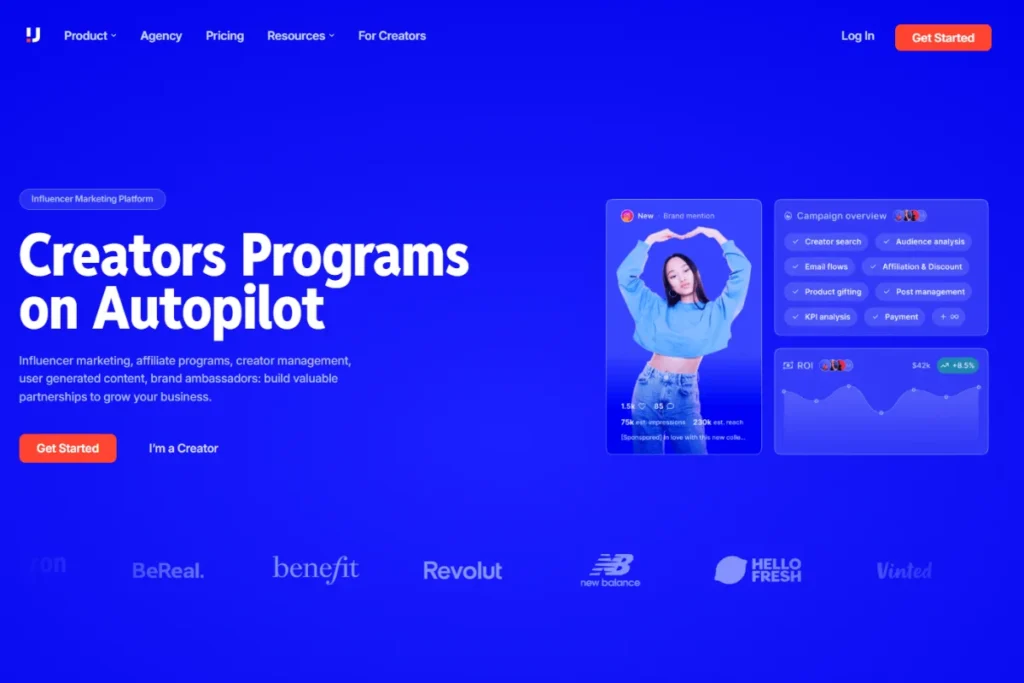
Upfluence stands at the forefront of this category, offering an integrated approach that manages the entire lifecycle of a creator program. A key innovation in this space is "Live Capture" technology, which allows brands to scan their own customer databases to identify influential purchasers. This strategy was recently validated by the fashion brand Valabasas, which utilized the tool to identify 900 creators within its existing Shopify customer base. The resulting campaign generated $165,000 in sales over a three-month period, representing a 14-fold return on investment. Furthermore, the integration of AI agents, such as Upfluence’s "Jaice," allows brands to automate recruitment and follow-ups, effectively scaling outreach without increasing headcount.
Other notable players in this segment include ShopMy and Levanta. ShopMy has carved out a significant niche in the fashion and beauty sectors by providing creators with digital storefronts. This model is particularly effective for premium creators who prefer a curated aesthetic. Levanta, meanwhile, addresses a specific pain point for marketplace sellers: attributing creator-driven sales on platforms like Amazon and Walmart. With pricing starting at $750 per month plus a 3.5% fee on affiliate sales, Levanta is positioned as a specialized tool for brands whose primary revenue is generated through third-party marketplaces.
Self-Serve Tracking: Cost Efficiency for Established Teams
For brands that already possess an established network of partners and merely require a robust technical infrastructure for tracking, self-serve platforms offer a more economical route. These tools vary significantly in their pricing structures, often alternating between flat monthly fees and percentage-of-sales models.
Refersion is a prominent choice for e-commerce stores, offering a marketplace for discovery alongside its tracking capabilities. However, its pricing model—which includes a percentage of affiliate-driven sales—can become expensive as a program grows. For instance, at $60,000 in monthly affiliate revenue, the Growth plan can cost upwards of $1,300. In contrast, Tapfiliate offers a traffic-based pricing model that ignores a share of sales in favor of click and conversion volume. This makes Tapfiliate a highly competitive option for high-volume programs; at the same $50,000 revenue mark, Tapfiliate’s "Scale" plan typically costs only $179 per month, provided conversion limits are respected.
For the Software-as-a-Service (SaaS) sector, Rewardful has become the standard for businesses utilizing Stripe or Paddle. It natively handles the complexities of recurring commissions, trials, and refunds, which are often difficult to manage in physical product-focused platforms.
The Global Giants: Traditional Affiliate Networks and Publisher Supply
Traditional affiliate networks remain the go-to for brands seeking "publisher supply"—the bloggers, comparison sites, and loyalty apps that form the backbone of the legacy affiliate industry. Awin, CJ Affiliate, and Rakuten Advertising continue to dominate this sector.

Awin’s entry-level "Access" plan, starting at $49 per month plus a 3.5% tracking fee, provides an accessible entry point for testing publisher demand. However, analysts note that the tracking fee can quickly add up, often exceeding the base subscription cost. CJ Affiliate and Rakuten Advertising generally target enterprise-level retailers, offering highly customized programs that often bundle affiliate marketing with broader performance media and display advertising. A critical distinction for brands to consider is ownership: in a network model, the network often "owns" the relationship with the publisher, meaning that if a brand leaves the network, it may lose its connection to those partners.
Enterprise Partnership Platforms and B2B Specialization
For multi-national corporations or specialized B2B software companies, enterprise partnership platforms offer the highest level of customization. Impact.com is widely regarded as the leader in this space, providing a unified contract system for affiliates, influencers, and B2B referral partners. Due to the complexity of implementation, these solutions are generally reserved for companies with multiple partner channels and significant internal resources.
In the B2B sphere, PartnerStack has established itself as the premier tool for companies selling through resellers. Its commission handling is specifically designed for subscription-based revenue models. Meanwhile, Everflow provides the most technical environment in the group, offering granular attribution and sub-affiliate tracking favored by performance marketing agencies and high-frequency media buyers.
Data-Driven Vetting and the Science of Engagement
A common concern among brand managers is that affiliate links may negatively impact creator engagement. However, an extensive study of 1.1 million affiliate posts on Instagram and TikTok conducted by Upfluence researchers found that affiliate content generally maintains the same engagement levels as organic content across almost all follower tiers. The only notable exception was found among TikTok creators with over one million followers, where a slight dip in engagement was observed.
To ensure program success, experts recommend a four-point vetting process before recruitment:
- Audience Alignment: Ensuring the creator’s followers match the brand’s target demographic.
- Engagement Consistency: Checking for "ghost followers" or inorganic growth patterns.
- Content Quality: Reviewing previous posts for brand safety and aesthetic fit.
- Historical Performance: Analyzing previous affiliate or sponsored content to gauge the creator’s ability to drive action.
Regulatory Compliance and the Global Legal Landscape
As affiliate marketing becomes more integrated into mainstream social media, regulators in the United States (FTC), United Kingdom (ASA), and Canada (Competition Bureau) have tightened disclosure requirements. The fundamental principle across all jurisdictions is the disclosure of a "material connection."
Affiliates are legally required to inform their audience that they earn a commission from the recommendations they make. These disclosures must be "clear and conspicuous," meaning they should be placed in close proximity to the recommendation and should be visible before a user clicks the link. Crucially, platform-specific labels—such as Instagram’s "Paid Partnership" tag—are often deemed insufficient by regulators if they are not accompanied by a written disclosure in the content itself. Brands are increasingly writing these disclosure standards directly into their affiliate terms of service to mitigate legal risks.
Strategic Implications and Future Outlook
The choice of an affiliate platform is not merely a technical decision but a strategic one that sets the ceiling for a brand’s potential growth. Switching platforms at a later stage often necessitates the re-recruitment of the entire affiliate base, a process that is both time-consuming and costly.
The current trend toward AI-driven automation and "customer-to-creator" pipelines suggests that the most successful brands will be those that move away from anonymous network publishers and toward authentic, direct relationships with their own influential customers. As the industry moves into 2025, the integration of multi-currency payouts, automated tax form collection (W-9/W-8BEN), and advanced KYC (Know Your Customer) checks will become standard features rather than premium add-ons. For brands still operating via spreadsheets, the message from the market is clear: the cost of manual management is no longer just an administrative burden—it is a barrier to competing in a hyper-automated global marketplace.


 Reynand Wu

 Nana Wu