Asep Darmawan

The complexities inherent in managing large-scale email marketing operations present a fertile ground for inefficiency, where factors ranging from miscommunication and brand inconsistency to unclear expectations and a dearth of documented processes can significantly undermine campaign success. In today’s hyper-competitive digital landscape, the distinction between a thriving campaign and a faltering one often hinges on an organization’s ability to navigate these pitfalls. Fortunately, a wealth of strategic solutions and technological advancements are available to address these challenges, enabling marketing teams to enhance their operational efficiency and maximize return on investment. A comprehensive guide from Validity, a leader in email deliverability and data quality, outlines key strategies for overcoming these pervasive inefficiency issues, emphasizing the critical role of structured workflows, defined roles, centralized technologies, and continuous performance measurement.
The Evolution of Email Marketing and Growing Operational Challenges
Email marketing has transformed dramatically from its nascent stages as a simple broadcast tool into a sophisticated, data-driven channel capable of delivering highly personalized and impactful communications. Initially, email campaigns were often managed by small teams or even individuals, with relatively straightforward content and limited segmentation. However, as digital marketing matured, so did the expectations for email. The advent of advanced analytics, automation platforms, and the demand for hyper-personalization propelled email into a central role for customer acquisition, retention, and engagement. This evolution necessitated larger teams, comprising specialists in content creation, design, coding, analytics, and strategy.
With this growth came an inevitable increase in operational complexity. The sheer volume of campaigns, coupled with the need for speed and agility, exposed vulnerabilities in traditional workflows. Siloed departments, disparate tools, and a lack of unified processes began to create bottlenecks. For instance, a 2023 report indicated that marketers are under increasing pressure to produce campaigns rapidly, with 76 percent now creating and sending marketing emails within three days, a feat largely attributable to the integration of AI tools. However, without proper foundational structures, this speed can compromise quality and increase error rates. The expansion of digital touchpoints and the imperative for consistent brand messaging across all channels further exacerbated the challenges, highlighting the urgent need for robust frameworks that can scale without sacrificing quality or efficiency.
Building a Resilient and Scalable Foundation for Email Programs
The cornerstone of efficient large-scale email operations lies in establishing a strong, adaptable foundation that can evolve with organizational needs and market demands. This involves a multi-pronged approach encompassing clear workflows, distinct roles, and integrated technology.
Establishing a Clear, Documented Workflow:
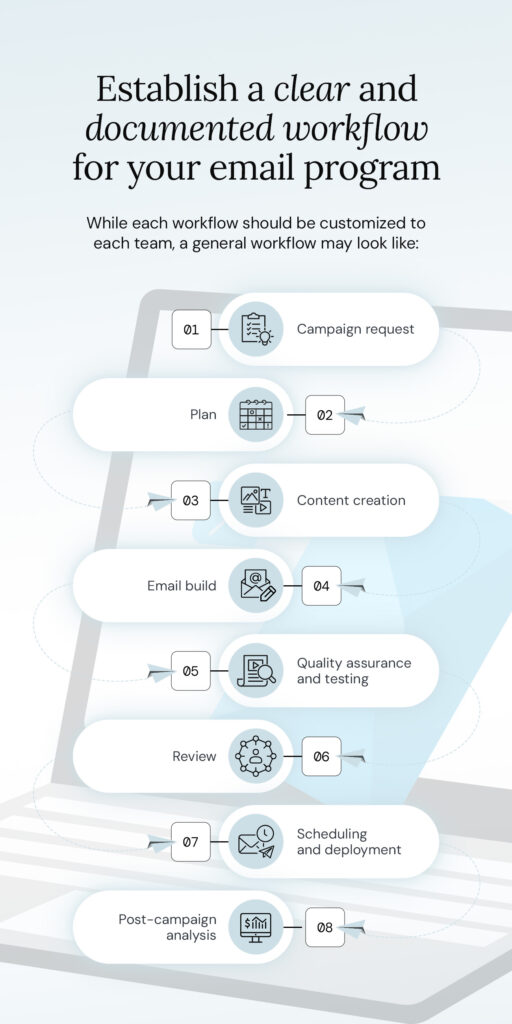
A well-defined, documented workflow is the navigational chart for any large team, providing direction from the initial campaign request through to post-campaign analysis. Such a process minimizes ambiguity, streamlines execution, and fosters consistency. For new hires, a documented workflow acts as an invaluable onboarding tool, accelerating their integration into the team and ensuring adherence to established standards. Moreover, it creates a transparent roadmap, making it easier to identify and address bottlenecks or areas ripe for improvement. Studies show that organizations with documented processes are significantly more efficient and less prone to errors.
A general workflow for an email campaign might include:
- Campaign Briefing: Initial concept, objectives, target audience, key messaging, and desired outcomes are defined.
- Content Creation: Copywriters develop compelling subject lines, preheaders, and body content.
- Design & Asset Creation: Graphic designers produce visuals, adhering to brand guidelines.
- Email Development/Coding: Developers translate designs into functional, responsive email templates.
- Quality Assurance (QA) & Testing: Emails are rigorously tested across various clients and devices for rendering, functionality, and link accuracy.
- Stakeholder Review & Approval: Campaigns undergo a structured approval process.
- Scheduling & Deployment: Campaigns are scheduled and sent via the Email Service Provider (ESP).
- Performance Monitoring & Analysis: Post-send data is collected, analyzed, and insights are generated for future optimization.
Defining Clear Roles and Responsibilities:
In a large team, the clarity of individual roles and responsibilities is paramount. Each team member must understand their specific contributions and how they integrate into the broader campaign workflow. This precision eliminates redundant efforts, prevents tasks from falling through the cracks, and fosters a sense of accountability. Large teams benefit from specialization, allowing individuals to become experts in specific domains—be it copywriting, graphic design, email development, or analytics. This specialization, in turn, elevates the quality of output for each component of the campaign. When roles are clearly delineated, team members can take ownership of their work, deriving satisfaction from their specific, recognized contributions, which boosts morale and overall productivity.
Centralizing the Technology Stack:
The modern marketer’s toolkit is extensive, with many leveraging a diverse array of platforms. In 2025, for example, it was reported that 1 in 3 marketers utilized four to six different tools for their email campaigns, many of which incorporated AI technology. While each tool offers specific advantages, a fragmented tech stack can lead to significant inefficiencies, data silos, communication breakdowns, and delays.
The strategic solution is centralization. By integrating various tools under a unified platform or a tightly connected ecosystem, teams can:
- Enhance Data Flow: Ensure seamless data exchange between different systems (e.g., CRM, ESP, analytics, project management).
- Improve Collaboration: Provide a single environment for team members to access assets, communicate, and track progress.
- Streamline Asset Management: Centralize digital assets (images, logos, templates) for easy access and brand consistency.
- Reduce Training Overheads: Simplify the learning curve by minimizing the number of disparate interfaces users need to master.
- Boost Automation: Facilitate automated workflows across different stages of the campaign lifecycle.
Achieving Consistency and Quality at Scale

Maintaining brand quality and message consistency across a high volume of email campaigns is non-negotiable for establishing professionalism and trustworthiness. Strategic implementation of design systems and advanced technology plays a pivotal role here.
Implementing a Modular Email Design System:
A modular email design system provides a standardized library of pre-designed, reusable components and templates. Instead of building each email from scratch, teams can assemble campaigns using automated code modules, significantly reducing creation time and ensuring brand consistency. This approach, akin to using building blocks, allows for rapid prototyping and deployment while adhering to established brand guidelines for fonts, colors, imagery, and layout.
Steps to implement a modular email design system typically include:
- Auditing Existing Emails: Analyze past campaigns to identify common elements and design patterns.
- Defining Core Components: Establish a library of reusable modules (e.g., headers, footers, content blocks, call-to-action buttons).
- Creating a Style Guide: Document brand guidelines for typography, color palettes, imagery, and tone of voice.
- Developing Master Templates: Build foundational templates using the defined modules, catering to different campaign types (e.g., promotional, transactional, newsletter).
- Establishing Version Control: Implement a system to manage updates and ensure all team members use the latest approved modules.
- Training and Adoption: Educate the team on how to effectively use the design system and its benefits.
By automating repetitive design and coding tasks, a modular system frees up creative resources, allowing teams to focus on strategic content and personalization, ultimately enhancing both efficiency and the quality of customer experience.
Taking Advantage of AI Technology:
Artificial intelligence has revolutionized operational efficiency across numerous industries and tasks, and email campaign management is no exception. AI tools offer powerful capabilities that significantly enhance various stages of the email workflow:
- Content Generation and Optimization: AI can assist in drafting compelling subject lines, preheaders, and even body copy, often outperforming human-generated versions in A/B tests. It can also optimize content for clarity and impact.
- Personalization and Segmentation: AI algorithms can analyze vast datasets to identify audience segments with high precision, enabling hyper-personalized content delivery that resonates deeply with individual subscribers.
- A/B Testing and Predictive Analytics: AI can automate multivariate testing, quickly identifying winning elements and predicting campaign performance based on historical data.
- Workflow Automation: AI-powered tools can automate routine tasks such as email scheduling, list hygiene, and basic reporting, freeing up human resources for more strategic initiatives.
- Deliverability Optimization: AI can monitor email sender reputation and suggest adjustments to improve inbox placement rates.
Crucially, many AI tools leverage machine learning, continuously improving their performance by analyzing every signal and interaction. This iterative learning process ensures ever-improving results, making AI an indispensable asset for large, efficiency-driven marketing teams. Industry analysts project that AI’s role in marketing will continue to expand, offering unprecedented opportunities for optimization and competitive advantage.
Simplifying Collaboration and Approvals
In large teams, inefficient collaboration and convoluted approval processes are major impediments to speed and quality. Streamlining these interactions is crucial for fostering a cohesive and productive environment.
Creating a Single Source of Feedback:
The traditional method of gathering feedback—scattered across emails, chat messages, and informal conversations—is a recipe for confusion and delay. Conflicting comments from multiple stakeholders on disparate platforms force teams to waste time deciphering priorities and reconciling contradictory instructions. This fragmented approach not only slows down the approval process but also increases the risk of errors and misinterpretations.
A centralized platform for approvals and feedback addresses these challenges directly. Stakeholders have a single, designated location to provide their comments, ensuring that feedback is consolidated, clear, and actionable. This unified approach can cut hours off the approval process, enhance transparency, and provide a documented record of all changes and decisions, which is invaluable for audit trails and future reference. Project management tools with integrated proofing features or dedicated collaboration platforms are ideal for this purpose.
Establishing a Tiered Approval Process:
A tiered approval process introduces structure and clarity into the review cycle, ensuring that the right individuals approve the right aspects of a campaign at the appropriate time. This systematic approach not only accelerates approvals but also provides additional quality assurance checkpoints and improves collaboration between creative teams and stakeholders. It eliminates guesswork regarding who needs to approve what, preventing bottlenecks caused by waiting for sign-off from individuals who may not be necessary at a particular stage.
While customizable to specific team structures and campaign types, a typical tiered approval process for an email campaign might involve:
- Content Approval: Copywriters submit content to a senior editor or marketing manager for initial review of messaging, tone, and brand alignment.
- Design Approval: Designers submit visual mock-ups or coded templates to creative directors or brand managers for aesthetic and brand guideline adherence.
- Technical/Compliance Approval: Email developers and legal/compliance teams review the coded email for functionality, responsiveness, accessibility, and regulatory compliance (e.g., GDPR, CAN-SPAM).
- Final Stakeholder Approval: A senior marketing leader or business owner provides final sign-off before deployment, ensuring alignment with overarching business objectives.
Each tier focuses on specific aspects, ensuring expert review at every critical juncture and distributing the approval workload efficiently.
Measuring and Improving Team Performance
Beyond evaluating individual campaign performance, it is equally vital to scrutinize the efficiency of the team’s workflows and overall operational output. Continuous measurement and improvement are essential for fostering growth and maintaining a competitive edge.
Key Metrics for Workflow Efficiency:
To accurately identify areas for improvement, measurable data on team performance is indispensable. Analyzing key workflow metrics provides objective insights into operational effectiveness:
- Time-to-Launch: The total time taken from campaign brief to deployment. A reduction indicates improved efficiency.
- Error Rate: The number of errors identified during QA or post-send corrections. Lower rates signify higher quality control.
- Feedback Cycle Time: The average duration for receiving and incorporating feedback from stakeholders. Shorter cycles indicate better collaboration.
- Resource Utilization: How effectively team members’ time and skills are being used across projects. Optimal utilization prevents burnout and maximizes output.
- Approval Cycle Duration: The average time taken for a campaign to pass through all approval stages.
- Number of Revisions: The average number of iterations required before final approval, indicating clarity of initial brief and feedback.
Tracking these metrics allows teams to benchmark their performance, identify trends, and implement targeted interventions to boost efficiency.
Tying Team Performance to Campaign ROI:
The ultimate justification for investing in team efficiency is its direct impact on campaign ROI. Boosting operational effectiveness has a cascading effect: faster email creation, fewer post-send mistakes, and optimized resource allocation all contribute to more impactful campaigns.
An efficient team can prepare campaigns for launch and analyze results in less time, freeing up valuable resources for higher-value, strategic activities. This additional capacity can be directed towards:
- Advanced A/B Testing: Conducting more sophisticated tests to pinpoint elements that resonate best with the audience.
- Enhanced Personalization: Crafting highly individualized content and offers based on deep customer insights.
- Detailed Segmentation: Developing more granular audience segments to ensure messages reach the right people at the optimal time.
- Strategic Campaign Planning: Allocating more time to long-term strategy, market research, and competitive analysis.
These strategic initiatives directly translate into improved campaign performance. Personalized emails, for instance, have been shown to drive significantly higher engagement and conversion rates compared to generic blasts. A/B testing provides data-backed insights for continuous optimization, while thoughtful segmentation ensures message relevance, leading to better open rates, click-through rates, and ultimately, higher revenue. Without an efficient operational foundation, teams remain bogged down in tactical execution, limiting their capacity for strategic innovation that directly boosts ROI.
Conclusion: Boosting Your Team’s Efficiency for Superior Email Campaigns
Efficiency is the critical differentiator between an email campaign that merely meets expectations and one that consistently exceeds them. For large marketing teams, achieving operational excellence is not just about speed; it’s about delivering higher quality, more strategic, and ultimately more profitable email campaigns without compromising brand integrity or team morale. By systematically addressing inefficiencies through robust frameworks and smart technology, organizations can unlock the full potential of their email marketing efforts.
The pathway to enhanced efficiency involves a holistic approach:
- Establishing robust, documented workflows: Providing clear direction and minimizing errors.
- Defining precise roles and responsibilities: Ensuring accountability and fostering specialization.
- Centralizing the technology stack: Streamlining operations and improving data flow.
- Implementing modular email design systems: Accelerating creation and ensuring brand consistency.
- Leveraging advanced AI technology: Enhancing personalization, content optimization, and automation.
- Creating a single source of feedback and tiered approval processes: Streamlining collaboration and accelerating decision-making.
- Continuously measuring and optimizing team performance: Driving ongoing improvement and tying efficiency gains directly to campaign ROI.
By embracing these strategies, large email marketing teams can transition from merely managing campaigns to orchestrating highly effective, data-driven communications that build stronger customer relationships and deliver exceptional business results. The investment in operational efficiency is an investment in the future success and sustainability of an organization’s digital marketing prowess.

 Ali Ikhwan
 Azzam Bilal Chamdy