Siti Muinah
The landscape of digital marketing is undergoing its most significant transformation since the advent of the mobile internet, as artificial intelligence fundamentally alters how consumers discover brands and navigate the path to purchase. For decades, the digital marketing funnel relied on a predictable, linear progression: a user entered a specific keyword into a search engine, scanned a list of "ten blue links," and clicked through to a website where a marketer attempted to secure a conversion. However, the rise of generative AI tools—ranging from Google’s AI Overviews and Search Generative Experience (SGE) to conversational engines like ChatGPT and Perplexity—has introduced a new layer of complexity to the buyer’s journey. The challenge for modern brands is no longer merely "ranking" in a list of results, but rather ensuring that the synthesized answers provided by AI lead to meaningful clicks and, ultimately, high-value conversions.
The Paradigm Shift: From Keywords to Synthesized Answers
Traditional search engines functioned primarily as directories, pointing users toward external sources of information. In contrast, AI-driven search engines act as synthesizers. When a user asks a complex question, these systems utilize a technique known as "query fan-out." This process involves the AI running multiple related searches across various subtopics and then aggregating the findings into a single, cohesive response. For marketers, this means that a potential customer might discover a brand not through a direct product search, but because the brand’s content answered a peripheral question several steps earlier in the decision-making process.
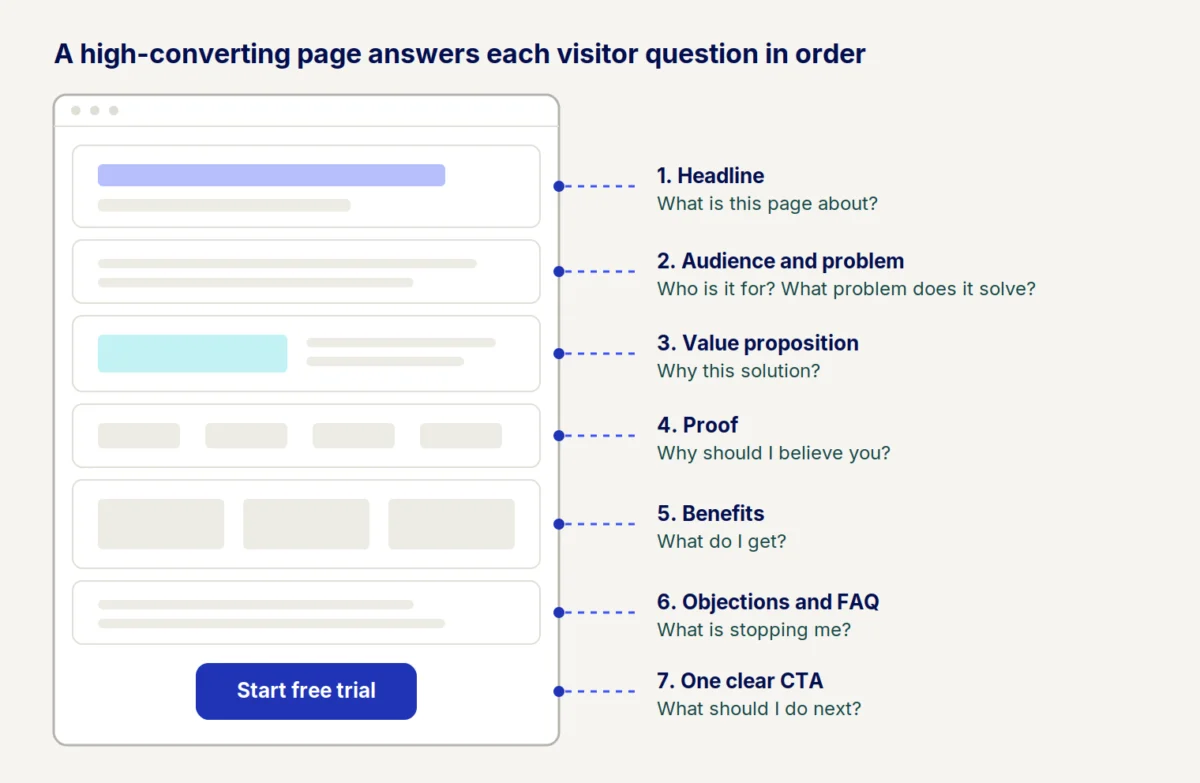
The traditional search journey followed a four-step path: Query, Results, Click, and Conversion. The AI-assisted journey, however, is far more iterative. It begins with a Question, followed by Related Searches, a Synthesized Answer, the presentation of Cited Sources, a Click, a period of Evaluation, and finally, a Conversion. This expanded journey places a premium on the quality of the "click." Because users are often more informed by the time they reach a landing page—having already interacted with an AI summary—the landing page must work harder to validate the AI’s recommendation and provide a seamless transition from information gathering to action.
A Chronology of Search Evolution
To understand the current state of AI search, it is necessary to examine the technological progression that led to this moment. The evolution of search can be categorized into four distinct eras:
- The Keyword Era (1998–2010): Search engines relied heavily on exact-match keywords and backlink volume. Marketers focused on "keyword stuffing" and basic SEO tactics to climb the rankings.
- The Semantic Era (2011–2021): With the introduction of updates like Google’s Hummingbird and RankBrain, search engines began to understand intent and context. The focus shifted toward "topics" rather than just individual words.
- The Generative Era (2022–Present): The launch of ChatGPT in late 2022 accelerated the integration of Large Language Models (LLMs) into search. Google responded with AI Overviews, and startups like Perplexity gained traction by offering an "answer engine" experience.
- The Predictive and Conversational Future: Analysts predict that search will move toward proactive assistance, where AI agents anticipate user needs based on past behavior and real-time context.
This timeline highlights a clear trajectory: search engines are moving away from being intermediaries and toward being endpoints of information. For marketers, this necessitates a move away from "SEO hacks" and toward "information authority."

Supporting Data: The Changing Economics of the Click
Industry data suggests that the impact of AI on search behavior is already measurable. According to recent studies by Gartner, traditional search engine volume is expected to drop by as much as 25% by 2026 as consumers migrate toward AI chatbots and generative interfaces. While this might suggest a decline in traffic, early data from digital marketing firms indicates that the traffic coming from AI citations is often higher in intent.
Internal metrics from landing page platforms like Instapage suggest that personalized landing pages see a conversion lift of 20% to 30% compared to generic counterparts. In the context of AI search, where a user may have spent several minutes "conversing" with an AI about a specific problem, the need for this personalization is amplified. If a user arrives at a page that does not immediately match the specific context of their AI-driven research, the "bounce rate" is significantly higher than in traditional search journeys.
Furthermore, the "zero-click search" phenomenon—where a user gets their answer directly on the search results page without clicking—is rising. A study by SparkToro found that nearly 60% of searches now end without a click to a non-Google property. This makes the remaining clicks more competitive and valuable, placing an unprecedented emphasis on the landing page’s ability to convert.
Technical Foundations: The Role of Structured Data and Schema
Despite the advanced nature of AI, these systems still rely on foundational technical elements to "understand" web content. One of the most critical tools in a marketer’s arsenal is Structured Data, specifically Schema Markup. This standardized code (JSON-LD) tells search engines and AI models exactly what a page represents—whether it is a product, a frequently asked question (FAQ), a local business, or an event.
Google has repeatedly clarified that its AI features are built upon its core search systems. There is no "magic file" or hidden formatting trick to guarantee an appearance in an AI Overview. Instead, Google encourages "people-first" content. However, using Schema Markup acts as a bridge, making it easier for AI systems to parse and cite a brand’s information accurately. Tools that automate this process, such as Instapage’s Schema Markup feature, allow marketers to generate and validate this data without deep technical expertise, ensuring that their pages are "AI-ready."
Strategic Implications: Moving from Keywords to Intent-Based Questions
The shift to AI search requires a fundamental change in content strategy. Traditional SEO often starts with a high-volume keyword. AI-driven strategy starts with a "problem-aware" question. For example, instead of targeting the keyword "landing page software," a brand might target the question "Why is my paid traffic not converting?"
By positioning a brand as the definitive answer to specific business problems, marketers can enter the AI conversation earlier. This approach involves identifying the various stages of the buyer’s journey:
- Problem-Aware: The user is researching symptoms (e.g., "Why are my ads so expensive?").
- Solution-Aware: The user knows they need a specific tool (e.g., "Best landing page builders for Google Ads").
- Decision-Ready: The user is comparing specific vendors (e.g., "Instapage vs. competitors").
Marketing teams that create content for each of these stages—rather than just churning out keyword-stuffed articles—are more likely to be cited by AI engines as authoritative sources.
Official Responses and Industry Reactions
The response from the tech industry has been a mix of innovation and caution. Google’s public statements have consistently emphasized that their AI-generated summaries are intended to help users find information more quickly, not to replace the ecosystem of publishers and creators. During the 2024 Google I/O conference, executives noted that AI Overviews actually lead to more diverse clicks to a wider range of websites, though many publishers remain skeptical.
SEO experts and CMOs are also adjusting their expectations. Many are moving away from measuring "rankings" as a primary KPI, focusing instead on "share of model"—the frequency with which a brand is mentioned in AI-generated responses. Inferred reactions from industry leaders suggest a growing consensus: the "commodity content" era is over. If an AI can summarize an article perfectly, there is no reason for a user to visit the site. Therefore, brands must provide original research, first-hand expertise, and unique insights that AI cannot easily replicate.
The New Job of the Landing Page: Reducing Uncertainty
When a user finally clicks through from an AI search result, the landing page must fulfill a new role. The user is likely already informed; they are no longer asking "What is this?" but rather "Is this the right fit for me?"
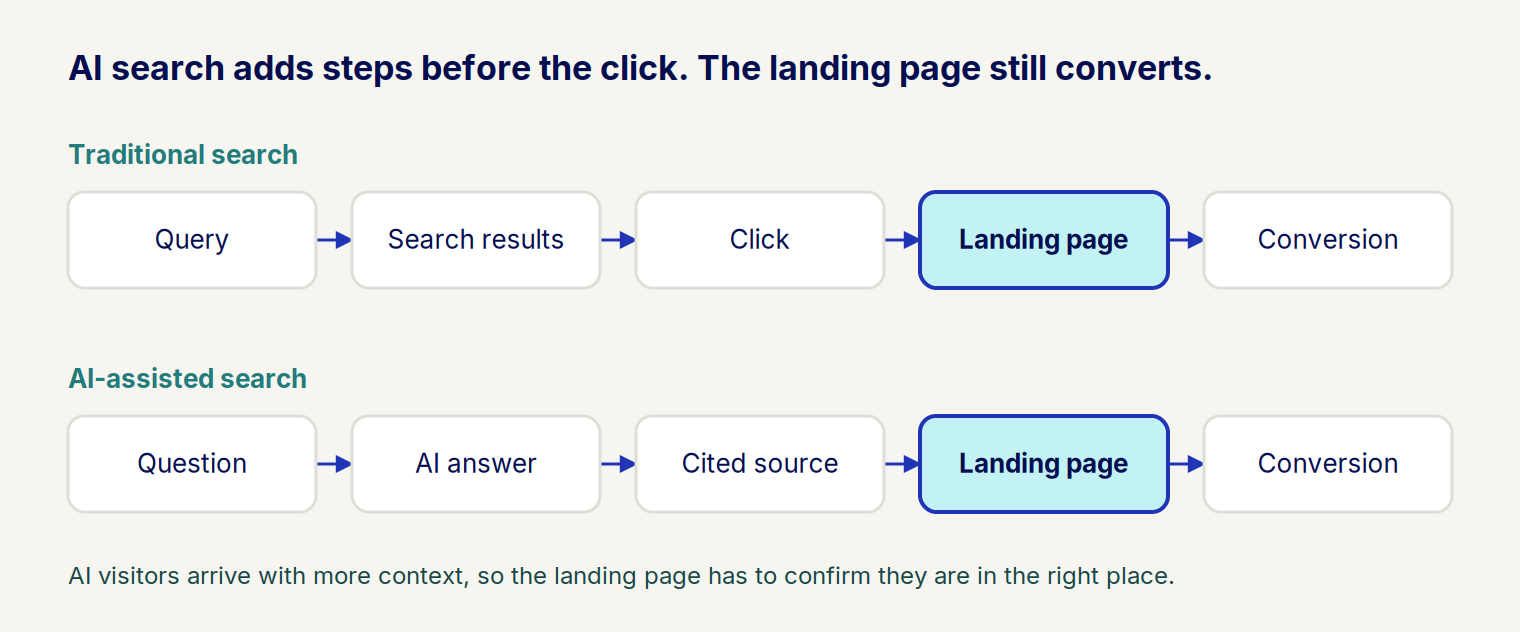
A high-converting landing page in the AI era must achieve six core objectives:
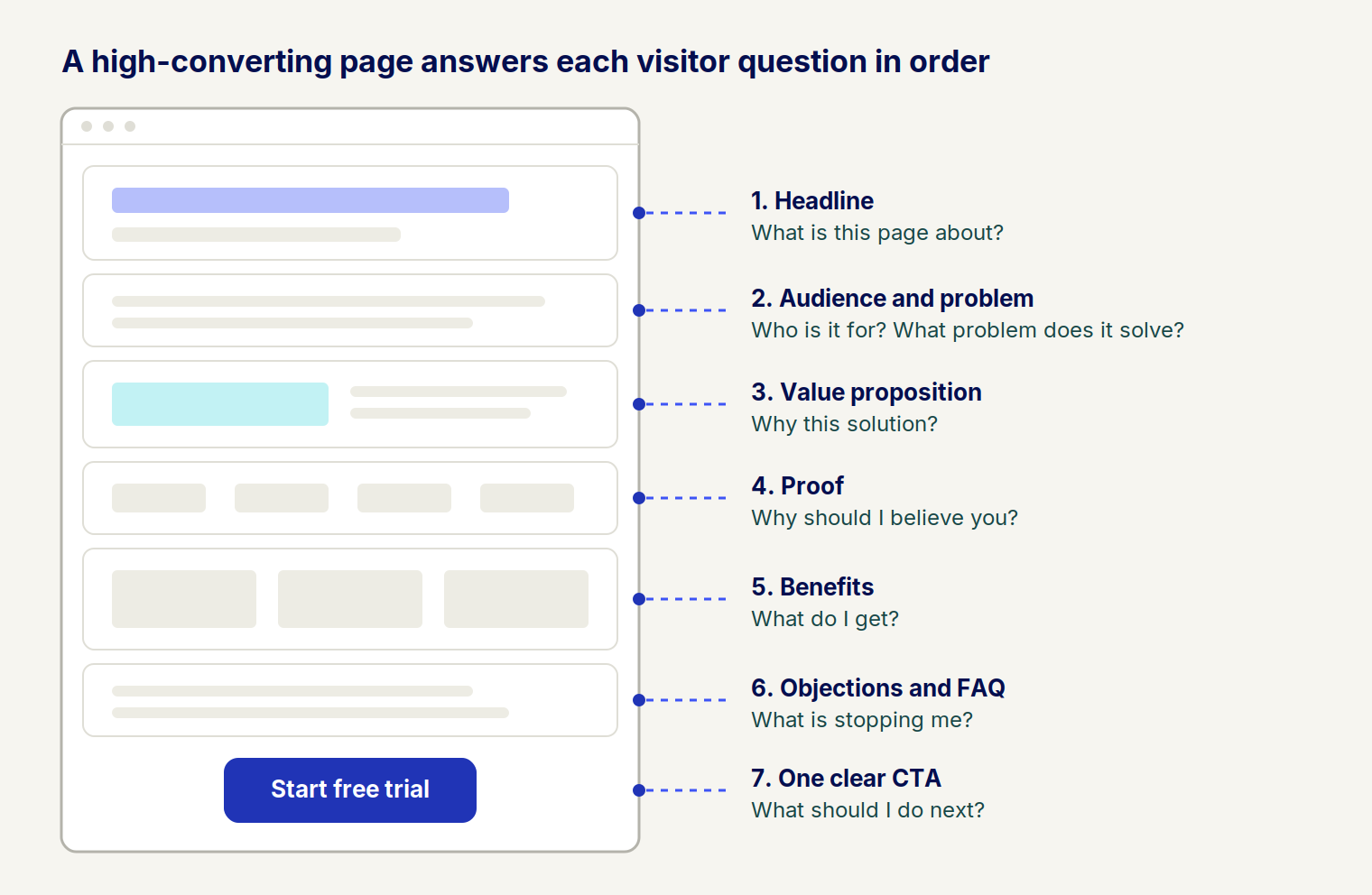
- Immediate Message Match: The headline must directly address the question that led the user there.
- Contextual Relevance: If the user was researching a specific industry problem, the page should reflect that industry’s language.
- Proof and Authority: Case studies, testimonials, and data points must validate the AI’s recommendation.
- Clear Next Steps: A singular, obvious Call to Action (CTA) prevents "decision paralysis."
- Minimal Friction: The page must load quickly and be easy to navigate, as AI-savvy users have low tolerance for poor UX.
- Addressing Objections: Since users are more educated, the page should proactively answer common hurdles to conversion.
To achieve this at scale, marketers are increasingly turning to AI-driven personalization tools. Features like "AI Collections" allow teams to generate hundreds of variations of a single template, each tailored to a specific audience, location, or intent, ensuring that every visitor feels they have found the "exact" answer to their query.
Broader Impact and Future Outlook
The broader impact of AI search extends beyond marketing tactics; it affects the very economics of the internet. As AI becomes the primary interface for information, the value of "generic" traffic will continue to decline, while the value of "authoritative" traffic will skyrocket.
We are likely to see a "quality over quantity" shift in content production. Brands that invest in proprietary data, original analysis, and deep technical expertise will thrive in an AI-dominated search environment. Conversely, sites that rely on aggregating information from others will find themselves bypassed by the very AI models they once hoped to attract.
In conclusion, AI search has not replaced the need for marketing; it has simply raised the bar. The core challenge remains the same: turning intent into action. The brands that succeed in this new era will be those that view AI search not as a threat to be mitigated, but as a sophisticated discovery engine that requires a more thoughtful, personalized, and authoritative response. Discovery is the invitation, but the landing page experience remains the ultimate closer.

 Layla Zulfa

 Asro