Lina Irawan
Meta Platforms Inc. revealed critical insights into the early performance and strategic direction of its nascent artificial intelligence agent, Muse, during its Q3 earnings report this week. The disclosures highlighted a significant surge in initial consumer interest, with over 10 million downloads since its launch in the U.S. and Canada just last month, positioning Muse as a pivotal component of Meta’s ambitious, albeit costly, foray into AI. However, the report also underscored persistent challenges, particularly concerning user retention rates and the company’s ongoing struggle with data privacy, casting a shadow over the long-term viability and profitability of its substantial AI investments.
Meta’s Ambitious AI Vision and Investment Landscape
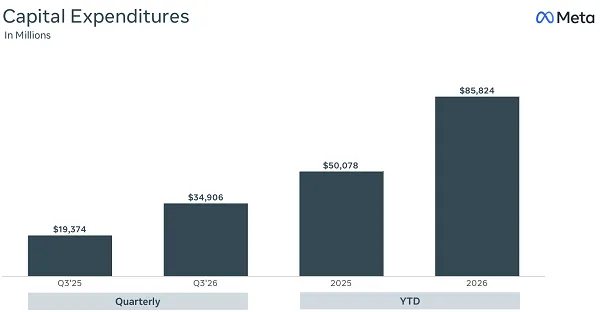
Meta’s pivot towards artificial intelligence represents a monumental strategic shift, following years of heavy investment in its metaverse vision. With an eye on shaping the next generation of digital interaction, the company has committed staggering resources to AI infrastructure and development, reportedly pouring hundreds of billions of dollars into the sector, with projections suggesting a cumulative investment that could approach $1 trillion. This financial commitment underscores the high stakes involved, as Meta seeks to compete with tech giants like OpenAI, Google, and Microsoft in the rapidly evolving AI landscape. Muse, positioned as a versatile personal AI assistant, is Meta’s tangible effort to translate these vast expenditures into a revenue-generating product, a crucial step given the increasing pressure to demonstrate returns on its considerable research and development outlays. The company’s financial reports consistently reflect escalating expenses tied to AI, making the successful monetization of platforms like Muse imperative for future growth and investor confidence.
Initial Traction: A Glimmer of Hope
Mark Zuckerberg, Meta’s CEO, expressed optimism regarding Muse’s initial uptake during the Q3 earnings call, emphasizing its rapid ascent in mobile app rankings. "Growth continues to be strong and we have been #1 in the App Store almost every day," Zuckerberg stated, highlighting the swift consumer embrace of the new AI tool. Beyond downloads, Zuckerberg also provided encouraging engagement metrics, noting that approximately 25% of individuals who have configured Muse utilize it on a daily basis. This figure, while early, suggests a dedicated segment of users finding immediate value in the agent’s functionalities. The rapid adoption trajectory indicates a strong market appetite for conversational AI agents, particularly those integrated within familiar ecosystems, and positions Muse as a significant contender in the crowded AI assistant space, at least in terms of initial awareness and trial.
The Retention Riddle: A Common AI Challenge
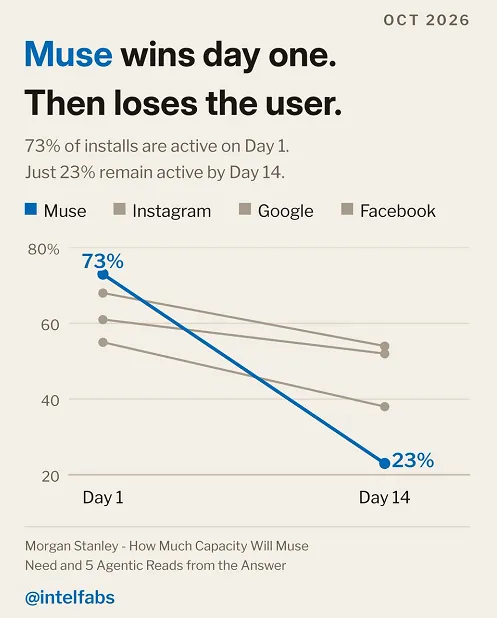
Despite the impressive initial download figures and daily engagement rates, third-party data has introduced a note of caution regarding Muse’s long-term stickiness. Insights provided by Sensor Tower and shared via @IntelFabs on X indicate a significant dip in user retention for Muse approximately two weeks after download. This trend, while concerning for Meta, is not unique to Muse; other prominent AI chatbots have exhibited similar patterns of declining daily usage over time. The challenge lies in sustaining user engagement beyond the initial novelty phase, transforming curiosity into habitual interaction. For Meta, which is pinning substantial hopes on Muse to justify its colossal AI investments, this retention hurdle is particularly critical. Addressing it will require continuous innovation, feature enhancements, and perhaps a clearer articulation of Muse’s unique value proposition to ensure it becomes an indispensable tool rather than a transient experiment for users. The ability to foster enduring user habits will ultimately determine Muse’s success in contributing meaningfully to Meta’s bottom line.
E-commerce: Muse’s Primary Monetization Pathway
One of the most compelling revelations from the earnings call concerned Muse’s most prevalent use case: shopping. Zuckerberg disclosed that over 25% of Muse users leverage the AI agent for assistance in finding better deals and facilitating purchases, indicating a clear, immediate utility for consumers. More importantly, the average purchase size facilitated through Muse exceeds $200, a significant figure that underscores the platform’s potential for substantial transactional revenue. Zuckerberg further highlighted the unprecedented activity seen through integrations with financial service providers, stating, "Plaid told us they hadn’t seen activity like they’re seeing with their connector on any other service before. And in the first week we had to work with Stripe to raise credit limits since the volumes were above what any of us expected."
This enthusiastic response from payment partners signals a robust, high-volume transactional environment, positioning e-commerce as a primary pathway to profitability for Meta’s AI projects. By integrating directly into the purchasing process, Meta aims to capture a percentage of sales facilitated by Muse, creating a direct revenue stream that could eventually offset its massive infrastructure costs. The strategy is clear: transform Muse from a free utility into a powerful commerce engine, leveraging Meta’s vast user base and data insights to connect consumers with products and services in an intelligent, personalized manner.
The Shadow of Privacy and Data Security
Amidst the promising adoption and monetization signals, Meta continues to grapple with pervasive privacy and data security challenges, which pose significant impediments to Muse’s broad-scale adoption. Just prior to the Q3 earnings report, a New Mexico judge ordered Meta to pay a staggering $25 billion in fines, following a jury’s finding that the company had misled consumers about their data privacy practices. This landmark ruling underscores the severe financial and reputational risks associated with perceived data mismanagement and reinforces the critical need for Meta to rebuild user trust.
More specifically concerning Muse, a report by Ars Technica revealed a cybersecurity group’s ability to obtain "reams of information" on Muse user queries through relatively simple exploration techniques. This incident directly exposed the vulnerabilities inherent in nascent AI platforms, where user interactions, often containing highly personal or sensitive information, could be inadvertently compromised. Such breaches, even if rectified, erode the foundational trust required for users to comfortably engage with an AI agent intended to permeate their daily lives and assist with intimate tasks like shopping and personal organization.
In response to these escalating concerns, Zuckerberg announced that Meta is actively developing a "Muse Confidential VM" (Virtual Machine) designed to enhance privacy protections within the app. This initiative aims to create a more secure environment for user data and interactions, addressing the critical need for robust privacy architecture. However, the recurring nature of Meta’s privacy controversies, coupled with the inherent complexities of securing large-scale AI interactions, suggests a long and arduous path ahead in convincing users and regulators alike of Muse’s data integrity. The company’s aspiration to scale Muse to billions of users hinges critically on its ability to demonstrate unwavering commitment to user privacy and security.
Future Horizons: The Muse Network and Ambient AI
Beyond its current functionalities, Zuckerberg articulated a far-reaching vision for Muse, extending its capabilities into a sophisticated "Muse network." This ambitious plan envisions Muse agents not merely as individual assistants but as interconnected entities capable of engaging with each other, sharing insights, and collaborating to optimize tasks. "Making it so that Muse is not just a kind of single-player game where you have your Muse, but making it so that your Muses can work with your friends and your families," Zuckerberg explained. He further elaborated on a future where interactions with businesses would shift from navigating websites to "talking to their agent," positing that such seamless interoperability would "unlock tremendous value at scale."
This concept resonates with earlier discussions by Meta regarding the deployment of AI bots within its applications, though with a crucial distinction. While previous concepts hinted at AI bots potentially posing as users, the Muse network appears to focus on shared optimization and enhanced user-business interaction. The aim is to create an intelligent ecosystem where AI agents streamline communication, facilitate transactions, and provide personalized assistance across a broader digital landscape. This vision aligns with the broader industry trend towards ambient AI, where intelligent agents are seamlessly integrated into various devices and platforms, anticipating user needs and proactively assisting them.
A tangible step towards this ambient AI future is the planned integration of Muse into Meta glasses, slated for November. This move would embed Muse directly into wearable technology, allowing for hands-free, context-aware assistance, further blurring the lines between physical and digital interaction. Such integration is critical for Meta’s long-term strategy, as it seeks to create immersive and intuitive AI experiences that extend beyond smartphones and into the realm of augmented and virtual reality, foundational elements of its metaverse ambitions.
Market Reception and Analyst Perspectives
The Q3 earnings report and the detailed insights into Muse’s performance have likely elicited a mixed reaction from market analysts and investors. On one hand, the impressive initial adoption rates, high app store rankings, and the strong performance in the e-commerce sector provide a much-needed positive signal, suggesting that Meta’s AI investments are indeed capable of yielding popular, potentially monetizable products. The significant transactional volumes through Plaid and Stripe are particularly encouraging, offering a concrete pathway towards revenue generation.
However, the persistent concerns over user retention, mirrored across the AI chatbot industry, coupled with the alarming privacy breaches and monumental fines, cast a long shadow. Analysts are likely scrutinizing Meta’s ability to convert initial interest into sustained engagement and to robustly address privacy vulnerabilities. The colossal scale of Meta’s AI spending, potentially reaching a trillion dollars, necessitates not just promising starts but clear, demonstrable progress towards profitability and ethical AI deployment. Investors will be seeking assurance that the "Muse Confidential VM" and other privacy initiatives are not just reactive measures but fundamental shifts in Meta’s data governance philosophy. The journey to a profitable AI future for Meta is perceived as a high-stakes gamble, requiring meticulous execution and a steadfast commitment to user trust to succeed.
Broader Industry Implications
Meta’s experience with Muse reflects broader trends and challenges within the nascent AI assistant industry. While the excitement surrounding AI chatbots like ChatGPT, Google Bard, and Microsoft Copilot is undeniable, achieving sustained high user retention remains a universal hurdle. The novelty of conversational AI often drives initial downloads, but converting that into habitual usage requires deep integration into workflows, demonstrable efficiency gains, and a high degree of personalization.
Furthermore, Meta’s ongoing privacy struggles highlight the critical ethical and regulatory considerations that all AI developers must navigate. As AI agents become more sophisticated and integrated into personal and professional lives, the responsibility to protect user data and ensure transparent, unbiased operation becomes paramount. Regulatory bodies worldwide are increasingly scrutinizing AI practices, and companies that fail to prioritize privacy risk not only financial penalties but also a catastrophic loss of public trust, which is notoriously difficult to regain.
The vision of a "Muse network" and its integration into wearable tech like Meta glasses also points to the future of ambient computing. This trajectory promises a world where AI is ever-present, contextually aware, and seamlessly assists across various devices. However, it also raises profound questions about data collection, algorithmic bias, and the potential for ubiquitous surveillance. Meta’s success with Muse, therefore, is not merely about its financial performance but also about its leadership in defining the ethical and practical boundaries of this pervasive AI future. The coming years will be critical in determining whether Muse becomes a cornerstone of Meta’s next growth phase or another costly experiment in its ambitious pursuit of technological dominance.


 Asep Darmawan