The digital commerce landscape is undergoing a fundamental shift as the focus of experimentation moves from isolated tactical wins to a comprehensive understanding of consumer behavior. Buse Hizarci, Optimisation Manager at the prominent UK-based direct-to-consumer (DTC) consultancy Vervaunt, has detailed a sophisticated approach to Conversion Rate Optimization (CRO) that prioritizes evidence over assumption and long-term insights over short-term gains. As the industry grapples with the commoditization of execution through artificial intelligence, Hizarci’s methodology highlights the increasing importance of human judgment in interpreting data and structuring testing programs that align with overarching business objectives.
Working with a diverse portfolio of high-growth brands, including Adanola, Ancient & Brave, AU Vodka, and YETI UK, Hizarci’s perspective is shaped by the practical realities of managing experimentation in a competitive ecommerce environment. Her career trajectory—transitioning from a technical developer role to an in-house User Experience (UX) specialist and eventually to an agency-side optimization lead—reflects a broader trend in the industry: the convergence of technical proficiency with a deep, empathetic understanding of the end-user.

The Strategic Shift From Assumptions to Evidence-Based Optimization
At the core of modern optimization is a simple but profound definition: the discipline of turning assumptions into evidence. Historically, digital marketing and web design were driven by subjective preferences or "HiPPO" (Highest Paid Person’s Opinion) decision-making. However, the maturation of the CRO field has necessitated a move toward rigorous testing. Hizarci argues that the value of an optimization program is not found in the "win" of a single A/B test, but in the cumulative knowledge gained about the customer.
In the current economic climate, where Customer Acquisition Costs (CAC) have risen significantly across platforms like Meta and Google, the ability to maximize the value of existing traffic is a critical survival strategy for DTC brands. Optimization is no longer just about changing the color of a button; it is about understanding the psychological barriers that prevent a user from completing a purchase and systematically removing them through data-backed iterations.
The Role of AI in Modern Experimentation Workflows
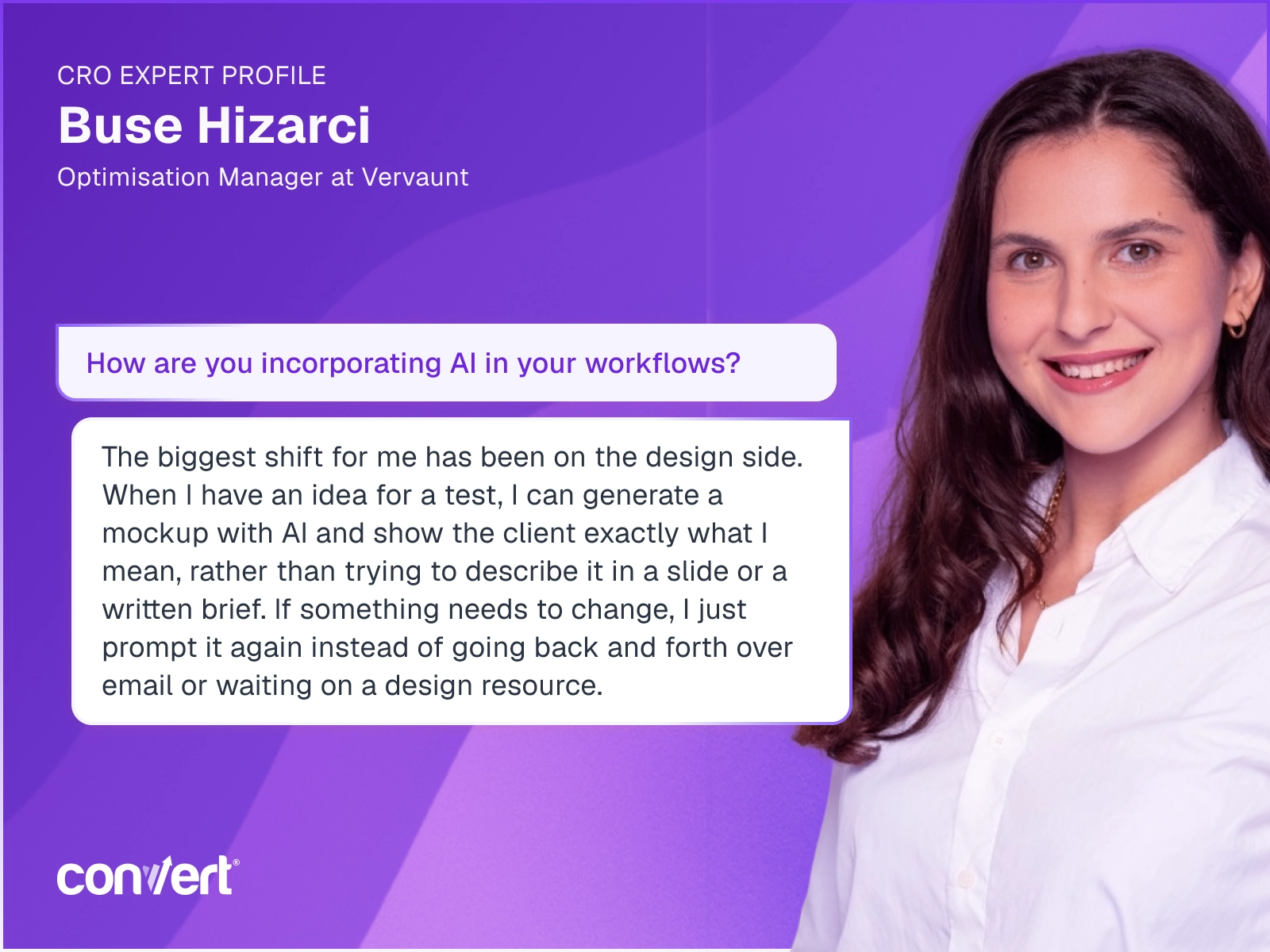
The integration of Artificial Intelligence (AI) has fundamentally altered the operational efficiency of experimentation. Rather than replacing the strategist, AI is serving as a catalyst for speed, particularly in the transition from conceptualization to execution. Hizarci identifies two primary areas where AI has revolutionized her workflow: design mockups and complex data analysis.

Accelerating Design and Client Buy-In
One of the most significant bottlenecks in the testing lifecycle is the design phase. Traditionally, moving from a hypothesis to a visual mockup required a back-and-forth process between optimization managers and design teams, often taking days or weeks. By utilizing AI to generate mockups, Hizarci can now present clients with high-fidelity visual representations of a test idea almost instantaneously. This allows for immediate feedback and rapid iteration, ensuring that the momentum of a testing program is not lost to administrative or resource-related delays.
Enhancing Statistical Rigor and Analysis
Beyond aesthetics, AI is being utilized to handle the "heavy lifting" of statistical analysis. Hizarci employs interactive tools preloaded with client-specific traffic and conversion data to automate Minimum Detectable Effect (MDE) calculations. By integrating directly with platforms such as Shopify and Google Analytics 4 (GA4), these AI-driven systems provide precise timelines for test duration. This eliminates the guesswork often associated with sample size requirements and ensures that experiments are powered correctly to yield statistically significant results.
A Hierarchy of Objectives: The Vervaunt Methodology
A common pitfall for many brands is maintaining a "flat" backlog of test ideas—a list of disconnected experiments that lack a cohesive strategy. Hizarci advocates for a structured hierarchy that anchors every individual test to a broader business goal. This systematic approach ensures that even "losing" tests provide valuable data that informs future strategy.
The Five-Tier Testing Framework
The Vervaunt model, as described by Hizarci, follows a logical progression:
- Business Metric: Identifying the primary KPI the brand needs to move (e.g., Average Order Value, Customer Lifetime Value, or Conversion Rate).
- Broad Objective: Defining the strategic goal (e.g., increasing the frequency of repeat purchases).
- Problem Areas: Identifying specific friction points on the site using qualitative and quantitative research (e.g., high drop-off rates on the cart page).
- Proposed Solutions: Brainstorming various ways to address the identified problems.
- Individual Tests: Executing specific A/B or multivariate tests to validate the proposed solutions.
This hierarchy ensures that every experiment is an update to the brand’s "customer knowledge base." When a test is completed, the result is not just filed away; it is used to reshape the priorities of the next testing cycle, creating a virtuous loop of continuous improvement.
Case Study: Deepening Customer Investment Through Strategic Interstitials
To illustrate the effectiveness of this methodology, Hizarci points to a specific experiment conducted for a high-growth acquisition category. The goal was not merely to increase the initial conversion but to enhance the depth of the customer’s investment in the brand during their first interaction.
The team identified a category that was a strong driver for new customer acquisition but suffered from low basket diversity. To address this, they designed a post-“add to bag” interstitial. Rather than a generic cross-sell, this popup surfaced items from the same specific collection or "look" that the user had just engaged with. By framing the offer around reaching a free shipping threshold, the brand provided a rational incentive for the user to increase their basket value.
The success of this experiment—which resulted in the permanent implementation of the feature—was rooted in the initial question. Instead of asking "How do we get them to come back later?", the team asked "How do we get them more invested while they are already here?". This shift in perspective, moving from retention to immediate engagement depth, exemplifies the sophisticated thinking required in modern CRO.
The Future of CRO: Understanding Over Outcomes
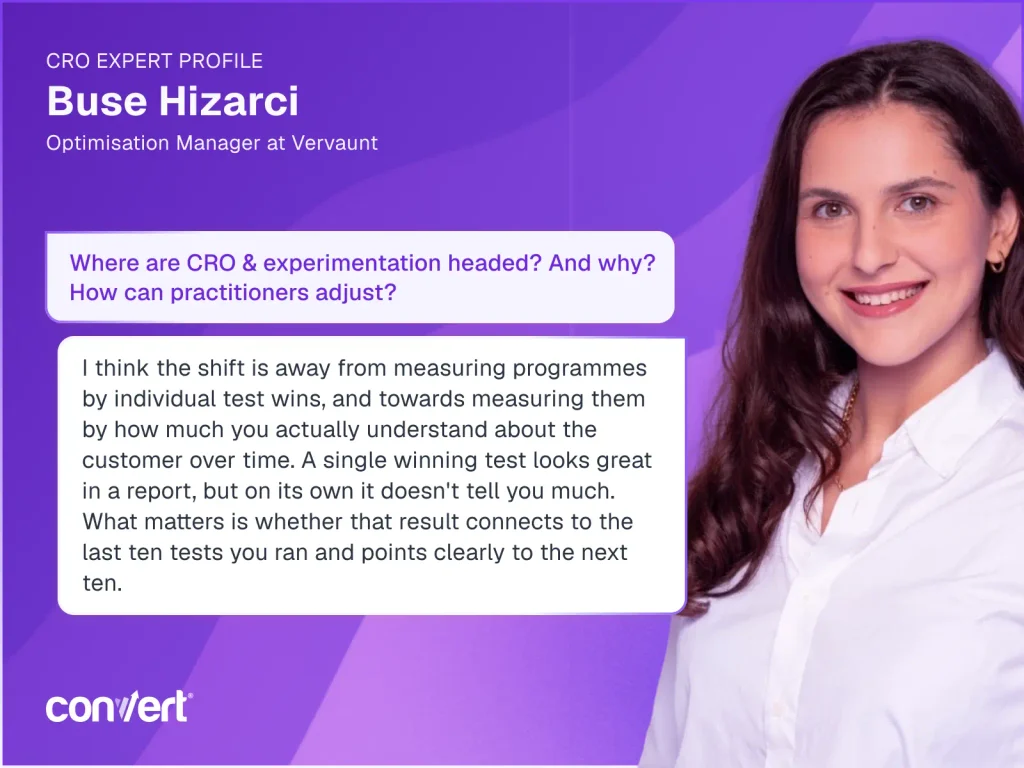
As execution becomes commoditized through AI and automated testing platforms, the competitive advantage for practitioners will lie in their ability to build a longitudinal understanding of the customer. Hizarci predicts that the industry will increasingly distance itself from measuring success solely through individual test "wins."
Implications for Practitioners
Practitioners must adjust by becoming more than just executors of tests; they must become architects of insight. This involves:
- Connecting the Dots: Ensuring that test results from one month directly inform the hypotheses for the next.
- Prioritizing Research: Investing heavily in "the why" before deciding "the what" to change.
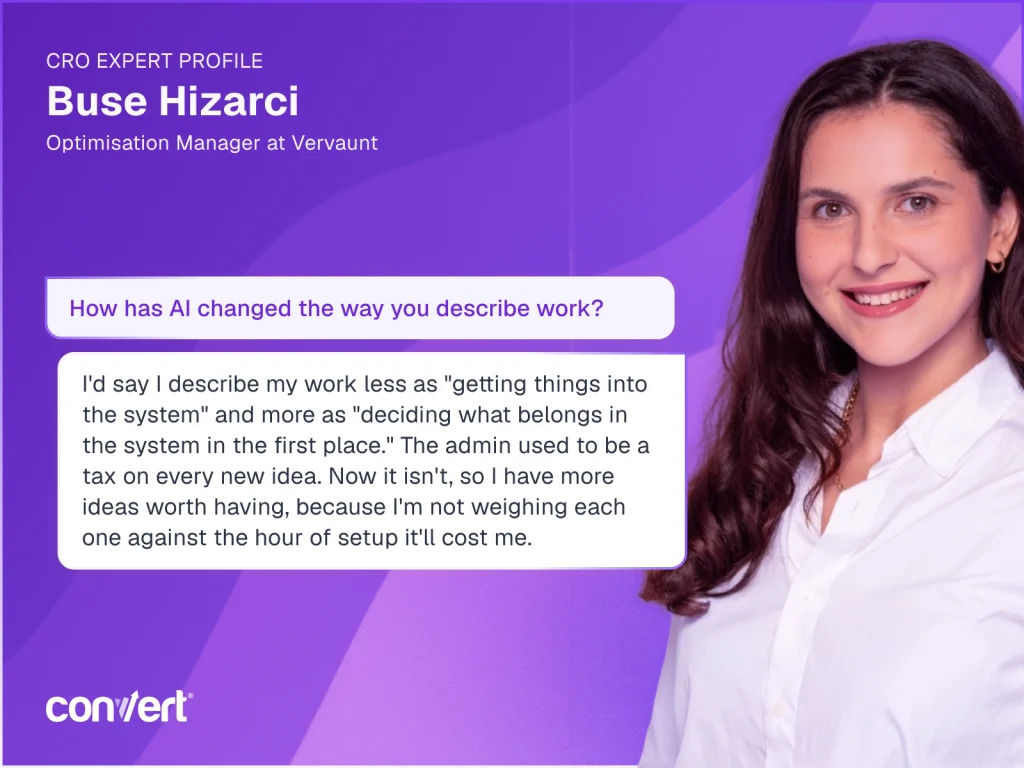
- Operational Agility: Using AI to automate repetitive admin tasks—such as meeting notes, ticket creation, and research documentation—to free up time for high-level strategic thinking.
Broader Impact and Industry Analysis
The insights shared by Hizarci reflect a maturing industry that is becoming more integrated with overall business intelligence. The transition from Google Universal Analytics to GA4 has forced many brands to re-evaluate their data structures, providing a timely opportunity to implement the kind of rigorous, hierarchical testing programs Hizarci describes.
Furthermore, the rise of "Written by Human" initiatives, as seen in Hizarci’s own work, highlights a growing tension in the digital space. While AI provides the speed, the human element remains essential for empathy, ethical considerations, and the nuanced understanding of brand identity. For DTC brands, the ability to balance the efficiency of AI with the strategic depth of human expertise will likely be the defining factor in their ability to scale in an increasingly crowded global marketplace.

In conclusion, the discipline of optimization is moving toward a more scientific and integrated future. By focusing on turning assumptions into evidence through a structured hierarchy of objectives, and leveraging AI to accelerate the mundane aspects of execution, professionals like Buse Hizarci are setting a new standard for how brands interact with and understand their digital audiences. The ultimate goal is no longer just a higher conversion rate; it is a more profound, data-backed understanding of the human beings behind the clicks.