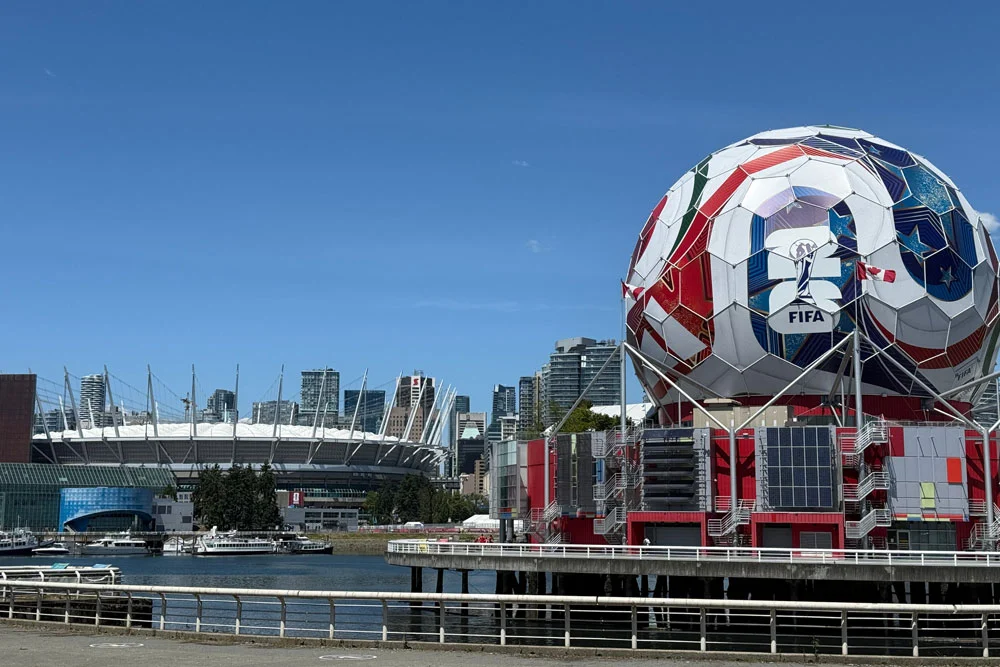
The FIFA World Cup 2026, a sprawling multi-national event hosted across Canada, Mexico, and the United States, has provided more than just a spectacle of athletic prowess; it has served as a profound case study in strategic management, resilience, and the unpredictable nature of competitive ecosystems. As the tournament progresses through its expanded 48-team format, the shifts in power dynamics on the pitch have begun to mirror the volatile yet rewarding landscape of the global affiliate marketing industry. Observations from the ground—ranging from the arrival of the Tartan Army in North American hubs to the shocking exits of perennial powerhouses—reveal that the principles governing world-class soccer are increasingly applicable to digital performance marketing. By analyzing the structural successes and failures within the tournament, industry professionals can derive actionable insights into teamwork, market disruption, and the necessity of continuous adaptation.
The Architecture of Collective Success: Moving Beyond Individual Brilliance
A primary takeaway from the early stages of the FIFA World Cup 2026 is the diminishing returns of isolated talent in the absence of a cohesive collective. While individual skills remain a prerequisite for entry into elite tiers, the tournament has demonstrated that even the most decorated players cannot carry a deficient system. The struggle of Croatia, despite the technical mastery of Luka Modrić against Portugal, and the exit of Portugal themselves at the hands of a disciplined Spanish side in the Round of 16, underscore a critical reality: genius is a component of success, not a guarantee of it.
In the realm of affiliate marketing, this translates directly to the structure of affiliate management agencies and the programs they oversee. An agency’s efficacy is fundamentally capped by the collective strength and diversity of its team members. Relying on a single "super-affiliate" or a solitary high-performing marketing channel creates a precarious single point of failure. Just as a soccer team requires a balanced distribution of defensive stability, midfield transition, and offensive creativity, a robust affiliate program must be diversified across multiple marketing channels.
Data from recent industry reports suggests that programs relying on a single affiliate type (such as purely coupon or loyalty sites) experience 30% higher volatility in year-over-year revenue compared to those with a diversified base. To protect long-term revenue and ensure the quality of referrals, managers are increasingly looking toward a mix of content creators, social media influencers, niche bloggers, and traditional review sites. This diversification mirrors the tactical flexibility required in international soccer, where a team must be able to pivot its strategy based on the opponent’s formation and the specific pressures of the match.
The Rise of the Underdog: Disrupting Established Market Hierarchies
One of the most compelling narratives of the 2026 tournament has been the unprecedented performance of historically "smaller" nations. The Group Stage saw Curaçao, making its debut on the world stage, secure a 0-0 draw against an Ecuadorian side favored to advance deep into the knockout rounds. Similarly, in the Round of 16, Egypt demonstrated tactical superiority for the majority of their match against Argentina, leading the defending champions 2-0 well into the second half. These instances validate the ancient strategic wisdom often attributed to Sun Tzu: there is no greater danger than underestimating an opponent.
This phenomenon of the "underdog" is equally prevalent in the commercial sector, particularly within the mattress-in-a-box industry. When AM Navigator launched the affiliate program for Nectar Sleep in early 2017, the brand entered a saturated market dominated by established giants such as Casper, Saatva, and Purple. These incumbents possessed larger budgets, deeper historical data, and established brand recognition. However, by leveraging a highly aggressive and meticulously managed affiliate strategy, Nectar Sleep’s program ascended to the number one position on the ShareASale network in just over one year.
The success of Nectar Sleep illustrates that being an underdog is not a sentence to mediocrity but an opportunity for agile disruption. By identifying gaps in the incumbent’s strategies—such as underserved niche content sites or more favorable commission structures for high-intent reviewers—smaller brands can bypass the traditional barriers to entry. In both sports and business, the "underdog" status allows for a level of risk-taking and unconventional tactical maneuvering that established "top-tier" entities often avoid due to institutional inertia.
The Imperative of Continuous Evolution: Avoiding the Stagnation Trap
The FIFA World Cup 2026 has been a graveyard for legacy reputations. Italy, a four-time world champion, failed to qualify for the tournament entirely, marking a period of sustained crisis for the Azzurri. The Netherlands, despite their tactical heritage, were eliminated by Morocco in the Round of 32, while Brazil’s journey ended abruptly in the Round of 16 following a loss to Norway. Norway’s ascent is particularly noteworthy; having not qualified for a World Cup in nearly three decades, their presence in the Quarterfinals serves as a testament to long-term structural rebuilding and adaptation to the modern game.
The parallel in affiliate marketing is the "dynamic" nature of the digital landscape. The strategies that generated significant Return on Ad Spend (ROAS) five years ago are frequently obsolete today due to changes in consumer privacy laws, search engine algorithms, and the rise of Artificial Intelligence in content generation. Resting on past laurels is a precursor to obsolescence.
Chronology of Market and Tournament Shifts
To understand the current state of play, it is helpful to examine the timeline of how these two disparate worlds arrived at their current junctions:
- 2017-2018: The "Mattress Wars" peak in affiliate marketing; Nectar Sleep disrupts the market, proving that aggressive affiliate management can unseat established leaders.
- 2022-2024: FIFA begins the transition to a 48-team format, expanding the global footprint of the tournament and allowing "underdog" nations more opportunities for top-tier exposure.
- 2025: Affiliate marketing global spend surpasses $17 billion, driven by a shift toward performance-based models as traditional display advertising faces declining engagement.
- 2026 (Summer): The World Cup enters the knockout stages; Norway and Morocco emerge as dominant forces, while traditional giants face internal reckonings.
Official Responses and Strategic Analysis
Industry analysts and sports commentators alike have noted that the "expanded" nature of both the World Cup and the digital economy has lowered the floor for entry but raised the ceiling for excellence. FIFA officials have defended the 48-team expansion as a means of "democratizing global football," a sentiment echoed by affiliate network executives who view the democratization of marketing tools as a boon for small-to-medium enterprises (SMEs).
However, this democratization brings heightened competition. According to data from the Performance Marketing Association, the cost of acquisition in high-competition niches has risen by 15% annually. This necessitates a move away from "set-and-forget" affiliate programs toward active, education-focused management. Professional development, such as attending industry-leading conferences like the Affiliate Summit in New York, is no longer optional for those wishing to maintain a competitive edge.
The broader implications are clear: whether managing a national soccer team or a multi-million dollar affiliate program, the requirements for success are identical. One must build a diverse and resilient team, maintain a healthy respect for emerging competitors, and commit to a cycle of perpetual learning.
Broader Impact and Future Implications
As the FIFA World Cup 2026 moves toward its conclusion, the lessons learned from the pitch will likely inform corporate strategy for years to come. The "Norway Model" of patient, data-driven rebuilding and the "Nectar Sleep Model" of aggressive, affiliate-led market entry provide blueprints for how to navigate complex, high-stakes environments.
The future of affiliate marketing will likely be defined by "hyper-localization" and "niche authority," mirroring how smaller national teams have used local talent and specific tactical identities to overcome larger, more generalized opponents. As the online landscape becomes more fragmented, the ability to manage a "team" of diverse affiliates—each serving a specific micro-audience—will be the defining characteristic of the next generation of market leaders.
The 2026 tournament has proven that the old hierarchies are fragile. In an era defined by rapid communication and globalized talent, the distance between the "champion" and the "underdog" has never been smaller. For the affiliate marketer, this represents both a significant threat and an unprecedented opportunity. The key to navigating this transition lies in the recognition that the tournament never truly ends; it merely evolves into its next phase, demanding new strategies, new alliances, and a relentless pursuit of excellence.