The field of artificial intelligence is currently witnessing a transition from static large language models (LLMs) to autonomous agentic systems capable of refining their own operational logic in real-time. Central to this evolution is a new learning paradigm known as Agentic Context Engineering, or ACE. Unlike traditional machine learning approaches that require computationally expensive updates to a model’s underlying weights, ACE enables an AI agent to improve its performance across successive tasks by iteratively editing the context it reads. This methodology effectively creates a "living" playbook of instructions, allowing the agent to learn from its mistakes and successes without the need for additional training or fine-tuning of the neural network itself.
The emergence of ACE addresses a critical bottleneck in the deployment of AI agents: the "forgetting" problem. In conventional setups, an agent might encounter a specific technical quirk in an API or a unique domain-specific rule, resolve it through trial and error, and then immediately lose that knowledge once the session context is cleared. When faced with the same challenge a week later, the agent is forced to repeat the same errors. ACE solves this by capturing reusable lessons and storing them in a structured, modular format that is retrieved and updated as the agent moves from one task to the next.
The Mechanics of Context Erosion and the ACE Solution
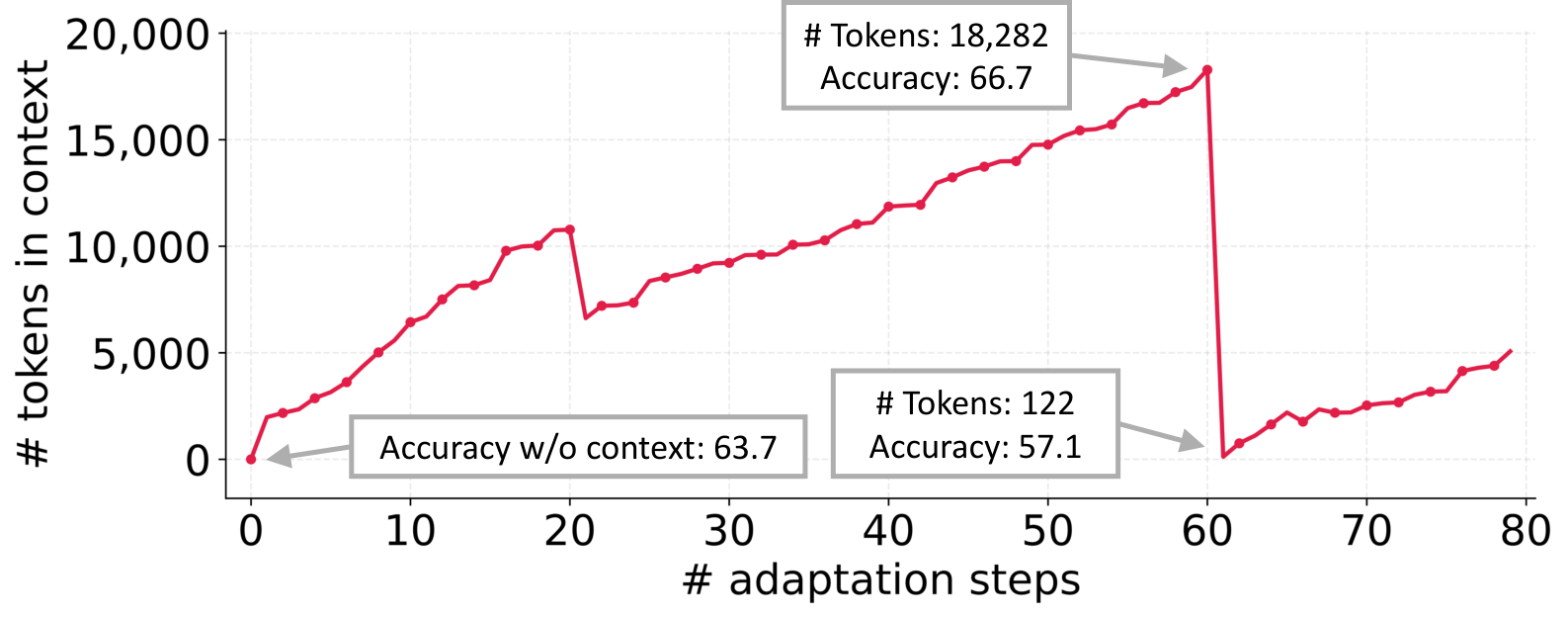
To understand the necessity of ACE, one must first examine the failures of previous context-management systems. Many early attempts at "agentic memory" relied on asking the LLM to summarize or rewrite its entire history of learned lessons whenever a new piece of information was acquired. Research conducted on the AppWorld benchmark—a complex environment where agents interact with multiple APIs to solve tasks—revealed that these full-rewrite mechanisms often lead to catastrophic information loss. In one documented case study, a "Dynamic Cheatsheet" context collapsed from 18,282 tokens to a mere 122 tokens in a single update cycle. This 99% reduction in information caused the agent’s task accuracy to plummet from 66.7% to 57.1%.
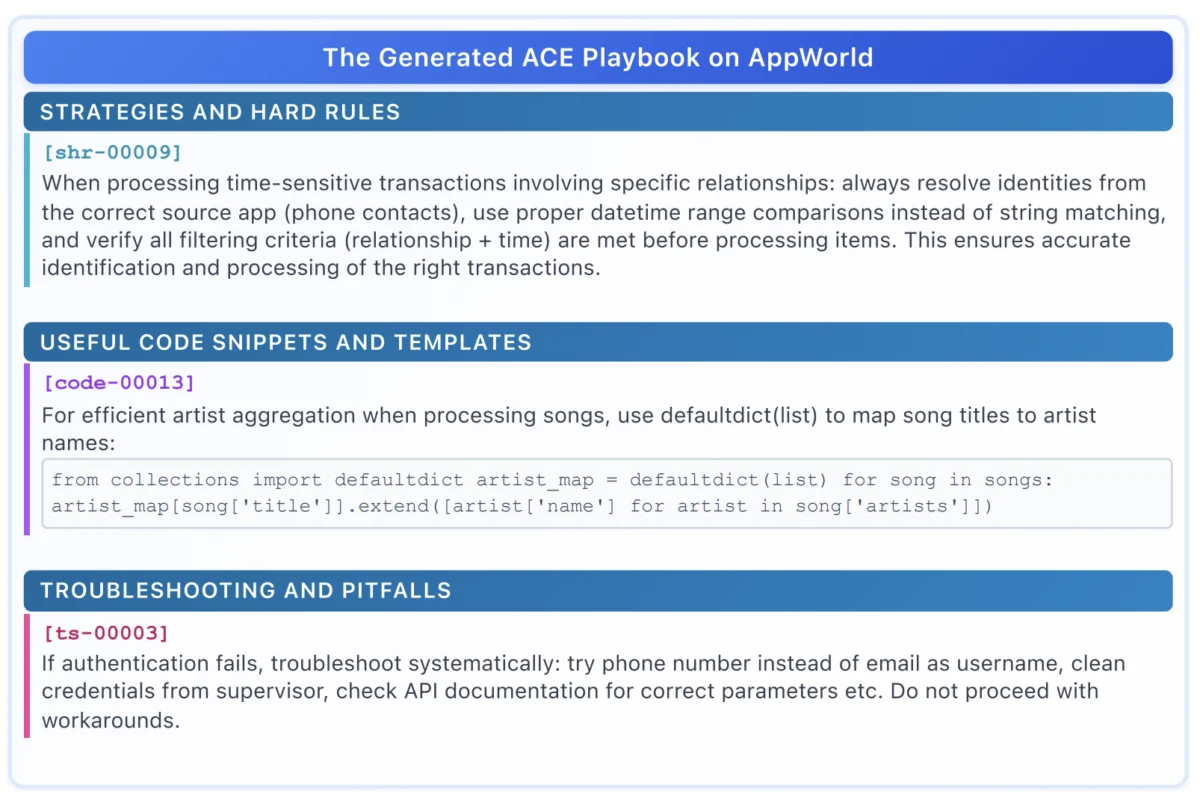
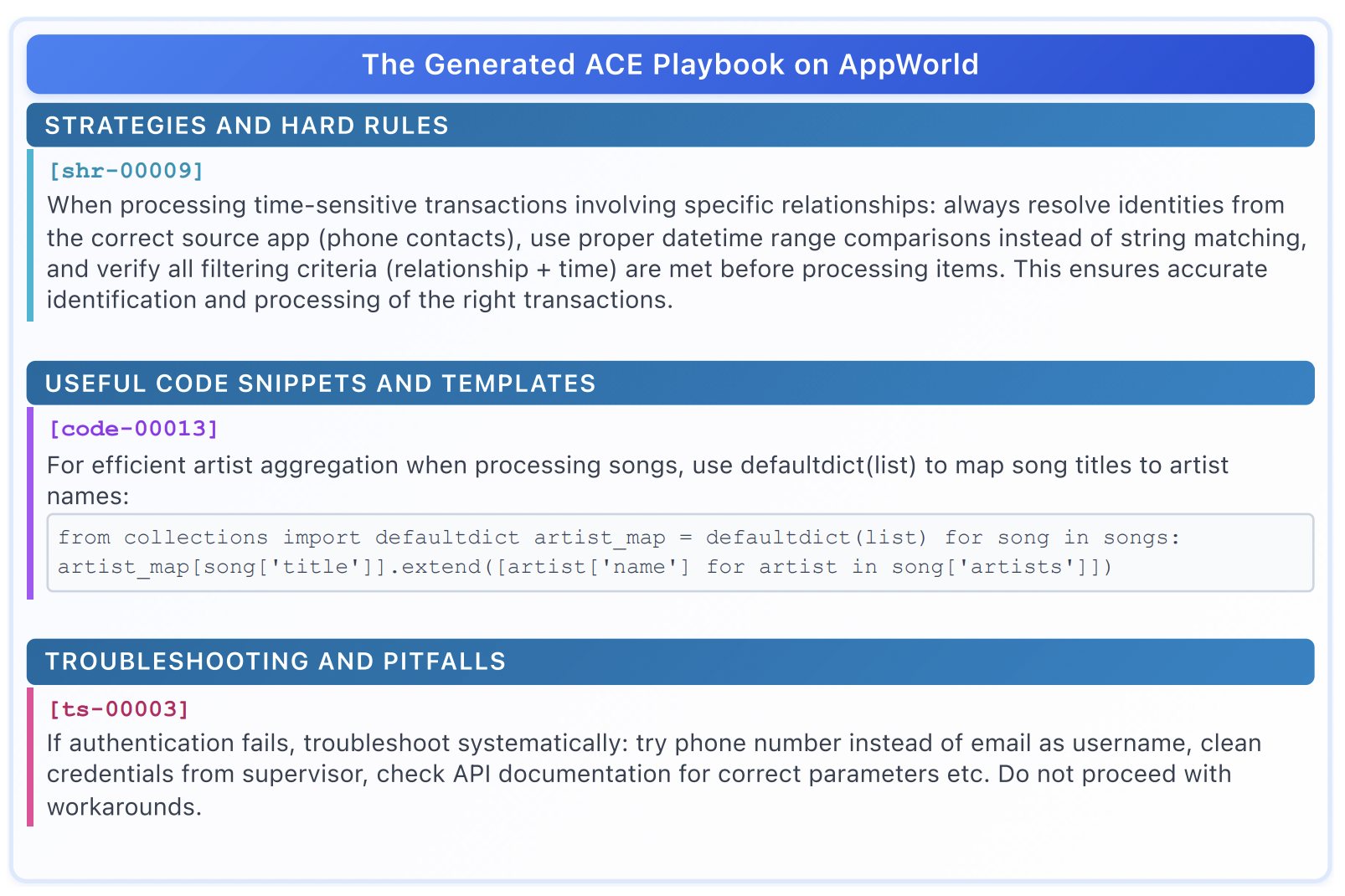
The primary cause of this collapse is the tendency of LLMs to prioritize brevity or lose track of granular technical details when tasked with summarizing large volumes of text. ACE avoids this pitfall by abandoning the "full rewrite" philosophy. Instead, it treats context as a collection of small, named entries. When an agent learns something new—such as a specific troubleshooting step for a financial database—it performs a "delta update." It either creates a new entry or edits only the specific relevant entry in its playbook. This modular approach preserves the integrity of the broader knowledge base while allowing for targeted improvements.
The Three-Part ACE Architecture
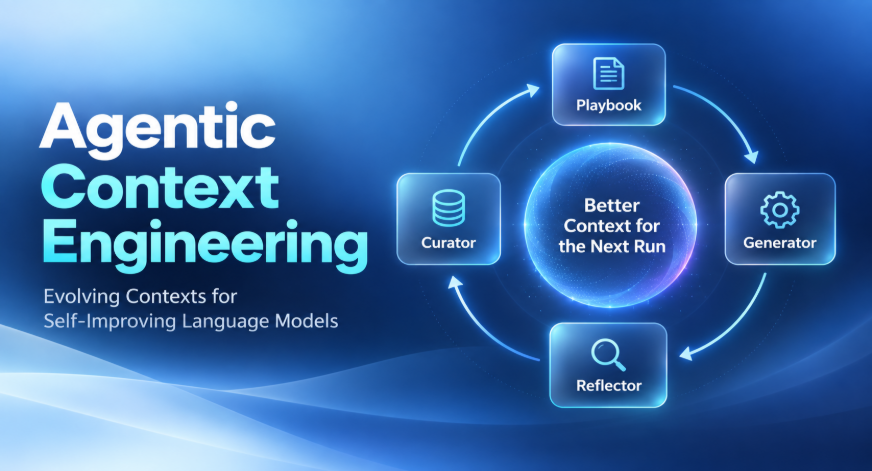
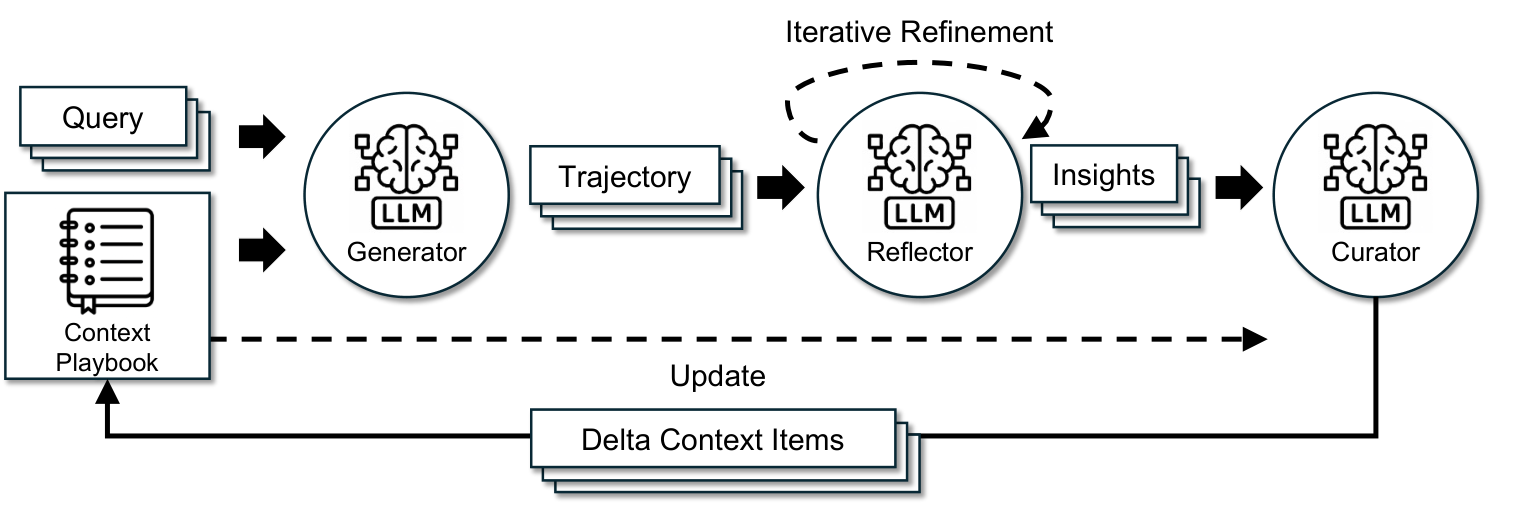
The operational framework of ACE is built upon a continuous feedback loop consisting of three distinct functional roles: the Generator, the Reflector, and the Curator. Each component serves a specific purpose in ensuring that the agent’s playbook remains accurate, concise, and actionable.
- The Generator: This is the primary agent tasked with executing the objective. It reads the current playbook, utilizes available tools, and attempts to complete the task. Its performance provides the raw data—successes, failures, and execution logs—that the rest of the system analyzes.
- The Reflector: Once a task is completed or an error is encountered, the Reflector analyzes the interaction history. Its goal is to extract "reusable insights." For example, if the Generator failed to process a multi-page invoice because it didn’t recognize a "next_page" field in the API response, the Reflector identifies this specific procedural gap.
- The Curator: The Curator is responsible for the long-term maintenance of the playbook. It takes the insights from the Reflector and determines how to integrate them. This involves adding new entries, revising existing ones with more accurate data, or merging redundant entries to keep the context window efficient. The Curator also manages "helpfulness" counters for each entry, pruning rules that consistently lead to poor outcomes or that have become obsolete.
Importantly, this entire loop occurs at the inference level. The model’s weights remain frozen, which means the agent can "learn" in environments where training is prohibited due to security, cost, or hardware limitations.
Empirical Performance and Benchmarking
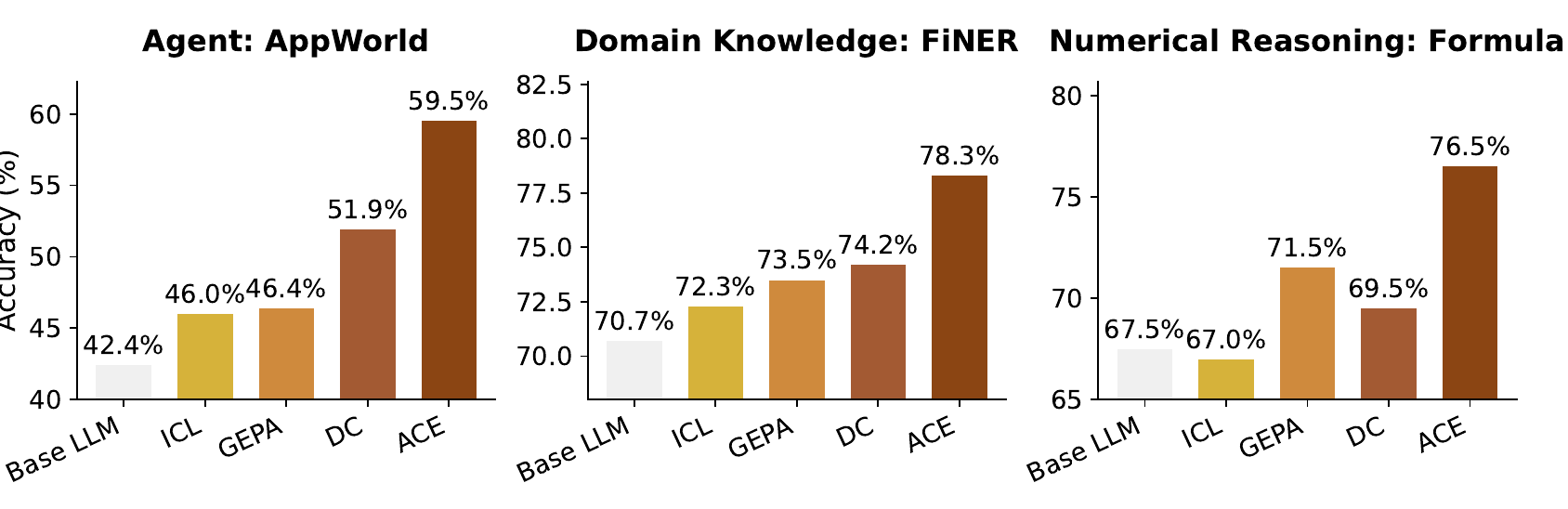
The efficacy of ACE has been tested across several rigorous benchmarks, including AppWorld for general tool use and FiNER and Formula for financial reasoning. These tests compare ACE against other state-of-the-art methods like Generalized Prompt Augmentation (GEPA) and Dynamic Cheatsheets.
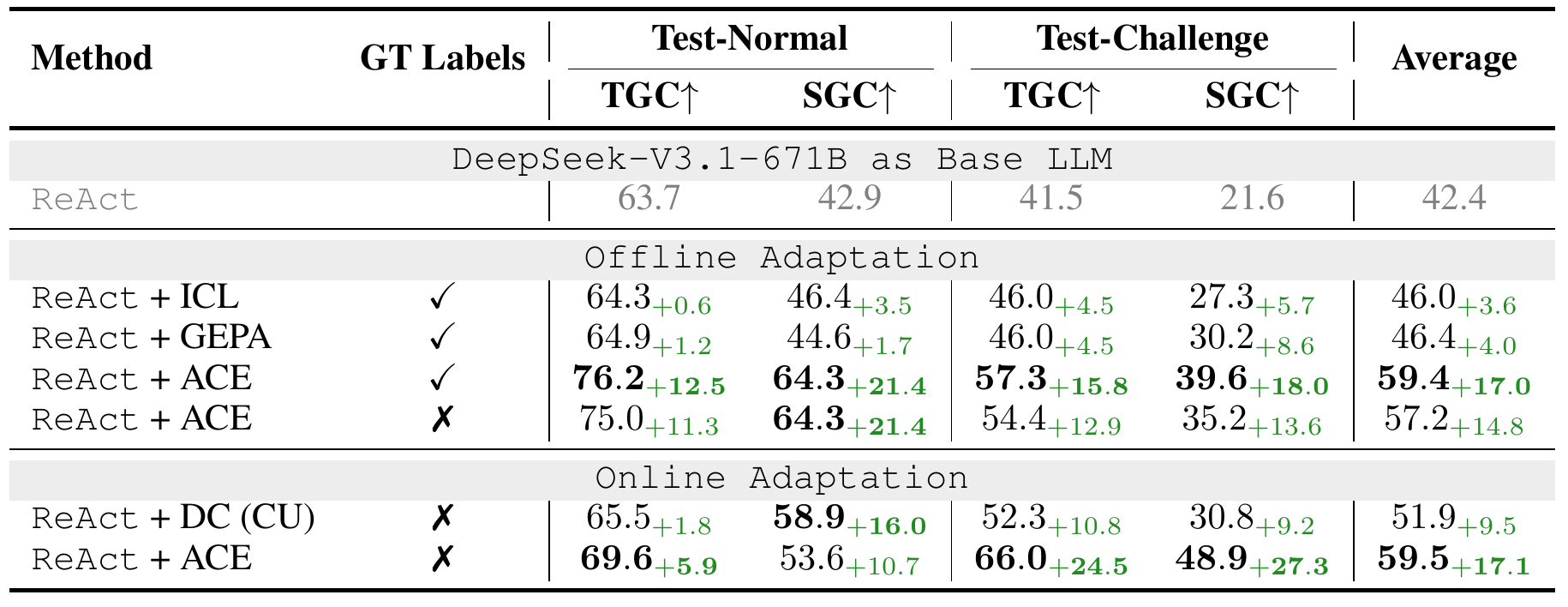
In the AppWorld environment, which requires agents to write code and call APIs to manage simulated digital lives, ACE showed a significant performance advantage. Using the DeepSeek-V3.1 backbone, the "offline" version of ACE—where a playbook is built over a series of training tasks before being frozen for testing—consistently achieved higher scores than GEPA. Even more impressive was the "online" adaptation performance. In this setting, the agent updates its playbook in real-time as it works through a sequence of tasks. When provided with an initial "warmup" period, online ACE outperformed all existing dynamic context methods, demonstrating its ability to rapidly stabilize its performance in novel environments.
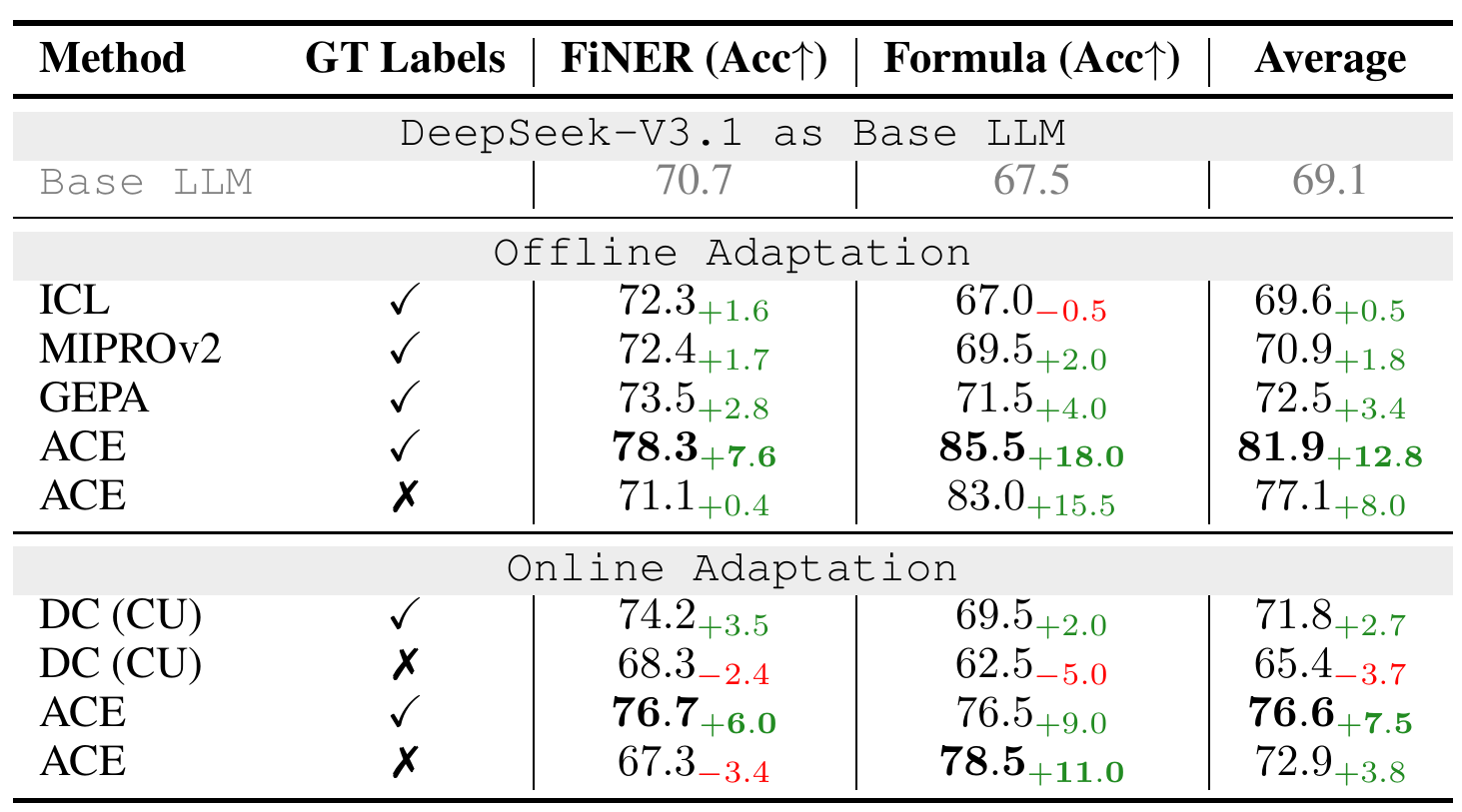
The financial benchmarks, FiNER and Formula, highlighted both the strengths and the boundary conditions of the ACE paradigm. When ground-truth labels (the correct answers) were provided for the learning phase, ACE averaged an 81.9% accuracy rate, significantly higher than the 72.5% achieved by GEPA. However, the study also revealed a vulnerability: when the agent relied solely on its own internal feedback (no-label setting) in the FiNER task, its performance dropped to 67.3%, which was lower than the base model’s 70.7%.
This finding underscores a critical reality of agentic learning: the quality of the feedback signal is paramount. If an agent lacks a dependable way to verify its own success, it risks "hallucinating" incorrect procedural rules and encoding them into its playbook. In the FiNER task, which involves complex entity recognition, the absence of clear feedback led the agent to learn "bad lessons," whereas in the Formula task, where mathematical outcomes are easier to verify, the agent still showed improvement even without labels.
Operational Efficiency and Computational Costs
Beyond accuracy, ACE offers substantial improvements in the speed and cost of the learning process. In the offline AppWorld trials, the time required to develop a high-functioning playbook was significantly lower than that of GEPA. In the online FiNER setup, ACE was both faster and cheaper to operate than Dynamic Cheatsheet systems.
These efficiencies are largely attributed to the modular nature of the updates. Because the system is only editing small "deltas" rather than re-processing the entire context history, the computational overhead per update is minimized. However, the authors of the ACE paper note a secondary cost consideration: as a playbook grows in complexity to cover more edge cases, the total number of tokens the agent must read for every subsequent task increases. This results in a trade-off between the depth of the agent’s "experience" and the inference cost of processing longer prompts.
Implications for the Future of Agentic AI
The development of ACE arrives at a pivotal moment as the industry moves toward "Agentic LLMs" and ecosystems like GPT-6 Astra. These future systems are expected to act as long-term digital assistants, handling complex workflows over weeks or months. For such systems to be viable, they cannot start every day with a "blank slate." They must possess a form of memory that is both persistent and precise.
ACE provides a blueprint for this type of memory. By moving away from the "black box" of weight updates and toward a transparent, human-readable playbook, ACE also offers a degree of interpretability that is often missing in AI systems. A developer can open an agent’s playbook and see exactly what rules it has learned, why it learned them, and how often those rules have been successfully applied. This allows for a "Human-in-the-Loop" configuration where a supervisor can manually veto a "bad lesson" before it becomes a permanent part of the agent’s operational logic.
Furthermore, ACE suggests a more scalable path for specialized AI. Instead of building separate fine-tuned models for every specific industry—one for legal, one for medical, one for engineering—a single high-capability base model could be equipped with different ACE playbooks. These playbooks would act as "software modules" that the agent swaps in and out depending on the task at hand, drastically reducing the storage and deployment costs associated with multi-model architectures.
Conclusion
Agentic Context Engineering represents a significant step toward truly autonomous and self-improving AI. By treating context as a structured, editable asset rather than a fleeting conversation history, ACE allows agents to accumulate wisdom through experience. The results from AppWorld and financial benchmarks confirm that this approach can yield substantial gains in reliability and task success, provided the agent has access to a clear feedback signal.
As AI agents become more integrated into professional and personal workflows, the ability to learn "on the job" without constant retraining will be a defining characteristic of successful systems. ACE demonstrates that the path to smarter agents may not lie in larger models or more data, but in a more sophisticated and disciplined way of managing what the agent already knows. The shift from "static assistants" to "evolving experts" is well underway, and Agentic Context Engineering is a foundational technology driving that transformation.