Late-stage buyer journey results are the primary focus for many B2B marketing leaders, yet paradoxically, it’s precisely in this crucial phase that B2B influencer and creator marketing programs often experience underinvestment. New research from TopRank Marketing, detailed in their "2027 B2B Creator and Influencer Marketing Report," reveals a significant disconnect between perceived program effectiveness and strategic allocation of resources. The report indicates that B2B marketers who categorize their influencer programs as "very effective" are substantially more likely to leverage influencer marketing across all stages of the buyer’s journey, not just the initial awareness phase.
Traditionally, B2B influencer marketing has been predominantly viewed as a top-of-funnel awareness tactic. Its core function is to build brand recognition and establish foundational trust by capitalizing on the established credibility of B2B creators. While this role is undeniably vital, without a comprehensive content strategy designed to harness this early-stage influence, brands risk failing to realize the full potential and impact of their investments. This report aims to guide marketers on how to strategically align their influencer mix, content topics, and formats with each distinct phase of the modern B2B buyer journey.
The Awareness Stage: Capturing Attention and Building Credibility
At the outset of their journey, buying groups and potential customers are primarily seeking information and validation. For these individuals, content generated by business influencers and creators serves as a powerful tool for reaching a broad, relevant audience, establishing brand credibility, initiating conversations, and fostering initial relationships. The objective is to make a significant impact with thought-provoking content delivered by respected voices within the industry.
This approach aligns with the prevailing utilization of influence in B2B marketing. According to TopRank’s own "State of B2B Thought Leadership" research, a substantial 66% of B2B marketers rely on thought leadership content during the awareness stage to enhance visibility and credibility. This underscores the critical role that recognizable and trusted voices play in the early stages of the buyer’s journey.
Data from the "2027 B2B Creator and Influencer Marketing Report" corroborates this. When selecting creators, B2B marketers prioritize trustworthiness and credibility (46%) and audience relevance (40%) significantly above sheer audience size (30%). While reach remains important for making an initial splash, it functions more as a tiebreaker than a primary selection criterion at this stage.
Key B2B creator profiles for awareness-stage initiatives often include what TopRank Marketing terms "brandividuals." This category encompasses individuals such as keynote speakers, consultants, podcasters, and social media personalities. Increasingly, entertainment creators are also emerging in this space, bringing a high level of visibility and engaging, often infotainment-style content to industry topics. The research indicates that entertainment creators now feature in approximately one-third of all B2B influencer rosters. Crucially, highly effective influencer programs are nearly twice as likely (43%) to integrate entertainment creators compared to all other programs (25%).
Quote: "Very effective B2B influencer marketing programs are nearly twice as likely as all others to partner with entertainment creators."

For awareness-stage content, topics should generally remain high-level, designed to showcase industry expertise and address the overarching challenges potential customers face. Examples include:
- Industry Trends and Future Outlooks: Providing a bird’s-eye view of market shifts and predictions.
- Major Industry Challenges and Opportunities: Identifying broad pain points and potential areas for growth.
- The Evolution of [Specific Industry/Technology]: Discussing the historical context and future trajectory of relevant fields.
A critical consideration for awareness-stage content is whether to gate it. Wherever possible, un-gated content is strongly recommended. Lead generation forms should be reserved for later stages of the buyer journey. This strategy is reinforced by research from Bain & Company, which indicates that approximately 89% of citations for unbranded B2B queries in AI search originate from third-party sources, not brand-owned content. Gated content is effectively invisible to Large Language Models (LLMs) and AI-powered answer engines. Un-gated awareness content can thus serve a dual purpose: building organic awareness and contributing to the AI citations that increasingly drive early-stage discovery.
Case Study Example: DemandBase Assembles a Marketing Superteam
In a notable campaign, TopRank Marketing partnered with DemandBase to transform well-known B2B marketing influencers into superhero characters. This creative initiative, centered around a narrative of saving the B2B marketing world from "human spam," aimed to raise awareness for DemandBase’s new Smarter GTM™ solution. The campaign was characterized by its bold, colorful, and creative approach, featuring prominent figures in the B2B marketing landscape. Significantly, the content was entirely un-gated, prioritizing broad reach and engagement over immediate lead capture. The campaign’s visual assets, such as the "thrilling tales of smarter GTM" comic book, exemplified this approach.
Mid-Stage Engagement: Delivering Practical Utility and Value
As buyers move into the middle stages of their journey, the focus shifts from broad awareness to actionable, highly useful content. This stage is about forging deeper connections with the audience and demonstrating tangible value. Content that empowers key decision-makers to excel in their roles, potentially leading to promotions or increased recognition, holds immense value. This necessitates a creator mix that reflects a more "on the front lines" mentality.
Collaboration between B2B brands and influencers can significantly accelerate performance during this phase. The "B2B Thought Leadership Report" highlights that 72% of marketers who frequently collaborate with influencers deem their research-based content highly effective, a stark contrast to the 29% efficacy rate reported by others. Practical, experience-driven voices are instrumental in translating insights into actionable strategies, precisely what mid-funnel buyers require.
Quote: "72% of marketers who frequently collaborate with influencers say their research-based content is very effective."
For mid-stage engagement campaigns, a strategic inclusion of brandividuals can still be beneficial for reaching a wider audience. However, the emphasis should increasingly be on incorporating trusted voices with demonstrable practical experience within the industry. This includes individuals actively working in the field or seasoned professionals who have progressed in their careers but maintain a keen understanding of industry dynamics. For instance, a retired CFO who now hosts a CFO interview podcast would be an ideal collaborator for finance-related topics. Similarly, successful practitioners who are currently excelling in their roles can offer invaluable insights. These profiles align with creator types that B2B brands frequently engage at this stage, such as executive leaders (33%) and subject matter experts (36%), alongside customer advocates.
For these influencer partners, the focus shifts from massive reach to delivering useful, actionable information. Recommended engagement topic areas include:

- How-to Guides and Best Practices: Providing step-by-step instructions for common tasks or challenges.
- Deep Dives into Specific Challenges: Offering in-depth analysis and solutions for nuanced problems.
- Case Studies of Practical Application: Illustrating how solutions are used in real-world scenarios.
- Expert Roundups on Niche Topics: Gathering diverse perspectives from specialists on specialized subjects.
In terms of content formats, highly effective programs are considerably more likely to invest in higher-effort, durable formats developed in collaboration with creators. These include podcasts (37% vs. 19%), research reports (35% vs. 22%), and newsletters (38% vs. 25%). If a checklist or how-to guide proves effective, exploring opportunities to develop it into a recurring series rather than a one-off asset can maximize its impact.
The decision to gate mid-funnel content requires careful consideration. Research indicates that buyers are more willing to share their information when influencer content offers clear, credible value, particularly when it’s grounded in original data and expert perspectives rather than mere opinion. It is crucial, however, to build a robust landing page that prominently features the creators, including their headshots and a preview of their content, thereby providing them with compelling reasons to share the asset.
Case Study Example: Prophix Empowers CFO Aspirants
Prophix, in collaboration with TopRank Marketing, developed an SEO-driven power page titled "The Finance Career Acceleration Center." This hub featured video testimonials from customers who had advanced their careers using Prophix, complemented by career advice from CFOs, finance mentors, and content creators through a series of influencer interview blog posts and integrated quotes. The influencers provided the practical expertise buyers were actively seeking, such as guidance on "how to become a CFO," while customer stories offered tangible proof of success. This approach allowed both groups to amplify content that directly addressed a career question without an immediate product pitch.
Late-Stage Conversion: Demonstrating Differentiation and Providing Proof
By the late stages of the buyer journey, prospects are no longer seeking broad industry names or thought leaders. Their primary objective is to understand why a specific solution is superior to alternatives, and they are looking for validation beyond the brand’s own assertions. Trust becomes the decisive factor at this juncture. B2B buyers consistently cite evidence, customer stories, and expert validation as key elements that mitigate risk and expedite decision-making. At this phase, influencers and creators are less about achieving broad reach and more about cultivating belief in the solution.
The definition of an "influencer" can broaden considerably at this stage to include in-house experts and existing customers. The creator mix for late-stage conversion should predominantly feature individuals with hands-on experience with the brand’s solution. These expert and trusted voices are invaluable for articulating what differentiates the brand from its competitors. Customers, in particular, are highly effective, as they can recount their experiences, ideally in their own words, illustrating the impact of the solution.
Customer advocates represent the second most common B2B creator type in influencer programs, trailing only large-audience content creators. Brands that do not systematically identify and activate their most satisfied customers as creators are significantly underutilizing their most persuasive bottom-funnel asset.
Insights into conversion-stage content topics should leverage influencer voices to highlight the unique strengths of the brand, its people, and its solution. Specifically, conversion content should aim to:
- Provide third-party validation: Showcase unbiased endorsements and expert reviews.
- Illustrate product differentiation: Clearly articulate what makes the solution stand out.
- Share customer success stories: Offer relatable narratives of positive outcomes.
- Offer comparative analysis: Position the solution against alternatives in a factual manner.
Regarding gating late-stage content, this is the appropriate phase for implementing lead generation forms. However, as previously noted, it is essential to offer substantial value before the gate, ensuring that influencer partners feel confident in linking to the content. A crucial consideration for content planning is that this type of third-party-validated proof content is highly sought after by AI search engines for citation. A completely gated asset cannot be cited. Therefore, a strategic approach involves pairing gated deep-dive content with an un-gated summary or companion piece. This preserves the lead-generation mechanism for buyers seeking the full asset while ensuring that AI search engines can still access and cite parts of the narrative.

Case Study Example: Deluxe Guides Bankers to Digital Transformation
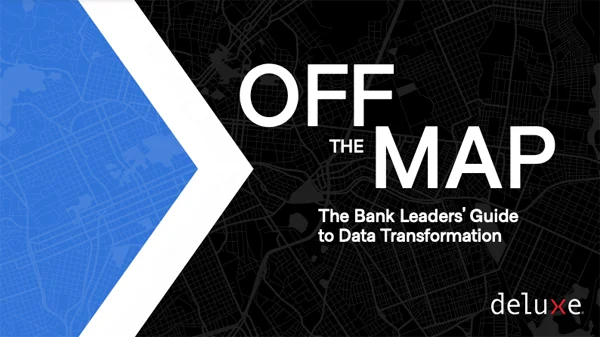
Deluxe’s "Off the Map" guide exemplifies a successful late-stage conversion strategy. The company aimed to demonstrate how its Banker’s Dashboard could assist small banks and credit unions in automating processes and enhancing efficiency. The guide featured advice from industry experts, practitioners, and customers, presented as an un-gated asset. Lead capture was facilitated through a more promotional section on the landing page itself, leading directly to a "Contact Sales" call-to-action. This approach allowed for broad accessibility while still capturing qualified leads.
Post-Sale: Fostering Retention and Advocacy
The customer lifecycle in B2B does not conclude with a signed contract. Highly effective B2B influencer programs are nearly twice as likely as others (46% vs. 25%) to extend influence into the post-sale stage. This gap represents a significant opportunity for growth, as the most effective creators for this phase are often already within the existing customer base.
The creator mix for post-sale content should focus on power users, community members, and the customer success and support teams who champion them internally. Occasional contributions from "graduated" voices—former customers who have advanced in their careers and now speak more broadly about the category—can also bridge back to mid-funnel credibility.
Content topics for expansion should aim to help existing customers derive greater value from their investment, assuming a baseline level of awareness and product knowledge. Examples include:
- Advanced Use Cases and Best Practices: Demonstrating sophisticated ways to leverage the product or service.
- Tips for Maximizing ROI: Providing guidance on achieving the greatest return on investment.
- New Feature Spotlights and Tutorials: Educating users on recently released functionalities.
- Community Engagement and Best Practices: Encouraging participation and knowledge sharing within user groups.
Regarding gating for post-sale content, lead generation forms are unnecessary as this audience has already converted. If any form of access control is implemented, it should be based on belonging, such as a logged-in customer community or a private council.
True B2B Influence is Unlocked Across the Buyer Journey
When B2B influencer voices are strategically integrated into every stage of the buyer journey, from the initial spark of awareness through renewal and advocacy, influencer marketing transcends a mere tactic and evolves into a cohesive system. This system gains even greater significance as discovery itself shifts upstream. Answer engines are far more inclined to cite third-party voices than brands, and these same voices carry amplified weight once awareness has been established. Programs that extend influence through evaluation, decision-making, and post-sale engagement are those that effectively channel discovery into enduring relationships and measurable results.
The framework for integrating influence with comprehensive buyer journey content experiences is known as Best Answer Marketing (BAM). Through a data-informed and integrated strategy, trust becomes systemic, and discovery occurs across the channels where buyers are actively searching, including AI search and LLMs. By adopting BAM, B2B brands can transition from simply executing campaigns to becoming the definitive "best answer" brand within their respective categories.
Influencer marketing can effectively generate attention, but it is belief that ultimately moves buyers forward. A well-crafted strategy can cultivate this belief at every stage, influencing both the humans making purchasing decisions and the AI engines shaping their perception. For organizations ready to build B2B influence that consistently performs across the entire buyer journey, including the evolving landscape of AI search, strategic partnerships and expert guidance can be instrumental in achieving these objectives.