The landscape of digital analytics has undergone a fundamental transformation as organizations move away from siloed reporting tools toward centralized data ecosystems. In a significant move to support this evolution, Crazy Egg, a pioneer in website optimization and user behavior tracking, has officially launched its Data Warehouse Connector. This new enterprise-grade feature allows analytics teams and data engineers to synchronize raw, granular website event data directly into their own managed data warehouses. By facilitating the transfer of raw behavioral records—including every click, scroll, and session interaction—Crazy Egg is enabling businesses to integrate user experience (UX) insights with broader business intelligence (BI) metrics, creating a more holistic view of the customer journey.
The introduction of the Data Warehouse Connector addresses a long-standing challenge in the marketing technology (MarTech) space: the "black box" nature of third-party analytics platforms. Traditionally, tools like heatmaps and session recorders provided summarized visualizations within their own dashboards, making it difficult for data scientists to join that behavioral data with internal CRM, sales, or subscription databases. With this launch, Crazy Egg is prioritizing data portability and governance, allowing organizations to own their raw data and process it according to their specific compliance and architectural requirements.
Technical Architecture and Integration Capabilities
The Data Warehouse Connector is designed to fit seamlessly into modern ELT (Extract, Load, Transform) and ETL (Extract, Transform, Load) pipelines. Rather than forcing users to rely on proprietary APIs that can be subject to rate limits or schema changes, Crazy Egg delivers data to a storage bucket owned and governed by the customer. This ensures that the data remains within the organization’s security perimeter, a critical requirement for companies operating under strict regulatory frameworks such as GDPR, CCPA, or HIPAA.
Technically, the connector utilizes high-performance, open-standard file formats. Data is synced daily in Parquet and Apache Iceberg formats. These formats are widely recognized as industry standards for big data processing due to their columnar storage capabilities, which allow for efficient querying and reduced storage costs. Apache Iceberg, in particular, provides a high-performance table format for huge analytic datasets, bringing the reliability and simplicity of SQL tables to big data while making it possible for multiple engines (such as Spark, Trino, Flink, and Presto) to safely work with the same tables at the same time.
The scope of the data available through the connector is comprehensive. It includes raw events from the full suite of Crazy Egg features:
- Heatmaps and Snapshots: Detailed coordinates of clicks and movements that inform visual engagement.
- Session Recordings: Event-by-event breakdowns of user sessions, allowing for the reconstruction of user paths within a data warehouse environment.
- Error Tracking: Technical logs of client-side errors linked directly to the specific user sessions where they occurred.
- Surveys and Feedback: Qualitative data points that can be correlated with quantitative behavioral patterns.
- Conversion and Click Events: Precise tracking of goal completions and micro-interactions.
To ensure immediate utility, the service includes historical backfills. This allows organizations to not only track future events but also to ingest their existing historical data from Crazy Egg into their warehouse, enabling year-over-year analysis and the training of machine learning models on long-term datasets.
The Strategic Shift Toward First-Party Data Sovereignty
The timing of this release is particularly relevant given the broader shifts in the digital advertising and privacy landscape. As third-party cookies continue to be phased out and privacy regulations tighten, the value of first-party data has reached an all-time high. Organizations are increasingly looking to build "composable" customer data platforms (CDPs) where the data warehouse—be it Snowflake, Google BigQuery, Amazon Redshift, or Databricks—serves as the single source of truth.
By offering a direct warehouse connector, Crazy Egg is positioning itself as a primary data provider for these composable stacks. This move acknowledges that for many modern enterprises, the value of a tool lies not just in its user interface, but in the quality and accessibility of the data it generates. When raw behavioral data is freed from a vendor’s proprietary dashboard, it can be used to power sophisticated attribution models that go beyond "last-click" or "first-click" logic. For instance, a data team can now determine if a specific pattern of interaction with a heatmap—such as hovering over a specific product feature—is a leading indicator of long-term customer lifetime value (CLV).
Chronology of Behavioral Analytics Evolution
To understand the significance of the Data Warehouse Connector, one must look at the chronology of the web analytics industry.
In the early 2000s, analytics were primarily server-side log analyzers. The introduction of JavaScript-based tracking led to the rise of platforms like Google Analytics, which focused on pageviews and bounce rates. Crazy Egg entered the market in 2005, revolutionizing the space by introducing heatmaps, which gave visual context to user behavior that standard metrics could not capture.
By the 2010s, the industry moved toward session recording and "all-in-one" CRO (Conversion Rate Optimization) suites. However, the data remained trapped within these platforms. Analysts could see that users were dropping off a checkout page, but they couldn’t easily link those specific "rage clicks" to a customer’s history in Salesforce or their subscription tier in Stripe.
The 2020s have been defined by the "Data Warehouse-First" era. Companies began investing heavily in centralized cloud data warehouses. The release of the Data Warehouse Connector in late 2026 represents the latest milestone in this timeline: the complete democratization of behavioral data. It marks the transition of UX data from a design-team resource to a core engineering and business intelligence asset.
Supporting Data: The Growth of Centralized Analytics
The demand for tools like the Data Warehouse Connector is supported by recent industry trends. According to market research, the global data warehouse market is expected to grow at a CAGR of approximately 10-12% through 2030. Furthermore, surveys of data engineers indicate that "data silos" remain the number one obstacle to achieving actionable AI and machine learning insights.
In a recent internal study, Crazy Egg identified that enterprise clients who integrated their behavioral data with their internal BI tools saw a 25% faster identification of friction points in the conversion funnel compared to those using siloed dashboards. This efficiency is driven by the ability to run complex SQL queries across disparate datasets, such as joining website "Error Tracking" logs with "Revenue" tables to quantify the exact dollar amount lost due to a specific technical glitch.
Official Responses and Industry Implications
Stephen Ngo, Director of Growth Marketing at Crazy Egg and a veteran of the B2B startup ecosystem with previous leadership roles at Nira, Paddle, and ProfitWell, emphasized the strategic importance of this launch for the modern data stack. "Analytics teams and data engineers can now work with user behavioral records from all Crazy Egg features alongside everything else they’ve centralized in their warehouse," Ngo stated. He highlighted that the goal is to allow businesses to govern their own data while leveraging Crazy Egg’s rich capture capabilities.
Industry analysts suggest that this move puts pressure on other behavioral analytics providers to follow suit. While some competitors offer limited API access or CSV exports, the move to daily, automated syncs in Parquet and Iceberg formats sets a new standard for data-heavy enterprises.
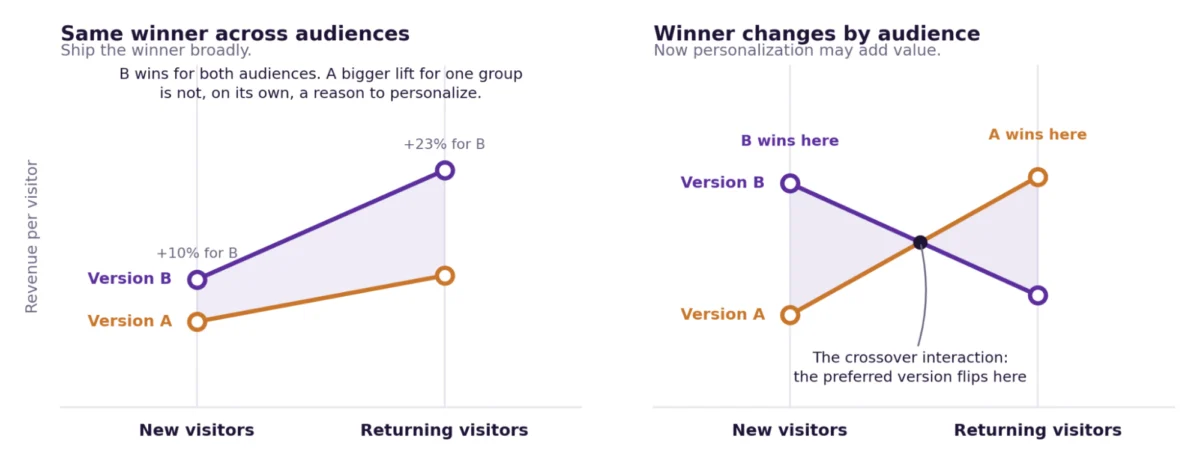
The implications for Artificial Intelligence are particularly noteworthy. As companies race to develop in-house AI agents and "agentic workflows," the need for high-quality training data is paramount. Raw clickstream data provides a "gold mine" of context for AI models. By feeding this data into a warehouse, companies can train models to predict user intent in real-time, allowing for hyper-personalized website experiences that go far beyond basic A/B testing.
Broader Impact on Business Intelligence
The release of the Data Warehouse Connector is likely to change how cross-functional teams interact. When behavioral data is available in a central warehouse, it is no longer the sole province of the marketing or UX team.
- Product Managers can use the data to validate feature adoption by querying how specific user cohorts interact with new UI elements.
- Customer Success Teams can proactively identify struggling users by monitoring session patterns that indicate confusion or technical errors.
- Finance Teams can build more accurate revenue forecasts by incorporating granular conversion signals that precede the actual transaction.
Furthermore, the inclusion of historical backfills ensures that there is no "data gap" when a company decides to upgrade its analytics infrastructure. This continuity is vital for maintaining the integrity of long-term trend analysis.
As organizations continue to navigate an increasingly complex digital landscape, the ability to centralize, govern, and analyze every aspect of the user experience will be a key differentiator. Crazy Egg’s Data Warehouse Connector represents a significant step toward a future where data is not just collected, but fully integrated into the fabric of business decision-making. For organizations interested in custom configurations or specific data models, the company has opened direct channels for consultation, signaling a commitment to white-glove service for enterprise-level data needs.