In an increasingly digitized world where conversations unfold at lightning speed across myriad platforms, social listening has transcended its initial role as a niche marketing tactic to become an indispensable pillar of strategic business intelligence. The practice involves the comprehensive tracking and astute analysis of online dialogue — spanning social media platforms, websites, forums, blogs, and even podcasts — to decipher public sentiment and discourse surrounding a brand, its competitors, or the broader industry landscape. This sophisticated approach offers organizations a real-time, front-row seat to the authentic narratives shaping consumer perception, enabling a proactive rather than reactive stance in the marketplace.
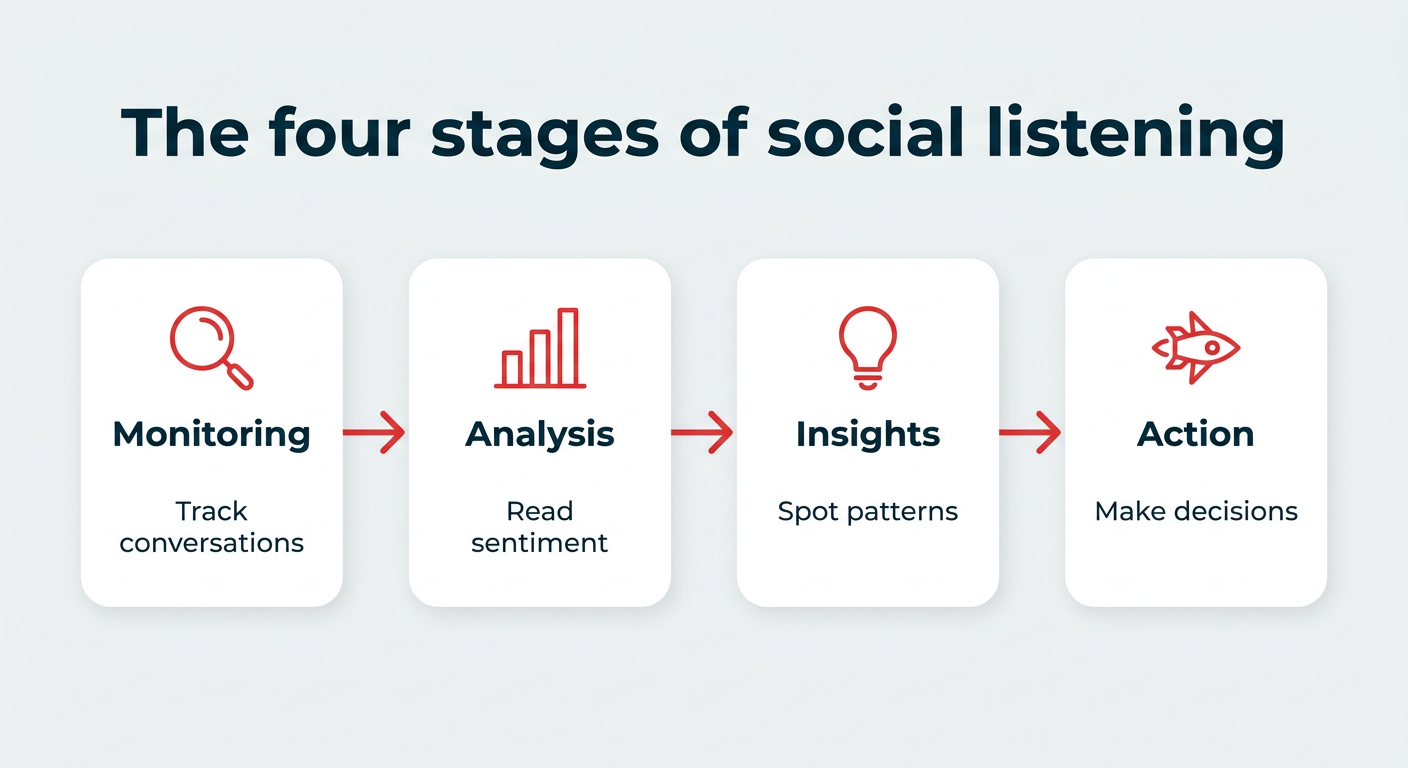
At its core, social listening operates through a four-stage process: meticulous monitoring of relevant digital spaces, systematic analysis of the gathered data, extraction of actionable insights, and ultimately, the strategic implementation of informed actions. With global internet users dedicating an average of 141 minutes per day to social media alone, the sheer volume of conversation data presents both a challenge and an unparalleled opportunity. Effective social listening tools are engineered to consolidate these fragmented signals from diverse online channels – from social networks and review sites to news outlets and specialized forums – into a unified, coherent view, empowering teams to act decisively.

The Evolution of Digital Intelligence: From Monitoring to Strategic Listening
The genesis of social listening can be traced back to the early days of social media, when brands first grappled with the burgeoning digital landscape. Initially, efforts were largely confined to "social media monitoring," a reactive process focused on tracking direct mentions, comments, and messages requiring an immediate response. This was akin to a digital customer service desk, primarily addressing immediate feedback or complaints. The emphasis was on the "what" – what are people saying?
However, as social media matured and data analytics capabilities advanced, the focus shifted. Social listening emerged as a more profound discipline, delving into the "why" behind online conversations. It moved beyond mere tracking to encompass a deeper understanding of underlying sentiment, emerging patterns, and broader cultural shifts. This evolution transformed social data from a purely operational metric into a strategic asset, enabling brands to anticipate trends, mitigate risks, and foster innovation. The distinction is crucial: monitoring is about tracking and responding quickly; listening is about learning from those conversations to improve messaging, products, and customer support over the long term.

Strategic Imperatives: Why Social Listening is Critical for Modern Brands
The importance of social listening for brands in 2025 cannot be overstated. It provides a continuous feedback loop that informs strategic decisions across every facet of an organization, from marketing and product development to customer experience and public relations. Brian Wright, Social Media Listening and Intelligence Leader at Wells Fargo, has highlighted how social listening delivers real-time insights vital for strategic decision-making, particularly during periods of market flux or organizational change.
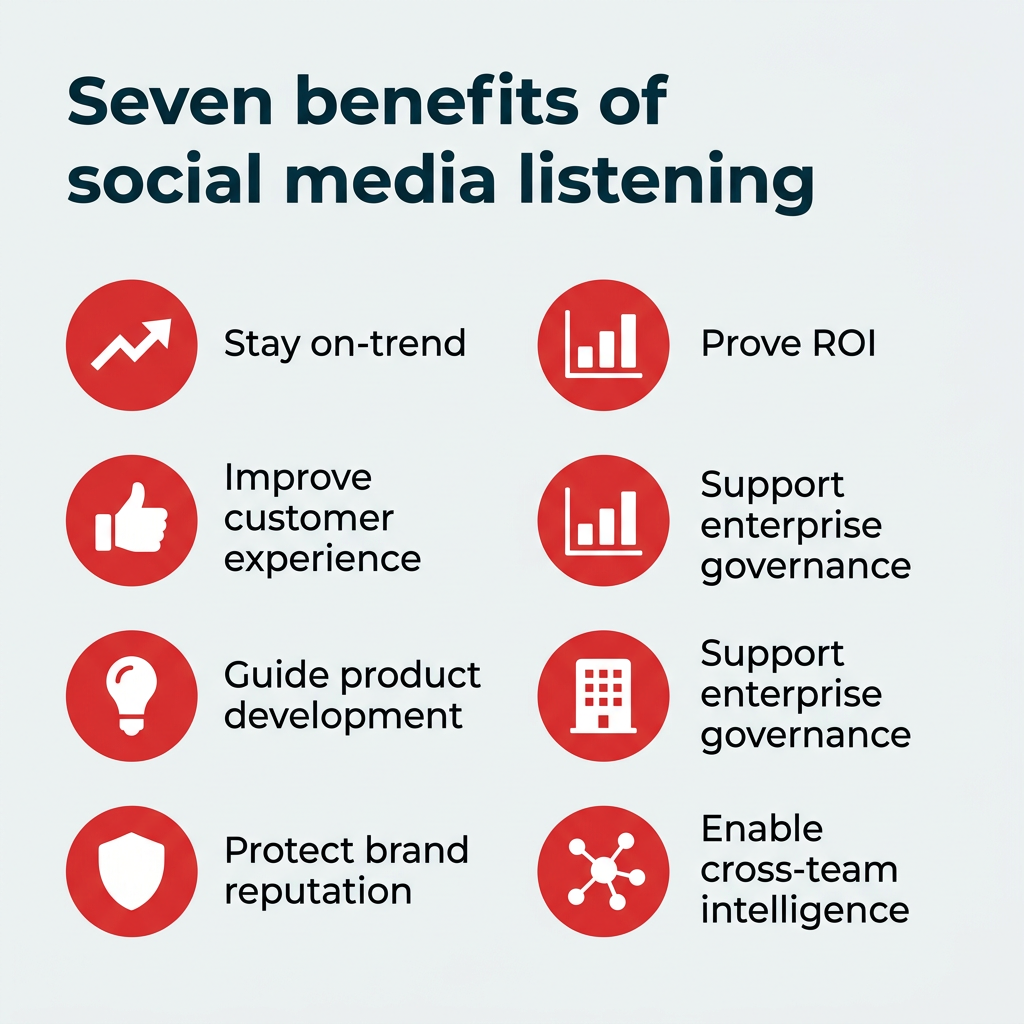
- Elevating Customer Experience (CX): Social listening offers an unparalleled lens into customer satisfaction and pain points. By identifying recurring themes around product issues, service inefficiencies, or unmet needs, brands can proactively address systemic problems before they escalate into widespread discontent. For instance, a software company detecting a surge in mentions regarding "slow loading times" post-update can swiftly route this insight to product engineering, prioritizing a fix and averting a potential customer exodus. This shift from reacting to individual tickets to understanding underlying patterns significantly enhances customer loyalty and reduces churn.
- Strengthening Marketing and Brand Strategy: With approximately 83% of marketers acknowledging increased exposure as a primary benefit of social media, listening provides empirical evidence for decisions often made on intuition. It informs content strategy by surfacing trending topics, helps refine messaging for greater resonance, and provides a clear benchmark for competitive positioning. Understanding brand perception, share of voice, and the efficacy of campaigns through sentiment analysis allows marketing teams to optimize their efforts, ensuring relevance and maximizing ROI.
- Driving Product Development and Innovation: Social conversations are a goldmine of unfiltered user feedback. Listening allows product teams to identify feature requests, gauge satisfaction with new releases, and even uncover entirely new market needs. This direct line to the consumer base fosters agile product development, ensuring offerings remain aligned with evolving customer expectations.
- Proactive Crisis Management and Reputation Protection: In the age of viral content, a single negative comment can quickly escalate into a full-blown crisis. Social listening acts as an early warning system, alerting brands to nascent issues or negative sentiment spikes, enabling rapid, informed responses that can de-escalate situations and protect brand reputation. The financial and reputational costs of mishandling a crisis can be astronomical, making proactive monitoring an essential investment.
- Unlocking Competitive Intelligence: Beyond one’s own brand, monitoring competitor conversations reveals their strengths, weaknesses, and customer pain points. This intelligence can be leveraged to identify market gaps, refine unique selling propositions, and strategically position a brand as a superior alternative. It provides a continuous scan of the competitive landscape, ensuring brands remain agile and responsive.
Core Methodologies of Social Listening
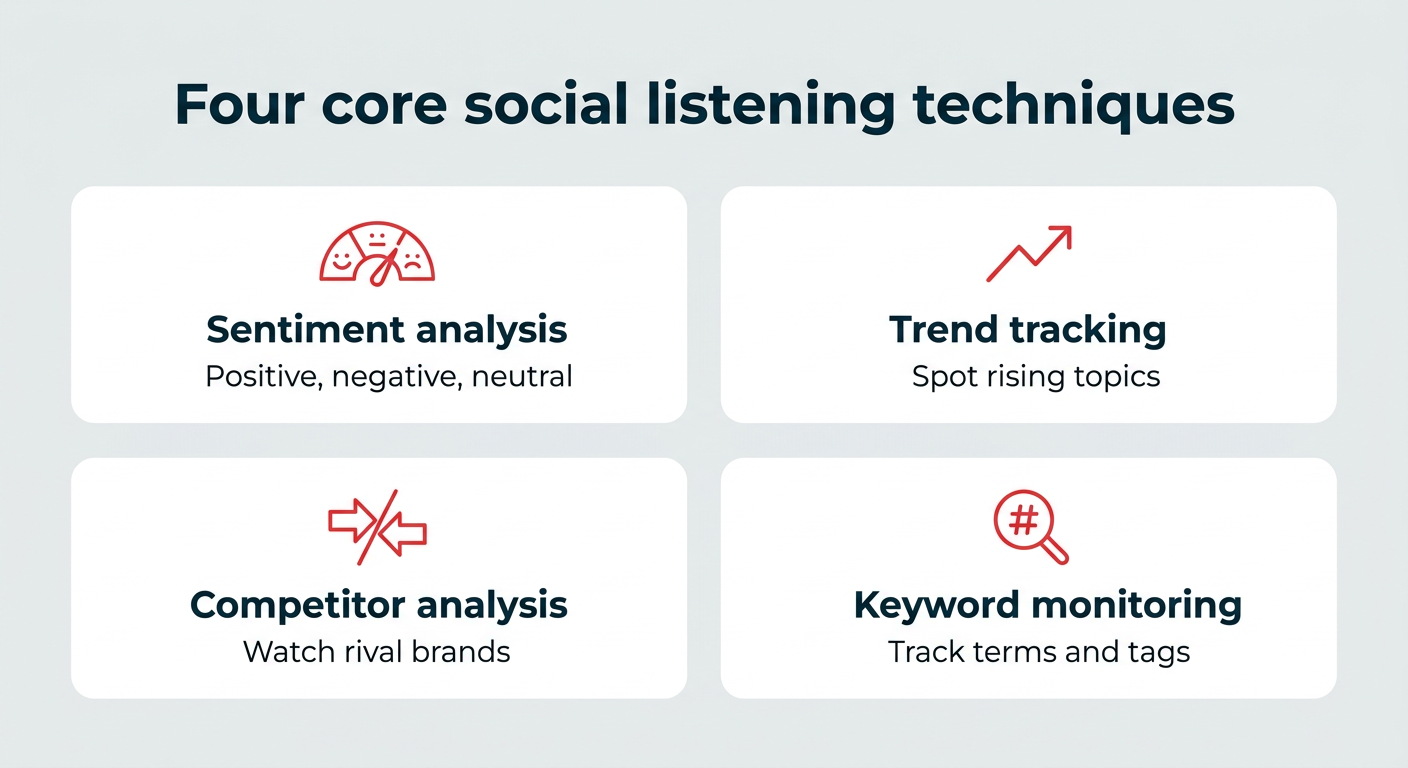
Effective social listening employs several sophisticated techniques to transform raw data into actionable intelligence:
- Sentiment Analysis: This technique categorizes mentions as positive, negative, or neutral, offering a real-time pulse on brand health and public perception. Modern AI-powered tools go beyond simple keyword matching, utilizing natural language processing (NLP) to detect nuances like sarcasm, irony, and contextual sentiment, even across multiple languages. This capability allows brands to quickly identify shifts in public opinion, assess campaign performance, and address negative feedback before it escalates.
- Trend Tracking: Identifying emerging topics, hashtags, and conversations gaining traction within a specific industry or cultural zeitgeist is crucial for staying relevant. Trend tracking helps marketing teams capitalize on cultural moments, plan timely content, and engage in conversations that resonate with their target audience. Its utility for agile campaign planning, where timing is paramount, is immense.
- Competitor Analysis: This involves monitoring discussions around rival brands, products, and services. By analyzing competitor sentiment, common complaints, and areas of excellence, companies can pinpoint market opportunities, understand competitive differentiation, and develop strategies to outperform their rivals. It also provides a clear measure of "share of voice" within a given market.
- Keyword and Hashtag Monitoring: Forming the bedrock of any listening setup, this involves tracking branded terms, product names, industry jargon, common misspellings, abbreviations, and relevant hashtags. Advanced tools also incorporate visual recognition technology to detect logos and product appearances in images and videos, capturing conversations that text-based queries might miss, especially given the rise of visual-first platforms like TikTok and Instagram.
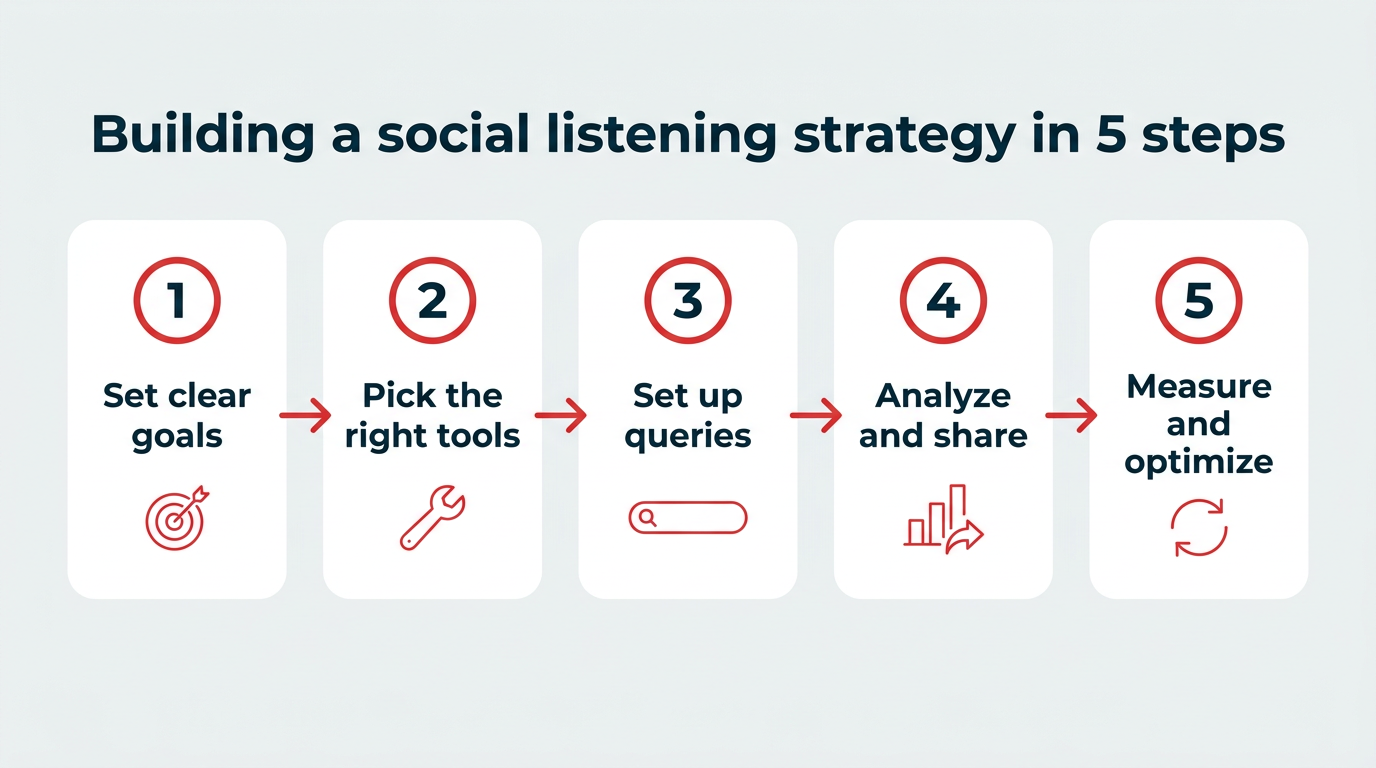
Building a Robust Social Listening Strategy: A Five-Step Framework
Translating the potential of social listening into tangible business value requires a structured, systematic approach.
- Set Clear, Measurable Goals: A social listening strategy must align with overarching business objectives. Whether the aim is to increase positive sentiment by 10% in a quarter, identify three new product features from customer feedback, or improve crisis response time by 20%, goals should be SMART (Specific, Measurable, Achievable, Relevant, Time-bound). Common use cases include brand reputation management, customer service optimization, content strategy development, and competitive benchmarking.
- Select the Right Social Listening Tools: Manual monitoring is impractical at scale. Dedicated social listening platforms automate data collection and analysis. Key considerations when choosing a tool include data coverage (number of platforms, historical data), AI capabilities (sentiment analysis, topic modeling), real-time alerting, integration with existing tech stacks (CRM, BI tools), and user-friendliness. Tools range from comprehensive enterprise suites to integrated social management platforms with listening features, and lite versions for specific needs.
- Construct Precise Queries: The effectiveness of listening hinges on accurate data collection, which is driven by well-crafted queries. Beyond simple keywords, leveraging Boolean logic (AND, OR, NOT operators) allows for highly granular searches, filtering out noise and focusing on relevant conversations. Incorporating slang, emojis, common misspellings, and geographical filters ensures comprehensive coverage. Advanced tools also allow for tracking mentions from specific influential accounts or niche communities.
- Analyze and Disseminate Insights: Data collection is only the first step; extracting meaning and sharing it with relevant stakeholders is where value is generated. Insights should be categorized (e.g., product feedback, marketing campaign sentiment, customer service issues) and then communicated through structured reports, dashboards, or real-time alerts. Establishing clear communication channels – for instance, flagging delivery delay sentiment spikes to customer support before messages pile up – transforms listening from a mere reporting exercise into a shared intelligence resource that drives cross-functional action.
- Measure and Optimize Continuously: Social listening is an iterative process. Regularly assessing progress against predefined goals using metrics such as share of voice, sentiment scores, engagement rates, and influencer impact is essential. Customizable dashboards provide clear visualizations of performance over time, allowing teams to identify trends, refine their queries, and adapt their strategies to maximize impact. Setting up real-time alerts for sudden spikes in mentions or sentiment shifts ensures agility.
The Transformative Power of AI in Social Listening
Artificial intelligence has fundamentally revolutionized social listening, moving it from a laborious, keyword-driven process to an automated, predictive capability. The integration of AI has significantly enhanced the speed, accuracy, and depth of analysis.
- Automated Sentiment Scoring: AI algorithms can analyze vast volumes of text across languages and platforms in minutes, providing immediate sentiment scores that are far more accurate and nuanced than manual methods.
- Topic Modeling and Trend Prediction: AI can identify subtle patterns and emerging themes within conversations that human analysts might miss. This allows brands to anticipate future trends, forecast shifts in consumer behavior, and proactively adjust their strategies.
- Noise Reduction and Data Filtering: AI helps sift through irrelevant data, ensuring that teams focus only on conversations pertinent to their objectives, thereby increasing efficiency.
- Multilingual Analysis: AI breaks down language barriers, enabling global brands to monitor and understand conversations across diverse linguistic communities.
- Visual and Audio Analysis: Beyond text, AI is increasingly capable of analyzing images (logo detection) and audio (speech-to-text for podcasts/videos), capturing a more complete picture of online discourse.
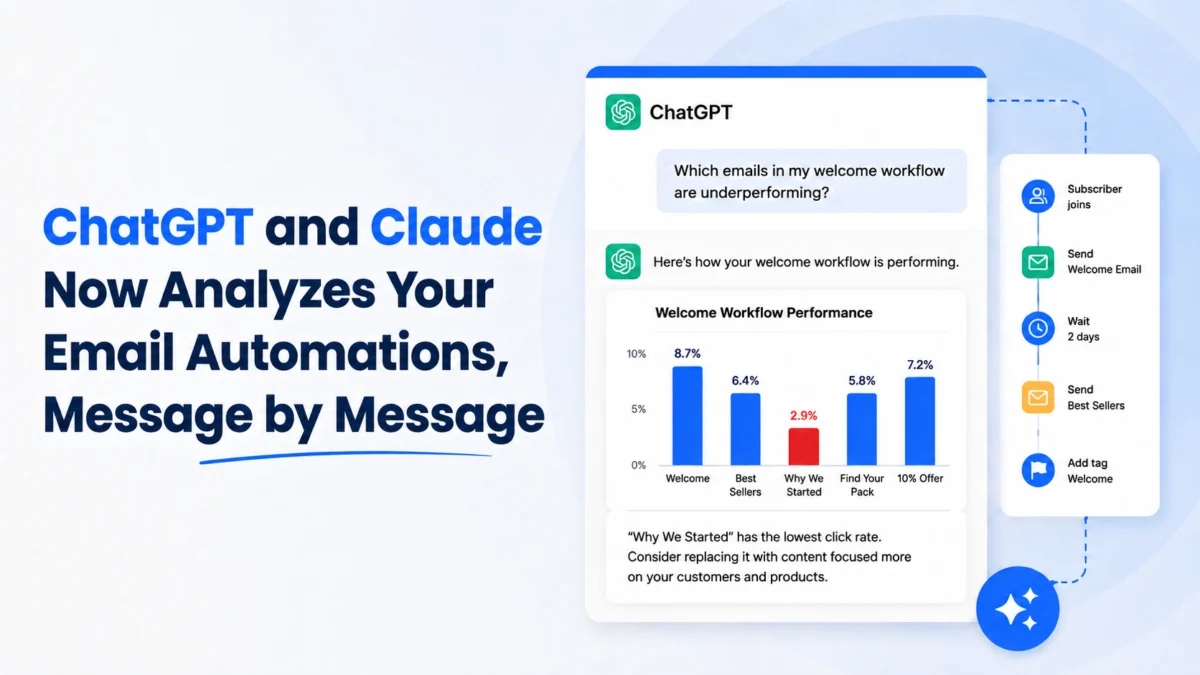
While general-purpose AI chatbots like ChatGPT are useful for summarizing exported content, drafting Boolean queries, or synthesizing findings, they cannot replace dedicated social listening platforms. The critical distinction lies in infrastructure: listening platforms operate continuously against licensed data feeds, offering real-time monitoring, historical data tracking, and alert capabilities – functions chatbots are not designed to perform. AI, therefore, serves as a powerful enhancer, not a substitute, for purpose-built listening tools.
Advanced Applications and Best Practices
To maximize the value of social listening, brands are employing increasingly sophisticated tactics:
- Sentiment Response Templates: Developing playbooks for responding to mentions based on their sentiment score ensures consistent messaging and rapid response times, crucial for managing brand perception across distributed teams.
- Consistent Competitor Monitoring: Beyond basic tracking, deeply analyzing competitor strategies, product launches, and customer feedback allows brands to continuously refine their market positioning and uncover unique selling propositions.
- Influencer Alerts: Setting up real-time alerts for mentions from key influencers or thought leaders, as HelloFresh did to inform recipes and packaging, enables brands to tap into high-stakes conversations and engage authentically with influential voices.
- Integration with the CRM and Tech Stack: Piping social listening insights into CRM systems enriches customer profiles, while routing alerts to internal communication platforms (e.g., Slack, Microsoft Teams) ensures product and support teams receive relevant signals in real-time, closing the loop between insight and action.
- Executive-Ready Dashboards: Translating complex data into clear, visual summaries that highlight key business outcomes (brand health, competitive positioning, campaign performance) is vital for gaining leadership buy-in and informing high-level strategic decisions.
Real-World Impact: Social Listening in Action
Numerous brands have demonstrated the tangible benefits of a robust social listening strategy:
- Crisis Aversion: A major airline, through diligent social listening, identified a widespread pricing error on a third-party booking site before it became a public relations nightmare. By proactively addressing the issue, they prevented significant reputational damage and financial losses.
- Product Innovation: A leading meal-kit delivery service leveraged influencer insights to understand evolving dietary preferences and packaging concerns, directly influencing their recipe development and sustainable packaging initiatives.
- Enhanced Patient Support: A pharmaceutical company listened to conversations among multiple sclerosis patients, uncovering critical unmet needs in support programs. This led to a complete redesign of their patient messaging and support services, fostering greater trust and improving patient outcomes.
- Strategic Campaign Adjustment: A telecommunications giant utilized social listening to monitor public reaction to a new marketing campaign. Real-time sentiment analysis revealed a misunderstanding of the campaign’s core message, allowing them to quickly pivot their creative and messaging, saving significant marketing spend and achieving campaign objectives.
The Horizon of Social Listening: Trends and Challenges
The social listening market is projected to reach $16.19 billion by 2029, reflecting its growing strategic importance. Several trends are shaping its future:
- Multimodal Listening: As content consumption shifts towards video, audio, and image-first platforms, listening tools are expanding beyond text to encompass broader coverage of platforms like YouTube, TikTok, and podcasts, as well as voice-based interactions.
- AI-Generated Content Monitoring: The proliferation of AI-produced posts, reviews, and comments necessitates tools capable of distinguishing organic conversation from synthetic content, posing new challenges for authenticity and trust.
- Privacy Regulation: Evolving global privacy regulations (e.g., GDPR, CCPA) will continue to shape what data is accessible and how it can be ethically used, requiring brands to build compliance into their listening programs.
- Integration with Business Intelligence (BI): Social listening insights are increasingly flowing into broader BI platforms, CRMs, and executive dashboards, bridging the gap between social data and enterprise-wide decision-making.
- Real-time Predictive Analytics: The next generation of tools aims to move beyond reporting "what happened" to anticipating "what will happen," enabling truly proactive strategies.
Despite its immense power, social listening is not without limitations. It relies on publicly available data, meaning private conversations remain inaccessible. Data can be biased, reflecting the demographics of active social media users rather than the entire customer base. Furthermore, the sheer volume of data, even with AI, can sometimes lead to information overload, and human interpretation remains critical for nuanced understanding and strategic action. Ethical considerations regarding data privacy and surveillance also require careful navigation.
Nevertheless, these limitations underscore the need for sophisticated tools, clear objectives, and human oversight, rather than diminishing the value of social listening itself. In an era defined by rapid digital transformation and heightened consumer expectations, the brands that cultivate a deep, continuous understanding of online conversations will be the ones best positioned to innovate, adapt, and ultimately, thrive. Social listening is no longer a luxury; it is a fundamental driver of competitive advantage and customer-centric growth.