The landscape of professional communication is undergoing a fundamental transformation as traditional metrics like impressions, reach, and Advertising Value Equivalents (AVEs) become increasingly decoupled from actual business outcomes. For decades, public relations and marketing departments have relied on "vanity metrics"—data points that appear positive on a dashboard but fail to answer the critical executive question: "Did this move the business?" As the industry moves toward 2026, the emergence of the PESO Model® Operating System (Paid, Earned, Shared, Owned) marks a shift from isolated tactics to a systematic, integrated approach designed to satisfy the rigorous demands of Chief Financial Officers and corporate boards.
The Obsolescence of Legacy Metrics in an AI-Driven Economy
Historically, communication success was measured by the volume of distribution. Impressions assumed a human eye met a piece of content; reach assumed that distribution was the primary barrier to entry; and AVEs attempted to equate earned media coverage with the cost of a corresponding advertisement. In the modern era, these figures are increasingly viewed as "malpractice" by data-driven executives. With a global population of roughly eight billion, reports claiming billions of impressions for single campaigns have lost all credibility in the C-suite.
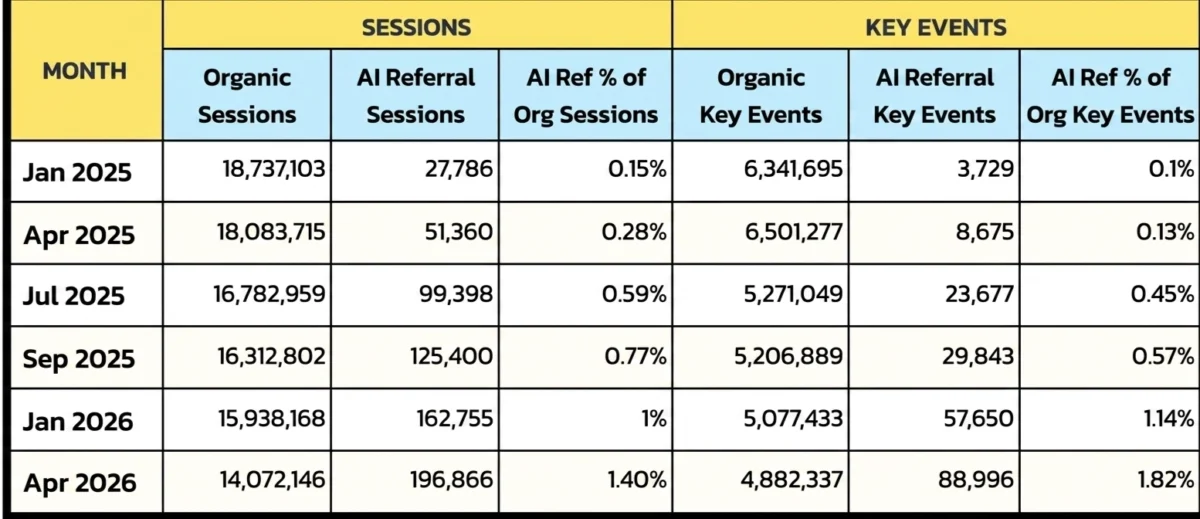
The primary driver of this shift is the change in consumer behavior. The traditional "search and click" model—where a user enters a query into a search engine and browses ten blue links—is being replaced by generative AI interfaces. Buyers now interact with Large Language Models (LLMs) such as ChatGPT, Gemini, Perplexity, and Claude to receive synthesized, single-source answers. Consequently, ranking on the first page of Google is no longer the definitive metric for visibility. If a brand does not appear within the synthesized response of an AI model, it effectively does not exist in the buyer’s journey.
A New Framework: The Four Critical Metrics for 2026
To address this "visibility gap," the 2026 PESO Model Operating System introduces four specific metrics designed to survive the scrutiny of budget meetings. These metrics move beyond measuring activity and begin measuring authority and business impact.
1. LLM Visibility
LLM Visibility measures the frequency and accuracy with which a brand appears in AI-generated responses to category-specific questions. This is the new "top of the funnel." Strategic communicators are now tasked with ensuring that when a potential buyer asks an AI for a recommendation or a solution to a problem, their organization is cited as a primary answer.
Measurement of LLM Visibility can be conducted through rigorous manual testing—running 20 to 30 "ideal buyer" questions across major models on a regular cadence—or through emerging Generative Engine Optimization (GEO) tools. These tools track visibility trends and provide recommendations for content optimization to ensure the AI "understands" and prioritizes the brand’s expertise.
2. Citation Frequency
While traditional PR measured "mentions," the 2026 standard prioritizes "citations." A mention indicates that a brand appeared in a piece of content; a citation indicates that the brand was the authoritative source of the information. In an AI-mediated world, citation frequency serves as a proxy for authority. When a journalist, a creator, or an AI model attributes a specific claim or data point to an organization, it signals that the brand is "load-bearing"—a foundational element of the industry conversation. Organizations must track who is citing them, for what specific claims, and whether that frequency is increasing relative to competitors.
3. Narrative Share of Voice
Traditional Share of Voice (SoV) focused on volume—who spoke the loudest or most often. Narrative Share of Voice, however, measures whose framing and language the industry has adopted. This is a qualitative metric with quantitative implications. It tracks whether competitors, analysts, and prospects are using a brand’s proprietary terminology and category definitions to describe the market. Achieving a high Narrative Share of Voice means the organization is no longer just participating in a conversation; it is setting the terms of the debate. This metric is significantly harder to "buy" through advertising and must be earned through consistent, integrated communication strategies.
4. Credibility Loop Close Rate
The most vital metric for the CFO is the Credibility Loop Close Rate. This tracks the reliability with which a prospect moves from initial visibility to trust-based action. It connects the entire PESO system in a single line: a prospect discovers the brand via an AI answer (LLM Visibility), validates the brand’s authority through third-party references (Citation Frequency), adopts the brand’s view of the problem (Narrative Share of Voice), and finally "raises their hand" to engage. The close rate measures how often this journey completes versus how often it stalls, providing a direct link between communication efforts and the sales pipeline.
Data Analysis: The Correlation Between Integration and Maturity
Recent data from the PESO Model® Diagnostic, which has assessed nearly one hundred organizations, reveals a stark disparity between tactical execution and organizational maturity. The diagnostic evaluates organizations across six dimensions: Owned, Earned, Shared, Paid, Integration, and Measurement.
The analysis shows a 0.83 correlation between "Integration" and overall maturity, and a 0.68 correlation for "Measurement." These figures suggest that the ability to run the PESO model as a unified system—rather than a collection of silos—is the single greatest predictor of success. However, the data also highlights a significant "maturity gap." Only 7% of assessed organizations have reached the "Systemize" stage of maturity. The majority (56%) remain at the "Foundation" or "Pilot" stages, where measurement scores are among the lowest across all dimensions.
As organizations climb the Maturity Ladder, their measurement scores typically quadruple, rising from an average of 19 at the Foundation stage to 77 at the Systemize stage. This indicates that sophisticated measurement is not something that can be added to a failing system; it is a byproduct of a mature, integrated operation.
Chronology of the PESO Model Evolution
The transition to these 2026 metrics represents the third major evolution of the PESO framework:
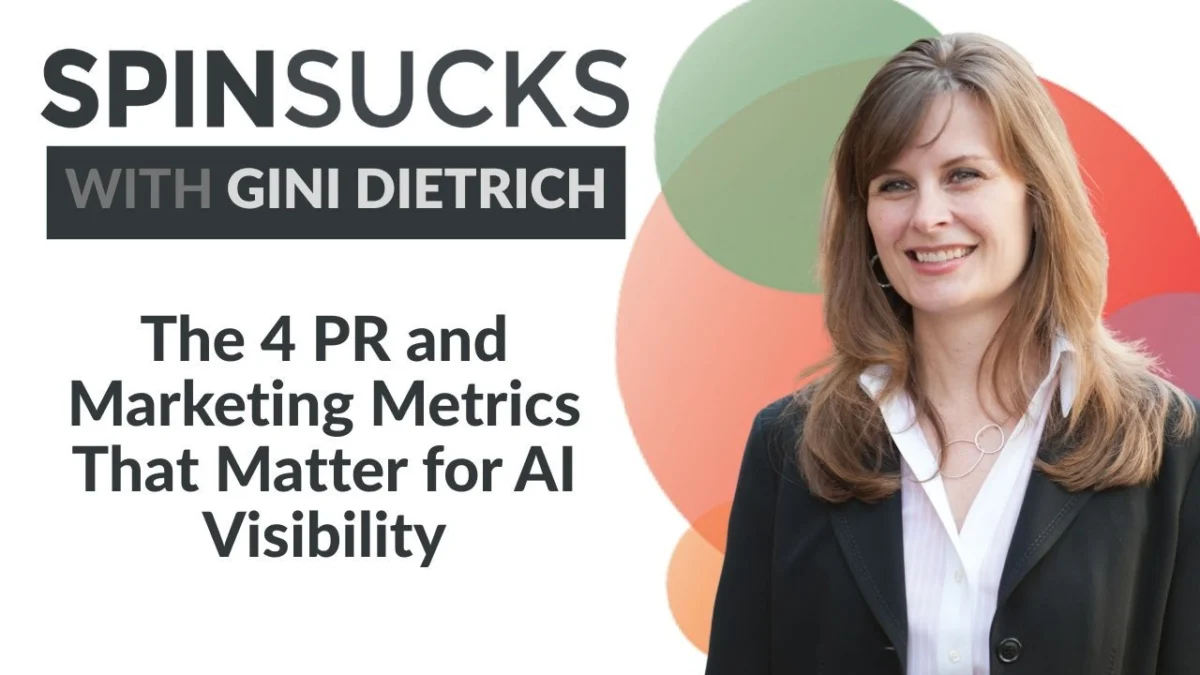
- 2014–2019: The Conceptual Phase. The PESO Model was introduced by Gini Dietrich in the book Spin Sucks, primarily as a way for PR professionals to reclaim territory in a digital world. The focus was on breaking down silos between departments.
- 2020–2024: The Tactical Integration Phase. Organizations began adopting the framework to coordinate content across channels. Measurement focused on "conversions" and "attribution," though often hampered by the "death of the cookie" and privacy regulations.
- 2025–2026+: The Operating System Phase. The model evolves into a technical operating system. The focus shifts to AI visibility and "narrative authority" as search engines lose their monopoly on information discovery.
Strategic Implications and Industry Response
The move toward these new metrics is being met with both urgency and resistance within the communications industry. Many practitioners express "capacity fatigue," arguing they do not have the time to implement complex new tracking systems while maintaining current output. However, industry analysts suggest that this shift is not optional.
The "Diagnostic data" suggests that the metrics separating mature organizations from those that are "stuck" are exactly the ones most currently ignored. By focusing on LLM Visibility and Narrative Share of Voice, communications teams can demonstrate a direct impact on the four pillars of corporate value: revenue, reputation, recruiting, and risk.
For the CFO, the Credibility Loop Close Rate provides a "memory" for leads. Instead of viewing a lead as a spontaneous event, the CFO can see the cumulative effect of the PESO system. This level of attribution allows for more confident budget allocation, as communication is no longer viewed as an intangible "cost center" but as a predictable "growth engine."
Conclusion: Moving Beyond the "Wall of Green"
The 2026 PESO Model Operating System serves as a "maturity project wearing a measurement costume." It forces organizations to confront the reality that a dashboard full of "green arrows" is meaningless if it cannot answer whether the business has moved.
To succeed in the coming years, communication leaders must stop measuring "parking spaces in a building everyone has left" and start measuring their presence in the machines that now stand between the buyer and the decision. The opportunity for the 7% of organizations that reach maturity is significant: they will not only be visible in the AI era but will also possess the narrative authority to define their industries. The challenge for the remaining 93% is to move beyond tactical silos and build a system worth measuring. The next time a performance review occurs, the goal is not to show that numbers are "up," but to prove that the organization has become the default choice in the mind of the market and the algorithms of the AI models.