The global corporate landscape is currently navigating a series of high-stakes crises ranging from aviation safety disputes and the collapse of local journalism to the existential debate surrounding artificial intelligence governance. In a recent press conference that has drawn sharp criticism from legal experts and passenger advocacy groups, Ryanair CEO Michael O’Leary dismissed claims made by a passenger who was reportedly injured during a mid-air window failure. Simultaneously, the American media industry is reeling from a fresh wave of contractions as McClatchy, one of the nation’s largest newspaper chains, executed a series of layoffs affecting up to 30% of its editorial staff in key markets. Meanwhile, in the technology sector, OpenAI has shifted its communication strategy to address alarming predictions regarding the potential for superintelligent AI to pose a terminal threat to humanity, calling for a robust international regulatory framework.
Aviation Safety and the Ryanair Legal Dispute
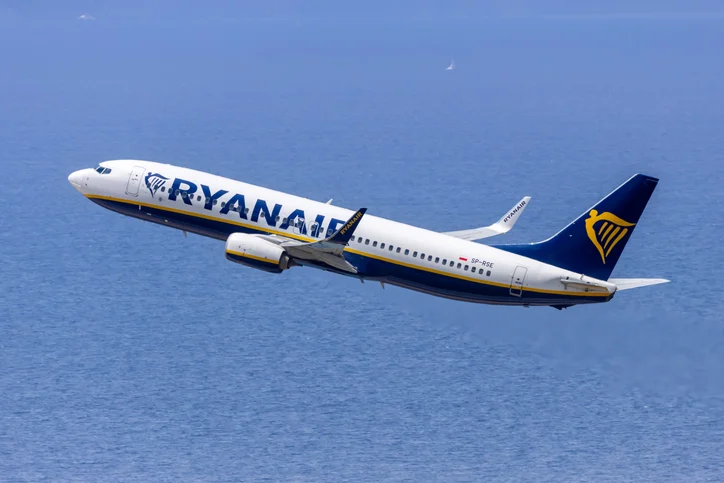
The controversy surrounding Ryanair stems from an incident in July 2026, during which a cabin window on a Ryanair flight was compromised while the aircraft was at cruising altitude. According to eyewitness accounts from both passengers and flight crew, Ljubisa Karovic was partially pulled toward the opening after the window pane failed. Karovic sustained significant burns and contusions on his arm and chest, necessitating immediate hospitalization upon landing.
The subsequent legal action filed by Karovic has been met with a characteristically aggressive defense from Michael O’Leary. Known for his "no-frills" approach to both business and public relations, O’Leary utilized a public platform to disparage the plaintiff and his legal representation. He specifically targeted Karovic’s wife, who claimed to have held onto her husband’s feet to prevent him from being ejected from the aircraft. O’Leary labeled the woman "delusional," citing flight records that placed her seat three rows behind her husband at the time of the incident.
Chronology of the Ryanair Incident and Response
- July 2026: A window failure occurs on a Ryanair flight; Karovic is injured and treated for burns and bruising.
- August 2026: Karovic’s legal team, led by Vasilis Tsiaras, files a lawsuit alleging negligence and safety failures.
- September 2026: During a press briefing, O’Leary disputes the severity of the incident, refers to the plaintiff’s wife as "delusional," and characterizes the legal team as "ambulance-chasing lawyers."
- September 10, 2026: Tsiaras responds by citing multiple eyewitness accounts that corroborate the claim that Karovic’s upper body was outside the aircraft frame.
Industry analysts suggest that O’Leary’s rhetoric may represent a significant PR risk. While Ryanair has historically leaned into a "villain" persona on social media to highlight its low costs, the transition of this tone into matters of physical safety and litigation is viewed by some as "unbecoming of a CEO." The focus of the dispute has now shifted from the mechanical cause of the window failure to the credibility of the victims, a move that legal experts suggest could influence jury perception regarding the company’s culture of safety and empathy.
The Economic Contraction of Local Journalism: The McClatchy Layoffs
The American media landscape faces a different kind of crisis as McClatchy announced a sweeping reduction in its workforce. The layoffs, which hit editorial departments particularly hard, saw staff reductions of up to 30% in specific regions. The Miami Herald, a flagship publication for the chain, was among the most severely impacted, losing more than 30 employees. Perhaps most significantly, the staff of El Nuevo Herald, the chain’s primary Spanish-language outlet, was nearly entirely eliminated, raising concerns about the loss of dedicated reporting for Hispanic communities in South Florida.
Supporting Data: The Financial Decline of Legacy Media
Internal communications from Greg Farmer, McClatchy’s executive vice president of local news, highlighted a dire financial reality. Over the past five years, the company reported:
- Consumer Revenue: A 41% decrease as print subscriptions continue to dwindle.
- Operating Expenses: Remained flat despite falling revenue, creating an unsustainable fiscal gap.
- Total Impact: Approximately 90 editorial positions eliminated nationwide in this latest round.
The implications of these cuts extend beyond the immediate loss of jobs. The reduction in local reporting often leads to the creation of "news deserts," where local government actions go unscrutinized and community stories remain untold. For public relations professionals and community leaders, the shrinking number of journalists represents a significant hurdle in disseminating public interest information. The decline of McClatchy, which filed for Chapter 11 bankruptcy in 2020 before being acquired by the hedge fund Chatham Asset Management, serves as a case study in the ongoing struggle to find a viable digital-first business model for local news.
OpenAI and the Debate Over Existential AI Risks
As the media and aviation sectors grapple with traditional crises, the technology sector is confronting a more theoretical, yet potentially more catastrophic, challenge. A former staffer from Anthropic, a leading AI safety and research company, recently published a viral warning claiming a greater than 10% probability that artificial intelligence could lead to human extinction within the next decade.
In a calculated response, OpenAI—the creator of ChatGPT—has positioned itself as a proponent of rigorous governance rather than dismissing the concerns. Chris Lehane, OpenAI’s Chief Global Affairs Officer, authored a blog post emphasizing that safety protocols are not an obstacle to innovation but a prerequisite for it.
Analysis of OpenAI’s Governance Strategy
OpenAI’s approach appears to be a proactive attempt to shape the regulatory environment before governments impose more restrictive measures. The company’s strategy includes:
- International Collaboration: Working with U.S. and state-level officials to define safety benchmarks.
- Incremental Progress: Acknowledging that the first steps in regulation will be imperfect but are necessary to prevent long-term risks.
- Brand Positioning: By responding while rivals remain silent, OpenAI is attempting to establish itself as the "responsible" leader in the race toward Artificial General Intelligence (AGI).
This pivot comes at a time when the "p-doom" (probability of doom) metric is becoming a standard topic of discussion among AI researchers. OpenAI’s shift toward a "somber and urgent" tone reflects a broader industry realization that public trust is essential for the continued deployment of advanced AI models.
Reflections on a Quarter Century Since September 11
Woven into these contemporary crises is the somber milestone of the 25th anniversary of the September 11 terrorist attacks. For many in the workforce, the events of 2001 remain a defining moment of their lives, while a younger generation of professionals knows the tragedy only through historical records and collective memory.
The anniversary serves as a reminder of the long-term impacts of global crises. The security protocols seen in modern aviation—the very industry currently under fire for the Ryanair incident—were largely birthed from the aftermath of 9/11. Similarly, the way information is shared during national emergencies has been permanently altered by the evolution of the news industry, from the 24-hour cable news cycles of the early 2000s to the fractured digital landscape of 2026.
Broader Implications and Analysis
The convergence of these events highlights a period of significant volatility across multiple sectors. In aviation, the Ryanair incident underscores the tension between ultra-low-cost business models and the high-stakes requirements of passenger safety and corporate dignity. O’Leary’s choice to engage in "mudslinging" may save the company from "millions and millions" in a settlement in the short term, but it risks alienating a consumer base that is increasingly sensitive to corporate ethics.
In the media sector, the McClatchy layoffs represent the continued erosion of the Fourth Estate. As local newsrooms disappear, the burden of information verification falls increasingly on the public and on automated systems, which brings the conversation back to the risks identified by OpenAI. If AI becomes the primary source of information in a world without local journalists, the safety and governance of those AI systems become not just a technical concern, but a societal necessity.
The current landscape demands a multifaceted approach to leadership. For CEOs like Michael O’Leary, the challenge is to balance fiscal aggression with human empathy. For media executives, the challenge is to find a path to profitability that does not sacrifice the mission of journalism. And for AI pioneers, the challenge is to ensure that the pursuit of superintelligence does not come at the cost of human safety. As these stories continue to unfold, the common thread remains the need for accountability, transparency, and a focus on long-term stability over short-term gains.