TikTok is making a significant leap into the future of digital advertising with the recent launch of its TikTok Ads MCP (Marketing Campaign Platform) and Agentic Hub. This strategic move integrates agentic artificial intelligence directly into the advertising workflow, promising to revolutionize how marketers manage and execute campaigns on the popular platform. While the MCP connector itself represents a crucial infrastructural upgrade, enabling AI tools to interact seamlessly with TikTok Ads, the true innovation lies in the ecosystem TikTok is actively building atop this foundation.
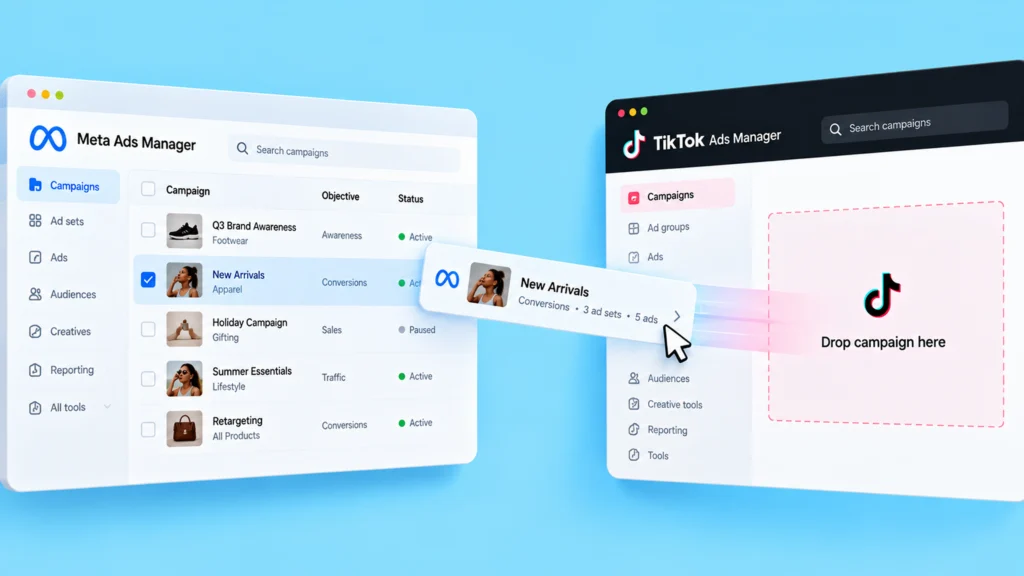
The MCP connector serves as the critical bridge, granting AI agents direct access to TikTok Ads. This allows these intelligent systems to analyze campaign performance, orchestrate complex campaign management tasks, engage with audience segments, refine creative assets, and execute advertising workflows without the need for manual intervention or constant switching between disparate AI environments and TikTok’s Ads Manager. This paradigm shift echoes similar developments from other major players in the digital advertising space. Meta, for instance, has also introduced its Ads AI Connectors, a parallel initiative designed to foster deeper integration between AI tools and its advertising ecosystem. However, TikTok’s approach with Agentic Hub and its "Skills" concept appears to be pushing the envelope further, aiming to create a standardized, reusable, and shareable repository of sophisticated paid social advertising workflows.
This development extends beyond mere operational efficiency. It signals a fundamental transition towards a future where the nuanced expertise and best practices of seasoned paid social practitioners can be codified, captured, and systematically applied. This has profound implications for how advertising teams operate, learn, and scale their efforts.
The Architecture of TikTok’s Agentic Future
At its core, the MCP connector is the foundational infrastructure. It empowers AI agents with the ability to access and interact with the TikTok Ads platform, crucially through natural language processing. This means that instead of complex coding or rigid rule-based systems, marketers can potentially instruct AI agents using everyday language, making advanced automation more accessible.
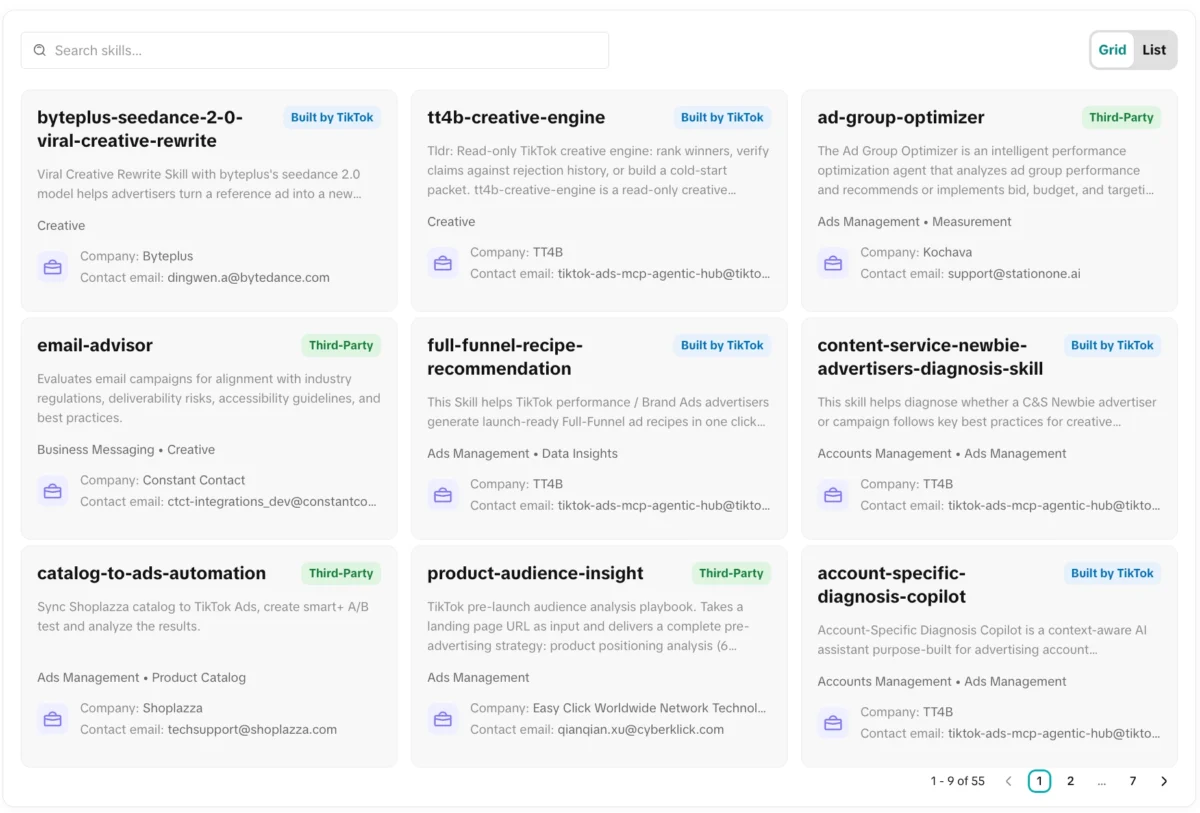
The Agentic Hub elevates this capability by transforming raw access into actionable intelligence and automated processes. The traditional challenge for marketers has been the laborious process of crafting bespoke prompts and workflows for every specific task and campaign. TikTok’s "Skills" aim to democratize this by packaging intricate instructions, proven methodologies, and established processes for specific advertising tasks. These pre-defined "Skills" can then be deployed within compatible AI environments, offering a standardized yet adaptable approach to complex advertising challenges.
Consider the pervasive issue of creative fatigue, a common hurdle in paid social advertising. A human paid social practitioner typically undertakes a multi-step process: meticulously pulling performance data, rigorously comparing creative assets, identifying declining engagement rates or conversion efficiencies, pinpointing the specific assets that are losing momentum, and finally, recommending which creatives need refreshing.
A "Skill" can encapsulate much of this analytical and decision-making methodology into a repeatable, automated workflow. TikTok has already developed "Skills" designed to tackle creative fatigue head-on. These can analyze ad performance, categorize assets based on their current effectiveness—whether they are candidates for scaling, require close monitoring, or should be retired—and even suggest replacements. The potential applications are vast, extending beyond creative management to encompass budget optimization, audience discovery and segmentation, comprehensive reporting, quality assurance for campaigns, and a myriad of other critical workflows.
This advancement, however, introduces a critical question regarding the delegation of authority to these automated workflows. Differentiating between identifying a potential problem, like creative fatigue, and automatically executing a solution, such as pausing a creative, is a significant distinction. Similarly, flagging inefficient ad spend is distinct from automatically reallocating budget. As teams begin to codify more of their operational methodologies into AI-driven systems, they will face the crucial task of defining clear boundaries: what actions can AI agents undertake independently, which require human oversight and approval, and which decisions should remain exclusively within the purview of human judgment. This nuanced approach to AI integration fundamentally reshapes the discourse surrounding artificial intelligence in paid social advertising.
The Enduring Role of Human Judgment in an Automated Landscape
The advent of agentic AI in advertising does not signify an abdication of human decision-making. Instead, it necessitates a refined understanding of where automated logic concludes and where essential business judgment takes precedence. For organizations embarking on the journey of experimenting with agentic paid social, a strategic focus on four core principles is advisable:
-
Define Clear Objectives: Before deploying any AI agentic workflow, it is paramount to establish precise, measurable, achievable, relevant, and time-bound (SMART) objectives for what the AI is intended to accomplish. This could range from improving cost-per-acquisition (CPA) by a specific percentage to increasing click-through rates (CTR) on a particular campaign. Without clearly defined goals, evaluating the success of AI interventions becomes challenging, and the potential for unintended consequences increases.
-
Prioritize Transparency and Explainability: While AI can operate at speeds and scales beyond human capacity, it is imperative that the decision-making processes of these agents are transparent and explainable. Marketers need to understand why an AI agent made a particular recommendation or took a specific action. This requires AI systems that can provide clear justifications, cite the data points influencing their decisions, and allow for audit trails. This transparency builds trust and enables continuous learning and refinement of the AI models.
-
Establish Robust Guardrails and Approval Gates: The power of AI agents to execute actions directly within advertising platforms necessitates the implementation of stringent guardrails and approval mechanisms. Not all AI-driven recommendations should be acted upon automatically. Critical decisions, especially those involving significant budget shifts, major campaign structure changes, or brand-sensitive creative approvals, should be subject to human review and explicit approval. This layered approach ensures that AI acts as an intelligent assistant, augmenting human oversight rather than replacing it entirely.
-
Foster Continuous Learning and Iteration: The digital advertising landscape is dynamic, and AI models must evolve alongside it. Successful adoption of agentic AI requires a commitment to continuous learning and iterative refinement. This involves regularly reviewing AI performance against defined objectives, analyzing both successes and failures, and using these insights to update AI models, refine "Skills," and adapt strategies. This iterative process ensures that AI remains a valuable and effective tool, continuously improving its contribution to campaign performance.
The Transformative Impact on Paid Social Teams
The implications of platforms like TikTok exposing more of their advertising infrastructure to AI agents extend beyond individual campaign management. A significant consequence is the increasing ease with which platform-specific execution can be replicated. While proficiency in operating platforms like TikTok Ads Manager will undoubtedly remain valuable, the competitive advantage is steadily shifting. The real differentiator will lie in the ability to strategically direct AI agents: understanding precisely what an agent should be tasked with, the optimal timing for its interventions, the critical data it should consider, the ethical and operational guardrails it must adhere to, and crucially, the ability to discern when its recommendations are flawed.
This evolving landscape places a greater premium on strategic foresight, critical thinking, and systems-level understanding. For brands and advertisers, this presents a unique opportunity to translate years of accumulated institutional knowledge and expertise into robust, automated systems. The frameworks, decision-making processes, and strategic insights that have historically driven performance can now be directly embedded into the operational fabric of their advertising efforts.
The ultimate competitive advantage will not stem simply from having access to AI agents, as such access is likely to become universally available. Instead, the advantage will be derived from the sophistication and effectiveness of what these agents are taught to do. It’s about the intelligence, the strategy, and the nuanced understanding that is encoded into the AI’s operational directives.
The Evolving Operating Model for Paid Social
In essence, TikTok Ads MCP provides AI with direct conduits into advertising workflows. Agentic Hub, however, introduces a potentially more transformative element: a mechanism for making the underlying methodologies of these workflows reusable and scalable. This points towards a fundamentally different operating model for paid social teams. As a greater proportion of campaign execution becomes agentic, teams will need to adopt a more deliberate and structured approach to defining how they analyze performance data, how they arrive at strategic decisions, and how they govern the actions that AI agents are permitted to undertake.
The organizations that will ultimately thrive in this new paradigm are those that can accurately identify their most potent strategic insights and analytical capabilities, successfully translate these into repeatable and reliable systems, and leverage the resulting efficiencies and enhanced capacity to make more informed and impactful strategic decisions. Paid social expertise is no longer confined to individual practitioners; it is increasingly becoming a component that can be architected and embedded directly into the operational systems themselves, creating a virtuous cycle of learning, automation, and strategic advantage.